

Curious about psychic skill sets that some people claim to have? This intro looks at two well-known types and how researchers have tried to study them.
Ingo Swann was an early test subject at the Stanford Research Institute. His work helped shape scientific interest in remote viewing as a method to gather accurate information about distant targets without normal senses.
Many who study consciousness compare viewing to a trainable musical skill. Over time, practice can improve accuracy for some people. Scientists still ask how the mind reaches facts that seem to sit outside everyday life.
Others call clairvoyance a natural gift that lets a medium sense the spirit or past events of a place. Understanding purpose and process helps separate sudden insight from a structured, learned practice.
Key Takeaways
- Remote viewing was studied at Stanford with notable subjects like Ingo Swann.
- Research treats viewing as a skill some people can develop over time.
- Consciousness studies aim to explain how information reaches the mind.
- Clairvoyant experiences often feel spontaneous and tied to spirit or place.
- Distinguishing gift from trained practice clarifies purpose and use.
Defining the Core Concepts
Some people report sudden inner images that feel like clear snapshots of distant scenes. This section names two distinct approaches and shows how they organize experience for study and practice.
The Nature of Clairvoyance
Clairvoyance often appears as a mind’s-eye gift. A person receives information without ordinary senses. Mediums may describe the spirit or soul of a place rather than exact facts.

The Mechanics of Remote Viewing
Remote viewing offers a structured way to pull usable data. Trained practitioners learn to separate signal from noise and record measurable details.
Researchers at Stanford and similar labs explored how consciousness might tap other dimensions. Many people report intuitive flashes, yet this method turns those moments into repeatable steps.
- Clairvoyance: spontaneous, image-led, spirit-focused.
- Remote viewing: procedural, verifiable, data-focused.
For a deeper look at psychic skill sets, see clairvoyant abilities.
Understanding What Is the Difference Between Clairvoyance and Remote Viewing
Psychic reports often fall into two styles: instant reception or methodical data-gathering. Clairvoyance tends to show up as sudden perception through a medium, with images tied to spirit, place, or past events.
Remote viewing was named by Ingo Swann to describe a controlled protocol for a viewer to describe a hidden target. In lab work at Stanford, viewers recorded impressions on paper to separate mental noise from usable information.
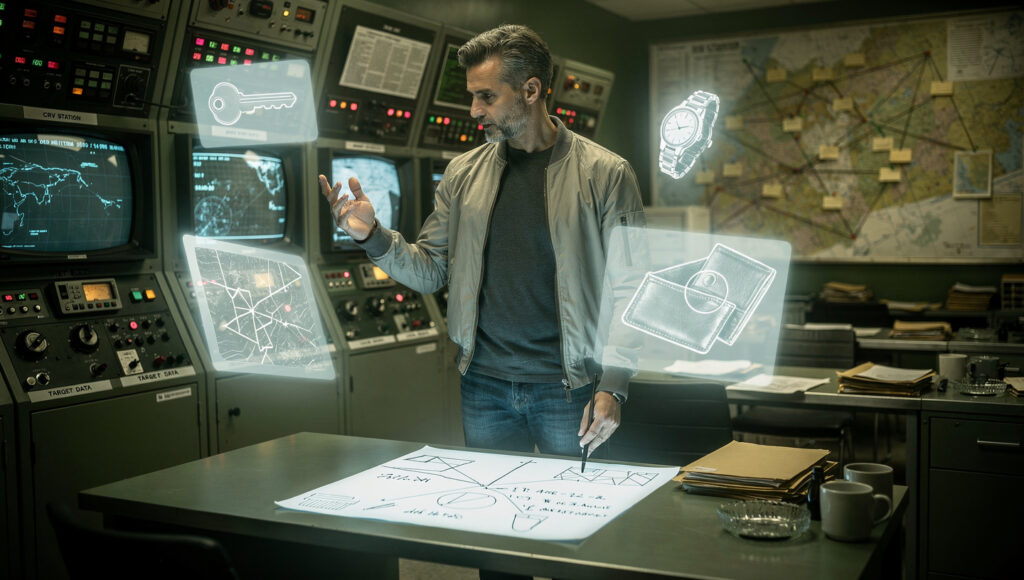
Think of the first as intuitive perception and the second as a repeatable technique for gathering data about a place or event. Both aim to access details beyond the five senses, but one relies on spontaneous perception while the other follows rules and documentation.
| Feature | Spontaneous Perception | Protocol-Driven Viewing |
|---|---|---|
| Origin | Often linked to a medium or spirit | Term coined by Ingo Swann; lab-tested |
| Approach | Intuitive, image-led reception | Structured steps and record keeping |
| Typical Goal | Sense events, people, or places emotionally | Gather factual information about a target |
| Validation | Subjective corroboration | Comparisons with hidden target data |
For further reading on readings that blend intuition and practice, visit clairvoyant readings.
The Historical Evolution of Psychic Research
Cold War urgency pushed psychic research from academic curiosity into a formal government effort. For more than two decades, a funded program sought usable intelligence through unconventional means.
The Stargate Project and Government Interest
Physicists Russell Targ and Harold Puthoff led early experiments at the Stanford Research Institute. Their work tested whether consciousness might influence physical events and yield reliable information.
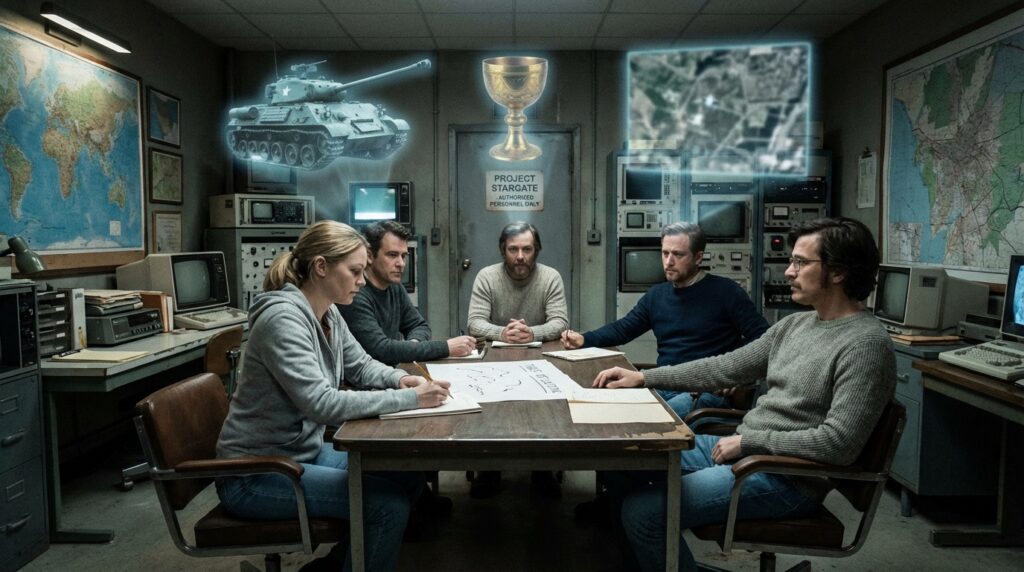
Congress backed the Stargate Project with about $20 million before it ended in 1995. Many people involved felt a strong purpose: protect national security during tense times.
“Training allowed novices to sharpen perception, turning odd flashes into repeatable reports.”
Ingo Swann helped shape training protocols that let others learn this ability. The program showed that with systematic training, some could improve at gathering data from distant targets.
Researchers still review experiments to see how such abilities might fit modern life. For further reading on abilities and doubt, see real-or-fake clairvoyant abilities.
Methodologies and Training Protocols
Structured practice helps novices turn vague impressions into usable reports. Joe McMoneagle, called Remote Viewer No. 1, showed how disciplined work can yield reliable results.

Controlled Remote Viewing Systems
Controlled Remote Viewing (CRV) uses a six-stage protocol to separate signal from noise. Students move step by step, recording sketches and notes to preserve raw impressions as data.
The Role of Ambiguity
Trainers teach people to trust small, unclear cues. Embracing ambiguity prevents premature guesses and often leads to more accurate information.
Sensory Cues and Impressions
Viewers focus on texture, color, and temperature rather than naming targets. Many find meditation helps sharpen attention and steady the mind during sessions.
- Record everything: paper logs make results verifiable.
- Open slowly: avoid rushing to conclusions about images.
- Practice regularly: repeated training refines ability over time.
Scientific Perspectives on Anomalous Cognition
Rigorous labs have tracked subtle links between focused intention and measurable outcomes for decades. The PEAR Lab at Princeton ran twenty years of experiments showing human intention could influence Random Number Generators with odds estimated at 375 trillion to one.
Statistical reviews matter. Jessica Utts judged psychic functioning robust when held to common scientific standards. Dean Radin’s meta-analyses also show consistent effects across many experiments.
Work at the Stanford Research Institute and SAIC produced protocols later replicated worldwide. The Stargate analysis found weak but statistically significant results that could not be attributed to fraud.

“These results nudge us to ask how consciousness might access information across distance and time.”
| Study | Finding | Implication |
|---|---|---|
| PEAR Lab | Significant RNG deviations | Intention can affect random systems |
| Stanford Research Institute | Replicable session reports | Protocol can yield usable data |
| Meta-analyses | Consistent small effects | Population-level phenomenon |
Modern technology and strict protocols keep this field rigorous. For a practical look at visionary practice, see clairvoyant visions.
Practical Applications in Modern Life
Many entrepreneurs report that inner prompts shaped key investments and product bets. Successful names like George Soros, Conrad Hilton, Thomas Edison, and Akio Morita often credited intuition for timing and strategy.
Intuition in Business and Decision Making
Intuition can act as a fast filter when data lags. Traders and founders sometimes use a trained sense to pick moves that raw numbers miss.
Remote viewing has been tried for crime-solving, search efforts, and market forecasting. Some teams report useful leads while researchers warn that independent verification often falls short.
A medium or intuitive person may help others make clearer decisions in life or work. With practice, a person can refine that ability and turn vague impressions into usable data.
“Using intuition as one input, not the only input, gives leaders an edge while limiting bias.”
For balanced guidance on psychic roles in readings, see psychic vs clairvoyant. Approach applications with curiosity and skepticism to track real results.
Conclusion
Whether gifted or trained, people explore inner perception to learn how a mind can access distant facts. Over time, research has tracked both spontaneous reports from a medium and methodical protocols used in lab settings.
These paths highlight a key difference: one leans on sudden sensing of spirit and place, the other uses strict training and repeatable steps. Both routes invite careful practice, patience, and clear records for verification.
As modern research continues, we may better map how consciousness and the soul interact with the world. For readers curious to learn more or to develop skill, see this guide on develop clairvoyance.