
In 1972, Hal Puthoff launched a program at the Stanford Research Institute that sought to test human ability to describe distant targets. The work drew scientists like Russell Targ and volunteers such as Pat Price. It blended parapsychology with hopes of practical intelligence value.
The program grew over years and caught the attention of the Defense Intelligence Agency and other agencies. In July 1995, the CIA released hundreds of pages that showed how the intelligence community tracked these studies.
This article offers a clear analysis of the methods, the reported results, and the debate that followed. We will look at evidence, data, and the practical tests that moved the work from lab trials to operational tasks. Read on for a balanced view of what this unusual program achieved and where questions remain.
Key Takeaways
- The program began in 1972 under Hal Puthoff and involved figures like Russell Targ and Pat Price.
- Declassified documents in 1995 revealed deep interest from the CIA and the Defense Intelligence Agency.
- Studies mixed laboratory tests with operational assignments to test target perception abilities.
- Results sparked significant debate over methodology, chance, and interpretation of evidence.
- Understanding the program requires weighing reported successes against critical analysis.
The Origins of the Stanford Research Institute Remote Viewing Experiments
In the early 1970s, a laser lab pivoted toward testing whether people could gather information beyond normal senses. Hal Puthoff left hands-on laser work and began exploring parapsychology in 1972 after conversations with Ingo Swann.
The Laser Research Connection
Puthoff’s background in optics gave the program a technical start. His lab skills helped shape controlled protocols and measurement methods.
Initial Proposals
The first proposals framed a practical goal: could viewing yield useful intelligence for an intelligence agency? Interest rose partly after the 1970 book “Psychic Discoveries Behind the Iron Curtain” suggested Soviet work in the area.
- Russell Targ joined early, adding credibility and a steady interest in parapsychology.
- Teams designed small lab tests to see if the phenomena could repeat under strict conditions.
- Over the following years the study grew into a funded, multi-year effort with formal protocols.
Those initial experiments set standards that guided later trials and shaped how results were judged. For an overview of the method and later progress, see a detailed review of remote viewing.
Early Interest from the Intelligence Community
CIA representatives visited SRI in 1972 after reading a report on Ingo Swann’s magnetometer tests. That visit began formal contact between government officials and the team doing early remote viewing work.
The intelligence agency grew concerned that Soviet funding supported similar parapsychology programs. Officials wanted to know if the program could yield usable information about foreign military sites.
Russell Targ and colleagues were approached to assess operational value. The team focused on producing results that the government could verify in tangible ways.

The study was kept low profile to avoid public backlash. Many people in the intelligence community stayed skeptical but continued funding to keep pace with Soviet efforts.
- Verification focus: trials aimed at checkable data for agencies.
- Operational goal: explore if viewing could add unique intelligence.
- Growing interest: by the mid-1970s funding expanded for more rigorous studies.
| Year | Trigger | Agency Action | Outcome |
|---|---|---|---|
| 1972 | Swann magnetometer report | CIA visit to SRI | Initial assessment of potential |
| 1973–1975 | Early results from Puthoff | Targeted studies and verification | Increased, cautious funding |
| Mid-1970s | Concerns about Soviet programs | Expanded program scope | More rigorous scientific studies |
The Role of Ingo Swann in Initial Testing
A surprise session in June 1972 with Ingo Swann became a turning point for the program. The visit produced a dramatic test that pushed the team to take the phenomenon seriously.
Magnetometer Testing
Swann visited to demonstrate psychokinesis and remote viewing skills. During a controlled test he perturbed a shielded magnetometer placed in a vault at Stanford University.
The team watched as the instrument showed unexpected changes. Swann then sketched the device, including complex parts not publicly described. This drew strong interest from the intelligence agency.
“That day convinced many that further tests were needed.”
Following the event, researchers ran additional tests to see if the subject could describe hidden targets reliably. Protocols grew out of those early trials to standardize how information and results were recorded.
- Swann’s perturbation of a well-shielded instrument suggested an unusual ability.
- Detailed drawings of the magnetometer impressed the research team.
- Results were passed to the intelligence agency and spurred further testing.
For a broader look at extra-sensory claims and methods used in later tests, see a focused overview on extra-sensory perception.
Scientific Protocols and Laboratory Methodology
To test claims rigorously, the group moved to double-blind setups that limited contact between the subject and the person who knew the target. This reduced sensory leakage and kept results clear of simple cues.
Procedures changed over time. Teams abandoned simple card tests and used varied National Geographic images to avoid decline effects seen in earlier parapsychology work.
The lab method placed a subject in a quiet room while an outbound experimenter visited a target site. The subject described landmarks, shapes, and textures without seeing any photos or notes.
- Independent judges performed blind analysis to prevent researcher bias.
- Statistical rules were strict so that chance matches were unlikely.
- Targets often included buildings and outdoor areas to provide clear verification points.
Over the years, protocol refinements tightened controls and improved data quality. That steady methodology gave stronger evidence that the phenomena deserved careful analysis.
| Protocol Element | Purpose | Outcome |
|---|---|---|
| Double-blind sessions | Remove sensory cues and experimenter influence | Lowered false positives |
| Varied target images | Prevent decline effects and patterning | More consistent scores |
| Independent judging | Blind analysis of descriptions vs data | Reduced bias in results |
Remote Viewing of Local Target Sites
Local Bay Area locations served as live test targets, with an experimenter acting as an on-site beacon. Protocols blocked any contact so the lab subject had no sensory cues.
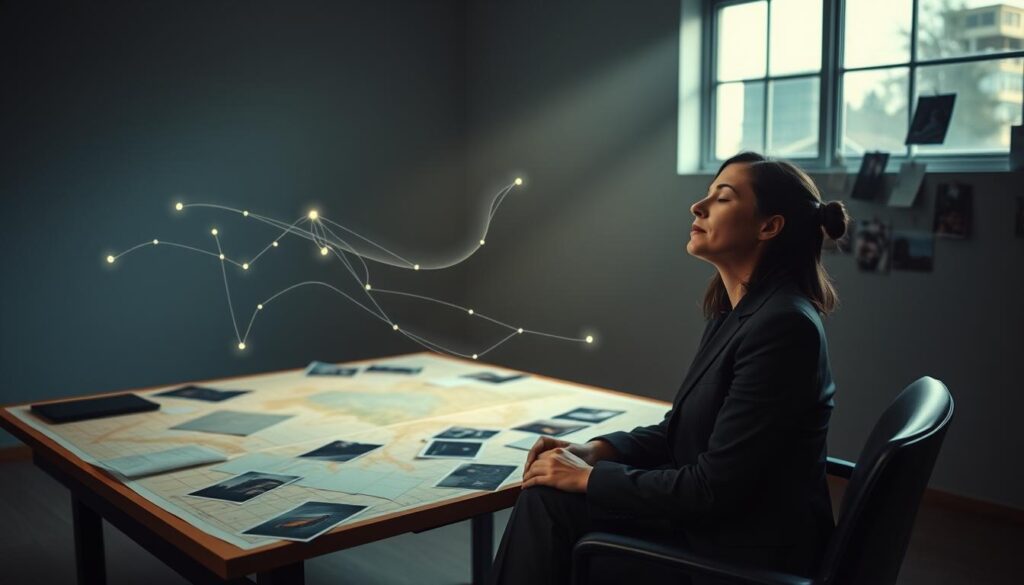
Sessions sent an outbound experimenter to a specific location in the San Francisco Bay area. The subject in the lab then described the place, its atmosphere, and notable features.
Researchers logged each result and compared descriptions to the actual site. Independent judges later scored matches to keep bias low.
- These trials tested a subject’s ability to perceive a distant location without sensory input.
- Careful documentation and blind scoring produced reliable data for later analysis.
- Local targets helped refine protocols before attempting long-distance targets.
The practical value of these local trials was clear: they offered controlled conditions that tightened variables and increased confidence in results. For a broader overview of methods and findings, see a summary of the science behind remote viewing.
| Element | Purpose | Outcome |
|---|---|---|
| Local Bay Area site | Provide verifiable, nearby targets | Clear comparison of description vs. location |
| Outbound experimenter | Act as on-site beacon without contact | Prevented sensory leakage |
| Blind judging | Reduce researcher bias | Objective scoring of matches |
Coordinate Remote Viewing Techniques
Coordinate remote viewing used latitude and longitude as the only cue to a target location. The method tested whether a subject could describe a site without an on-site beacon or prior visits.

The earliest sessions featured Ingo Swann and Pat Price as primary subjects. They produced detailed descriptions of places they had never seen. The team logged descriptions, sketches, and later compared them to actual maps and photos.
Protocols kept sessions strict. Experimenters limited contact, shuffled coordinates, and used blind scoring to reduce clues. This ensured that any matches rested on the sitter’s reported impressions, not accidental cues.
- Core idea: give only coordinates, receive qualitative data.
- Global reach: any location on the globe could be targeted.
- Outcomes: results showed distance did not block the ability to describe targets.
These tests became a central part of the group’s work. The coordinate method expanded the program’s scope and provided important evidence for long-distance target acquisition.
Operational Success at the Semipalatinsk Facility
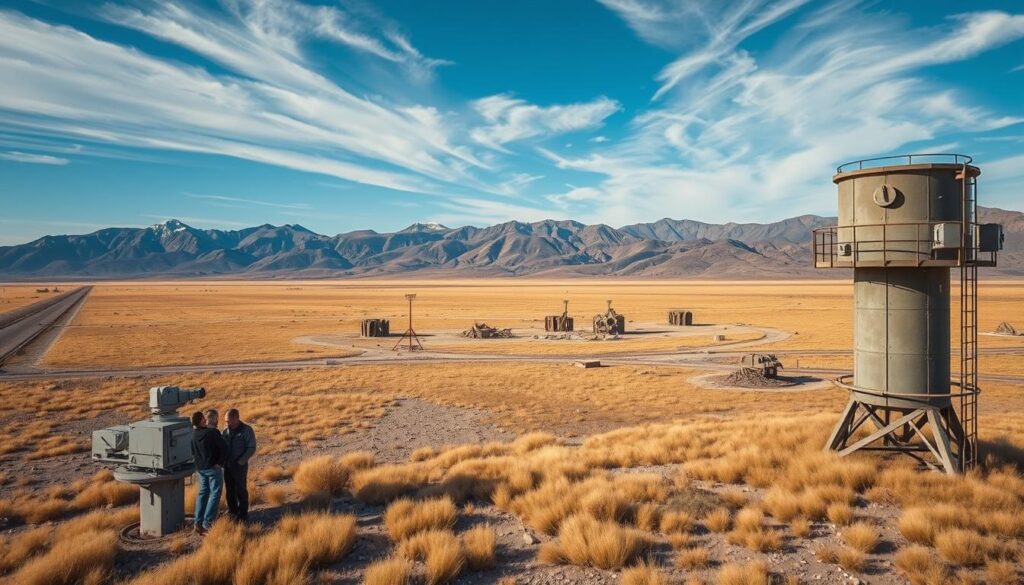
Operational tests at Semipalatinsk gave the team its clearest case of field-grade intelligence collection. In July 1974 Pat Price described a complex industrial site with striking structural detail.
Phase One Procedures
Phase one followed strict protocols. A trained subject received only minimal cues. The team recorded sketches and verbal impressions in real time.
Three phases structured the work: initial description, follow-up clarification, and a final phase that produced data harder to verify but operationally useful.
Verification of Structural Data
Independent analysis later checked the details Price provided. Satellite imagery confirmed a multistory gantry crane on tracks at the target site. The intelligence agency treated that match as significant evidence.
“This test became a major point of interest for the government.”
- Landmark result: the Semipalatinsk case showed field potential beyond lab tests.
- Verified detail: crane and structural layout matched later imagery.
- Expert analysis: a group reviewed the descriptions to assess reliability.
For context on related claims about clairvoyant skills and verification methods, see a discussion of clairvoyant abilities.
Notable Experiments with Pat Price
Pat Price emerged as a standout subject whose sketches and notes often matched verifiable facts. He gained a reputation for giving clear descriptions of distant targets that held up under later checks.
One striking example involved a Palo Alto water purification plant. Price described tanks and structural details that were not visible at the time.
Later, investigators found those same tanks in a 1913 photograph of the site. That discovery became a notable data point for the program and shaped how the team assessed results.
Price was considered one of the most accurate subjects the team ever worked with. His sessions provided useful information and helped test the limits of the phenomena.
“He consistently provided high-quality descriptions that the team logged and verified.”
- Price supplied detailed sketches and verbal notes about targets.
- His descriptions sometimes matched historical records and photographs.
- These outcomes added weight to ongoing research and program reports.
For more context on related claims and verification methods, see an overview of clairvoyant abilities.
The Involvement of Joe McMoneagle
During critical operational weeks, Joe McMoneagle provided descriptions that later matched satellite imagery.
McMoneagle served as a key subject for the Defense Intelligence Agency, tasked with high-pressure target work. He moved from lab sessions to field tasking and often supplied concise data for analysts to check.
One notable example: in 1979 he predicted the construction and launch of a massive Soviet submarine. That fact was later confirmed by imagery, and the result became a central point in program analysis.
His ability to give accurate information about distant sites made him valuable to the intelligence agency. Teams ran tests under tight time limits to see how reliable the data remained under stress.
Experts analyzed his transcripts, sketches, and follow-up notes to verify matches. The careful analysis helped turn single-session impressions into usable leads.
- Worked directly with the defense intelligence agency on operational targets.
- Provided data later corroborated by satellites.
- Examples of his success influenced how the program used viewers in field tasks.
For more on claimed psychic skill and real-world applications, see a review of psychic superpowers.
Scientific Publication and Peer Review Challenges
A 1974 paper placed the group’s data before the broader scientific community and stirred debate.
Russell Targ and Hal Puthoff published “Information transmission under conditions of sensory shielding” in the journal Nature that year. The article reported data that the authors said supported the reality of the phenomena they studied.
The publication was notable and controversial. The editor added a disclaimer about lack of consensus. That note signaled how unusual it was for mainstream journals to print such work.
The Nature Journal Controversy
Critics questioned methods, possible sensory cues, and statistical treatment of data. Supporters argued that results and analysis showed genuine effects worth further study.
The debate made clear how hard it is to get acceptance for parapsychology in standard venues. The group faced intense scrutiny, and the paper became a flashpoint in discussions about chance, bias, and verification.
“Publication in a leading journal exposed methodological questions and intense critique.”
Despite the controversy, the authors and others kept publishing. Their goal was to improve protocols, present clearer evidence, and win broader interest over the following years.
Methodological Flaws and Skeptical Analysis
Skeptical reviews soon focused on how easy cues and post-hoc matching could skew outcomes. Critics, notably Ray Hyman, flagged procedural gaps that made positive results less convincing.
Sensory Cues and Judging
Observers noted that subtle signals—words, gestures, or file labels—could leak information to a subject. Independent judges sometimes saw clear links between prompts and reported content.
Researcher Bias
Expectations and prior notes can shape how data are recorded and scored. Over time, teams risked favoring matches that fit a favored narrative.
The Sharpshooter Fallacy
Post-hoc matching was a major concern: defining a target after a session inflates apparent accuracy. This practice can turn vague descriptions into seeming hits by selective comparison.
These critiques do not end the debate, but they demand stricter protocols, blind scoring, and replication before claiming strong evidence for the phenomena.
| Flaw | Effect | Suggested Fix |
|---|---|---|
| Sensory cues | False positives in results | Strict blinding and sealed files |
| Researcher bias | Over-interpretation of data | Independent scoring and preregistration |
| Sharpshooter fallacy | Post-hoc target fitting | Predefined targets and clear scoring rules |
Replication Studies and Their Findings
Independent teams tried to reproduce key claims to see if the effect was real and repeatable. Many follow-up studies used stricter protocols and blind scoring to avoid obvious cues.
In 1980 Ray Hyman and James McClenon published a well-known replication that found no supporting evidence. Their analysis challenged earlier positive results and raised questions about bias and chance.
Other investigators reported limited success in group settings. Those small wins were often inconsistent and met with skepticism by the scientific community.
- Purpose: test whether individuals could perceive distant targets under varied conditions.
- Outcome: mixed results, with some confirmed matches but many null findings.
- Impact: the data deepened debate rather than settling it.
“Replication attempts were central to evaluating the program’s claims.”
| Year | Team | Finding |
|---|---|---|
| 1980 | Hyman & McClenon | No evidence found |
| Late 1970s–80s | Other groups | Limited, debated successes |
| Years after | Meta-analyses | Inconclusive overall |
The mixed picture kept the program controversial. For more context on claimed abilities and follow-up work see a concise review of psychic powers.
The Role of Parapsychology in Cold War Research
Cold War pressures pushed intelligence services to test unusual sources of information for tactical advantage.
Both the United States and the Soviet Union quietly funded studies in parapsychology to see if the technique could reveal foreign military activity.
The intelligence agency community treated remote viewing as a possible tool to gather information that standard methods could not reach.
Work ran in secrecy. Many people—scientists, military analysts, and individuals trained as viewers—took part in the program.
Goals included checking whether the phenomena produced usable results on real targets and whether chance could explain observed matches.
Analysts ran careful scoring and data analysis to judge credibility. Classified findings kept public scrutiny low but increased internal interest.
“The study of parapsychology during this time shows how science and intelligence can intersect under pressure.”
- Both sides sought a strategic edge.
- Defense intelligence agency teams tested operational value.
- Classified results fueled further study and guarded debate.
Declassification and Public Disclosure
When federal archives published 270 pages in 1995, the hidden history of the program moved into plain sight.
The release came from the central intelligence office as part of a push for greater transparency about past intelligence activity. It marked the first public admission that an intelligence agency had funded this research over many years.

The files from the research institute gave scholars, journalists, and citizens a chance to read session notes, protocols, and analysis. Defense intelligence personnel and other offices helped vet the material before it went public.
The disclosure mattered because it sparked broader, open discussion about parapsychology and government-funded work. For the first time, people could examine data and judge methods for themselves.
- The 1995 declassification made decades of program material available.
- Released reports allowed outside researchers to re-evaluate methods and claims.
- The move increased accountability and renewed public interest in the site history.
“The release of these reports remains a landmark moment in the study’s public record.”
Modern Perspectives on Consciousness and Psi
Recent work looks at consciousness as a field that might carry information beyond ordinary senses. This idea keeps drawing interest from scientists and curious readers across the United States.
Modern researchers study the nature of awareness and its possible link to psi and parapsychology. Some say past program notes offer useful evidence that maps to older Eastern views about mind and awareness.
Practical groups such as an intelligence agency once funded field work, and those archives still spark debate. The defense intelligence community moved on, yet the questions remain alive in academic and public circles.

Ongoing studies try to test non-local models and measure effects under tight controls. Teams hope to turn intriguing reports into repeatable findings.
“Light on old data can guide new methods and clearer tests.”
- Scholars compare old session notes with modern theory to find patterns.
- Public interest fuels new funding and interdisciplinary projects.
- Careful data handling aims to separate chance from real signals.
| Focus | Approach | Likely Outcome |
|---|---|---|
| Consciousness modeling | Laboratory tests with strict blinding | Stronger or null evidence for non-local effects |
| Historical data review | Archival analysis and meta-study | Contextual information and hypothesis building |
| Operational lessons | Evaluation by intelligence agency analysts | Practical guidance, limited operational use |
Conclusion
Even now, the program serves as a complex case study in how intelligence and unconventional study can intersect. The stanford research files and session notes offer striking accounts and usable information for historians and analysts.
The defense intelligence agency and related groups funded and vetted this work. That oversight added practical aims to the study and shaped field tests.
While the scientific community divides on validity, the work produced valuable leads and debate. The research institute’s legacy keeps shaping modern thought on consciousness, human potential, and how we judge unusual claims.
Thank you for reading this balanced overview of a curious Cold War chapter in intelligence and science.