

Extrasensory perception often appears in conversation as a claim that a person can gain information through a sixth sense. J. B. Rhine at Duke University coined the term to group telepathy, clairvoyance, psychometry, and time-related claims like precognition.
The topic mixes fascinating stories with hard questions about scientific evidence. Many phenomena rely on anecdotes rather than controlled experiments. The scientific community has challenged these claims for years, citing poor methods and failed replications.
This guide maps the debate in plain language. You’ll get a clear definition, a quick history, and a look at common abilities people mention, such as telepathy and seeing future events.
We’ll also point to resources where researchers and curious readers can learn more, including a primer on mind powers at mind powers.
Key Takeaways
- Extrasensory perception is a broad label for claimed abilities beyond the five senses.
- J. B. Rhine popularized the term and ushered it into early research.
- Most support comes from stories, not reproducible experiments.
- The scientific community seeks consistent results and clear mechanisms.
- This guide balances curiosity with critical evaluation of bold claims.
What Is Extra Sensory Perception? Defining the “sixth sense” and core abilities
At its core, the claim describes a person reporting knowledge that seems to arrive without sight, hearing, touch, smell, or taste. Researchers shortened that idea to ESP, often calling the group of claims extrasensory perception or psi in lab notes.
Key terms and origins
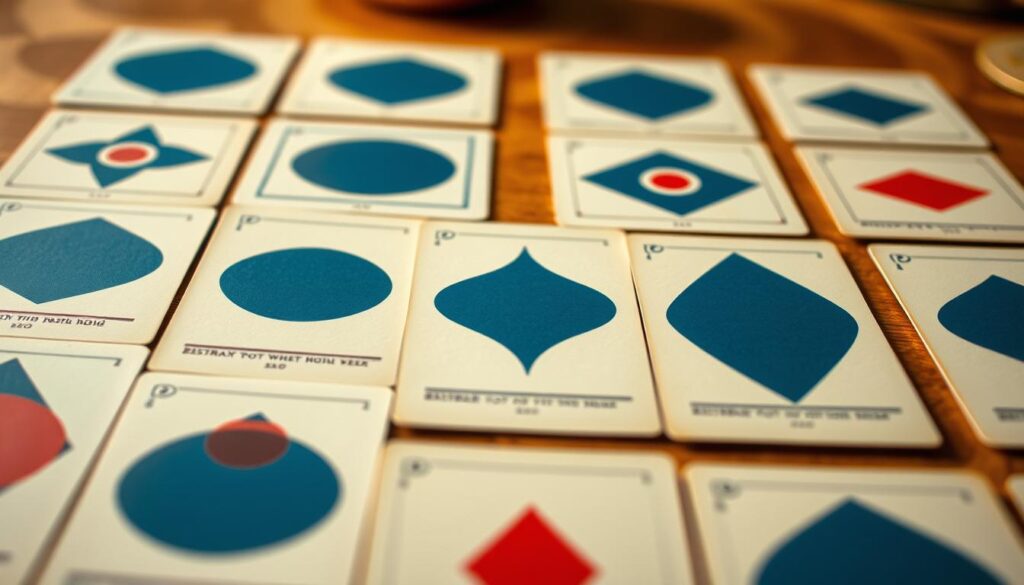
J. B. Rhine at Duke University popularized the term and used Zener cards to turn anecdotes into testable tasks. Rhine’s work framed psi as a set of testable abilities rather than a single mystery.
Core categories explained
Standard categories include:
- Telepathy — mind-to-mind transfer of information.
- Clairvoyance — details about distant people or places.
- Precognition — an alleged ability to know future events.
- Retrocognition — claimed insight into past events.
- Psychokinesis — influence of the mind on physical objects.
“Researchers translate broad claims into narrow tests so outcomes can be measured.”
As an example, an individual might report a sudden image of a loved one and later match it to a real event. Scientists stress that anecdotes like this need controlled experiments and repeatable evidence before acceptance.

| Category | Claim | Test Example |
|---|---|---|
| Telepathy | Share thoughts between two people | Sender views image; receiver guesses under blind conditions |
| Clairvoyance | Know distant details | Identify hidden object in sealed box |
| Precognition | Foresee future events | Predict random target chosen later |
Want a deeper look into claimed abilities and cultural stories? See a practical overview of psychic claims at psychic superpowers.
A brief history of ESP research in the United States
In the 1930s, a set of formal tests at Duke University pushed claims about unseen abilities into lab settings. J. B. Rhine and Louisa E. Rhine used Zener cards — 25‑card packs with five symbols — to turn guessing into repeatable tasks.
Zener cards, card guessing, and dice: the Duke University era
Protocols included sender/receiver telepathy, hidden‑card clairvoyance, and precognition trials where the order was set after guesses. Rhine also tested dice for claims that the mind might influence outcomes.
Early replications, critiques, and allegations of sensory leakage and cheating
Other labs tried to repeat Rhine’s findings over the following years. A notable replication at Princeton by W. S. Cox ran 25,064 trials with 132 subjects and found no convincing evidence of esp.
Critics pointed to simple flaws that can bias experiments. Testers discovered readable card backs, reflections in eyeglasses that let a subject could see symbols, and subtle cues from experimenters that influenced guesses.
“Small procedural lapses can produce misleading results.”
- Why it matters: the place and era show that blinding and randomization were still developing.
- Lesson: rigorous controls are needed to rule out ordinary explanations before accepting claims of existence.
For readers curious about related lab work on mind effects, see a primer on psychokinesis studies at what are pk abilities.
Inside the lab: ESP experiments, procedures, and methodological flaws
Researchers design controlled setups to see whether reported abilities survive rigorous testing. Labs try to make sender and receiver roles, timing, and scoring clear so results are comparable across studies.
How ganzfeld experiments work: sender, receiver, targets, and hits
A typical ganzfeld experiment places a receiver in an acoustically isolated room under red light. Ping‑pong ball halves cover the eyes while white noise plays. A sender in another room focuses on a randomly chosen target image or video.
After a mentation period the receiver ranks four choices. A correct pick equals a “hit.” With four options the baseline chance rate is 25%.

Common methodological flaws: stacking effect, sensory cues, and poor randomization
Methodology problems can create false positives. Closed sequences and trial‑by‑trial feedback produce a stacking effect that inflates results.
Sensory leakage is common: reflections, audible cues, or readable marks on cards let a person infer information they shouldn’t have. Poor randomization or marked Zener cards also bias outcomes.
“Correcting these flaws tends to eliminate apparent above‑chance effects.”
Understanding chance: why marginally higher-than-chance results matter—and when they don’t
Early ganzfeld meta‑analyses reported hit rates around 35%, which drew attention. But later auto‑ganzfeld protocols computerized selection, logged procedures, and reduced human bias.
Small deviations above chance can be promising, but they require strict controls and independent replication before they count as reliable evidence for any phenomena.
- Key procedures: acoustic isolation, proper randomization, pre‑registration.
- Watch for: stacking effects, sensory cues, and poor shuffling.
- Outcome: when flaws are fixed, many apparent effects disappear.
Evidence, replication, and the scientific community’s view
High‑profile experiments and failed repeats have shaped how scientists view claims about seeing future events and other mind claims. The scientific community now weighs single papers against independent replication and transparent methods.
Daryl Bem and follow-up attempts
daryl bem published surprising precognition findings where college students picked future image locations above chance. Those initial results sparked many replication attempts. Most independent labs could not reproduce the same findings, undermining the original claims.
Brain scans, Stargate, and null outcomes
Brainwave and MRI research looked for distinct signals when subjects tried to access targets. A Harvard‑linked MRI study found no neural signature that differed from normal viewing. The CIA’s Stargate remote viewing program also produced results no better than chance and closed in the 1990s.
Meta‑analyses, effect sizes, and methodological rigor
Meta‑analyses offer mixed patterns: early ganzfeld work showed modest hits; later reviews found null effects or much smaller sizes when controls improved.
| Test | Outcome | Key issue |
|---|---|---|
| Daryl Bem precognition | Initial positive; failed replications | Replicability, researcher degrees of freedom |
| Stargate remote viewing | Null (chance level) | Long-term program; no reliable predictions |
| MRI and brainwave studies | No distinct neural pattern | Argues against a measurable signal |
| Ganzfeld meta-analyses | Mixed; small effects shrink with stricter control | Publication bias, methodological flaws |
“Robust scientific evidence requires transparent methods, independent replication, and plausible mechanisms.”
Overall, current evidence does not support reliable existence of extrasensory perception. Researchers prioritize repeatable, well‑controlled experiments. For more on claimed foresight, see this precognition overview.
Beyond the lab: claims, anecdotes, and popular belief in psychic powers
Personal reports of sensing a future event or a distant place spread quickly, even when probability can explain them.

Anecdotes vs. probability
Thousands of retrospective cases exist where a person felt they predicted events. Parapsychology has cataloged many such stories, but memory is unreliable.
Coincidences happen: thinking of a friend then getting a call feels meaningful. Probability ensures some matches by chance, which weakens an anecdote as solid evidence.
Cultural fascination and crime claims
Police and media sometimes consult psychics. High-profile reviews, including government projects, failed to confirm reliable help in investigations.
Why people believe: pattern-seeking, hindsight bias, and shifting details make an example seem uncanny. Many individuals sincerely report an ability see events, yet controlled experiments usually fail to support existence esp.
“Stories can be powerful, but they do not replace rigorous tests.”
- Ask what was known vs. guessed.
- Consider how memory may reshape the story.
- Look for independent tests, not just personal reports.
For a broader look at reported powers and case collections, see supernatural abilities.
Extra Sensory Perception today: research directions, terms, and real-world relevance
Current work emphasizes clear methods and replication. Many labs now require pre-registration, blind scoring, and open data before sharing surprising results. The scientific community remains skeptical because most positive claims fail replication.

State of the evidence
Ongoing parapsychology studies continue, but meta-analytic updates show small or null effects when controls tighten. Researchers stress that a single experiment does not prove existence esp.
Terms and methods to know
- ganzfeld experiments / auto-ganzfeld — sensory isolation tests; computerized targets reduce human bias.
- Sender and receiver — defined roles that must stay isolated during an experiment.
- Zener cards — classic stimulus set still mentioned in method descriptions.
Practical takeaways for U.S. readers
When you read headlines, check for pre-registration, independent replication, and transparent procedures. Small effects near chance need multiple, independent confirmations before they count as evidence existence.
“Replication and strict methodology matter more than single surprising findings.”
| Focus | What to check | Why it matters |
|---|---|---|
| Study design | Pre-registration, blinding, clear sender/receiver setup | Reduces bias and sensory leakage |
| Results | Independent replication, open data | Shows findings are robust and not chance |
| Methods | Use of ganzfeld experiments or auto-ganzfeld, proper randomization | Limits experimenter effects and stacking |
To follow new research taking place, track journals and look for transparent datasets and careful methodology. For related reading on child cases, see psychic children.
Conclusion
Decades of experiments have shaped a clear pattern: reproducible, above‑chance results for a sixth sense remain rare. This guide shows that careful lab work and auto‑ganzfeld trials tend to shrink apparent effects when controls tighten.
Across years of research, the balance of studies points toward null or mixed outcomes rather than robust proof. Claims about extrasensory perception lack strong scientific evidence for widespread acceptance.
Notably, high‑profile work like daryl bem prompted many follow-up tests. Most independent teams could not reproduce the original findings, and methodological flaws help explain how subjects could seem accurate at times.
Final takeaway: stay curious but skeptical. Weigh any single experiment against the wider field, check methods closely, and see detailed notes and psychic signs if you want more background on reported abilities and future directions.