

Remote viewing is a structured practice that helps a viewer gather information about a distant target without using the five physical senses. The method was studied in the 1970s at the Stanford Research Institute by physicists Russell Targ and Harold Puthoff. That formal work gave the practice a clear framework and a way people could test results.
A typical session begins with relaxation to quiet the mind. Next, the viewer sets a clear intention to access impressions of the chosen target. This focus helps capture raw perceptions about a location, object, or events.
With regular practice, a dedicated viewer can refine skill and gather information that often appears beyond chance. This guide includes a clear table of contents and simple forms to help you follow sessions and chart progress.
Key Takeaways
- Remote viewing is a disciplined method for accessing hidden information.
- Early research at SRI by Targ and Puthoff framed the session format.
- Each session needs a calm mind and clear intention for best impressions.
- Consistent practice helps a viewer improve accuracy across targets.
- This guide offers structured forms and a table to track results.
Understanding the Basics of Remote Viewing
Start with a clear picture of the practice: remote viewing is a disciplined method that lets a viewer describe a distant target site using extrasensory perception. This definition frames the work and sets realistic expectations for sessions.

Defining the Practice
Remote viewing is a structured method for accessing information about a place, object, or event that is out of ordinary reach. Ingo Swann and Dr. Harold Puthoff shaped many foundational techniques in the early 1980s. Their work turned impressions into repeatable data.
The Nature of ESP
The nature of ESP suggests the human mind can extend consciousness and gather perceptions from a separated target. With focused techniques, a viewer can capture raw sensory impressions that often yield useful information.
- It is a disciplined form, not a mystical gift.
- Sessions use clear intent and structured forms.
- Many people develop this ability with practice over time.
“A structured session helps separate true perception from guesswork.”
Understanding these basics is the first step toward linking subconscious impressions with conscious reporting.
How to Learn Controlled Remote Viewing Step by Step
Start with short, focused sessions that teach the mind to notice subtle impressions. Keep practice brief and regular; short runs reduce fatigue and sharpen perception quickly.
Commitment matters: follow a consistent training routine and record raw sensory impressions without judgment. The Monroe Institute offers programs that teach the protocol and help people discover an innate ability for this skill.
During a session, the viewer sets a clear intent and lets information arrive. Avoid analysis while noting sensations, shapes, smells, or textures. This form of reporting preserves accuracy.
Use structured methods that guide how you capture impressions, mark uncertainty, and separate guesswork from genuine data. Over time, this approach trains the mind to access details about a target more reliably.
“Disciplined practice turns fleeting impressions into verifiable information.”
Tip: keep a simple log for each session. Track targets, raw notes, and later feedback. That record helps a viewer refine perception and recognize true signals amid mental noise.

The Historical Origins at Stanford Research Institute
In the early 1970s a team at Stanford set out to test whether people could report distant targets under controlled lab conditions.
The work led by Russell Targ and Harold Puthoff produced rigorous experiments that shaped modern remote viewing methods. Those tests asked each viewer to describe a sealed target and record raw impressions during a session.
The Stargate Project later expanded this research. Funded by the CIA and Department of Defense, Stargate used trained viewers to collect intelligence on distant targets.
The results remain controversial. Mainstream science often questions the conclusions, yet the dataset from SRI and Stargate still fuels debate about consciousness and perception across time and space.
“Researchers sought repeatable protocols that could separate genuine impressions from guesswork.”
- Early SRI work created the training framework used by many viewers.
- Stargate applied those methods in practical intelligence trials.
- Analysis of the data offers insight into method and results, if not definitive proof.
| Program | Lead Researchers | Focus | Notable Outcome |
|---|---|---|---|
| Stanford Research Institute | Russell Targ, Harold Puthoff | Testing perception for distant targets | Structured protocols and training |
| Stargate Project | Multiple government teams | Intelligence collection using viewers | Operational trials; debated results |
| Follow-on analyses | Independent researchers | Data review and replication attempts | Continued debate over validity |
For related techniques and experiments with mind-based perception, see move things with your mind.
Distinguishing Remote Viewing from Clairvoyance
Clear definitions make it easier to tell trained protocols apart from spontaneous psychic flashes.
Clairvoyance usually brings spontaneous visual impressions. Those visions can be symbolic and tied to events or people. They are often personal and subjective.
Remote viewing follows a strict form. A viewer records tangible details about a target during a session. The goal is verifiable data, such as shapes, textures, and spatial layout.
This difference matters when setting training goals. A practitioner seeking measurable results should focus on protocol and precise reporting. That approach improves the chance of producing useful information over time.
“Structured reporting separates raw perception from guesswork.”

- Remote viewing uses a repeatable protocol to reduce outside influence.
- Clairvoyance relies on spontaneous impressions and symbolic content.
- Each session in protocol aims for data that can be checked against the target.
| Feature | Remote Viewing | Clairvoyance |
|---|---|---|
| Report style | Structured, objective data | Symbolic, subjective impressions |
| Main focus | Tangible target details | Events, people, meanings |
| Best for | Verifiable research and training | Personal insight and spontaneous vision |
Preparing Your Mind for Successful Sessions
Before a session, brief centering clears clutter and opens a steady awareness. These simple steps quiet mental noise and help a viewer bring focused attention to a chosen target. Consistent practice makes it easier to access subtle impressions.
Meditation Techniques
Meditation calms the mind and reduces internal noise that blocks impressions. Try five minutes of slow breathing, then shift attention to the area between the eyebrows to increase awareness.
Short, regular sessions work best. They cut fatigue and sharpen perception over time. Use gentle body scans and soft breath counts to reach a quiet, alert state.

Setting Clear Intentions
State a simple, specific intention about the target before you begin. A clear instruction guides the mind and limits analytical interference.
Practice this routine:
- Quiet with a short meditation.
- Focus intent on the target area.
- Note first impressions without judging them.
“A quiet mind captures subtle impressions more reliably.”
The Role of the Monitor in Professional Training
In professional training, a monitor acts as a steady guide who protects the integrity of the session.
The monitor keeps the viewer on task and enforces protocol. This role prevents analytical thoughts from drifting into the report and helps the viewer focus on the target. Monitors stay neutral and use brief, nonleading prompts.
Students often rotate into the monitor role during viewing training. This practice teaches them how guidance influences impressions and results. Experiencing both roles builds empathy and sharpens skills for future sessions.
“A skilled monitor provides structure without supplying answers.”
Below is a quick comparison of monitor duties and session benefits.
| Monitor Duty | Purpose | Benefit |
|---|---|---|
| Neutral cueing | Keep protocol pure | Reduces bias in information |
| Time management | Control session length | Prevents fatigue, improves results |
| Feedback handling | Deliver blind feedback | Maintains double-blind integrity |
- Monitors help viewers access impressions without prior knowledge.
- They are central to reliable training and professional work.
Exploring the Six Stages of Controlled Remote Viewing
Each stage guides a viewer along a predictable path, refining raw impressions into precise data.
The six stages offer a structured method for gathering more detailed information about a target across sessions. Stage 1 is the launch point where simple sensory notes appear. As the viewer moves forward, perception shifts from basic colors and shapes toward spatial layout and context.
Stage 6 is the culmination: it allows the creation of a three-dimensional model of the target. That final form helps a viewer map locations and events with depth and relation. This progression reduces noise and raises the chance of useful results.
“A staged approach turns scattered impressions into verifiable insight.”
- This method trains individuals to move from raw impressions to abstract data.
- Research at the Stanford Research Institute helped shape the six-stage framework.
- Mastering the stages gives remote viewers a repeatable way to access targets and capture meaningful data.
For deeper background on related abilities, see psychic superpowers.
Mastering Sensory Impressions in Early Stages
Early sessions center on pure sensation—colors, textures, and small shifts in temperature that arrive before any mental label.
Record these hits immediately. A viewer who writes down raw impressions preserves data that often fades as analysis kicks in.
Keep each note brief: color names, texture words, simple temperature cues. That practice reduces mental noise and protects perception from fast guesses.
Over time, this training builds a reliable foundation. Accurate basic impressions help the viewer form clear maps of a target without relying on belief or memory.

Each session is a chance to refine discipline. Track repeated impressions and compare them with later feedback. That record raises the quality of the information collected and the value of future data.
“Small, honest notes taken quickly often hold the key to larger discoveries.”
For more on related abilities and context, see clairvoyant abilities meaning.
Developing Dimensionality and Sketching Skills
This phase asks the mind to sense how a target fills space, not just what it feels like.
Stage three trains a viewer to note height, width, and volume. Sketching helps externalize those impressions quickly. Draw simple outlines, blocks, or cross-sections even if you lack formal art skills.
Use short sessions for practice. Each session gives time to refine spatial reports and reduce mental noise. Over repeated runs, sketches become clearer and match later feedback more often.

Why sketching matters:
- It turns fleeting visual impressions into usable data.
- Sketches show how a target occupies space and relate parts to the whole.
- Simple drawings help viewers verify accuracy against actual targets.
“Visualizing volume brings raw impressions into measurable information.”
| Skill | What it captures | Benefit |
|---|---|---|
| Dimensional sensing | Height, width, depth | Clearer spatial data |
| Quick sketching | Shapes, relationships, scale | Better verification later |
| Practice routines | Timed sessions, repeat trials | Reduced noise and stronger access |
Accessing Abstract Data in Advanced Stages
Stage four and beyond shift perception from raw senses toward meaning and context. In these advanced levels, remote viewing moves past colors and textures. A viewer begins to register themes like origin, era, or purpose rather than simple objects.
Abstract data can label a target as “foreign” or “historical.” That information requires the mind to process complex links. It also asks the viewer to hold impressions without adding quick judgments.

This phase demands focused training. Keep sessions short and steady to limit analytical noise. Each session is practice in translating vague concepts into useful information about targets.
“Mastery at this level lets viewers supply insight that goes beyond basic sensory or dimensional reports.”
- Advanced stages enable perception of complex concepts tied to the target.
- High focus reduces overlay and preserves clean impressions.
- Repeated practice builds the ability to access deeper data and meaningful context over time.
Utilizing Modeling for Complex Target Perception
Modeling brings a tactile dimension that helps a viewer map complex spatial links in three dimensions.
Stage 6 often uses modeling compound, clay, or simple materials so a viewer can shape volume, cavities, and relative positions. The physical act anchors fleeting impressions and makes subtle relationships easier to report.
Creating a small sculpture during a session helps reduce analytical noise. As the viewer shapes forms, information becomes clearer and data quality improves.
Benefits for training:
- Solidifies perception of unusual or layered targets.
- Reveals spatial details that sketches miss.
- Improves accuracy when later comparing results with feedback.
“A hands-on model can turn vague impressions into verifiable structure.”
| Technique | What it captures | Training benefit |
|---|---|---|
| Modeling compound | Volume, internal cavities, relationships | Better three-dimensional data |
| Quick sculptures | Relative scale and proximity | Faster verification across sessions |
| Repeated sessions | Refined texture and feature detail | Lower noise; improved access to information |
Viewers who include modeling in their practice often report clearer impressions and more reliable data over time. For complementary skills and energy work, see send healing energy.
Overcoming Mental Noise and Analytical Overlays
Noise from memories, guesses, and inference is the single biggest obstacle between a viewer and accurate target information.
Recognize the sources of interference. Mental noise appears as quick stories, familiar images, or neat explanations that jump in before impressions settle. These overlays distort raw data and mimic valid perceptions.
In CRV work, managing subconscious interference is central to clean results. The method trains a viewer to pause, note an impulse, then mark its certainty without expanding it into a narrative.
Managing Subconscious Interference
Use short anchors during a session. Label impressions as sensory, spatial, or emotional. That brief tag keeps the mind from glossing impressions with memory or logic.

“A simple label often stops the mind from turning a fleeting hit into a confident but false story.”
- Stay aware of guessing and stop analysis early.
- Record raw impressions first; refine later.
- Practice consistent form and feedback routines.
| Interference Type | Sign | Best Response |
|---|---|---|
| Guessing | Fast, confident labels | Mark as low certainty; move on |
| Memory overlay | Familiar scenes or faces | Note similarity, avoid naming |
| Analytical story | Logical explanations appear | Pause; return to raw senses |
Each session becomes a training moment. Over time, remote viewers gain steadier access to target impressions and produce more reliable data across varied targets.
The Importance of Double Blind Protocols
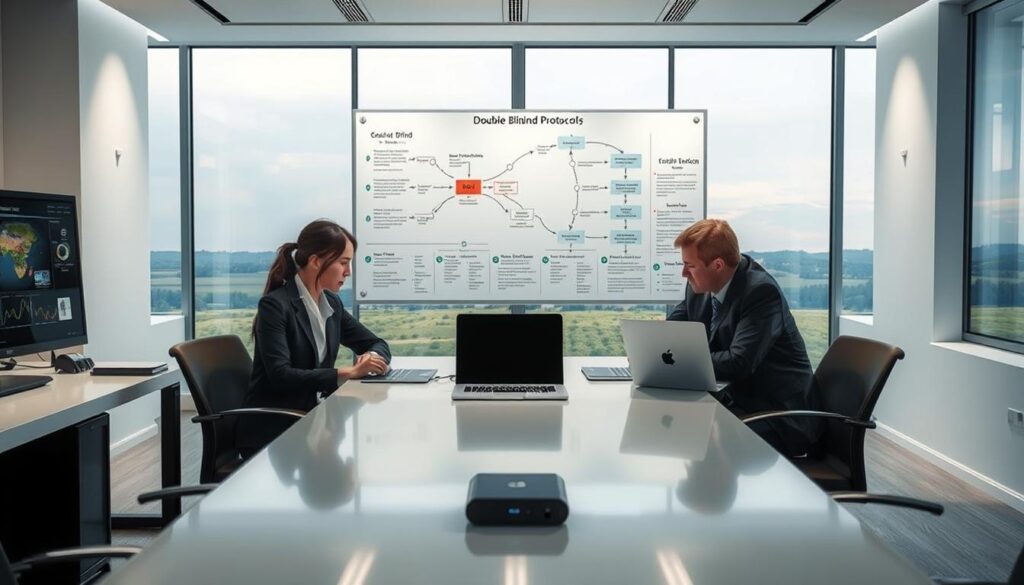
When neither participant nor guide knows the target, bias has far less room to influence reports. That safeguard is the core of double-blind testing and protects the integrity of a session.
A true double-blind keeps both the viewer and monitor unaware of target identity. This prevents subtle cues or personal expectations from shaping impressions. It also reduces the chance that noise will be mistaken for valid data.
Joe McMoneagle, a well-known practitioner, has taken part in many double-blind experiments. His work shows how strict protocols improve the credibility of results in professional research situations.
- Eliminates subconscious bias by hiding target details from both parties.
- Produces higher-quality data that can be checked and repeated.
- Prepares viewers for real-world situations where accuracy matters.
“A rigorous blind protocol is the gold standard for research and experiments in perception work.”
For further context on credibility in psychic research, see clairvoyant abilities real or fake. Adhering to these standards helps the field earn documented results over time.
Common Myths Surrounding Psychic Abilities
Misunderstandings often shape how people view extrasensory work. Myths can make the practice seem dangerous or guaranteed. A clear, calm look helps set realistic expectations for anyone exploring this field.

Debunking Dangerous Myths
Practiced safely, this kind of meditative work is no more harmful than common mindfulness routines. With proper guidance, a session rarely causes lasting distress.
Most risks come from suggestion, not the practice itself. Proper form and an experienced guide reduce anxiety and protect mental focus.
Reality of Accuracy
Accuracy is not guaranteed. Even seasoned remote viewers report vague or incorrect impressions in many sessions.
- Science treats the field as unproven, though controlled data draws interest.
- Results vary by person, target, and noise in the mind.
- Grounded practice and honest record keeping improve chances over time.
Focus on method, not myths: that shift helps many people gain clearer access to impressions and more useful data. For basic training resources, see psychic development techniques.
Spiritual Benefits of Consistent Practice
Regular practice often opens a quiet doorway into deeper spiritual awareness. Practicing remote viewing with calm intent can expand a viewer’s sense of self and place in the universe.
Many people report that steady work strengthens daily focus. The mental discipline gained in each session often carries into relationships, work, and decision making.
With time, repeated viewing can deepen inner life and sharpen intuition. A dedicated viewer finds greater balance and clearer access to subtle impressions that guide choices.

- The practice builds an expanded awareness of consciousness and meaning.
- Consistent sessions help improve concentration and life balance.
- Many people note that ability to access intuition becomes stronger.
“Each session can be more than data collection; it is a path toward personal growth.”
Beyond gathering information about a target, remote viewing often becomes a spiritual routine. Over time, results include calmer presence, richer awareness, and subtle shifts in how a person meets the world.
Conclusion
Every journey toward mastery asks for steady practice and honest record keeping. Mastering remote viewing takes patient time and a clear protocol. Treat each session as an opportunity to refine skill and note what works.
A dedicated viewer builds ability over months and years. The history from early research to modern training shows that disciplined practice helps people gain reliable access to target details.
Use the table of notes you already keep, review outcomes with care, and stay curious. For structured support and training options, consider psychic development services that match your goals.