

This short guide introduces two ways people claim to access distant targets. One uses a formal protocol and training, while the other relies on an inner sight that can appear spontaneously.
Longtime practitioners say remote viewing is earned, not stumbled on. Many veteran viewers report that once you practice the method, it reshapes how you experience life and perception.
We will outline how each path gathers hidden information, how time has changed study methods, and why some professionals call their craft by a specific name. If you want context on inner sight, you can learn about clairvoyant abilities to see how the terms are used in practice.
Key Takeaways
- One approach follows strict steps and training.
- The other often seems spontaneous and inner-led.
- Experienced viewers say practice reshapes perception.
- Historical study and time have refined methods.
- Explore evidence and decide what fits your view.
Defining the Core Concepts
Clear definitions help readers separate an innate inner sight from a trained protocol that targets distant locations.
The Nature of Clairvoyance
Clairvoyance is often described as the ability to perceive a remote or hidden object without physical senses. Many traditions treat it as an innate talent. In Indian Yoga, skilled practitioners called this Divya Drishti.
Understanding Remote Viewing
Remote viewing is a structured system that trains a person to acquire information about a spatially remote location. Protocols guide a viewer to describe a target that is hidden from their sight. J.B. Rhine coined the term ESP in 1934 to group such phenomena under research methods.

| Feature | Clairvoyance | Remote Viewing |
|---|---|---|
| Origin | Often innate; cultural records exist | Developed as a repeatable system |
| Approach | Fluid, spontaneous insight | Protocol-led steps and feedback |
| Common use in experiments | Individual reports, case studies | Controlled trials with targets and viewers |
| Goal | Perceive hidden object or scene | Gather usable information about a location |
Historical Origins of Psychic Perception
From ancient script to mid-20th century labs, accounts of inner sight form a long record. Patanjali’s Yoga Sutras, written around 400 B.C., names the first of the ashta-siddhis and links higher perception to disciplined practice.
Centuries later, interest renewed during the Human Potential Movement, when people explored the limits of the mind. In the early 1970s, Harold Puthoff and Russell Targ began formal research at the Stanford Research Institute, aiming to test psychic abilities with controlled experiments.

The team chose the term remote viewing to mark a specific system and set of techniques. That work helped shape protocols used by remote viewers to gather impressions with the inner eye.
Across the world, ancient texts and modern experiments describe similar phenomena: impressions, unseen energy, and a mind that can reach distant targets. These historical roots explain why some scientists remain skeptical while others continue to test the system and its practical uses.
Exploring the Difference Between Controlled Remote Viewing and Clairvoyance
What sets the two approaches apart is the amount of structure a practitioner uses while attempting to perceive a target.
Remote viewing relies on a stepwise protocol. Practitioners follow phases that guide attention, record impressions, and receive feedback. This framework aims to reduce bias and make the gathered information verifiable over time.
By contrast, clairvoyance is more spontaneous. An individual may receive clear images or senses without formal steps. That freeform quality can feel authentic but is harder to test in laboratory setups.

Researchers refined the structured method for practical use in intelligence and other fields. The goal was to make results repeatable and to limit imaginative contamination of reports.
- Protocol-led practice promotes consistency and measurable outcomes.
- Intuitive perception favors quick impressions and a flatter hierarchy of control.
Which path to choose depends on goals. If you need consistent, testable output, a disciplined approach often fits better. If you value spontaneous insight, an intuitive method may feel more natural. For more on psychic powers and how they differ in practice, see psychic superpowers.
Methodological Approaches in Remote Viewing
Method choices shape how practitioners collect and test impressions of distant sites. Over time, teams refined stepwise workflows so a person can report with less bias.
Structured Protocols
Protocols break a session into clear steps: orientation, impression capture, and recordkeeping. The stanford research teams developed scoring systems to compare reports to known targets.
The Role of Coordinates
Using coordinates or coded cues isolates a target location and reduces suggestion. Joe McMoneagle often used geographic markers in field work to focus a viewer’s attention.
Target Selection
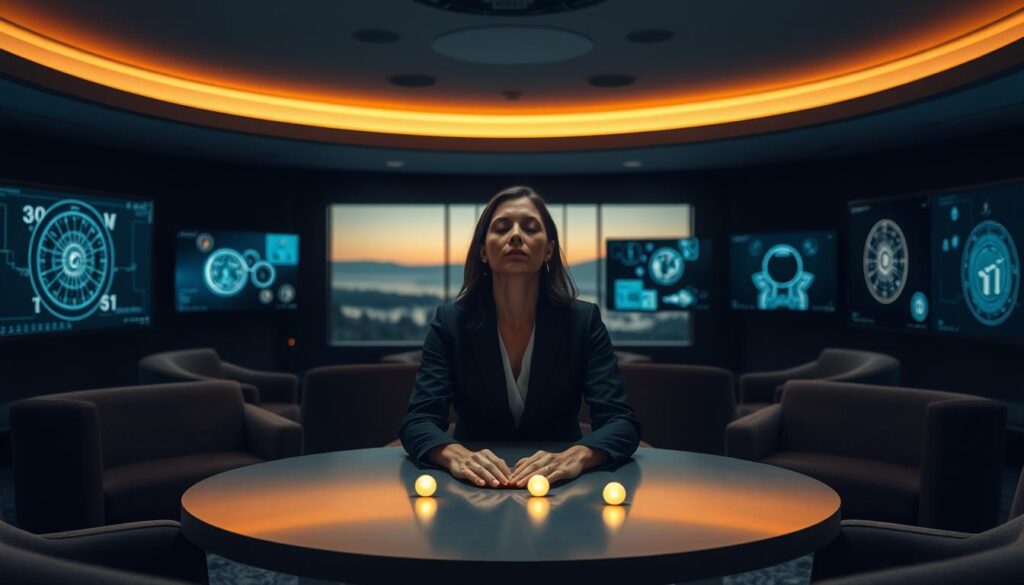
Random target selection and blind assignment prevent bias. Famous cases like Pat Price’s 1974 description of Rinconada Park show how precise results can occur.
- Order and technique help distinguish actual impressions from imagination.
- Ingo Swann’s Jupiter experiment is an example of applying methods to a novel target.
- Rigorous experiments improve the chance that the information a viewer gives is verifiable.
The Role of Consciousness in Distant Perception
Many researchers now ask whether consciousness itself might stretch past normal spatial limits to gather information at a distance.
Proponents suggest that remote viewing is an active use of the mind that taps a universal field of energy. This view treats perception as non-local and flexible across time.
Unlike passive clairvoyance, which often feels like images arriving unbidden, structured remote viewing emphasizes deliberate attention and intentional reporting.

- The mind may access past, present, or future impressions (retrocognition).
- Active protocols aim to reduce personal bias and sharpen usable data.
- Ancient traditions and modern research both explore a non-local model of awareness.
“The notion that perception can transcend place is central to many schools of thought.”
While skeptics press for stronger proof, studying how consciousness links to the environment helps explain why some sessions produce verifiable results. For a practical look at claims and tests of inner sight, see clairvoyant abilities real or fake.
Scientific Investigations and Skeptical Perspectives
Careful analysis of classic studies exposed flaws that reshape how we read reported successes. Early experiments often lacked tight controls, which led critics to probe the methods closely.

David Marks and Richard Kammann reviewed 1970s material and found that judge notes sometimes contained clues about the order of targets.
The Impact of Sensory Cues
Sensory cues in transcripts can let a judge match a report to a target without any paranormal factor. When those cues are removed and strict blinding is enforced, many experiments drop to chance levels.
Skeptics stress that independent replication is vital. Without consistent replication under tight conditions, the wider scientific community remains cautious.
| Issue | What investigators found | Impact on results | Recommended fix |
|---|---|---|---|
| Judge bias | Notes revealed order clues | Inflated hit rates | Full blinding of judges |
| Transcript leaks | Contextual hints present | Matchable impressions | Redact identifying info |
| Replication | Mixed independent attempts | Inconsistent outcomes | Standardized protocols, open data |
| Sensory control | Insufficient isolation | False positives | Stricter physical and procedural controls |
Conclusion: Examining the data helps explain why debate continues. For another look at eyewitness-style claims and inner sight, see clairvoyant visions.
Operational Applications in Intelligence Programs
Efforts to harness non-ordinary perception for national security produced a notable, costly experiment.
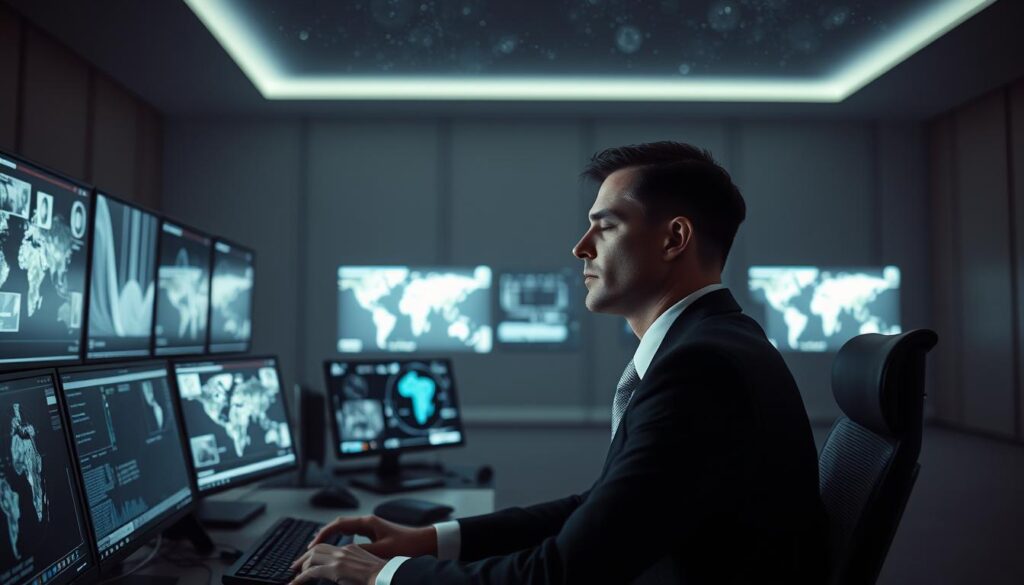
The Stargate Project ran from 1975 to 1995 as a U.S. government program that cost about $20 million.
Paid viewers such as Pat Price and Joe McMoneagle were asked to focus on specific targets and report usable information.
In 1974 Pat Price gave detailed impressions of the Semipalatinsk nuclear site in the Soviet Union. In 1979 Joe McMoneagle famously predicted the launch of a large Soviet submarine.
These episodes showed how people in the program believed psychic abilities could yield strategic advantage.
Evaluators later concluded the project did not produce reliable, actionable results and closed the work in 1995. Still, researchers and enthusiasts study the archived data to learn more.
“The legacy of Stargate sits at the intersection of intelligence, science, and controversy.”
- Tasking: Focus a person on a target place with clear instructions.
- Outcome: Some striking hits, but inconsistent operational value.
- Legacy: Ongoing interest in archived data and reported phenomena.
| Program | Years | Notable viewers | Notable target |
|---|---|---|---|
| Stargate Project | 1975–1995 | Pat Price, Joe McMoneagle | Semipalatinsk nuclear site; Soviet submarine launch |
| Operational focus | Field tasking | Trained remote viewers | Intelligence location and target data |
For readers curious about the people who offered impressions in these programs, see clairvoyant readings for related accounts and services.
Challenges in Replicating Psychic Phenomena
Many labs find that initial successes often fade when experiments are run again with tighter controls.
Consistency is a core problem. The American Institutes for Research reviewed the Stargate program in 1995 and found the project did not yield usable intelligence data.
Other teams report positive outcomes. For example, the PEAR lab logged 336 formal trials by 1989 and published a composite z-score of 6.355. Yet critics question protocol and interpretation.

Variations in conditions, the way targets are selected, and how impressions are scored all shape results. The decline effect—where success slips over time—also complicates replication.
Independent work matters. When people outside the original program repeat tests with strict controls, findings carry more weight.
- Method differences can produce conflicting data.
- Clear standards help others judge outcomes.
- Careful experiment design reduces accidental cues.
| Issue | Example | Impact | Recommended Fix |
|---|---|---|---|
| Inconsistent methods | Different scoring across labs | Conflicting results | Standardized protocols |
| Decline effect | High initial hits, then drop | Unstable evidence over years | Longitudinal replication |
| Protocol critique | PEAR vs. skeptical analyses | Debate over data validity | Open data, third-party review |
“Analyzing varied data shows why this work remains controversial.”
For more on inner sight and related claims, see clairvoyant powers and abilities.
Conclusion
Practical value depends on whether a trained viewer can reproduce usable information about a specific target under tight conditions. Tests and research have produced mixed results, so many findings invite careful scrutiny.
One approach uses protocol to shape how a person reports impressions, while another emerges more spontaneously as inner sight labeled clairvoyance. Both raise questions about the role of consciousness in perception.
Historic efforts like Stargate show ambition and limits: notable hits exist, yet consistent operational worth remains unproven. Stay curious, weigh the evidence, and judge claims with clear standards.