
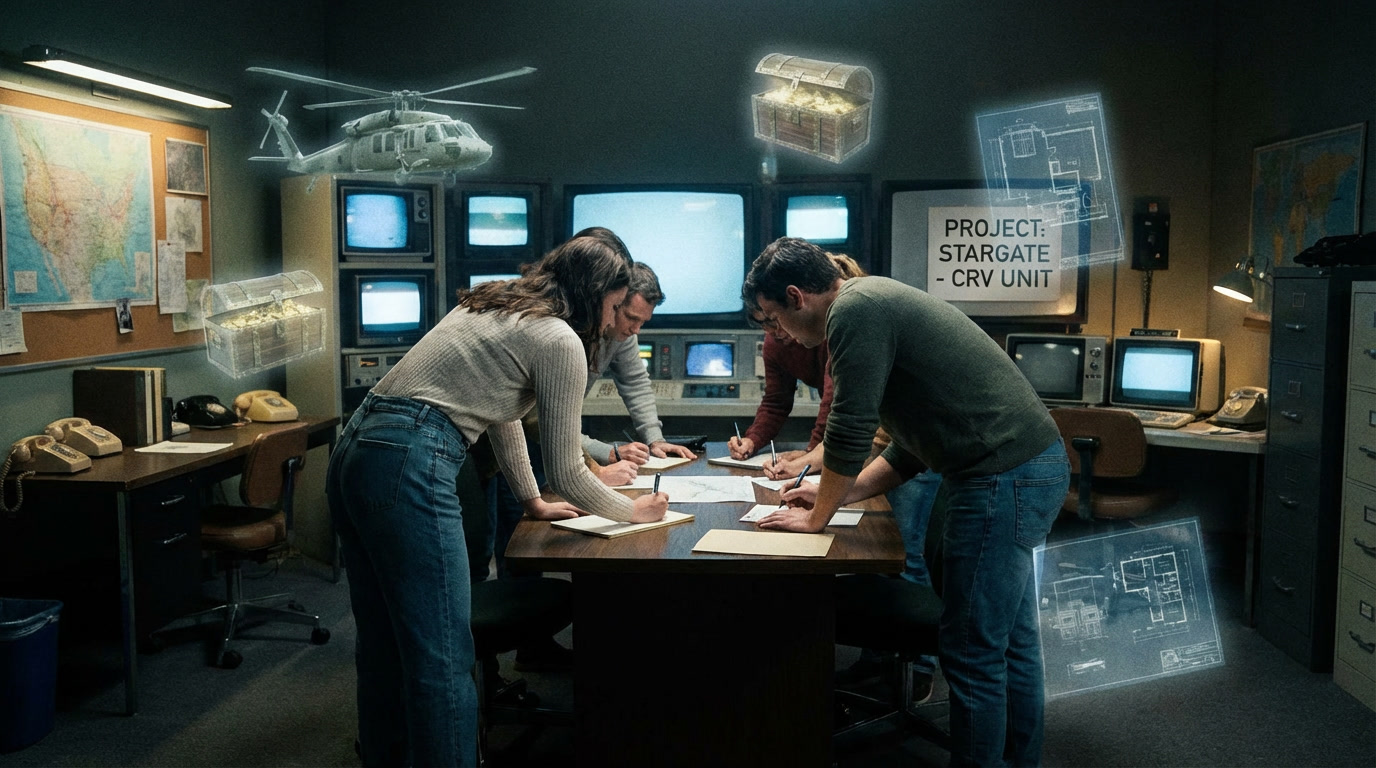
This introduction explains a clear process for evaluating remote viewing work. It draws on classic research and protocols that shaped early studies at places like the Stanford Research Institute.
Understanding the viewer and the target matters. Protocols set strict controls so that each session yields fair data and the judge can compare descriptions to photos without bias.
We outline methods used over the years to count hits and misses, report scores, and analyze whether observed effects go beyond chance. The guide also highlights common sources of bias and practical steps that raise reliability and confidence in results.
Expect a concise look at protocols, analysis methods, and historical examples that make evaluation practical and clear. This sets the stage for deeper sections that follow.
Key Takeaways
- Learn the standard protocols that reduce bias and protect data integrity.
- See how scoring and judges compare descriptions to targets in trials.
- Review historical projects that shaped modern research methods.
- Understand common pitfalls when counting hits, misses, and chance effects.
- Gain practical tips for clearer reports and more reliable analysis.
Understanding the Foundations of Remote Viewing
The early era turned intuition into protocol, laying out clear steps for a viewer to describe a sealed target and produce testable data.
Historical Origins
Ingo Swann framed remote viewing as a structured experiment where intuitive abilities could be tested for scientific evidence of nonlocal perception.
The Stanford Research Institute then developed strict protocols during the 1970s. These methods guided projects that coordinated with U.S. agencies and ran for years.

Scientific Principles
Researchers examined psi phenomena such as telepathy and out-of-body reports. They treated each session as part of an empirical study.
Every successful session depended on a clear response from the viewer and an objective match against a photo or set of targets.
“The process shifted anecdote into testable steps, making scoring and analysis possible.”
- Structured methods improved reliability and confidence in reported effects.
- Early studies produced data that shaped later trials and scoring methods.
- Describing a target remained a central part of the scientific method for these tests.
How to Measure Success Rates in Remote Viewing Experiments
Objective scoring across batches of sessions reveals whether a viewer’s responses rise above chance.
Large samples matter: many published studies aggregate dozens of trials so patterns emerge. One set of ARV work included 86 completed trials and 220 transcripts from sporting and financial events. That number lets judges spot repeatable trends.
The standard process asks a judge to match a session transcript to a sealed photo or set of targets. This comparison yields a numerical score for each session.
Statistical checks then estimate the probability that the observed results come from random guessing. Low probability values support the claim that psi effects are present.
“If a viewer consistently identifies the correct target, that pattern becomes strong evidence rather than an anecdote.”
- Use blinded judging and clear scoring scales.
- Report raw data and aggregate scores for transparency.
- Ask specific questions about reliability and confidence for each project.

The Role of Blind Protocols in Research
When programs lock down target access, the resulting records are far cleaner for analysis and scoring. That separation is a core part of scientific work with remote viewing.

Blinding Procedures
Good blinding keeps the judge unaware of target identity. This reduces cueing and limits bias that can creep into transcripts.
Programs use sealed envelopes, random target lists, and independent handlers. Each step separates viewer, judge, and target information.
- Sealed assignment: A neutral agent prepares random targets before any session.
- Blinded judging: Judges score transcripts without photos or with shuffled sets of photos.
- Audit trails: Logs record time, handler actions, and any exchanges of information.
“Clear concealment of target cues makes analysis more reliable and narrows the possible sources of bias.”
| Procedure | Purpose | Expected Benefit |
|---|---|---|
| Random target list | Remove pattern prediction | Lower chance matches |
| Independent judge | Blind scoring | Reduced bias in results |
| Sealed documentation | Protect information flow | Stronger data integrity |
These methods help isolate any psi effect and offer clearer evidence for review. Careful control for each session keeps the number of correct matches from being merely random or procedural.
For background on related findings and evaluation of clairvoyant claims, see clairvoyant abilities.
Analyzing Qualitative Data and Transcripts
Careful reading of session reports uncovers descriptors and sketches that point toward a specific target. Judges look for repeated motifs, sensory phrases, and concrete nouns that match a photo or site.
Start by coding key elements: list nouns, colors, textures, spatial cues, and any drawn shapes. Compare those notes with the set of photographs and the sealed target image.
Scoring stays consistent when researchers apply a fixed rubric. That rubric may weight sketches, specific object names, and unique combinations more heavily than generic terms.
For example, a viewer sketch showing a red lighthouse and rocky shore will be compared against photographs. A judge assigns a score based on matching features and overall gestalt.
“Focus on the quality of descriptors; one precise detail can carry more evidential weight than many vague phrases.”

- Use consistent criteria across trials for fairness.
- Record scores and raw data for later analysis.
- Report confidence and any ambiguous matches for transparency.
Introduction to Associative Remote Viewing
Associative Remote Viewing (ARV) is a predictive method created by Stephan Schwartz that pairs discrete photos with possible future outcomes. This technique asks a viewer to describe the photo that will match an upcoming event.
The program has roots in the Stanford Research Institute and adapts standard protocols for predictive testing. By linking binary or multiple outcomes to specific images, researchers build a controlled test of psi.
In ARV the target is separated across time: the viewer describes an image they will see later, so the session functions as a forecast rather than a conventional match to a present photo.
“ARV converts prediction into a repeatable trial by tying future events to distinct visual targets.”
Why this matters: ARV yields countable results and makes it possible to analyze whether observed effects rise above chance. That numeric data supports transparency, analysis, and confidence in findings.
| Feature | Purpose | Benefit |
|---|---|---|
| Paired photos | Link outcomes with images | Clear choice for scoring |
| Time-separated target | Make prediction testable | Reduces present-cue bias |
| Binary/multiple options | Create simple analyses | Facilitates statistical review |

Establishing Effective Judging Procedures
Clear, repeatable judging rules make the difference between anecdote and analyzable data. A compact, written protocol helps maintain fairness across every session and keeps bias low.
Start with independent scoring. Have two or more judges read each transcript without seeing identifying information. They should assign a numerical score and note a brief rationale for that score.
Independent Judging
Independent judges reduce cueing and protect the integrity of the process. Each judge records a confidence level alongside their score.
Use sealed target lists, shuffled photo sets, and time-stamped logs so no judge has extra information that could influence their response.

Consensus Methods
After independent scoring, convene a short review where judges compare notes. If several judges independently select the same target, that agreement becomes stronger evidence for the session.
Consensus methods can include majority vote, weighted averages by confidence, or an adjudicator who resolves ties using pre-set rules.
“When multiple evaluators converge, the number of spurious matches falls and reliability rises.”
- Record raw scores, confidence marks, and final consensus.
- Report disagreements and rationale for transparency.
- Keep the process audit-ready for later analysis.
The Importance of Inter-Rater Reliability
Consistent scoring across judges is the backbone of reliable remote viewing research. When judges assign similar scores, the session’s data gains weight as evidence rather than opinion.
A recent study found judges were in 100% agreement in only six of 86 trials (6.9%). That low number highlights the need for better training and standardized methods.
Without high reliability, reports lose clarity. Disagreement makes it hard to present results that other researchers can verify. Scores then reflect individual interpretation instead of a shared reading of the response.
Researchers improve reliability by using clear rubrics, practice rating sessions, and blind comparison of transcripts against the target photo set. These methods help judges agree on which descriptors match a target and why.
Inter-rater checks build a stronger body of evidence for psi phenomena. When multiple judges converge, an experiment’s analysis, number of matches, and final report become more persuasive to other studies and to reviewers.

“Agreement among independent judges is a key part of showing that an effect is real rather than anecdotal.”
- Train judges with sample sessions and scoring rubrics.
- Use blinded photo sets to cut cueing.
- Record disagreement and resolve it with pre-set rules.
Managing Predictions and Passing Protocols
A clear pass policy protects the integrity of a project when a session yields ambiguous data. Teams decide ahead of time when a viewer issues a forecast and when they call a pass based on confidence thresholds.
Calling a pass removes low-quality sessions from aggregated results and keeps the overall analysis cleaner. This practice helps ensure that reported evidence reflects genuine effects rather than noise or chance.
The judge plays a key role. They examine the viewer’s response against the sealed target and note whether descriptors, sketches, or a photo match are strong enough for a score.
When information is thin, a pass preserves credibility. That prevents a single weak session from skewing study outcomes or confusing later analysis.
- Set confidence cutoffs before each session.
- Record passes and the reason for each decision.
- Keep all logs blind and time-stamped for transparency.
“A strict passing protocol lets researchers separate clear matches from ambiguous material and keeps the analysis honest.”

For practical guidance on running a program with clear protocols, see local readings for an example of documented procedures and client-facing records.
Evaluating Statistical Significance in Trials
A simple probability test can show whether a cluster of hits is unlikely under random guessing. This step turns scored sessions into interpretable results for a project.
Binomial probability testing is the standard method used across many studies. It treats each trial as a yes/no outcome and calculates the chance of observing a given number of hits under a defined baseline.
Applying the Test
Start with the judge’s score for each session. Convert scores into binary outcomes: a match or not a match, using pre-set thresholds.
Then use the binomial formula to find the probability of that number of matches across the set of trials. Low probability values suggest the observed effect is unlikely due to chance alone.
Aggregating data from many sessions improves statistical power. Small samples can yield misleading swings, while larger numbers reveal consistent trends.
“Rigorous analysis helps separate genuine signal from noise and reduces the influence of bias.”
- Define chance level before running the test.
- Keep judging blind and document all scores.
- Report p-values, effect size, and raw data for transparency.

The Impact of Feedback on Viewer Performance
Feedback after a session can reshape a viewer’s expectations and shift later transcript content.
Researchers debate whether showing the correct photo improves future performance or simply trains responses. Some studies report that revealing the target strengthens an emerging psi effect, perhaps by reinforcing patterns the viewer unconsciously follows.
Other trials show little difference when feedback is withheld. Those data suggest that providing information does not always change overall results or the number of accurate matches over time.
What matters for project design is careful tracking. Teams should log which sessions included feedback, the timing of disclosure, and any changes in viewer behaviour.
Analyzing that information across a set of trials helps reveal trends. Clear records let a judge and analysts test whether feedback creates learning, bias, or merely random variation.

“Transparent logs and consistent rules make it practical to separate genuine effects from training artifacts.”
- Record feedback timing and content for every session.
- Compare blinded sessions with feedback sessions in the same study.
- Report both raw data and any post-feedback shifts for transparency.
| Aspect | With Feedback | Without Feedback |
|---|---|---|
| Immediate learning | Often observed | Rare or absent |
| Long-term change | Variable across studies | Sometimes stable |
| Bias risk | Higher if uncontrolled | Lower with strict blinding |
Lessons from Historical Research Projects
Decades of recorded trials reveal patterns that teach modern teams which methods yield the clearest results.
Major projects offer clear examples. Greg Kolodziejzyk ran 5,677 ARV trials from 1998–2011 and reported a significant z = 4.0. That large number of sessions gives weight to statistical analysis and shows the value of persistent data collection.
Earlier work mattered too. In 1982 Keith Harary and Russell Targ used ARV to make nine consecutive forecasts for the silver futures market and realized about $100,000 in gains. Those reports highlight practical applications where careful protocol met reliable results.
Common takeaways include strict blinding, redundancy checks, and clear pass rules. Targ’s 1985 redundancy protocol is a good example of improving procedures so judges and viewers produce cleaner reports.
“Each project acts as a case study that answers questions about reliability and provides evidence for repeatable effects.”
- Large sample sizes support stronger analysis.
- Rigorous protocols lower chance matches.
- Transparent logs help judges compare transcripts and photos.

For background on related findings and extra context, see extra-sensory perception.
Addressing Displacement and Target Similarity
Sometimes a viewer’s response points at a nearby or similar photo rather than the intended target, creating displacement.
Displacement happens when a remote viewing description fits another image in the set. This often occurs because that photo feels more vivid or easier for the viewer to name.
Target similarity worsens confusion and lowers the value of results. When two photographs share size, color, or a landmark, a judge may match the wrong photo during analysis. That outcome skews data and raises questions about bias.
Careful selection of targets reduces this effect. Use distinct photos that differ in composition, color palette, and obvious features. Randomize the photo set so similar images are not grouped together.
- Choose visually distinct targets.
- Limit similar subjects in each set.
- Train judges to note near-miss responses.
These steps protect the integrity of the project and make the number of correct matches more meaningful. For broader context on psychic training and skills, see psychic superpowers.

“Distinct targets and careful selection cut down on misplacement and improve the clarity of results.”
Utilizing Confidence Scales for Scoring
Assigning a confidence level lets researchers separate strong responses from weak impressions.
Confidence scales provide a simple numeric tag for each session. A judge notes how clearly a description matches a target and gives a score. That score becomes part of the project record and helps later analysis.
Consistent scales let teams compare results across studies and trials. When a remote viewer records high confidence for a photo, that number supports claims about abilities more than vague notes alone.

“A clear confidence mark helps convert impression into documented data that can be reviewed and tested.”
- Use fixed cutoffs for pass/fail choices.
- Record confidence alongside the judge’s score and raw transcript.
- Compare confidence trends across a set of sessions rather than single hits.
| Scale | Meaning | Typical use |
|---|---|---|
| 1–2 (Low) | Vague or generic response | Flag for pass or exclusion |
| 3–4 (Moderate) | Some matching descriptors | Include with caveats in results |
| 5 (High) | Specific match to photo or target | Used for prediction and aggregation |
Common Pitfalls in Experimental Design
Even minor choices—like similar photos or vague targets—can skew results and bury real effects. Small flaws often appear as judge disagreement, misplaced matches, or inflated scores.
Poor target selection is a frequent problem. When a set includes similar images, a judge may match the wrong photo and the number of correct hits looks misleading.
Lack of blinding raises bias. If the viewer, handler, or judge gains extra information, data and analysis both suffer. That risk was common in early studies.
Other pitfalls include unclear pass rules, low sample size, and inconsistent scoring. Each can push an apparent effect toward chance rather than signal.
“Design mistakes turn good data into questionable claims when bias is allowed into the process.”
- Choose distinct targets and randomize the set.
- Keep roles separate and use blind judging.
- Define pass thresholds and record all information clearly.

| Pitfall | Impact on Results | Practical Fix |
|---|---|---|
| Similar photos | Displacement and false matches | Use visually distinct targets |
| Unblinded judging | Inflated scores due to bias | Independent, blind judges with logs |
| Vague scoring rules | Low inter-rater reliability | Fixed rubric and training |
Careful planning keeps a project honest and makes the number of successful trials a true reflection of the viewer’s ability. For related background on clairvoyant methods, see clairvoyant abilities.
Future Directions for Parapsychology Research
Future work will likely pair larger archives of session data with modern statistical tools to find subtle psi signals in noisy results.
Standardized target sets and clearer scoring rubrics can reduce displacement and help judges agree more often. Small changes in target selection or photo type offer a clear example of methods that may shift outcomes.
Machine-assisted analysis of transcripts may flag repeated descriptors or patterns that humans miss. Combining that with rigorous blinding and longer trials will strengthen the evidence base.
Researchers should run diverse studies that vary target types, judge rules, and feedback timing. Each well-documented project adds information and helps refine protocols for later experiments.
“Systematic archives, better statistics, and consistent protocols will make evaluations more transparent and reproducible.”

- Use analytics to test whether a small effect survives across many trials.
- Compare photo categories and judge methods to find robust approaches.
- Keep detailed logs so later analysis can revisit raw data and responses.
Conclusion
Bringing protocol, statistical checks, and trained judges together makes reports more persuasive. Clear rules and careful logs strengthen any remote viewing study and help protect raw data from bias.
Good practice keeps the viewer and target roles distinct. That clarity reduces misplaced matches and makes trials easier to review.
Learning from past research guides better project design. Consistent scoring, blind procedures, and repeatable analysis raise confidence in observed effect and published findings.
As methods refine, archives of transcripts and photos will let analysts test patterns across many trials. The goal remains simple: produce clear information that others can verify and build upon.