

Curious about psychic abilities and how people gather impressions from distant places? This introduction sets the stage for a clear comparison between spontaneous flashes of insight and a formal, trainable practice called remote viewing. You will see how innate talent and disciplined method differ.
In the early 1970s, researcher Ingo Swann named a protocol that aimed to make perception repeatable. That protocol is now known as remote viewing, and it is distinct from clairvoyance or mediumship because it uses rules and practice to reduce guesswork.
Throughout this guide, we’ll trace the history, compare raw ESP impressions to trained approaches, and explain why the protocols mattered to military and scientific teams. By the end, beginners and seasoned practitioners will better grasp how casual perception becomes a reliable method for accurate reporting.
Key Takeaways
- Learn the key difference between spontaneous psychic hits and a repeatable protocol.
- See how historical experiments shaped systematic training methods.
- Understand why rules help reduce mental noise and boost consistency.
- Recognize that both talent and training play roles in accurate reporting.
- Find out what beginners can expect when moving from raw insight to disciplined practice.
Understanding the Foundations of Psychic Functioning
Psychic functioning lets people access information that ordinary senses cannot reach. It covers data blocked by distance, shielding, or the passage of time.

At its core, this process depends on how the mind and body act together as a bridge to distant events. Individuals learn to hold grounded awareness while perceiving targets that lie elsewhere.
Research into such phenomena includes decades of experiments showing subtle links between intention and measurable systems. For example, the Princeton Engineering Anomalies Research Lab found evidence that human intent can influence random number generators.
- The human capacity can access information shielded by space or time.
- Unlike out-of-body reports, disciplined viewing keeps consciousness anchored.
- Training helps separate raw sensory data from analysis, improving accuracy.
| Element | Role | Outcome |
|---|---|---|
| Mind | Receives impressions | Identifies non-local cues |
| Body | Maintains grounding | Reduces drift and confusion |
| Training | Separates data from analysis | Improves verifiable information |
Grasping these foundations is essential for anyone who wants to move from intuition to disciplined practice. For a deeper look at practical abilities and training, see psychic superpowers.
Defining Ingo Swann Natural ESP vs Structured Remote Viewing
A simple contrast helps readers see why two approaches exist. One produces random, helpful impressions that arrive without warning. The other is a disciplined process built to be repeatable and testable.

Natural ESP Characteristics
Spontaneous perception appears as quick flashes or feelings. These impressions can be vivid but unpredictable.
People often forget details or mix memory with the initial hit. That makes verification difficult for others.
Structured Protocol Benefits
The CRV system created a stepwise practice. A trained viewer uses techniques to record data in real time.
That process reduces bias and separates signal from mental noise. As a result, trained viewers deliver more consistent, verifiable information.
- Spontaneous hits: unpredictable, hard to verify.
- Trained practice: repeatable, uses methods to protect data integrity.
- Professional viewers use specific techniques to limit analysis until after reporting.
The Origins of Remote Viewing at Stanford Research Institute
What began as curiosity-driven tests at Stanford Research Institute grew into a formal effort to train and measure perception at a distance. Physicists Hal Puthoff and Russell Targ led careful experiments in the 1970s to see if subjects could report details of unseen sites.
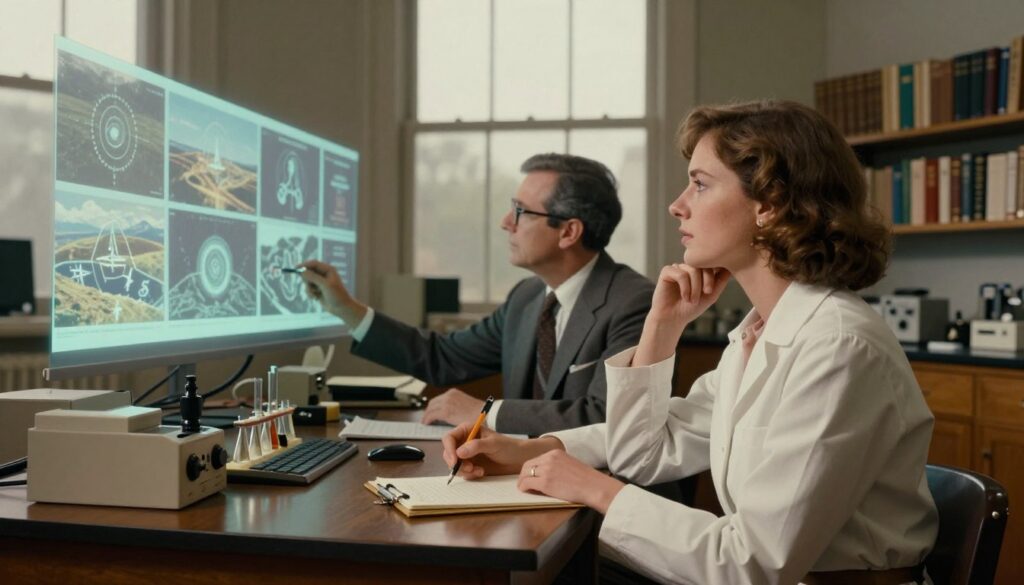
One early subject demonstrated consistent success describing targets from weather patterns to shielded detectors. That work inspired a coordinate remote method that an author and researcher helped shape into a repeatable training program.
The program attracted interest from an intelligence agency and later support from the U.S. Army. Over time, the experiment evolved into a classified effort commonly called the Stargate project, funded for more than twenty years with roughly $20 million in government backing.
- Scientific labs turned anecdote into protocol.
- Subjects became trained viewers using stepwise practice.
- Cold War needs pushed the program into military use.
| Year | Lead Researcher | Key Outcome |
|---|---|---|
| Early 1970s | Hal Puthoff & Russell Targ | Controlled experiments proving repeatable reports |
| Mid–1970s | First subjects (noted author/researcher) | Development of coordinate remote method for training |
| 1980s–1990s | Government programs | Stargate project funded and used by U.S. Army |
Core Principles of the Controlled Remote Viewing Method
A stepwise method lets a practitioner move from raw sensation to a clear, spatial model of an unknown site.
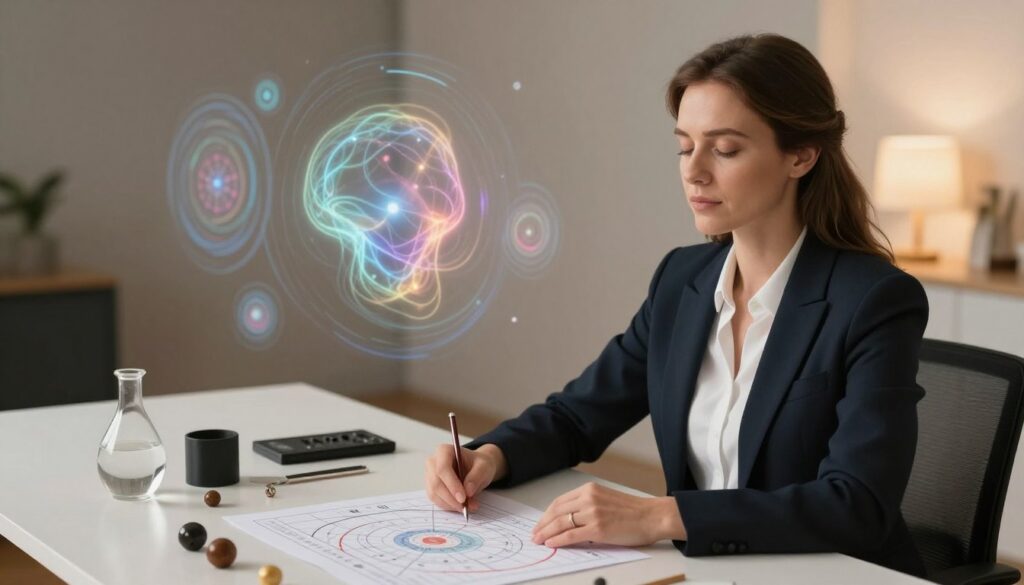
Ideograms and Gestalts
The first stage uses quick, single-stroke marks called ideograms to capture the initial gestalt of a target.
This protects the signal from analysis. The viewer records a simple symbol that holds the target’s basic “feel.”
Sensory Data Collection
After the ideogram, training guides the viewer to note sensory impressions in real time.
These include textures, sounds, temperatures, and motion. Recording impressions as they arise keeps data clean and unfiltered.
“Record what appears before naming or explaining it.”
Three Dimensional Modeling
In later stages, the process moves toward scale and structure. Stage 6 asks viewers to build three-dimensional models of the site.
These models convert raw impressions into organized spatial information. When combined, the stages let trained viewers achieve surprisingly high accuracy even with unknown targets.
- Six stages guide the viewer from abstract to concrete.
- Ideograms bypass the analytical mind early on.
- Real-time recording separates signal from noise.
For a practical primer on techniques and protocols, see remote viewing training.
The Role of Mental Noise and Analytical Overlay
Mental clutter often hijacks a session before clear impressions form. When a viewer tries to interpret fragments too soon, the mind fills gaps with familiar ideas. That tendency produces analytical overlay (AOL), which can distort or replace true information.

Managing mental noise is a core part of CRV training. The process trains a viewer to notice impulses and label them without turning them into judgments. Simple protocols—like ideograms and timed reporting—help keep analysis off the page until later.
In practice, a trained viewer pauses when interpretation arises. They record raw sensory details, then return to analysis after the session is closed. This separation preserves the integrity of the data and reduces common errors.
- Mental noise (AOL) is the main obstacle every viewer must manage.
- Ingo Swann warned that the mind fills missing pieces with known patterns, creating issues for accuracy.
- The CRV process gives viewers tools to set aside interpretations in real time.
- Heightened consciousness helps distinguish genuine impressions from internal chatter.
Learning this skill marks the shift from beginner work to reliable professional practice. Consistent control of analytical overlay leads to cleaner data and better verification over time.
Why Bilocation is Essential for Accurate Data
Bilocation is the skill of holding steady awareness of both the physical room and a distant target at the same time. This state keeps perception anchored so the practitioner can note impressions as they occur.

Balancing Awareness Between Locations
Bilocation lets a remote viewer stay in their body while accessing information from another site. That means the viewer records impressions in real time instead of relying on memory later.
Unlike out-of-body reports, this process preserves the link to the physical environment. Remaining grounded reduces drift and keeps the session reliable for monitors and analysts.
Training teaches viewers how to move attention without losing contact with their surroundings. Skilled viewers learn to toggle awareness, gather sensory details, and report them clearly to a monitor.
For those who want a scientific lens on how this practice was tested, see the science behind remote viewing. Understanding bilocation explains why the method yields better, verifiable data over time.
The Importance of Blinding Protocols in Research
Keeping viewers blind to target identity is the single most important safeguard in credible perception research.
Single-blind protocols ensure the viewer has no prior knowledge of the target. This stops subtle cues or memory from shaping results.
A double-blind approach goes further: neither the viewer nor the monitor knows the target until the session ends. That method reduces accidental signaling and observer bias.
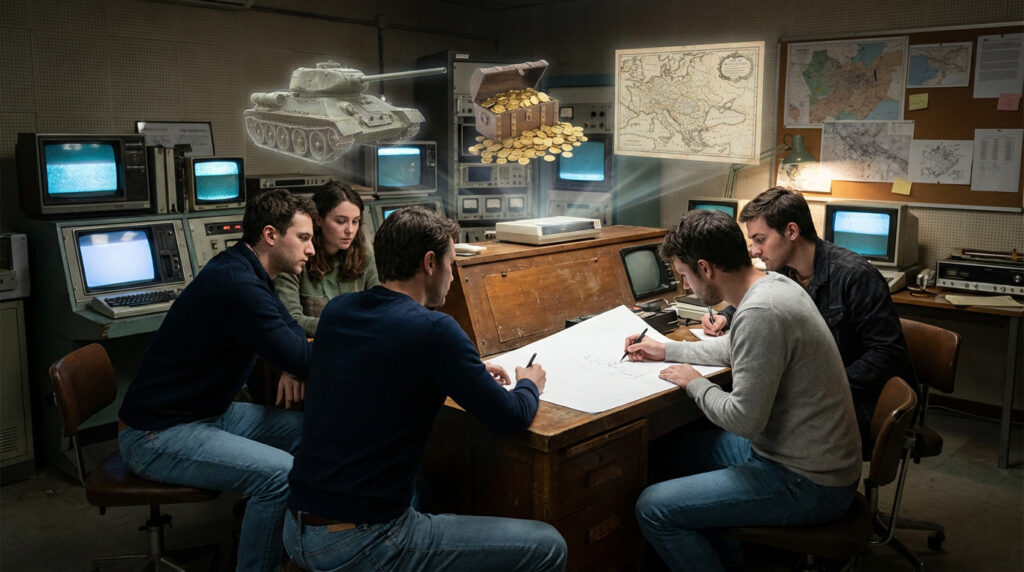
Blinding protocols are the bedrock of reliable remote viewing research. They make it impossible for a viewer to use deduction or contextual hints to identify a site.
- Scientific cases often demand double-blind setups to meet peer-review standards.
- Proper training stresses that a viewer remain completely blind to preserve data purity.
- Operational practice adopts the same rules to protect accuracy under pressure.
By following strict remote viewing protocols, researchers and trainers can show that the practice yields repeatable, testable information. That adherence separates credible cases from anecdote and builds trust in the methodology.
Distinguishing Between Natural Psychic Ability and Trained Skills
Many people assume psychic talent is an all-or-nothing gift, but careful practice tells a different story. While some individuals begin with vivid impressions, disciplined methods let almost anyone refine those impressions into accurate reports.
Ingo Swann stressed that talent can help, yet steady training and routine practice matter more for professional success. A trained person learns to control timing, reduce bias, and record what appears without rushing to explain it.

Key differences are practical. Raw hits can be striking but inconsistent. The trained viewer aims for repeatability and useful detail. With repeated sessions, others can expect steady improvement in accuracy and clarity.
- Some are born with quick impressions; skillful practice turns them into reliable data.
- Control and discipline reduce error more than raw talent alone.
- Training focuses on objectivity so reports are useful across contexts.
| Aspect | Born Psychic | Trained Viewer |
|---|---|---|
| Consistency | Variable; sudden accuracy | Repeatable across sessions |
| Error Control | Prone to analysis and guessing | Uses protocols to limit bias |
| Skill Development | Relies on innate flashes | Improves with deliberate practice |
| Practical Use | Often anecdotal | Operationally useful and verifiable |
Bottom line: remote viewing is a teachable skill. With proper training, practice, and feedback, many can learn to gather information that lies beyond ordinary senses.
The Evolution of the Six Stage Training Program
A formal six-stage curriculum emerged to turn sporadic impressions into consistent, reportable data. That program gave novices a reliable path from first contact to detailed description.

The Role of the Monitor
Monitors guide the viewer through each stage, timing prompts and preventing premature analysis.
A skilled monitor protects the data. They call out stage changes, note issues like analytical overlay, and keep the session on track for accurate reporting.
Progression of Training
The six-stage CRV program was developed by Ingo Swann and Tom McNear to standardize training for military personnel. Over time it became the gold standard for a viewing program used by the U.S. Army.
Early trainees, including Paul Smith, completed staged instruction and advanced through practice, feedback, and repeat work. Each stage builds on the last, increasing sensory detail and spatial modeling.
“A clear progression turns isolated hits into verifiable information.”
- Stages guide the viewer from ideogram to 3D model.
- Monitors manage timing and reduce common issues.
- Consistent training yields better understanding and reliable results over time.
Investigating the Alleged Advanced Stages Beyond Six
A closer look at archival notes shows why talk of a full twelve-stage curriculum is more rumor than fact. While a “Stages Document” in the archives lists additional steps, the paper reads like exploratory notes rather than a finished training program.
Most experts agree only the rudiments of a Stage 7 were ever pursued. Researchers such as Hal Puthoff and Paul Smith have clarified that the proven method remains the six-stage CRV system used in formal training.
The fascination with extra stages has created many myths. Careful review shows the list mixes speculative ideas, possible experiments, and draft concepts. There is no clear evidence these items were developed into a repeatable training program for a viewer to use in fielded applications.

- Historical records point to notes, not a finished curriculum.
- Key researchers treated later stages as experimental sketches.
- The focus remains on validated stages that produce reliable data.
For readers who want context on abilities and practical methods, see a related primer on extra sensory perception. Staying grounded in verified techniques protects the legacy of past researchers and keeps the community focused on useful training and applications.
The Significance of the Stages Document
A dated list of twelve potential steps offers a rare window into one author’s experimental thinking about future training. The paper came from an archive at the University of West Georgia and records ideas that were never formalized into standard practice.
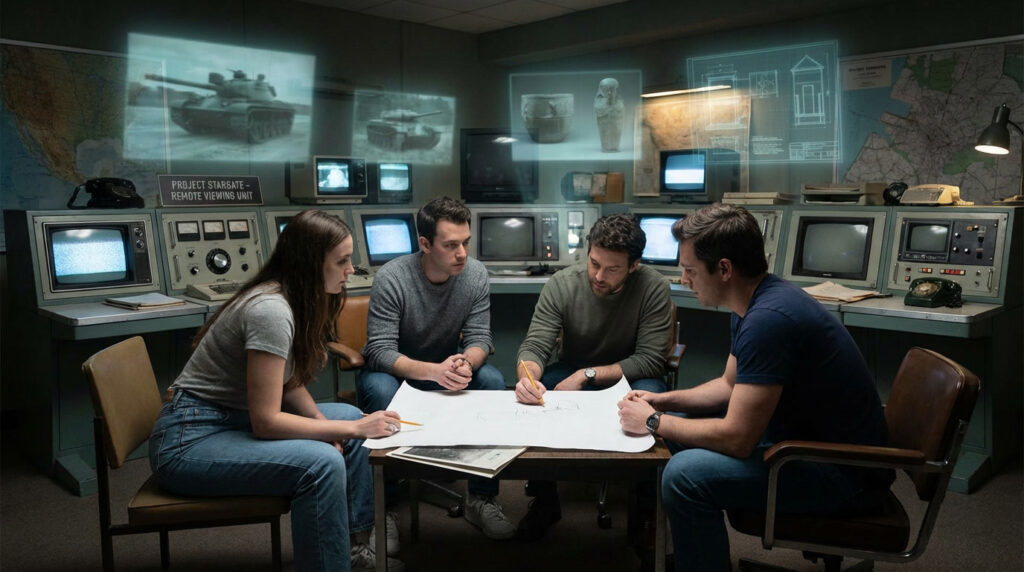
Analyzing the Historical Record
The Stages Document is important because it shows how the concept of expanded stages emerged alongside the six-stage CRV curriculum. Comparing it to Tom McNear’s 1985 manual, “Coordinate Remote Viewing Stages I–VI and Beyond,” highlights where theory met practice.
Researchers such as Hal Puthoff, Paul Smith, and other close associates provided context that separates draft notes from operational training. Their work clarifies which items were experimental and which were used by the U.S. Army program.
“The document enriches history but does not replace proven training methods.”
- The list reveals exploratory ideas, not a finished syllabus.
- Cross-checking with McNear’s manual shows influence, not equivalence.
- Clear records help solve longstanding problems of misinformation.
Bottom line: the Stages Document is a vital historical artifact. It helps scholars and new viewers understand how training evolved over time, while confirming that the six-stage method remains the tested, operational approach.
How Military Intelligence Shaped Modern Protocols
Military needs pushed experimental practices into a rigorous program that could deliver verifiable intelligence under pressure.
The U.S. Army and intelligence agency sponsors funded a formal remote viewing program until 1995. Their priorities demanded strict blinding, careful monitoring, and repeatable methods so that reported information could be trusted.

Monitors and blinding became central tools. Monitors timed sessions and kept viewers blind to target identity. This reduced bias and analytical overlay, making the data testable.
- Researchers and the author community refined CRV and coordinate remote methods.
- Key figures, including Paul Smith and the original author, helped adapt training for operational use.
- Over time, these military-grade protocols influenced a wider variety of public methods and instruction.
| Influence | Military Practice | Public Legacy |
|---|---|---|
| Blinding | Strict single and double-blind setups | Adopted in civilian training to ensure data purity |
| Monitoring | Dedicated monitors to prevent analyst interference | Used by instructors to teach discipline to viewers |
| Documentation | Detailed logs for verification | Standardized reporting in modern training methods |
For a related look at practical psychic skills and validation, see psychic powers and training.
The Role of Feedback in Validating Psychic Data
A dependable feedback loop separates hobbyist guesses from disciplined, testable work. Feedback is not optional; it is the mechanism that lets a viewer confirm accuracy and learn from mistakes.

Why feedback matters: when a session is compared to the actual target, the viewer can see what matched and what did not. That comparison points out problems in perception and highlights reliable signals.
Ingo Swann insisted every session include feedback. Without verifiable follow-up, a report is speculative and fails to meet professional program standards.
- Feedback validates the data and builds trust in the process.
- Regular review helps a viewer refine technique and reduce common problems.
- Consistent loops transform training into measurable improvement over time.
Bottom line: feedback is the core principle of the CRV program and the broader research work. It provides objective evidence that the information produced is useful and real.
Common Misconceptions About Remote Viewing
Public discussions often lump many psychic arts together, which hides what makes each method unique.

One major myth is that remote viewing is just clairvoyance or mediumship. In truth, it is a disciplined process that relies on protocols and timing to reduce error.
Another false idea says the skill cannot be taught. Training lets a person learn timing, report structure, and ways to separate impressions from analysis.
People also confuse the term with other psychic methods. That mix-up obscures the fact that the viewing program used by an intelligence agency emphasized testing, blinding, and documentation.
Ingo Swann repeatedly framed the work as experimental rather than mystical. This historical point helps readers see why the practice demands practice, not faith.
- It is a learnable, repeatable process, not only a gift.
- Protocols protect data from interpretation and bias.
- Clear distinction matters for training, applications, and useful information.
“Distinguish professional methods from anecdote to avoid misinformation.”
Scientific Perspectives on Psychic Functioning
Modern labs have applied strict statistical tests to claims of perception beyond the five senses. That work frames psychic functioning as a subject for careful measurement rather than guesswork.
Statistician Jessica Utts judged that the evidence meets standards used in other scientific fields. Her review concluded that the phenomenon is reliable enough to merit further study.

Meta-analyses by researchers such as Dean Radin have found small but consistent effects across many trials. These studies show that properly controlled protocols and blind procedures produce measurable information that the mind and body report.
Why this matters: rigorous experiments reduce bias, use controls, and demand repeatable results. Treating these findings like any other scientific claim helps the field progress.
“Scientific methods applied to psychical research have yielded reproducible patterns that deserve academic attention.”
- Evidence-based reviews support continued research into remote viewing and related techniques.
- Historical programs at research labs established protocols that future studies still use.
- For practical practice and further instruction, consider psychic coaching.
Conclusion
This guide closes by noting that a clear protocol and regular practice convert raw sensations into reliable, actionable information through remote viewing.
Viewing becomes useful when a trainee follows steps, keeps records, and accepts feedback. Good training teaches timing, ideograms, and how to curb analysis so a viewer can report clean data.
Historical tests and military programs shaped the method, and careful training remains the path to consistency. Whether you study the history or explore modern practice, disciplined work improves accuracy in psychic functioning. Keep learning, practice often, and let feedback guide your progress as a dedicated viewer.