
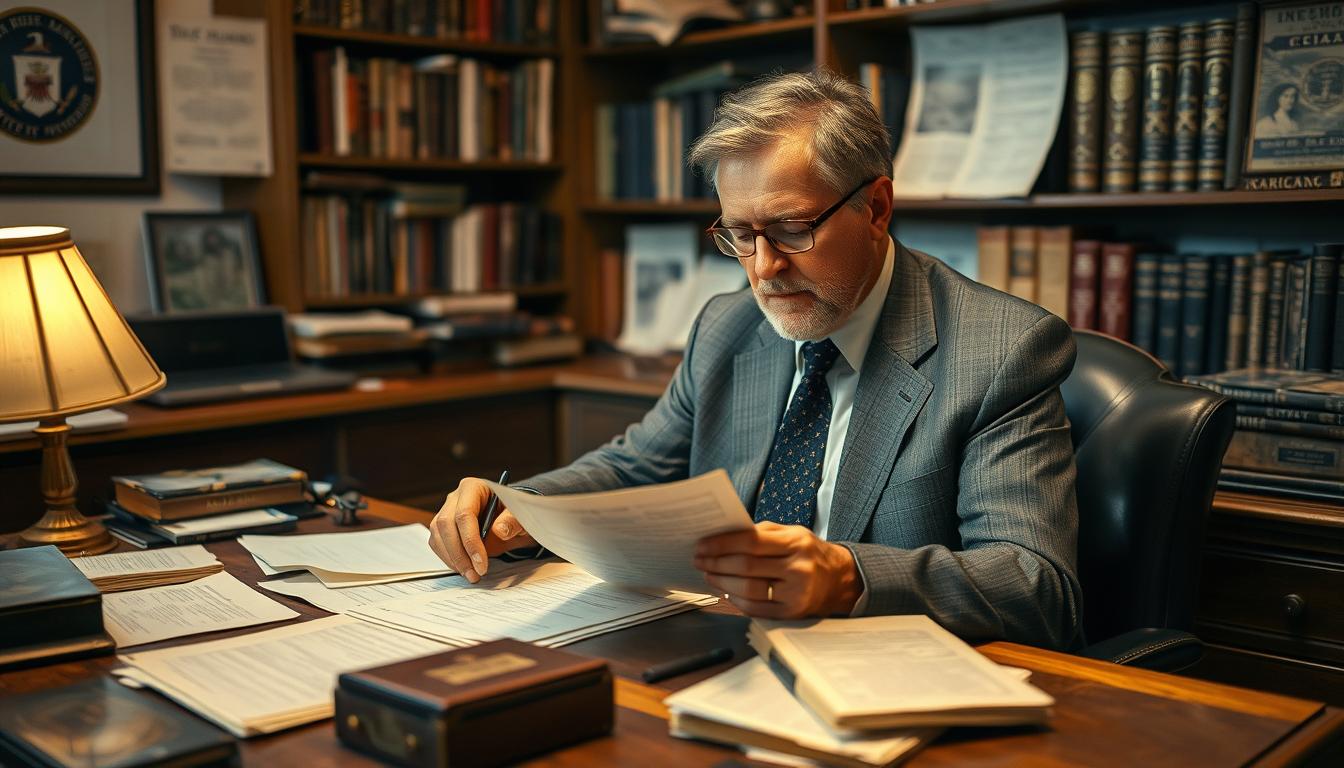
Ingo Swann was born in Telluride, Colorado, on September 14, 1933, and passed away in New York City in 2013.
This short introduction traces the life of a man whose unique perception abilities drew attention from the United States intelligence community. We outline a clear timeline of his early years, his work with government programs, and the lasting debate about his psychic claims.
Every word written about his abilities sparked questions about scientific rigor and proof. By reviewing released material, we aim to show how his contributions shaped remote viewing protocols and how researchers measured change over time.
For background on similar figures and context, see a curated list of famous clairvoyants at notable clairvoyants.
Key Takeaways
- Brief life facts: Telluride birth, death in New York City, 2013.
- His claimed abilities prompted formal study and program development.
- Scientific debate about validity has been intense and ongoing.
- Released records help trace his role in remote viewing methods.
- The article blends personal history with research scrutiny for clarity.
The Life and Legacy of Ingo Swann
Ingo Swann was born in Telluride, Colorado, in 1933 and spent much of his adult life shaping public debates about perception and human potential.
A native of a small mountain town, this man later moved to New York, where he wrote widely and participated in decades of research. His books offered personal accounts and theories about consciousness.
Over the years he shifted from private life to prominence across the United States. Researchers and critics still discuss his methods and claims, and his legacy sparks lively analysis in this country.
“His career spanned decades of experimentation and public scrutiny, leaving a complex record for students of parapsychology.”

| Year | Event | Impact |
|---|---|---|
| 1933 | Born in Telluride | Early environment shaped curiosity |
| 1970s–2000s | Published books and took part in studies | Raised debate about methods |
| 2013 | Died in New York City | Marked end of a long public career |
Early Childhood Experiences and Psychic Development
A surgical visit at age three became the moment he later described as a first shift in perception. During a tonsil removal, he claimed an out-of-body episode that changed how he saw the world.
Auras and Early Clairvoyance
After that event he reported seeing bright, colorful auras around people and objects. These impressions stayed with him through childhood and shaped his emerging consciousness.
He wrote that the sensation felt like his awareness moving away from his physical body. Over time, these experiences guided his interest in formal testing and study.
Those early reports formed a narrative that he later used when describing the potential of the human mind across time. By documenting the episodes, he created a foundation for the claims that followed.

For practical context about mental training and techniques that explore similar abilities, see related psychic skills training.
Understanding the CIA Declassified Documents on Ingo Swann
Careful review of agency files highlights the protocols that guided trials of his perception at a distance.
Key findings reveal an intense interest in whether remote viewing could produce usable intelligence. Researchers logged data from each session and scored descriptions against known targets.
Each target was chosen to test specific limits. A set number of trials used blind methods so subjects could not see the site or its images.
The reports show how monitoring of subjects aimed to measure consistency across targets and sessions. This information helped analysts judge if perception reports could become a reliable source for field work.

- Trial selection: varied target types
- Scoring: blind comparison to source data
- Monitoring: repeatability checks
| Item | Detail | Purpose |
|---|---|---|
| Program | Stargate Project | Evaluate remote viewing |
| Targets | Geographic sites, objects | Challenge perception limits |
| Data | Session logs, scores | Assess reliability |
For related material and broader predictions, see clairvoyant predictions.
The Birth of Remote Viewing at Stanford Research Institute
Researchers in Menlo Park developed a new protocol that aimed to turn vague claims into measurable data. At the Stanford Research Institute in Menlo Park, Harold Puthoff and Russell Targ worked with a notable subject to shape the method.
Collaboration with Puthoff and Targ
The team set up repeated trials and logged each session as usable data. They tested how a person could describe a distant place or object from a great distance.

The Role of Geographical Coordinates
One important change was to use coordinates as a clear way to point a subject to a specific target. This removed many chances for guesswork.
The method aimed to study the nature of the phenomenon and the means by which the mind might access information. Over time, the experiments in Menlo Park became a key form of interest in the field.
“The protocol made it possible to compare descriptions to targets and judge accuracy in a methodical way.”
For related training and methods that explore perception and intuition, see intuition development.
Scientology and the Pursuit of Operating Thetan Abilities
Throughout the 1970s he invested significant time in Scientology practices that promised deeper mastery of mind and spirit. Those years shaped how he talked about training and technique in public forums.
He reached the Operating Thetan level after extensive auditing. He said the courses helped him access a higher state of consciousness and refine controlled out-of-body experiences.
The organization’s training focused on gaining control of the physical body and sharpening mental faculties. He credited structured exercises with improving focus and reproducibility during experimental sessions.

For him, these spiritual practices were more than belief; they were practical routines applied to laboratory-style testing. His long involvement influenced both public presentation and research methods.
“Those years of disciplined practice became part of his toolkit for remote viewing and public demonstrations.”
Controlled Out of Body Experiments at the ASPR
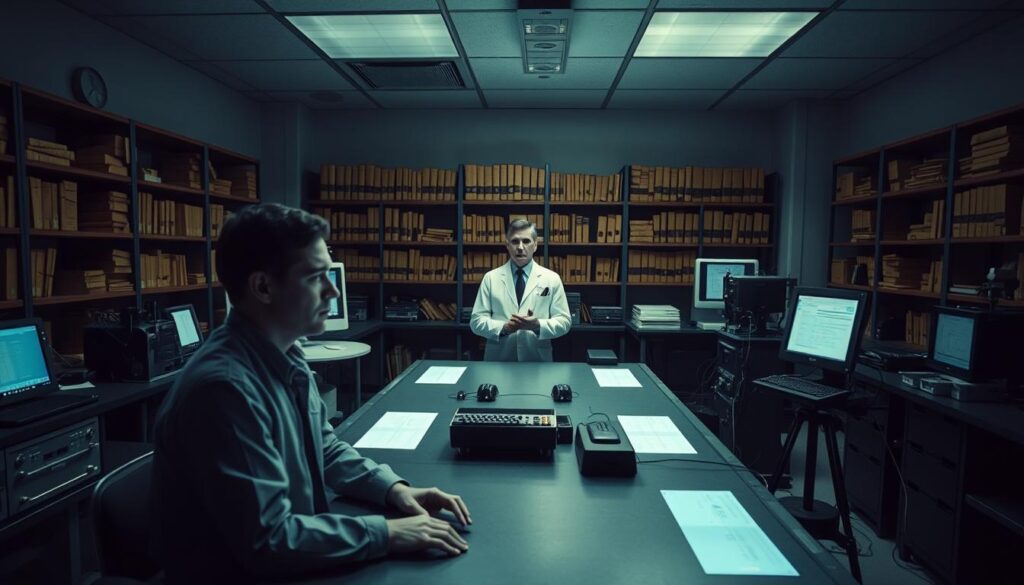
In 1972, controlled trials at the American Society for Psychical Research in New York tested whether out-of-body reports could match objects placed at a distance.
Karlis Osis led research that required a strict setup. The subject kept a fixed body position while sensors tracked brain activity. Researchers recorded every description as live data for later review.
Methodology of Blind Judging
Blind judging ensured the person matching descriptions to a target had no prior information. Judges compared session notes to several possible targets and ranked accuracy.
The number of successful matches reached statistical thresholds that researchers called significant. The experimental conditions aimed to remove cues and rule out error.
These tests became a landmark way to collect structured results. Months and then a year later, analysts kept mining the records to study reproducibility and the limits of perception at distance.
Magnetometer Psychokinesis Testing and Scientific Skepticism
At one point in June of that year, a lab session in the Varian Physics Building became a key point of debate.
The experiment took about an hour. Dr. Arthur Heberd operated the magnetometer while observers watched for any change in the magnetic field.
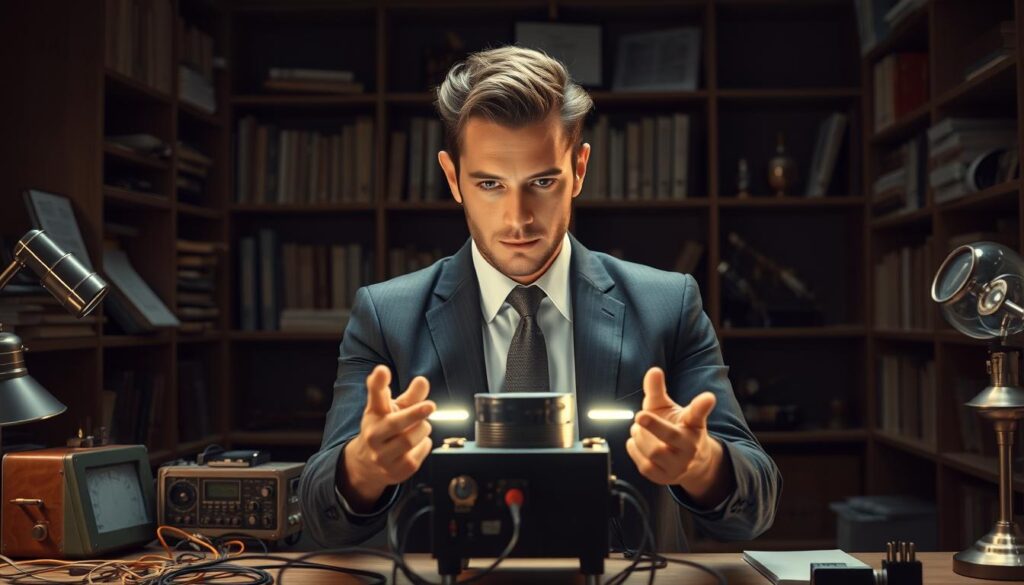
Two subjects of the test reported attempts to influence the device from a distance. Men in the room tracked readouts and logged live data to verify any effect.
Later checks found that the equipment had faults, a fact that critics cite when questioning the reported results.
Yet some sources argue the observed phenomenon had real signatures and was not purely an instrument error. Other sources reject that view, saying the malfunction explains the things seen during the session.
“The mixed findings and experimental conditions left researchers unable to agree.”
- Location: Varian Physics Building, Menlo Park
- Date: June 6, 1972 (that year)
- Outcome: contested; sources remain divided
Early Coordinate Remote Viewing Protocols
Early test designs introduced a simple but powerful idea: give a pair of coordinates and nothing else. This process aimed to point a viewer toward a single hidden target without hints.
By offering only latitude and longitude, researchers reduced the chance that experimenters would cue the subject. Viewers worked with the numbers and then described features they “sensed.”
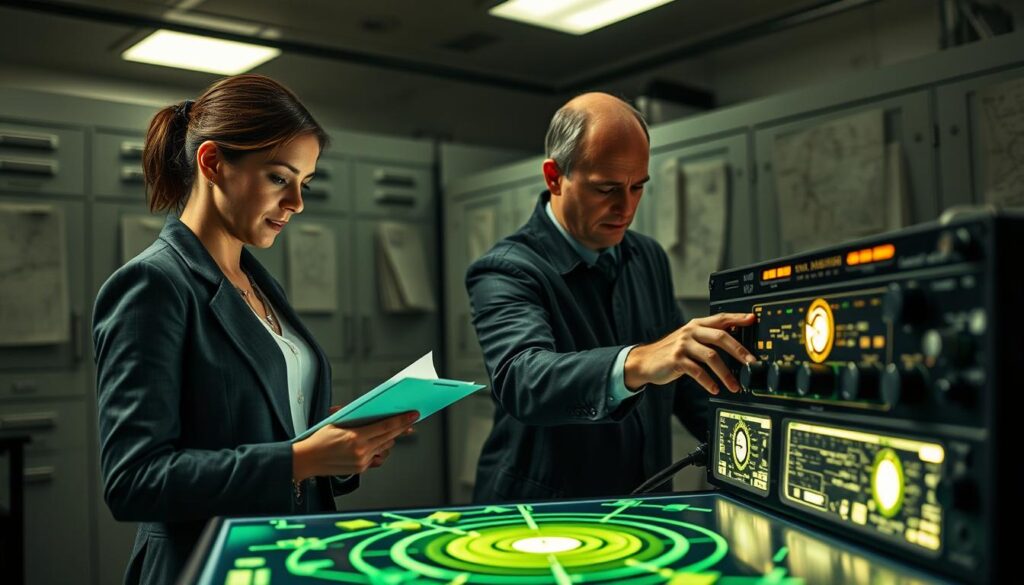
The protocol required subjects to report details with no prior knowledge. Descriptions were later compared to several candidate targets to judge accuracy. This standard made scoring fairer across sessions and people.
These early procedures helped build a repeatable framework. They made it easier to compare results from different sessions and to evaluate whether descriptions matched real targets.
For a broader look at related psychic claims and testing methods, see a clear discussion of clairvoyant abilities at clairvoyant abilities: real or fake.
| Protocol Element | Description | Purpose |
|---|---|---|
| Coordinates | Latitude and longitude only | Remove verbal cues; point to a specific target |
| Blind Sessions | Subjects lack prior target info | Prevent bias and leading |
| Scoring | Compare reports to multiple candidate targets | Standardize accuracy assessment |
The Controversial Remote Viewing of Jupiter
In April 1973 a single session aimed at a distant planet became one of the most discussed experiments in remote viewing.
The session lasted about an hour and was recorded by puthoff russell and russell targ. The viewer provided specific information about atmosphere layers, rings, and surface shapes at a remote place.
Atmospheric Crystal Observations
The viewer described a kind of crystal cloud layer and unusual particulate structures. This kind of detail stood out because it was concrete and testable.
Years later, spacecraft data produced images and analyses that matched several of those claims.
Comparison with Voyager Data
Feedback and follow-up used hard data and photographic images from probes. Analysts compared session notes to probe results when the probes reached the target.
- The session date: April 27, 1973.
- Session length: one hour.
- Key claims: crystal layer, rings, mountains.
- Feedback: later compared to Voyager data.
| Aspect | Claim | Voyager Result |
|---|---|---|
| Atmosphere | Crystal-like cloud layer | Particles and layered haze confirmed |
| Rings | Visible rings and debris | Rings detected by probe sensors |
| Topography | Mountain-like forms | Complex cloud structures observed |
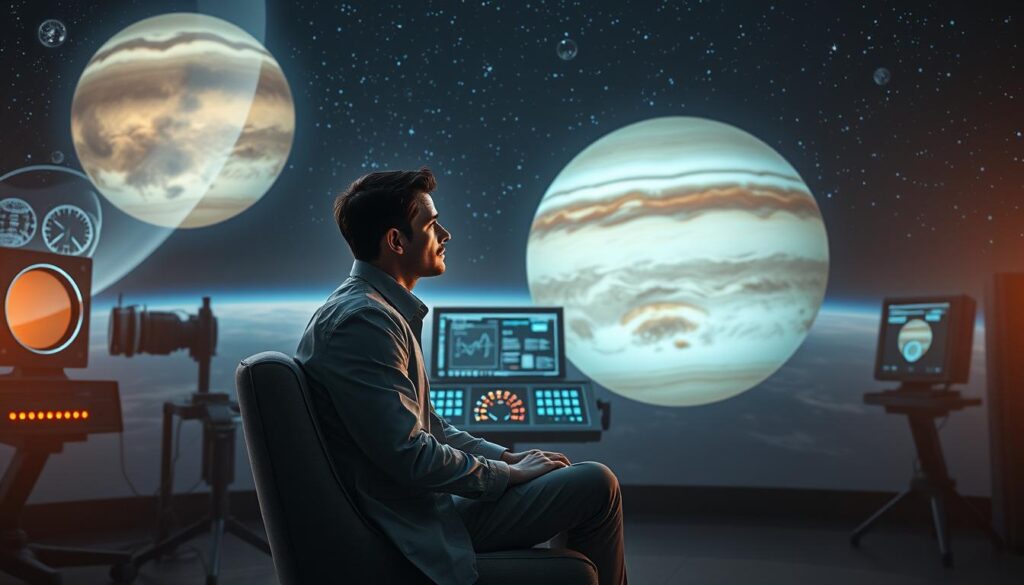
“The session remains controversial because sources disagree about how to interpret the match between notes and probe results.”
Despite debate, the event shows how a single, timed attempt to view a faraway target generated lasting interest in the nature of perception and scientific feedback.
Brain Activity and Neuropsychiatric Observations
Researchers measured distinct neural patterns during remote viewing sessions that differed from ordinary waking rhythms. Michael Persinger published a 2001 study that tracked electroencephalographic changes while a noted subject attempted to describe distant targets.
The study found significant congruence between controlled stimuli and activity in the frontal and temporal lobes. This alignment suggested a repeatable brain signature linked to the act of remote description.
Persinger’s work implied the state of consciousness during these sessions was not the same as normal wakefulness. Observers noted whole-body shifts in physiology that accompanied the reported experience.
By closely monitoring the subjects, scientists observed how the brain processed information during the perception attempt. The objective results helped bridge first-person reports with measurable signals.
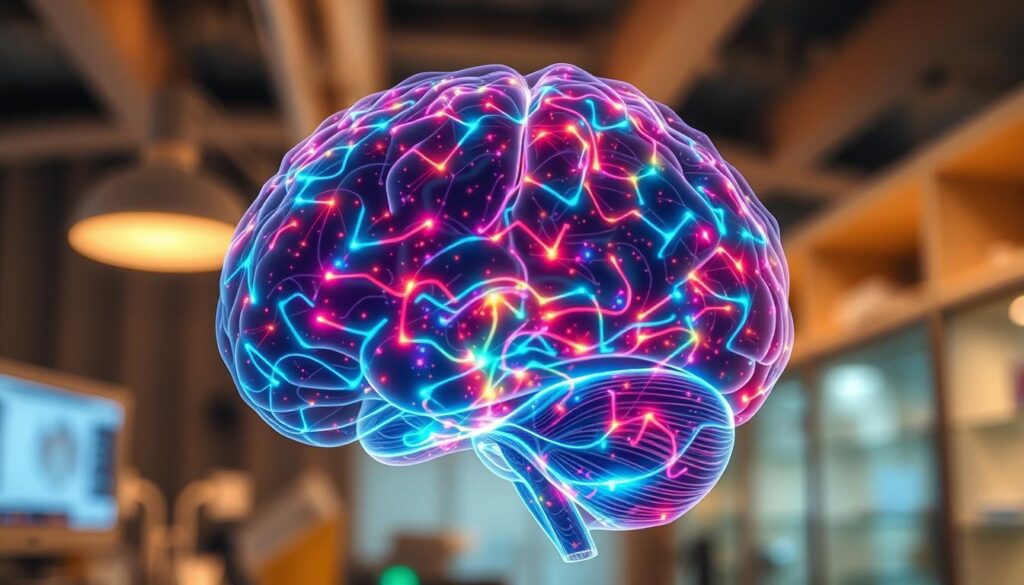
“Linking subjective experience to physiological data gave researchers a clearer path to test claims scientifically.”
| Brain Region | Observed Effect | Implication |
|---|---|---|
| Frontal lobe | Increased synchronous activity | Enhanced focused retrieval |
| Temporal lobe | Stimulus-congruent oscillations | Perceptual processing link |
| Autonomic markers | Whole-body changes | State-dependent physiology |
For broader context about related research and methods, see a review of clairvoyant abilities and science.
Evaluating the Success of Psychic Detectives
Between 1972 and 1979, investigators sometimes turned to psychic help when standard leads ran cold. During that time, a well-known practitioner reported involvement in a series of criminal probes.
The number of cases reached twenty-five, but the practitioner later said twenty-two were unsuccessful. This simple tally shapes how researchers view field claims.
The data from these years shows low practical returns. Researchers compare session notes with case outcomes to judge reliability.
Many analysts point to how few accurate hits occurred when subjects tried to locate a target. Skeptics argue the few positive results fit chance rather than clear ability.
“The real-world record matters more than staged trials when assessing usefulness to police.”
| Period | Cases Attempted | Reported Successes |
|---|---|---|
| 1972–1979 | 25 | 3 |
| Practical use | Investigative leads | Mostly inconclusive |
| Research value | Session notes & scores | Useful as procedural data |
Overall, the balance of failures and rare hits challenges claims that psychic methods reliably provide actionable information in criminal work. Those years remain a test case for how such claims translate to police practice.
Swann and the World of Ufology
He became a frequent voice within the UFO community, writing for newsletters and taking part in public debate.
He contributed to Saucer Smear and often argued that study of UFOs mattered to broader questions about mind and reality.
He treated the UFO field as a critical target for researchers who wanted to test claims about consciousness and contact.
His pieces mixed personal episodes with methodical notes drawn from his remote viewing practice.
By engaging with enthusiasts and skeptics alike, he aimed to raise attention to the idea that extraterrestrial contact might be more than rumor.
This outreach helped keep the conversation alive in both hobbyist and specialist circles.

“His writing bridged personal experience and procedural detail, inviting scrutiny and dialogue.”
| Area | Role | Impact |
|---|---|---|
| Publication | Saucer Smear contributor | Amplified ufology debates |
| Field focus | UFO reports and analysis | Framed cases as investigation targets |
| Legacy | Blended sightings with method | Kept public interest in the topic |
Examining the Claims of Extraterrestrial Telepathy
In his 1998 book, Penetration, the author moved from lab notes to personal stories that describe close contact with nonhuman beings. He wrote of meetings that he said happened in everyday settings.

Encounters in Los Angeles include a detailed account of seeing a female extraterrestrial in a Los Angeles supermarket. He called that episode a physical place and argued it felt real to the senses.
The book claims these beings often wore a human body and used telepathy as a subtle way to communicate. He described covert observations where he and other men served as observers at a great distance from cities.
This sort of tale became central to his later work. He framed these events as a new kind of target for researchers and for anyone curious about our place in the universe.
“These claims remain a controversial word in ufology, challenging conventional views.”
Encounters and Implications
Whether one reads these accounts as myth, memory, or report, they changed how a person might think about contact. The stories still prompt debate in New York circles and beyond.
Notable Publications and Literary Contributions
Across decades, his writing aimed to translate lived episodes into testable claims and wider discussion. He published both memoir-style accounts and books that tried to place personal experience into a broader method.
Key titles include To Kiss Earth Good-bye and Penetration. These works mixed anecdote, protocol notes, and speculative thought about mind and perception.
Many of his books were released by publishers in New York, giving them wider access to reviewers and research networks. Distribution reached readers across the country and into the wider world.
The texts served two roles. First, they preserved session detail and procedural notes for researchers. Second, they offered a narrative about a life lived around unusual experience and inquiry into the future of human perception.

“His publications remain a primary source for anyone studying his methods and claims.”
| Title | Type | Publisher |
|---|---|---|
| To Kiss Earth Good-bye | Memoir / Methods | The Crossroad Publishing Company, New York |
| Penetration | Personal Encounters / Theory | Independent / Various |
| Collected Essays & Notes | Procedural Records | New York presses and specialty publishers |
The Ongoing Debate Over Scientific Validity
For decades, researchers have tried to pin down whether perception of a distant target is a real, testable ability.
Teams in Menlo Park and other labs still reexamine old data each year. New studies aim to clarify whether the phenomenon can be replicated under strict conditions.
The interest in this field stays high. Some people point to feedback from successful sessions as proof. Skeptics note that many results are inconsistent and argue that chance can explain some things.
What matters now is better methods. Researchers ask for tighter controls, clearer scoring, and reliable means to test subjects. The future of the field will depend on whether studies can produce repeatable information in a scientific state.
“Until protocols reduce uncertainty, debate will remain part of the scientific process.”
- Yearly reviews help surface new facts and methods.
- Careful feedback links claims to measurable results.
- Consensus needs robust, repeatable conditions for all subjects.
| Perspective | Claim | Key Point |
|---|---|---|
| Proponents | Feedback shows accurate target hits | Argue for further study |
| Skeptics | Results are inconsistent | Call for stricter controls |
| Neutral analysts | Mixed evidence in archived data | Suggest improved protocols |
For related methods and broader context, see a concise psychic powers review.
Conclusion
The story closes with a figure who bridged fringe practice and formal study, leaving mixed evidence behind. In this view, Ingo Swann remains a complex personality whose work still sparks debate.
His efforts helped shape remote viewing as a tested method. Researchers gained protocols, logs, and new questions about perception.
While many claims stay controversial, the record offers a rare look at how curiosity and method meet. His legacy is a reminder that exploring the unknown can prompt better tests and clearer thinking about human potential.