

This compact guide explores names that keep surfacing when people ask about the future — from temple seers to television mediums.
The list spans classical history with the Pythia at Delphi, the 16th‑century quatrains of Nostradamus, and 19th‑ and 20th‑century figures like Edgar Cayce, Daniel Dunglas Home, the Fox sisters, Jeane Dixon, Sylvia Browne, John Edward, Uri Geller, the Psychic Twins, and Bulgaria’s Baba Vanga.
We’ll describe what witnesses reported, note notable performances, and show how media shaped each person’s public life and career. Expect balanced attention to claims and skeptical views so readers can weigh storytelling against surviving evidence.
Along the way, we highlight the human themes behind interest in these figures — grief, hope, and the search for meaning — and point readers to deeper profiles, including an anchored resource on modern practitioners at notable clairvoyant profiles.
Key Takeaways
- This piece surveys figures who shaped ideas about the future across the world and through history.
- “Clairvoyant” covers prophets, mediums, and stage performers with varied methods and claims.
- Media—from temple records to TV—has driven many careers and lasting reputations.
- We present notable episodes alongside critiques so readers can weigh evidence.
- Human motives like hope and loss explain why these stories stay living parts of culture today.
Why Famous Clairvoyants Still Fascinate Us
Stories of prophecy travel fast—shifting from temple altars to television studios over time. This pattern shows up across history and helps explain why people seek meaning during upheaval in the wider world.
In crises, communities turn to voices that promise a glimpse of the future. The way we meet those voices has changed: priestesses, printed quatrains, and live broadcasts answer similar emotional needs.
Readings and predictions offer narrative scaffolding that helps people cope. They also become communal events: séances, studio audiences, and shared viewing make private loss public.
“People want stories that turn chaos into cause and consequence.”
Media amplifies reach, and interpreters often retrofit lines to events, which fuels debate and keeps these names in circulation. Performance, empathy, and the hope of contact shape how many evaluate claims and the lasting appeal of such lives.
Patterns to Watch
| Era | Typical Setting | Why It Resonates |
|---|---|---|
| Ancient | Sanctuary or oracle | Guidance for war and state choices |
| Early Modern | Books and pamphlets | Printed reach, broad interpretation |
| Modern | Media and live events | Emotional contact and mass audiences |
For an anchored look at modern predictions and how they circulate, see psychic predictions.
Ancient and Early Voices: The Pythia and the Roots of Prophecy
In ancient Greece, a temple voice at Delphi shaped policy, reputation, and the choices of entire city-states. The Pythia prophesied at the Oracle of Delphi (Pytho) from around the 8th century BC in a sanctuary to Apollo, and her role anchors much of this history.
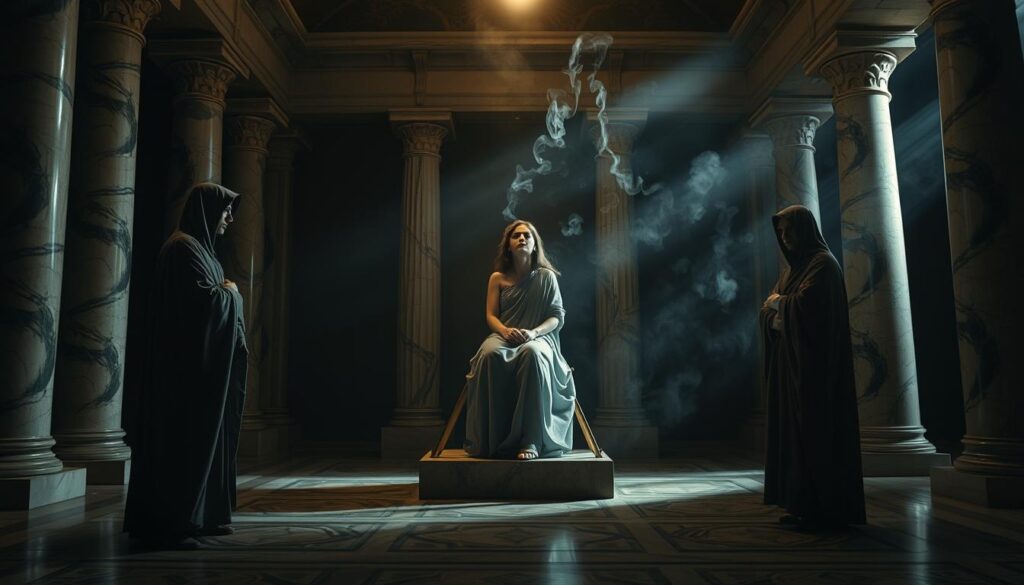
The Pythia at Delphi: frenzied readings for wars and national dilemmas
The Pythia functioned in some ways like an early medium, a formal bridge between petitioners and a god. Accounts describe her entering a frenzied state while delivering guidance on wars, policy, and national problems.
Leaders and city councils came for predictions that could decide battle plans or alliances. Those readings carried practical weight: a single pronouncement might alter a campaign or a treaty.
Ritual, sanctuary, and giving up family life to serve Apollo
Temple records show priestesses were chosen carefully and often renounced ordinary family obligations to serve exclusively. Service at Apollo’s sanctuary created authority and shaped expectation.
The ritual setting framed everything: petitioners brought offerings and sacrificed animals before timed audiences. Temple staff and others then mediated the oracle’s words, blending ceremony, interpretation, and public theater.
- People traveled from across the Greek world, giving Delphi a pan‑Hellenic reach.
- The Pythia’s perceived abilities were inseparable from place and ritual, not just lone visionary moments.
- Scholars still debate whether trances sprang from spiritual, psychological, or environmental causes—but the cultural role is clear.
“The oracle turned private need into civic counsel, making prophecy a public instrument of decision.”
For readers curious about how such institutions shaped later figures and networks, see an anchored profile on related modern practitioners at Sirian starseed resources.
Nostradamus and the Power of the Book
When Nostradamus published Les Prophéties in 1555, he changed how prophecy traveled. A printed book made his verses available to readers across Europe and through time.
Quatrains and claims: Over the centuries, people have tied his short quatrains to events like the Great Fire of London (1666), the French Revolution, Pasteur’s breakthroughs, Hitler’s rise, the atomic bombings, JFK’s assassination, and September 11, 2001.
Critics note that language in the work is compressed and symbolic. That style invites flexible readings and many retrospective attributions.
Vague verses or visionary predictions? Translation choices and editorial framing shape what a reader finds. Different translators emphasize phrases that match modern events, while skeptics use textual analysis and historical context to argue against prophetic intent.
- The printed format helped spread these ideas far beyond one region.
- Media cycles revive quatrains during crises, boosting sales of related books and articles.
- Whether puzzle or prophecy, the work illustrates how publishing can magnify contested claims.
“The same quatrain can comfort one reader, warn another, and puzzle a third.”
For a look at how predictions resurface in modern media and culture, see a focused piece on psychic dreams and predictions.
Famous Clairvoyants of the Spiritualist Era
Mid‑19th‑century Spiritualism turned private knocks into public ritual and a new social industry. The movement standardized séance settings and expectations for readings. It also created roles that later psychics and mediums would adapt.
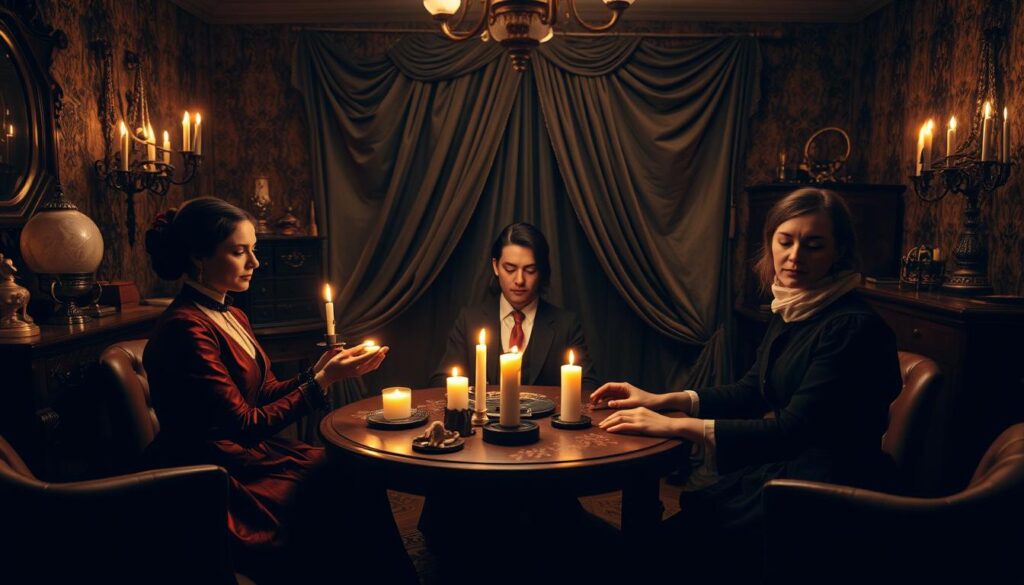
The Fox sisters: knocking spirits, public séances, and later confessions
In 1848 Leah, Margaret, and Catherine Fox claimed nightly knocks answered questions at home. The raps drew crowds and helped launch large, public séances led by mediums.
The origin tale—mysterious sounds, an alleged skeleton under a floor, and courtroom curiosity—fixed the sisters in the era’s history. Margaret later confessed the knocks were made by joint snapping, then softened that admission, and many eyewitnesses said sounds came from different places, complicating a simple verdict of fraud.
Their early fame did not secure stable lives. Despite wide demand for readings, the sisters later faced financial strain and personal hardship amid public scrutiny.
Daniel Dunglas Home: levitation, table phenomena, and speaking for loved ones
Daniel Dunglas Home became the era’s marquee medium. Accounts describe levitation, moving and dancing tables, and spirit voices speaking through him. Elite clients traveled to witness séances in both America and Europe.
Newspapers and investigators split between acclaim and accusation. Supporters insisted phenomena were genuine; critics called it trickery. Both responses shaped how the public judged such performances.
“Séances promised messages from beyond, often centering on grief and the desire to hear from family.”
| Figure | Notable Phenomena | Public Reaction |
|---|---|---|
| Fox sisters | Rapping knocks, spirit communications, skeleton story | Mass interest, later confession, mixed eyewitness testimony |
| Daniel D. Home | Levitation, moving tables, voice phenomena | Elite patrons and press debate; both endorsement and skepticism |
| Legacy | Standardized séance roles, expectations for readings | Influenced later psychics and medium practices |
The Spiritualist era shows how performance, belief, and journalism combined to shape public lives and careers. For a modern look at related practitioners, see notable clairvoyant profiles.
American Icons of the 20th Century
Two very different American figures helped shape public ideas about prediction and healing in the 1900s. Their career paths show how private practice and mass media can turn individual methods into cultural movements.
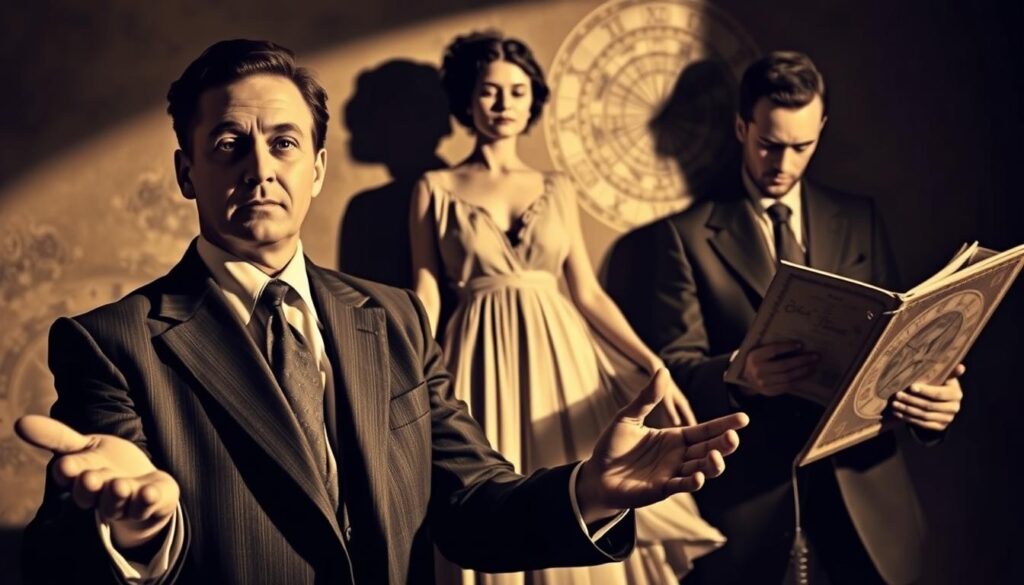
Edgar Cayce, the “Sleeping Prophet”: body, mind, and readings in a trance
Edgar Cayce was a 20th‑century American man known for inducing a sleep state to deliver healing and spiritual readings.
Supporters said his subconscious left his body during trance and returned with advice on health, reincarnation, Atlantis, and other topics.
Followers credit Cayce with foresights like the 1929 crash, World War II, and later geopolitical shifts, though these claims remain debated.
His work seeded elements of New Age thought and holistic approaches that still influence seekers’ life choices today.
Jeane Dixon: presidential predictions, bestselling books, and a nation of readers
Jeane Dixon built a public persona with syndicated columns and multiple bestselling books, bringing astrology and prediction into newspapers and homes.
She is popularly tied to a claim about JFK’s assassination and is said to have advised both Franklin D. Roosevelt and Richard Nixon during tense moments.
Her media savvy turned personal counsel into widely read columns and books, widening the reach of a single psychic voice.
- Private vs. public: Cayce kept files of trance readings; Dixon worked the press and celebrity circuits.
- Impact: Both influenced how Americans sought guidance about health and the future.
- Reception: Each drew avid believers and persistent skeptics.
“Their lives show two paths: quiet, documented trance work and the louder, media-driven prediction machine.”
The next section looks at how radio and television later amplified similar personalities, bringing mediumship directly into living rooms and shaping mass belief.
Media Psychics and Global Reach
Mass media gave individual psychics a platform to reach international audiences overnight. Television and radio turned private sessions into a shared spectacle. That shift changed how viewers expect readings to unfold.

John Edward
John Edward’s TV show framed studio moments as reunions with loved ones. Audience interactions, quick impressions, and emotional validation made the program a comfort for many clients.
Critics argued his techniques relied on body language and inference rather than clear proof. That debate followed him into public discourse.
Sylvia Browne and the Psychic Twins
Sylvia Browne mixed radio spots, books, and TV appearances to build a global profile. The Psychic Twins leaned into headline predictions and claimed to channel celebrities, keeping them in news cycles.
Uri Geller
Uri Geller brought spoon‑bending and supposed mind‑reading to variety stages in the 1970s. His demonstrations sparked wonder and a long-running dispute about whether feats were psychic abilities or theatrical showmanship.
| Person | Medium | On‑air Style | Public Reaction |
|---|---|---|---|
| John Edward | medium | Audience readings, emotional validation | Warm believers; skeptical investigators |
| Sylvia Browne / Psychic Twins | psychics | Radio/TV segments, public predictions | Broad fame; headline scrutiny |
| Uri Geller | psychic | Physical stunts, televised demos | Fascination and controversy |
Broadcast editing, staging, and audience expectation shape perceptions of ability. For context on related phenomena and PK claims, see what are PK abilities.
Baba Vanga and Other World Figures Shaping the Way People See the Future
A blind Bulgarian woman from a small village became a global symbol of whispered prophecies and contested claims.
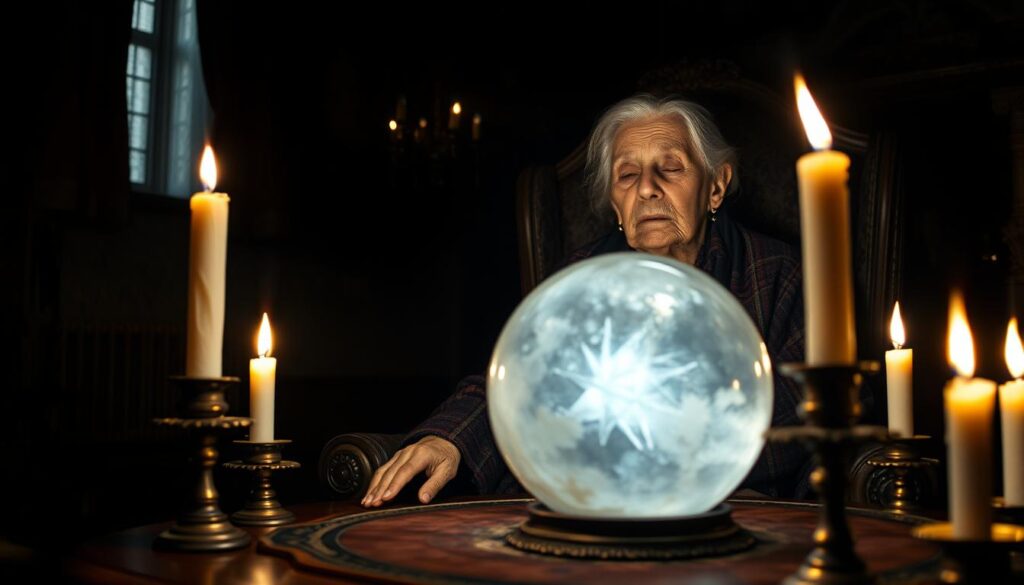
Baba Vanga reportedly lost her sight after being thrown by a tornado‑like event as a child. Locals began to seek her counsel, and her life turned from private to public as visitors brought questions and news.
Circulated predictions tied to her name include 9/11, the 2004 Indian Ocean tsunami, Brexit, and some far‑future scenarios like speculative time travel centuries ahead. Alleged 2020 warnings about world leaders also circulated.
Precise verification is elusive. Records, dates, and translations vary, which fuels debate much like discussions around Nostradamus.
- Her path relied on word‑of‑mouth and community visits rather than stage shows.
- Admirers describe her intuition as a form of second sight or psychic abilities.
- Critics point to gaps in documentation and retrospective attribution.
“Her story shows how ideas about ability and fate travel across borders and adapt to local history.”
| Aspect | Baba Vanga | Other Media Psychics |
|---|---|---|
| Primary setting | Village visits, local counsel | TV, radio, live stages |
| Spread | Word‑of‑mouth, later media | Mass broadcasting |
| Verification | Ambiguous records | Recorded shows, documented critiques |
Her legacy highlights how reverence and skepticism can coexist, and how people around the world shape what counts as prophetic influence.
Conclusion
Across ritual and broadcast, readings have helped people navigate loss and uncertainty. The arc of these lives—from the Pythia to studio mediums—shows how a medium or reader uses the tools of their era to reach clients and communities.
Note the human stories: a man entering trance to help with health, a career built on columns and interviews, and small sessions that comfort loved ones. Value the ritual, the work, and the human care — strong, steady threads through time.
Pay attention to presentation: language, setting, and pacing change how a reader or one of the audience interprets abilities. Whether framed as spiritual gifts or practiced skill, these practices persist because they meet needs in everyday living.
Respect grief and hope, and weigh documentation and method. The debate about authenticity will continue, but the narratives endure as ways to find meaning, ritual, and community in the face of the unknown.