

This introduction explains the basics in plain language for readers new to the topic.
Shamanism is a broad spiritual practice that crosses faith lines and focuses on restoring balance in life. John Matthews calls it a practice rather than an organized religion, and many modern guides present it as a grounded, practical approach rather than magic.
In this guide you will learn a clear definition, how the practice often works, and common methods like journeying, clearing, and retrieval work. The aim is simple: reduce emotional baggage and support a calmer mind and stronger self-connection.
Expect practical framing: this approach looks at root causes rather than just symptoms. Many people combine these methods with other wellness paths. Individual experience varies, and the article helps translate spirit-world language into everyday terms without asking readers to adopt a specific belief system.
Key Takeaways
- Shamanic healing is a practical, restorative path that aims to rebalance life and mind.
- The guide covers definition, methods, and what sessions may feel like.
- Modern practice emphasizes emotional release and real-world benefits over mysticism.
- People often integrate these methods with other wellness routines.
- Language about spirit and world is explained so readers can choose what fits them.
Shamanism in the present day: a practical spiritual practice across cultures
Across the globe, shamanism shows up in modern life as a flexible set of methods rather than a single creed. It adapts to local needs and often sits alongside established faiths without replacing them.
John Matthews notes that this tradition “cuts across all faiths and creeds.” Practically, that means you can try these practices while keeping your religion, provided your belief system allows personal connection to a higher power.
Stanley Krippner defines a shaman as a community-assigned magico-religious professional who deliberately alters consciousness to get information from the spirit world.
“Shamans use a voluntary, ecstatic trance to travel to invisible worlds and bring back guidance that affects ordinary reality.”
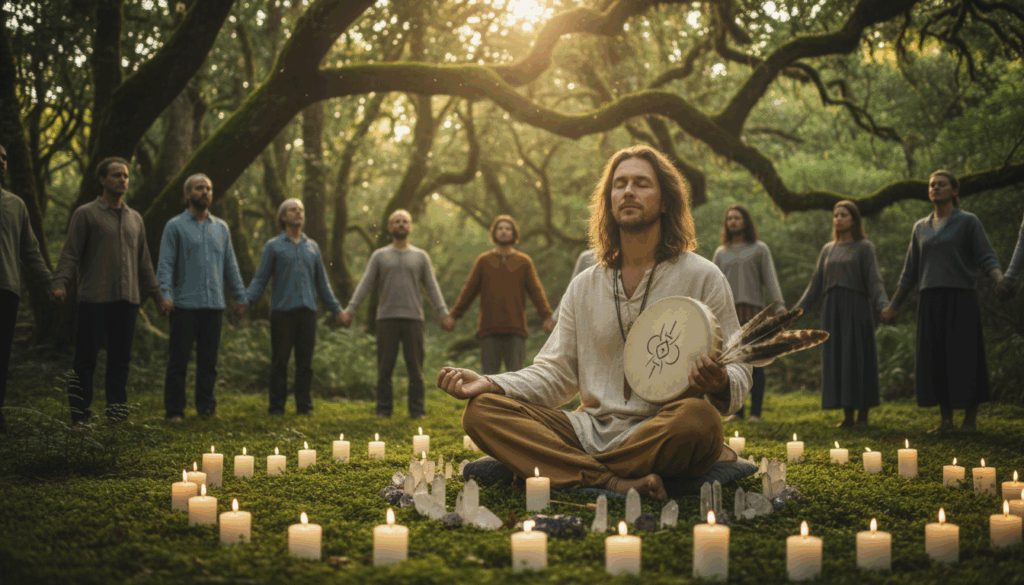
Altered states are intentional, controlled ways to focus awareness—often called ecstatic trance. Shamans form working relationships with helping spirits. That connection is central: guidance and power come through ongoing ties, not one-off tricks.
- How this helps today: individuals consult shamans for health, family issues, work stress, or ancestral patterns.
- What to expect: a guided journey that seeks information and practical guidance for real-life change.
For more on related forms of support and modern practice, see psychic healing.
What is shamanic energy healing
Many teachers describe this approach as two clear steps: diagnose patterns in the field, then perform targeted work to restore balance and harmony.
A beginner definition: working with the field to restore balance and harmony
Shamanic healing helps bring emotional, spiritual, and physical parts back toward wholeness. Practitioners read patterns around and within the body—stress, old beliefs, and stuck feelings—and aim to rebalance those patterns.

Diagnosis plus action in the invisible worlds
First, the practitioner locates root energies tied to symptoms. Next, they perform a specific choreography to remove what does not belong or to return what was lost.
Common misconceptions: grounded practice, not mysticism
Some fear occult theatrics, but most sessions focus on intention, clear methods, and measurable outcome. Sessions can resemble talk therapy in tone, yet the practitioner often does the active work while the client rests.
- Trauma note: this work can uncover deep wounds. Seek licensed mental health support for serious conditions.
- Why results vary: similar symptoms may trace to different root causes, so treatment is personalized.
For further reading on practical methods and guided approaches, see psychic energy healing techniques.
Core shamanic healing practices you may encounter
Practitioners commonly use structured journeys and practical tools to find patterns that affect daily life.
Journeying and trance methods
Journey work uses drumming, chanting, breathwork, or guided visualization to shift attention into a focused state. This trance is controlled—clients stay safe while the practitioner gathers guidance or does specific work.
Clearing and rebalancing
Clearing means finding blockages, removing burdens, and restoring flow so the body and heart feel lighter. Sessions often end with simple grounding steps to help regulation over time.
Soul retrieval and power animal support
Many traditions describe fragmentation after trauma as missing soul parts. Soul retrieval aims to restore presence and vitality without dramatic promises.
Power animals may be retrieved as allies. These animals offer strength, protection, and practical support in daily routines.
Divination and dreamwork
Divination pairs journey-based information with tools like runes, bones, or cards to clarify choices. Dreamwork attends to big dreams as meaningful signals that can guide insight and recovery.

| Practice | Method | Common outcome |
|---|---|---|
| Journeying | Drumming, breathwork, guided travel | Symbolic insight and targeted work |
| Clearing | Field scanning, energetic removal | Sense of lightness, better regulation |
| Soul retrieval / Power animal | Guided retrieval during trance | Restored vitality; added support |
| Divination & Dreamwork | Runes, bones, cards, dream exploration | Clarity for decisions and meaning |
An example: a modern session may include deep drums and global music while the client rests. Afterwards the practitioner explains where blockages connect to life patterns and suggests gentle integration steps.
Beginners usually experience these practices in a supportive, structured format with time for integration. For related services and follow-up options, see supportive session offerings.
What a shamanic healing session looks like for beginners
Ready clients often feel relief simply by knowing the process before they arrive. A clear outline helps set intention and ease anxiety about the session.
Before the session
Set one or two intentions. Name specific concerns and decide how deep you want to go. If you suspect root causes beneath surface symptoms, mention that up front.
During intake, a practitioner may ask about current challenges, medications, support systems, and whether you work with mental health or medical providers. This helps the healer plan safe, effective care.
During the session

You usually lie down and listen to steady drums or soft music. The practitioner guides a meditative state and leads the work—clearing, retrieval, or guided journeying.
Expect sensory notes: imagery, shifts in temperature, tingling, or calm in the body. The client’s role is to breathe, stay present, and notice inner responses while the healer does the active work.
After the session
Sessions often last about 45 minutes in modern practice. Afterward, dialogue helps name themes and plan next steps. Integration matters: rest, hydrate, journal, or sketch to process insights.
Follow-up support is a best practice, especially after retrieval-style work. Some people feel immediate lightness; others notice subtle shifts over days or weeks. The most useful outcome is clear guidance for life changes and further therapy if needed.
| Phase | Typical actions | Beginner result |
|---|---|---|
| Before | Intake questions, set intention, confirm safety | Clear plan and readiness |
| During | Guided meditative state, practitioner-led work, sensory noticing | Targeted removal or retrieval; new insight |
| After | Dialogue, rest, journaling, follow-up scheduling | Integration, emotional processing, ongoing support |
For beginners seeking training or introductory practice, consider a development workshop for beginners to build skills and confidence.
Conclusion
If you feel drawn to deeper restoration, this approach offers practical steps to regain balance.
Core takeaway: shamanism frames healing as a practice that seeks to restore balance by working with subtle energies and, often, guidance aimed at restoring the soul.
This path fits alongside existing faiths and modern wellness routines. Many people find it useful as a supportive modality rather than a replacement for therapy or medical care.
Next steps: reflect on your needs, choose a reputable practitioner, ask about training and follow-up, and combine care when trauma or complex issues appear.
If you want related supportive tools, consider exploring spiritual tarot readings as an adjunct resource.