

Short intro: This guide explains a complementary wellness approach that aims to promote calm and balance by working with the body’s life force. Many traditions call that flow Qi or prana, while modern sources may label it biofield work or energy medicine.
People seek this approach to feel calmer, manage daily stress, and support overall health. Sessions are usually non-invasive and low risk, used alongside conventional care rather than replacing it.
What to expect: Practitioners describe hands-on or hands-off methods that aim to rebalance subtle forces. Results vary by person, method, and time; some gains are subtle or build over several visits.
For a practical overview of common practices and session details, see a helpful guide on psychic healing and related work. That resource fits well with a realistic, safety-first approach to supportive care.
Key Takeaways
- Used as supportive care, often for stress, anxiety, pain, and quality of life.
- Frames include Qi, prana, biofield, and energy medicine.
- Non-invasive methods aim to promote relaxation and balance.
- Outcomes vary; some effects are gradual rather than instant.
- Best used alongside medical and mental health treatment when needed.
Energy Healing Explained: Definitions, Goals, and Why People Try It
A growing number of people turn to supportive methods that aim to restore calm and function. In plain terms, healing energy often describes how someone feels when they move from frazzled and tired to steadier and more relaxed.

Everyday meanings
Think of energy balance as feeling regulated rather than scattered. Folks describe fewer spikes of overwhelm, easier sleep, and clearer focus when balance improves.
Core goal
The main goal of most sessions is simple: support the body’s natural relaxation response. That can help the nervous system settle and promote better day-to-day functioning and a higher quality life over time.
Complementary, not a substitute
This approach is intended as supportive care, not a replacement for medicine or professional mental health treatment. Continue prescribed treatment and talk with your healthcare provider about combining approaches.
Realistic expectations
Some people report calmer moods, gentler sleep, and less tension. These methods are not presented as cures for disease in mainstream guidance. They are options many try for added support alongside standard care.
What is energy healing and how does it work?
Across cultures, many traditions describe a subtle life force that links breath, movement, and inner balance.
The life force concept shows up as Qi in Chinese medicine and prana in Indian systems. These shared terms help people talk about vitality, regulation, and resilience in a common way.
Pathways and centers act like maps. Chinese medicine uses meridians—linear channels tied to organs. Indian traditions use chakras—central hubs that relate to emotion and function. Practitioners use these models to plan supportive work.
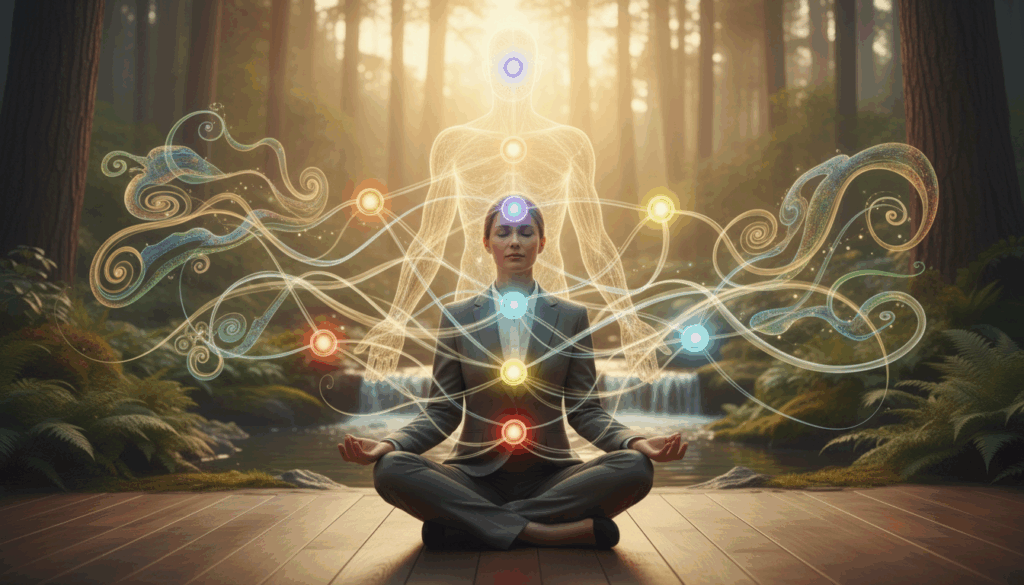
The modern biofield model describes a massless field that surrounds and permeates the body. This idea bridges hands-on and non-touch methods by framing the body as part of a larger field.
“Practices often blend focused attention, breath, and gentle touch to guide relaxation and balance.”
Typical session elements include a practitioner’s focused attention, calming breath cues, intention-setting, and light placement of hands or hovering above the body. Some describe channeling this work through a higher power or spirit; others use secular language. Either way, the process aims for relaxation, reduced tension, and gradual shifts in stress response.
| Model | Core idea | Common methods |
|---|---|---|
| Chinese medicine | Meridians link organs and function | Acupuncture, acupressure |
| Indian traditions | Chakras as energy centers | Yoga, pranayama, meditation |
| Biofield model | Field surrounding and penetrating the body | Reiki, Therapeutic Touch, distant sessions |
For practical technique summaries and session examples, see a helpful guide on psychic energy healing techniques. It fits well for readers exploring forms and methods alongside conventional care.
Key Principles Behind Energy Medicine in Modern Wellness
Imagine a river that runs smooth when life feels steady and slows where stress piles up.
Flow vs. blockage uses that river image to explain why many practitioners focus on clearing stagnation. When flow moves freely, people often feel more balanced. When flow stalls, daily signs show up: tight shoulders, racing thoughts, low mood, or a sense of being stuck under chronic stress.

How relaxation shifts the nervous system
Many approaches aim to prompt the body’s natural relaxation response. That means nudging the parasympathetic rest and digest mode so recovery, sleep readiness, and emotional regulation improve.
Researchers often track observable changes — lower cortisol and better heart rate variability — rather than trying to prove subtle fields directly. The focus in modern wellness tends to be on measurable outcomes and usable tools for stress and anxiety.
Typical session process
Sessions commonly guide a slow-breathing, quiet-attention routine with gentle contact or non-touch scanning. Practitioners cue clients to notice body sensations and make small adjustments. This simple process supports self-regulation and serves as supportive care for stress-related conditions.
For practical guidance on manual techniques and field work, see this overview on energy manipulation.
Common Types of Energy Healing Therapies People Use Today
Modern wellness seekers often pick from a set of accessible practices that blend touch, movement, and mindful attention.
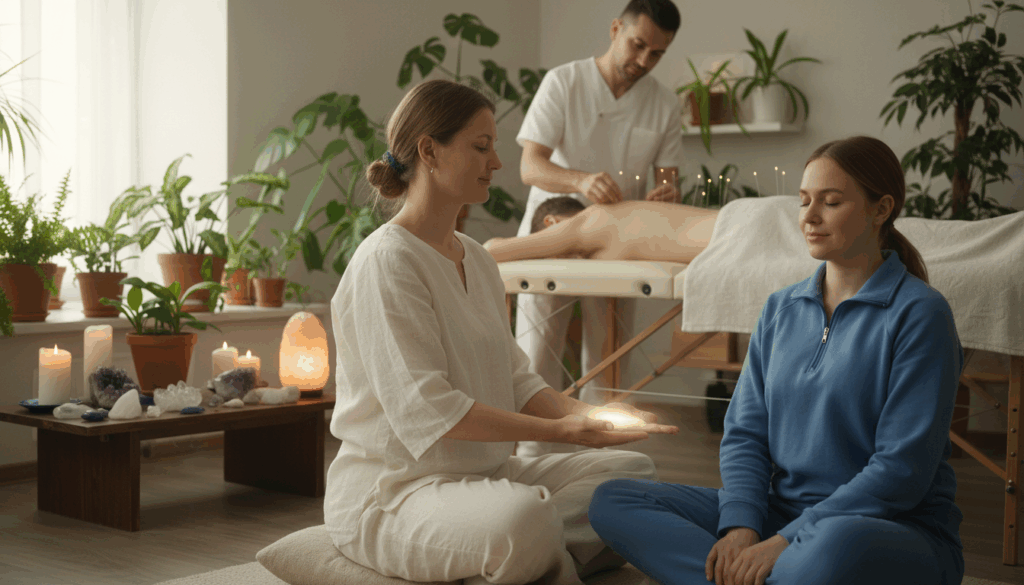
Reiki. Hands either rest lightly on the body or hover above it. Practitioners use focused intention and calm attention to support deep relaxation and nervous system downshift.
Acupuncture (traditional Chinese medicine). Thin steel needles target points along meridians to rebalance flow. Common uses include chronic pain support and stress relief.
Qigong and tai chi. These moving meditations pair gentle movement, breath, and focus. Many people use them to improve circulation, sleep, and overall calm.
Therapeutic Touch and polarity therapy. Both favor non-invasive work with the energy field. Polarity may add gentle pressure and lifestyle guidance alongside hands-on options.
EFT tapping and reflexology. Point-based methods apply fingertip taps or pressure on hands, feet, or face to reduce stress and ease pain or tough emotions.
“Many clients report feeling calmer and more grounded after a single session.”
Note: Research tends to be strongest for acupuncture and Reiki among these therapies, while other forms have smaller or emerging evidence bases.
What an Energy Healing Session Looks Like in Real Life
A typical session starts with a short check-in so the practitioner can learn your goals and any recent symptoms.
Intake and settling: Brief questions set intention. Then you sit or lie down, usually fully clothed. The practitioner explains the plan and asks for consent.
Scanning and contact: The healer may move hands just above the body to scan for imbalance. Some methods use light touch; others apply gentle pressure in targeted spots.

In-person versus remote
In-person sessions let the practitioner work near your field and use subtle touch. Remote sessions often happen over Zoom; you find a quiet spot and relax while the practitioner guides the process from afar.
Common after-effects and tracking
People report deep calm, tiredness, brief emotional release, or subtle changes that build over time. These non-invasive sessions are low risk.
“Many clients notice better sleep and a clearer mind in the days after a session.”
Tip: Keep a simple journal of sleep, mood, and pain to track whether this form of care supports your goals.
Potential Benefits for Stress, Anxiety, Pain, and Mental Health
A gentle session can quickly shift a tense body into a quieter, more rested state.
Stress relief and better sleep. Many clients notice deep relaxation right away. That calm can help people fall asleep faster and sleep more soundly. Small gains often show up after a single visit.
Support for anxiety, depression, and burnout. Sessions aim to help regulation and reduce reactivity. They are offered as supportive care, not as a substitute for formal mental health treatment. Talk with your clinician before changing any treatment plan.
Chronic pain support. Acupuncture has the strongest clinical evidence among related therapies for some pain conditions. Results vary by condition and person, so realistic expectations matter.

Everyday quality-of-life improvements. People often report feeling more grounded, more resilient, and better able to recover after stressful events. That shows up as fewer stress spikes and improved coping.
“Research often measures stress hormones, heart rate variability, sleep, and self-reported pain and anxiety to track change.”
| Benefit | Typical markers | Notes |
|---|---|---|
| Stress relief & sleep | Improved sleep quality, lower perceived stress | Often noticed after one session; supports daily recovery |
| Anxiety & mood | Reduced anxiety scores, calmer mood | Used alongside standard mental health treatment |
| Chronic pain | Pain scale changes, function gains | Acupuncture shows strongest trial support among therapies |
For a practical referral to a trained practitioner, consider a short search or a consultation with a psychic counselor. Use these methods as part of a broader health plan with proper medical oversight.
Energy Healing for Addiction Recovery and Emotional Regulation
Recovery programs often add gentle supportive practices to help people manage intense cravings and strong feelings.
Why programs include these tools: They offer a low-risk way to calm the nervous system during vulnerable times. Programs pair them with counseling and medical treatment to reduce stress hormones and boost emotional regulation.
Skills that build healthier coping
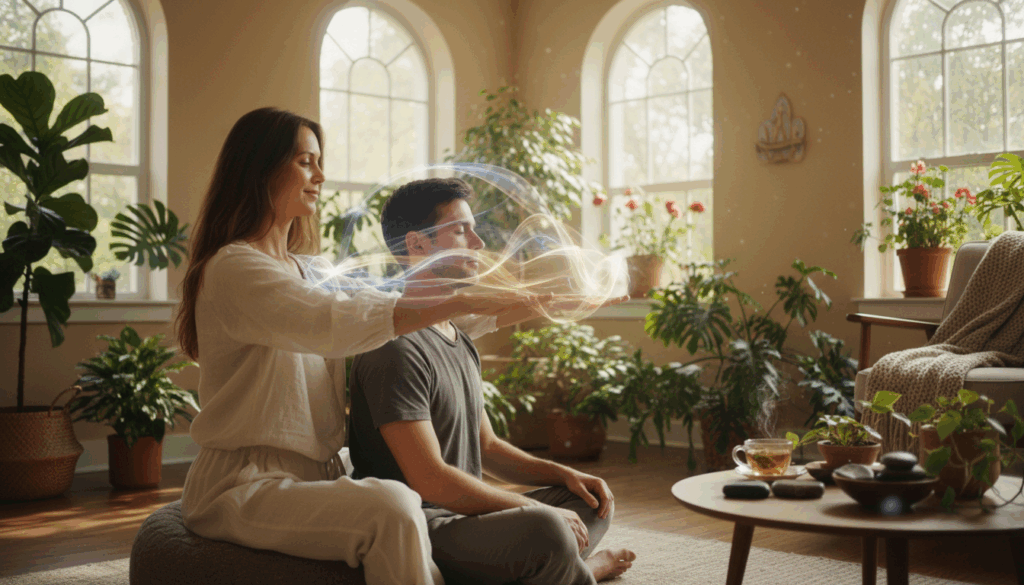
Breathwork, meditation, and mindful movement teach people to notice sensations and delay reactivity. Over time, these methods help create space between craving and action and support daily routines that aid recovery.
Quick technique for use in the moment
Box breathing (4-4-4-4):
- Inhale for 4 counts.
- Hold for 4 counts.
- Exhale for 4 counts.
- Hold for 4 counts. Repeat as needed.
Use this during cravings, panic, conflict, or sleepless nights to prompt rapid calm.
“These methods work best as a complement to formal treatment, therapy, and peer support.”
| Tool | Typical use | Benefit |
|---|---|---|
| Acupuncture | Program sessions or clinics | May lower stress hormones; supports craving control |
| Mindful movement (tai chi/Qigong) | Daily short practice | Improves regulation and sleep |
| Breathwork & meditation | On-the-spot or routine practice | Quick parasympathetic calming; easy at home |
These approaches are accessible and brief, and they pair well with therapy and medical care. For additional guidance, consider a trusted referral like psychic intuitive readings and guidance as one of many supportive resources.
Research and Evidence: What We Know, What We Don’t, and What’s Next
Clinical studies have begun to test whether supportive modalities can change measurable signs like sleep and stress hormones.

Where trials are strongest
Acupuncture and Reiki have the clearest clinical trial base compared with many other methods. Trials show more repeatable results for some pain conditions and short-term stress relief.
What studies measure
Researchers track outcomes that show real-world change:
- Stress markers such as cortisol.
- Heart rate variability (HRV) for autonomic balance.
- Sleep quality, anxiety scores, and pain scales.
| Measure | Typical finding | Notes |
|---|---|---|
| Cortisol | Often reduced after sessions | Small to moderate effects |
| HRV | Improved variability in some trials | Suggests parasympathetic shift |
| Sleep & mood | Better sleep and lower anxiety ratings | Results vary by condition and study quality |
Limits and uncertainties
Current evidence often comes from small samples and mixed designs. Practitioner differences, varied session styles, and placebo controls complicate interpretation.
Debates about mechanisms—such as field-based models versus psychophysiological pathways—remain unresolved. That means medicine can cautiously say there are potential benefits, but full explanations are not settled.
“Treat session work as a supportive tool and track your own outcomes over time.”
Practical takeaway: If you try energy healing as part of a care plan, keep a simple log of sleep, mood, and pain. Use a trusted reference like the clinical overview of psychic energy to learn more and make informed choices.
What’s next: Larger, better-controlled trials and clearer standards for practice will help people and clinicians weigh benefits more confidently.
Safety, Risks, and How to Choose Reputable Energy Healers
Before booking a session, learn how reputable practitioners protect your health and boundaries.
Low-risk care and common precautions
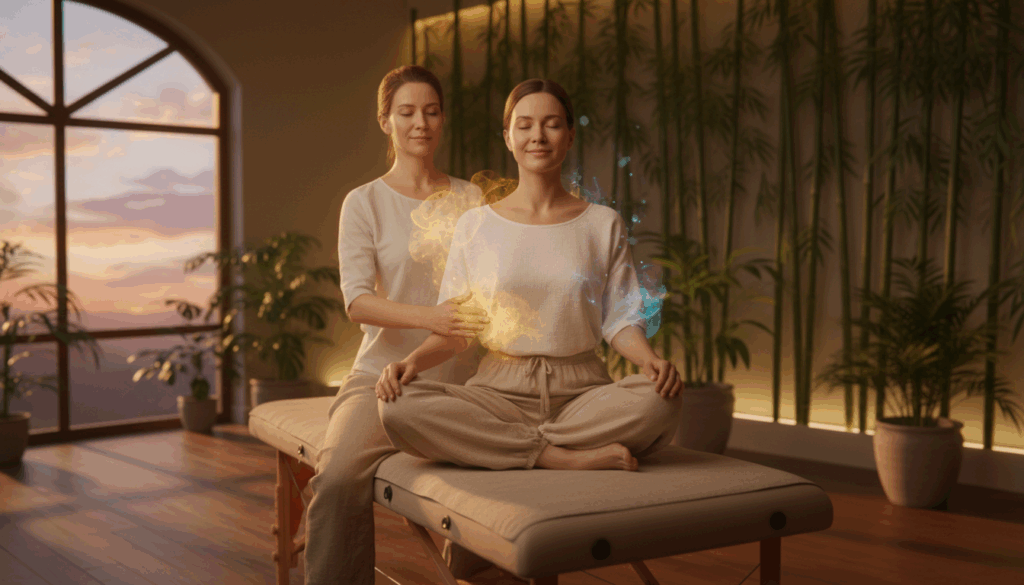
Most forms are non-invasive and carry few side effects because they use touch, presence, or guided breath rather than drugs.
Exceptions: Licensed acupuncture requires sterile technique and state credentialing. If you have implants, bleeding disorders, or pregnancy, consult your clinician first.
When to talk with your healthcare provider
If symptoms persist, you have complex medical conditions, serious mental health concerns, or plan to change any medicine or treatment, get medical advice before adding new sessions.
Red flags to avoid
- Promises of permanent cures or pressure to stop medical care.
- Claims that only one person can fix you, or that a healer has divine status.
- Boundary violations, romantic pressure, fear-based predictions, or demands that undermine your autonomy.
What reputable practitioners do
Good healers offer clear pricing, informed consent, and a plain description of touch versus non-touch methods.
They respect trauma limits, refer back to medicine when needed, and encourage clients to keep their mental health and medical care in place.
How to vet and integrate responsibly
- Check credentials (licensed acupuncturist, Reiki lineage, or professional reviews).
- Ask for a short consult, read client feedback, and request written consent details.
- Schedule sessions around existing treatment, track sleep, mood, and pain, and adjust use based on real outcomes.
“A trustworthy practitioner supports your choices and never uses spirit or power language to override medical advice.”
For a vetted referral to spiritual and clairvoyant services that complement standard care, consider a brief consult at clairvoyant spiritual readings.
Conclusion
If you want to try calmer routines, start small and track simple changes over weeks.
At its simplest, energy healing describes supportive therapies people use to promote relaxation and balance. Sessions use focused attention, breath, and light touch or non-touch methods to nudge the nervous system toward rest.
Try one option—Reiki, acupuncture, Qigong/tai chi, Therapeutic Touch, EFT tapping, or reflexology—and notice sleep, mood, and body tension over time.
Benefits often include stress relief, better sleep, improved regulation, and occasional pain support. Evidence is strongest for acupuncture and Reiki, so pair these methods with your regular medical and mental health care.
Choose a reputable practitioner, try a few sessions or a short daily practice, log your results, and keep your healthcare team informed.