

What is energy healing massage in plain terms? It blends hands-on bodywork with gentle, energy-based methods to support balance across body, mind, and spirit. Sessions aim to ease stress, reduce tension, and promote better sleep and overall well-being.
Clients find value in a simple, non-invasive approach that complements medical care. Techniques range from Reiki and acupuncture to reflexology and EFT tapping. Evidence tends to be stronger for acupuncture and Reiki, while other methods show mixed results.
Expectations: This guide will explain how sessions often flow, what sensations you might notice, and how to pick a practitioner in the United States. It also covers basic ideas about life force, common signs of imbalance, and safety tips.
The tone here stays friendly and practical. No promises are made. Think of these sessions as supportive tools that many people use to improve relaxation and enhance quality life.
Key Takeaways
- Sessions mix touch work with energy-based techniques to support balance.
- Benefits often include stress relief, better sleep, and calmer mood.
- Acupuncture and Reiki have stronger evidence compared to some other methods.
- Methods are generally low-risk and meant to complement medical care.
- Guide will cover signs of imbalance, common techniques, session flow, and booking tips.
Energy healing massage basics: the definition and the “life force” concept
Many traditions describe a subtle life force that gives people calm, resilience, and a sense of steady well‑being. Practitioners use this framework to explain sensations of relaxation, recovery, and renewed balance in the human body, though it remains a practitioner model rather than a universal medical label.

How this method differs from standard therapy
A standard massage focuses on muscles, fascia, circulation, and the relaxation response. By contrast, sessions that add intentional work with the energy body pair hands‑on body work with techniques aimed at the subtle field around the body.
The role of spirit and the body‑mind connection
Some clients welcome spirit and meaning‑making during a session; others simply want stress relief. You can take part without adopting any belief system. The main goal tends to be a stronger body mind connection and improved regulation.
What blocked flow and imbalances look like daily
“Blocked” flow often shows up as feeling stuck, tense, or unable to fully rest even after sleep. Imbalances can surface as irritability, recurring tightness, mental fog, or low motivation—signs to address rather than medical diagnoses.
Different traditions call pathways chakras, qi, or aura, but clients usually notice practical outcomes: more relaxation, clearer thinking, and gradual release. For related background on guided approaches, see psychic healing.
What is energy healing massage and how does it work?
Sessions often combine hands-on touch with subtle field work to address both tissue tension and nervous-system tone. This means two layers commonly happen at once: manual bodywork to ease muscular guarding and an energy-focused approach—using light contact or no-touch—to encourage calm and balance.

How practitioners use hands, light touch, or no-touch methods
Common hand methods include gentle placements where the practitioner rests their hands on key areas, hovering a few inches above the body, and scanning motions like those used in Therapeutic Touch to detect shifts.
Techniques such as Reiki may be hands-on or hovering, while Quantum Touch blends light contact with breath and focused attention to notice changing sensations.
Why combining energy work and bodywork supports whole-system balance
Massage softens muscles and improves circulation. At the same time, subtle approaches help the nervous system settle. Together they often create faster regulation than either approach alone.
How pathways relate to stress, pain, and emotional load over time
Prolonged stress can show up as chronic tension, shallow breathing, headaches, or recurring pain patterns. During a session many people report thoughts slowing, a calmer mind, or an emotional “exhale.”
Takeaway: These methods aim to support the whole system—body and nervous systems—so clients may feel more regulated and less burdened by long-term stress or persistent pain.
Signs your energy flow may be out of balance
When daily stress keeps replaying in the mind and body, many people notice a broader imbalance in their overall rhythm. Use these signs as prompts to seek support, not as a self-diagnosis.

Stress and anxiety that linger in the mind and body
Ruminating thoughts at night, feeling keyed up, or carrying tension in the shoulders and jaw are common. Physical signals include tight chest, shallow breathing, and restless legs.
Physical discomfort, tension patterns, and recurring pain
Ongoing tightness in hips, neck, or lower back, plus recurring aches that resist standard care, often lead people to try blended approaches. These patterns can point to deeper holding in the system.
Low vitality, poor sleep, and feeling “off”
Waking unrefreshed, midday crashes, or an emotional flatness can signal low vigor and disrupted balance. Poor sleep that never feels restorative deserves attention.
- Keyed up or ruminating at night
- Tension in shoulders, jaw, or hips
- Tight chest, shallow breath, restless legs
- Recurring pain or non‑resolving tension
- Waking tired, afternoon energy dips, flat mood
| Sign | Typical Example | Practical Step |
|---|---|---|
| Lingering stress | Night rumination | Track sleep and mood |
| Somatic anxiety | Tight chest, restless legs | Try nervous-system calming tools |
| Recurring pain | Neck or low back tension | Combine manual care with gentle field work |
| Low vitality | Afternoon crash, flat affect | Assess sleep habits and support |
If symptoms are severe or persistent, consult a healthcare provider. For related techniques and background, see psychic energy techniques.
Energy healing techniques commonly blended with massage
Here’s a short menu of common add-ons you may see offered alongside table work. Each entry shows how the approach typically looks during a session and why clients choose it.

Reiki
Hands-on or hovering placements support deep relaxation. Practitioners pair light contact with soft strokes to encourage the body’s natural calming response.
Therapeutic Touch
Practitioners center themselves, then scan the field above the body. Smoothing motions may be used before or after bodywork to help a client settle.
Polarity Therapy
Gentle pressure, guided movement, and lifestyle suggestions (yoga, mindful eating) work together. This method blends easily with table-based care.
Pranic healing and Reflexology
Pranic work uses non-touch clearing and aura recharging for clients who prefer minimal contact. Reflexology applies pressure to hands, feet, or ears to support nerve pathways.
Quantum Touch, EFT, acupuncture, qigong
Quantum Touch uses touch + breathing + focused awareness to shift sensations, often around pain. EFT adds tapping with focused thoughts as brief coaching. Acupuncture and qigong are related treatments that may complement a session for stress and sleep support.
| Add-on | Typical Format | Why clients choose it |
|---|---|---|
| Reiki | Hands or hover, paired with strokes | Deep relaxation |
| Therapeutic Touch | Field scanning, smoothing | Settling nervous system |
| Reflexology | Pressure on feet/hands/ears | Comfort and reflex support |
| Quantum Touch / EFT | Touch+breath / tapping | Pain modulation and calm |
How to prepare for an energy healing massage session
A clear intention and a few simple steps before your appointment set the stage for better results. Keep your goal short and specific—sleep better, feel calmer, reduce neck tension, or process a stressful season.

Set an intention
State one focused aim before you arrive. Saying it aloud or noting it on your intake form helps the practitioner tailor the session to support health and well‑being.
What to share with your practitioner
- Current symptoms, recent injuries, and ongoing medical treatments.
- Medications, recent surgeries, pregnancy status, and mental health concerns.
- High stress load or life demands such as caregiving or grief.
“Honest details let a practitioner choose safe pressure, pacing, and techniques.”
Simple pre-session tips
Hydrate, avoid heavy meals right before, and wear loose clothing. Arrive 10–15 minutes early to create gentle mental space and silence notifications.
Comfort matters: Ask for bolsters, blankets, or no-scent options. You may also request light or no-touch approaches if you prefer less physical contact.
| Prep step | Why it helps | Quick tip |
|---|---|---|
| Set an intention | Focuses the session | One short sentence |
| Share medical details | Ensures safe care | List meds and treatments |
| Hydrate & dress comfortably | Reduces discomfort | Water and loose clothes |
Remember: These approaches often support quality of life but do not replace a medical diagnosis or treatment. If in doubt, discuss options with your healthcare provider and see further guidance on energy manipulation.
What happens during a session from start to finish
The session starts simply: a few minutes to share goals, history, and any areas to avoid.
Intake and discussion
The intake is a quick, supportive conversation. You’ll state goals, recent injuries, and any medications.
Practitioners ask about pressure preferences and boundaries. This helps them plan a safe treatment that honors modesty and comfort.
The table experience
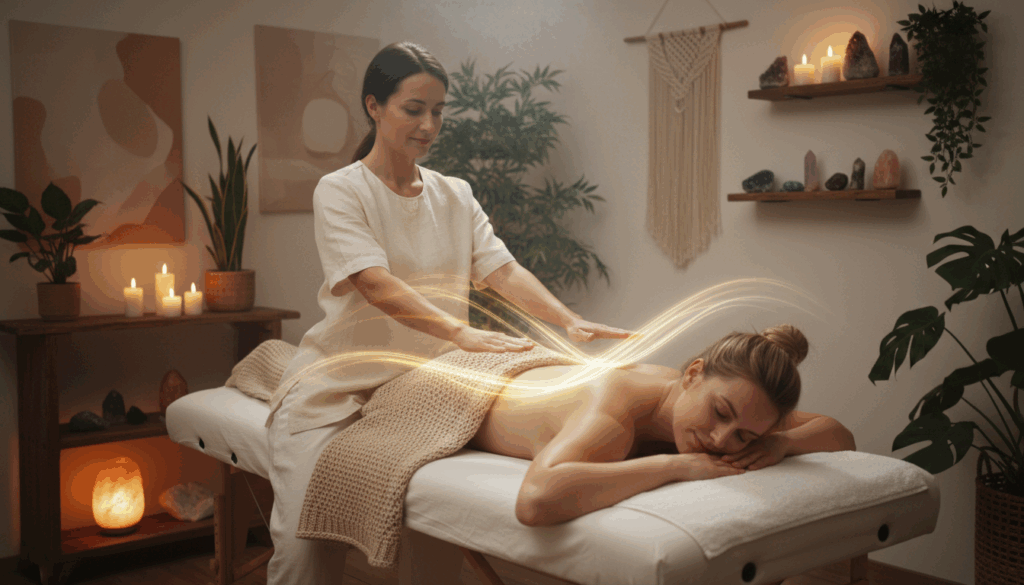
On the table, the practitioner may alternate massage strokes with still or hovering hands placed over key zones.
Sessions often begin with a quiet scan, then blend deeper work and gentle touch. Breath cues and focused attention help notice shifts in sensation.

What you may feel
Many clients report warmth, tingling, heaviness, or lightness as tension eases.
Some notice a deep relaxation or an emotional release. Others feel only subtle shifts; both responses support improved balance in body and mind.
Aftercare and integration
After a session, drink water, take a gentle walk, and avoid booking busy time right away.
Jot quick notes on mood, sleep, or pain. Try brief breathing breaks and lighter workouts to help new patterns settle.
| Step | Why it helps | Quick tip |
|---|---|---|
| Intake | Ensures safe care | Be honest about meds |
| Table work | Combines touch and field work | Ask for pressure changes |
| Aftercare | Supports integration | Hydrate and rest |
“You can pause or change anything at any time during a session.”
Key advantages and benefits for quality of life
Small, practical gains often add up into noticeable change. A session can lower nervous-system arousal so breathing slows and muscles relax. Over days this may help reduce stress and make coping easier.

Reducing stress and supporting a calmer nervous system
Shifts show up as slower breath, less muscle guarding, and an easier ability to turn off at night. These changes help reduce stress and steady daytime energy.
Relief from pain and muscle tension
When the body softens, bracing eases. That can improve range of motion and lead to fewer flare-ups of chronic pain.
Better sleep and deeper relaxation
Many people fall asleep faster, wake less often, and feel more restored. Improved sleep is a major boost to overall quality life.
Mental health support for anxious or cycling thoughts
Sessions may help calm anxiety and reduce racing thoughts by promoting body awareness. These are supportive tools alongside clinical care.
Whole-person benefits: grounded, balanced, connected
Well-being gains include feeling more grounded and a clearer body mind connection. People report a warmer sense of spirit and renewed capacity for daily tasks.
| Benefit | Typical outcome | Daily impact |
|---|---|---|
| Less stress | Calmer breathing | Better focus |
| Pain relief | Reduced muscle guarding | More movement |
| Better sleep | Fewer wake-ups | Higher daytime energy |
| Mental calm | Fewer racing thoughts | Improved mood |
“Reported benefits vary; these approaches support health and quality life rather than replace medical care.”
What the evidence says today and what it doesn’t
The research picture is uneven—some techniques show promise, while many remain under-studied. Clinical trials have given clearer results for acupuncture and Reiki, yet most other approaches lack enough trials to state firm success rates.
Why some methods have more studies
Why acupuncture and Reiki are better studied
Both have longer clinical histories and larger research programs. That has produced multiple trials across pain, sleep, and stress outcomes. Still, results vary by study design and population.
What “more high-quality scientific evidence is needed” means
It means studies often use small samples, different protocols, and subjective measures. These limits make results hard to compare and reproduce. Better trials use consistent methods, controls, and longer follow-up.
How to track results over time
Keep simple, repeatable notes. Baseline your pain (0–10), sleep quality, anxiety/stress, energy, and mood before the first session. Record the same measures after each visit for several weeks.
| Measure | How to rate | Why it helps |
|---|---|---|
| Pain | 0–10 scale | Tracks symptom change objectively |
| Sleep | Hours + quality (poor/fair/good) | Shows restorative gains over time |
| Stress | 0–10 scale | Reflects nervous-system shifts |
| Energy & mood | Daily note (low/medium/high) | Reveals cumulative effects |
“Expect relaxation first; longer-term gains often need multiple sessions and honest tracking.”

Safety, risks, and how energy therapies fit with medical care
Because approaches focus on calm and safety, they rarely involve invasive procedures or complex equipment. Most work uses light contact or no-touch methods, and clients keep control of boundaries.

Why sessions are usually low risk
Non-invasive methods and gentle pacing reduce side effects. Practitioners stop or slow down when you ask. This makes sessions safe for many people.
Use as complementary care, not a replacement
Keep medical treatments in place. These practices support comfort and stress relief but do not treat or cure serious physical disease. Continue prescribed care and follow your provider’s advice.
When to contact a healthcare provider
- Persistent or worsening pain
- Numbness, severe dizziness, chest pain, or fever
- Unexplained fatigue or mental health crisis
| Concern | Action | Why it matters |
|---|---|---|
| New or worsening pain | See medical provider | Rule out physical disease |
| Numbness/tingling | Report to clinician | Avoid delayed diagnosis |
| Emotional release | Pause, ground, seek mental health support | Keep safety and integration |
Tell your practitioner about ongoing medical treatments and diagnoses so they can adapt pressure and session goals. For related background and context, see psychic energy overview.
“A reputable practitioner will respect scope of practice and encourage appropriate referrals.”
How to choose an energy healer and book an appointment
A good first step is to choose someone who explains techniques plainly and respects your boundaries. Clear training, a professional intake, and a calm manner matter more than labels.
Practical selection criteria
Look for transparent training and a practitioner who names the techniques they use—hands-on, hover, or no-touch. Check that they describe risks and contraindications before you book appointment.
Questions to ask
Ask about session length, pricing, what’s included (table work, reflexology, or a Reiki add-on), draping policy, and coordination with medical care. Also confirm consent and pacing rules.
In-person vs. distance options
Some offer remote sessions that they say “transcend time and space.” Choose based on comfort and budget. Both formats can support nervous-system regulation, though formats differ.
Scheduling guidance
High stress: try weekly. Maintenance: biweekly. General well‑being: monthly. Tailor frequency to your goals and symptoms in simple tracking notes.
“Pick a practitioner who communicates clearly and honors consent.”
Red flags: promises of cures, pressure to stop medical care, or sales tactics that use fear. To feel confident, use this quick checklist before you book appointment.
Conclusion
In short: energy healing massage blends table work with subtle-field approaches to support relaxation, balance, and whole-person well‑being.
Many people use these sessions for stress relief, calmer nervous-system tone, and a practical “reset” that helps them feel more at home in their body.
Techniques vary — Reiki, Therapeutic Touch, polarity methods, pranic work, reflexology, EFT, qigong, and acupuncture are common — so ask what an appointment includes and how it will feel.
Evidence favors acupuncture and Reiki more than many other methods, and wider, higher-quality studies remain necessary before broad medical claims can be made.
Next step: pick a reputable practitioner, set a clear intention, track sleep/mood/pain/energy, and adjust frequency to match goals. Use these approaches as complementary care and consult your healthcare provider for persistent concerns.