

Quick guide: This intro explains the roots and role of a gentle, noninvasive practice that many use for relaxation and stress relief.
Origins: The name comes from Japanese words for universal rei and life force ki. Practitioners describe working with subtle energy to support calm and comfort during a session.
Sessions usually feel quiet and hands-on or near the body. You will learn how to prepare, what a step-by-step visit looks like, common sensations, and simple aftercare. Most people seek this approach for stress, pain relief, better sleep, or general health support.
Balanced view: Some clinics offer this as a complementary option, but scientific proof for a measurable universal field remains inconsistent. It is low risk for most, yet delaying medical care for serious symptoms can be harmful.
Later sections will help you pick a practitioner, decode titles like “master,” and note typical pricing and insurance patterns. For additional resources, see a related guide on psychic healing resources.
Key Takeaways
- A short, gentle practice used mainly for relaxation and symptom support.
- Rooted in Japanese terms and described by practitioners as working with subtle forces.
- Offered in some integrative settings, but research results vary.
- Generally low risk; do not delay medical care for serious issues.
- This guide covers sessions, sensations, choosing a practitioner, and costs.
What Is Reiki, and Why People Try It
Rei commonly translates as universal or spiritual, while ki refers to a vital life force. That language appeals to many readers who look for gentle, noninvasive support and a more holistic vocabulary for stress relief.
Mikao Usui developed this Japanese system in the early 1900s. Hawayo Hiromi Takata later brought the practice to the United States, helping it spread beyond Japan and into Western wellness circles.
People seek this method for curiosity, stress overload, extra comfort during medical visits, or as a companion to other approaches. It often appears in hospitals, hospices, and integrative medicine programs as a complementary service focused on relaxation and coping.

Clinics commonly group it with massage, acupuncture, and meditation. That label—complementary—matters: these therapies support conventional treatment rather than replace it.
Practitioners learn through levels of training and attunement, which people expect to vary by teacher and tradition. Acceptance in medical communities still varies, so many choose it alongside, not instead of, standard care.
For more on related approaches and methods, see psychic energy techniques.
what is reiki energy healing
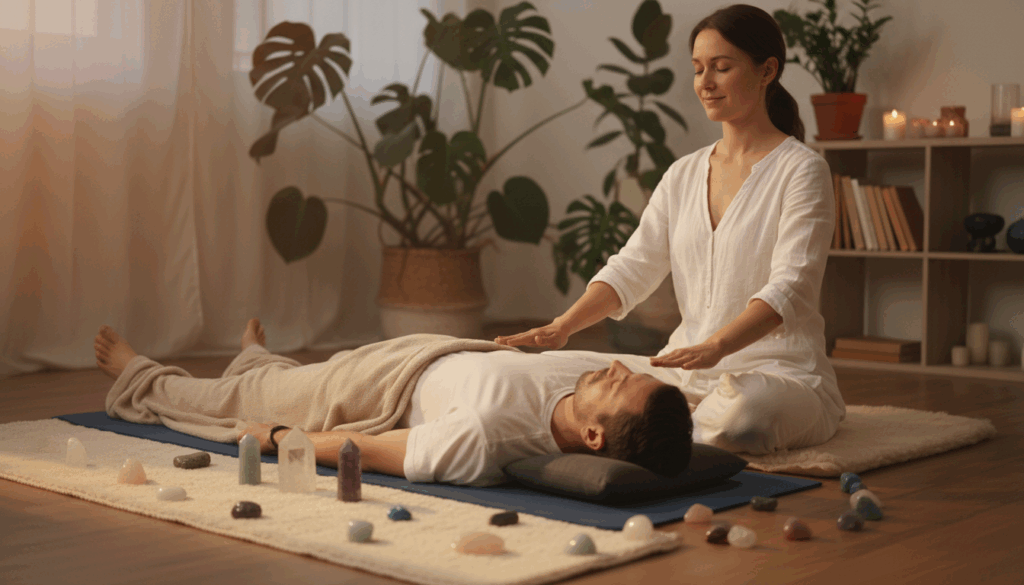
A gentle session aims for deep relaxation and a sense of balance rather than physical manipulation. Sessions keep clients fully clothed and focus on calm, steady contact or hands held just above the body.

Balancing “stuck” flow in the body
Practitioners often describe blocked flow when someone feels tense, tired, or emotionally off. They use simple touch or hovering hands to encourage a return to ease.
This approach appeals to people seeking relief from stress, pain, or anxiety who prefer a low-touch session that calms the nervous system.
How this differs from massage and other hands-on treatments
Unlike massage, there is no kneading, pressure, or muscle work. Recipients remain clothed and rest quietly while the practitioner stays still and attentive.
| Feature | Low-touch session | Massage |
|---|---|---|
| Clothing | On | Often on or off depending on technique |
| Touch | Light touch or hands-hovering | Kneading, pressure, manipulation |
| Primary goal | Calm and perceived balance | Muscle relief and tissue work |
| Good for | Stress, anxiety, gentle pain support | Muscle tension, sports recovery |
Practical tip: Ask about touch style before booking so expectations match the chosen treatment.
How Reiki Works According to Practitioners
A common description from masters frames the practitioner as a clear conduit, not a source, for subtle life flow. They say they do not give personal power; instead, they channel a universal force directed where a client needs support. This distinction helps clients feel safe about boundaries and consent.
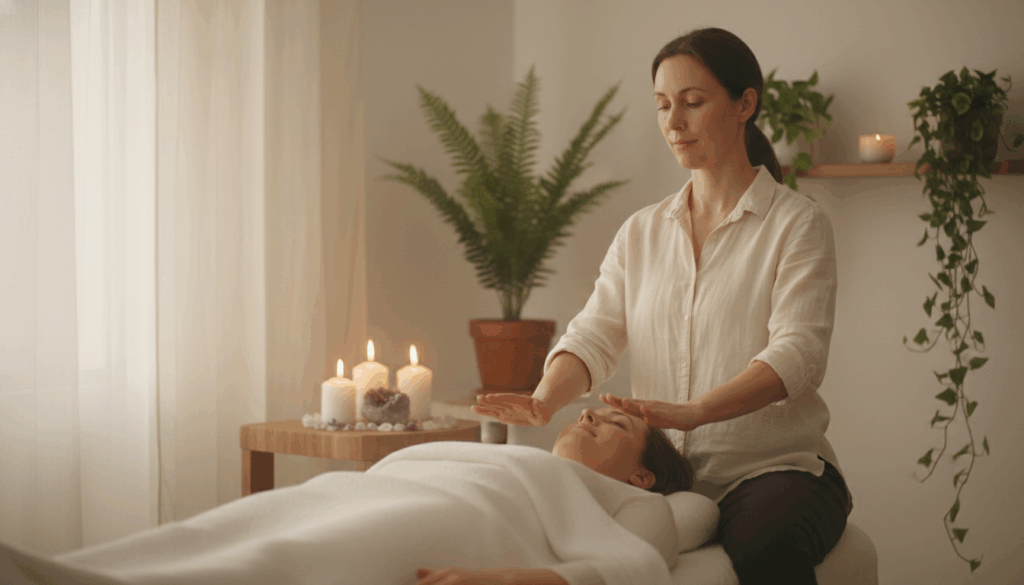
The two main touch styles
Hands-on: Gentle contact placed on clothed areas of the body. This can feel reassuring and grounding for many clients.
Hands-hovering: Hands held just above the body to reduce direct contact while keeping focused attention. Both styles are part of the same system and depend on comfort and consent.
Common practitioner terms
- Centering: Gathering focus and calm before a session.
- Clearing: Letting go of tension or emotional blocks.
- Beaming and smoothing the aura: Descriptions for shifting perceived patterns around the body and life context.
Pathways, the mind-body link, and research
Some practitioners reference meridians or pathways as an easy-to-follow map for attention. Many clients report slower breathing, deep relaxation, and a calmer stress response after sessions.
Researchers note that while people report benefits, scientific methods have not confirmed a measurable field mechanism. Readers can hold two views at once: a spiritual explanation and a practical relaxation/context effect that often shapes results.
How to Prepare for a Reiki Session
Before your visit, a few simple steps help the session run smoothly and boost relaxation.

Clothing and brief intake
Wear: comfortable, non-restrictive clothes you can lie down in. You typically stay fully clothed.
Share: list of current medications, key symptoms, recent procedures, and major health conditions so the practitioner can plan safe care.
Choosing a setting
Options include hospital programs for complex medical needs, integrative clinics, wellness centers for general support, home visits for convenience, or distance sessions. Ask how the remote session will run before booking.
Comfort factors and boundaries
Lighting, music, table warmth, room temperature, and privacy shape relaxation. Decide if you prefer touch or hovering, and whether to talk or stay quiet.
“Arrive a few minutes early so your body and mind have time to settle.”
| Setting | Best for | Notes |
|---|---|---|
| Hospital | Medically complex care | Integrates with clinical teams |
| Wellness center | Stress and general relaxation | Flexible scheduling |
| Home / Remote | Convenience | Ask about session structure and time |
What Happens During a Reiki Session Step by Step
Begin with a brief health check, then rest fully clothed while the practitioner works with gentle hand positions.
Arrival and intake: A quick chat covers medications, current symptoms, and goals. You’ll also note any areas to avoid touching.
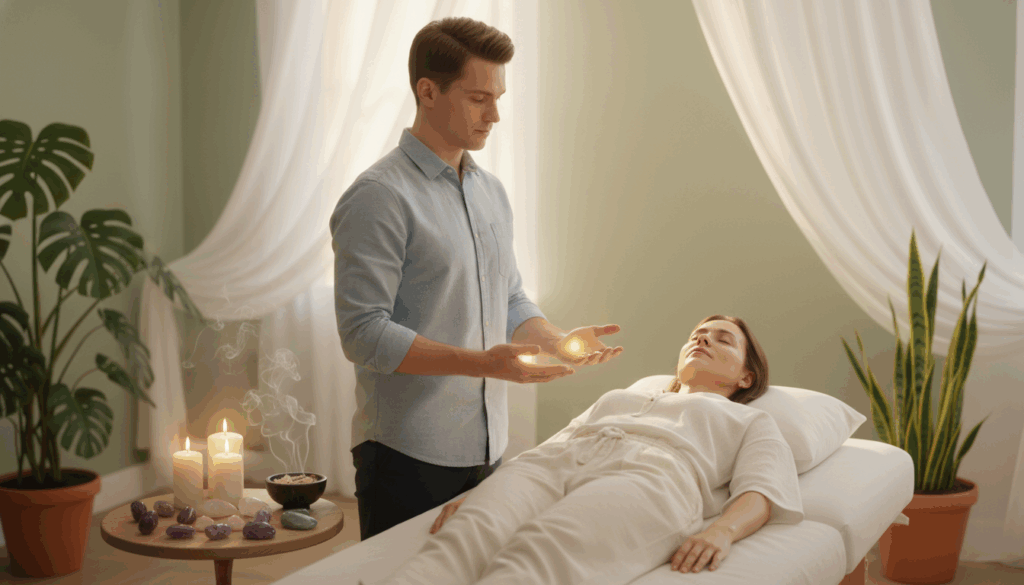
On the table and comfort
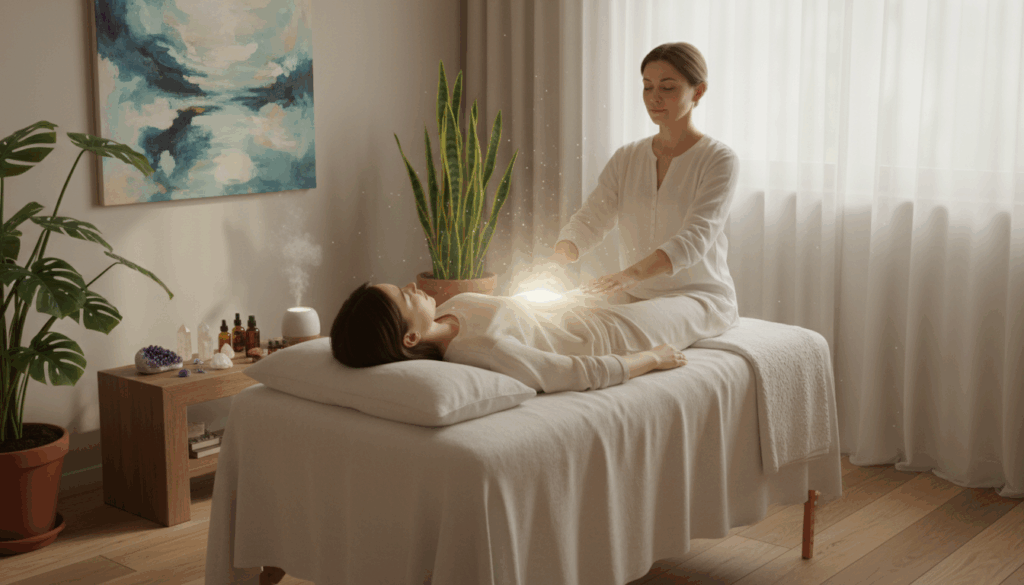
You lie on a padded table with shoes off. Pillows, bolsters, and a blanket help you settle.
Important: Gentle touch does not include kneading, stretching, or joint movement. This is not massage or physical therapy.
Hands and timing
Practitioners may use up to 15 hand placements. Each position stays in place for several minutes.
Typical sessions run about 60–90 minutes so there’s time for deep relaxation and steady attention.
Sensations you might notice
- Warmth, tingling, pulsing, or a buzzing feeling
- Emotional release or drifting off to sleep
- Or no clear sensation at all — that’s common
“Effects can vary from one person to the next and from session to session.”
After the session
Effects may last minutes to hours. Some people notice changes later the same day.
Simple aftercare: drink water, take a gentle walk if you feel floaty, and jot down what you experienced to share next time.
For related support and guidance, consider a trusted reading or consult this resource: psychic intuitive readings and guidance.
Potential Benefits of Reiki for Stress, Anxiety, Pain, and Overall Health
Clients commonly say sessions leave them feeling quietly restored and more able to cope with daily stress. Many seek relief for sleep struggles, low mood, and persistent aches.
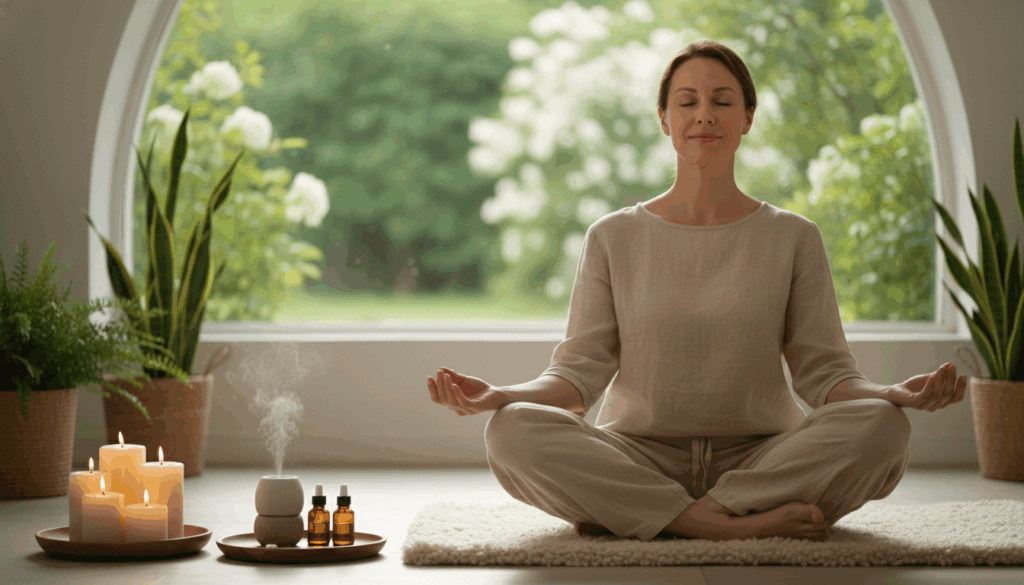
Stress reduction and deep relaxation
Most reports point to a reset: breathing slows, muscles relax, and the nervous system shifts toward calm. That shift often links to parasympathetic, or “rest and digest,” responses.
Real-life results include feeling less wound up, fewer stress-driven body sensations, and clearer thinking after a session.
Anxiety and mood support
People often say they feel calmer and more emotionally grounded afterward. These changes are described as mood support rather than medical treatment.
Pain relief and muscle tension
For some, sessions reduce muscle tightness and soreness, especially when stress amplifies discomfort. This can help with everyday aches and chronic pain symptoms.
Sleep, energy, and quality of life
Deep relaxation during a session may make it easier to fall asleep and feel more restored the next day. Many report better daytime energy and an improved sense of overall quality.
“Consider this approach as one part of a broader self-care plan alongside recommended medical treatments.”
Condition-aware note: people with chronic conditions often use sessions to improve comfort and daily quality of life while continuing standard care from their providers.
What Research Says About This Practice (and What It Doesn’t)
Many trials report benefits, yet their designs vary widely and limit firm conclusions.
Why the evidence is debated
Medical summaries often note small sample sizes, different methods across providers, and varied outcome measures. These factors make it hard to compare results or repeat findings.
Findings from reviews and studies
Some reviews and individual studies suggest reduced pain, lower anxiety, fewer depression symptoms, and improved quality of life for certain groups. Results tend to rely on short-term self-report scales rather than objective tests.
Placebo, expectation bias, and sampling issues
Placebo effects happen when people feel better after an inactive treatment because they expected help.
Expectation bias shows up when study participants already favor the approach and report stronger benefits.
Sampling bias can occur when practitioners survey their own clients; those participants often already chose the service and may rate outcomes positively.
“Uncertain evidence doesn’t mean no one benefits, but it does mean avoiding large health claims.”
| Concern | Why it matters | How it affects trust |
|---|---|---|
| Small samples | Less statistical power to detect real differences | Results may be due to chance |
| Varying methods | Different touch styles and session lengths | Limits comparison across studies |
| Self-reported outcomes | Subjective measures like pain scales or mood surveys | Susceptible to expectation bias |
Takeaway: Research has not confirmed a specific underlying mechanism, but reported relaxation and supportive effects may still be meaningful for many people. Use findings cautiously and combine this approach with standard medical care when needed.

Safety, Risks, and When Reiki Should Not Replace Medical Treatment
A calm, low-risk approach like this often fits best as a complement to medical care, not as a substitute.
Safety baseline: Sessions normally use light touch or hands-hovering and involve no joint manipulation. That makes the practice generally gentle with few side issues for most people.
Use alongside conventional medicine
Think of it as complementary therapy: it can support relaxation and coping while you follow standard tests and treatment plans from your clinician.
Red flags — seek medical evaluation first
- Chest pain, shortness of breath, or sudden severe pain
- Worsening symptoms, new neurological signs, fainting
- Unexplained weight loss, fever, or a new lump
Delaying diagnosis can be dangerous. Symptoms that need imaging, labs, surgery, or urgent care won’t be solved by this approach alone.
Extra caution for certain situations
After surgery, avoid work near fresh incisions and report any changing pain to your surgeon. For chronic conditions and cancer care, stay aligned with your oncology or specialty team and use sessions as supportive care only.
“Many people use this safely for comfort and stress support when it complements, not replaces, medical treatment.”
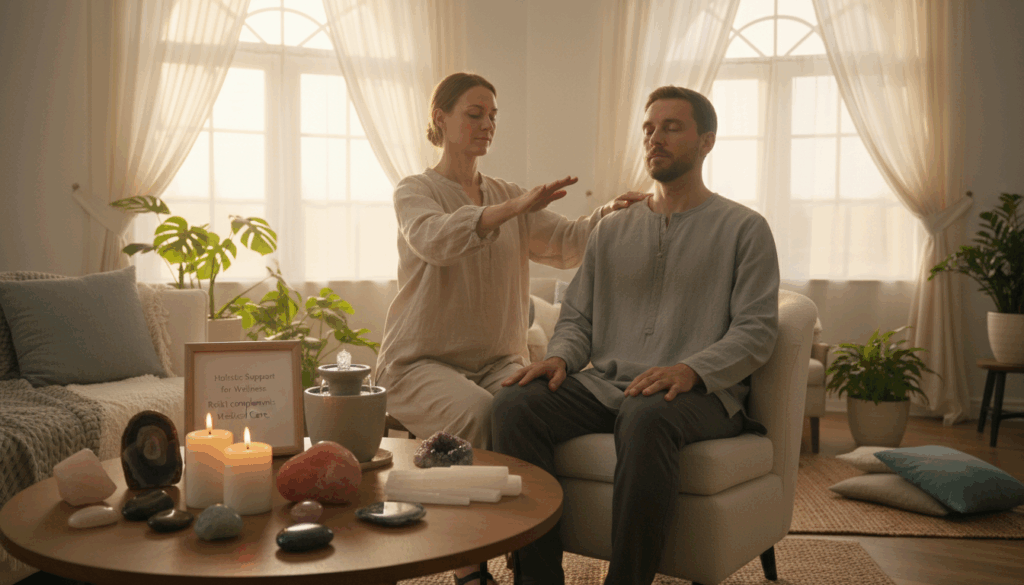
| Area | Suggested role | When to prioritize medicine |
|---|---|---|
| Minor stress or sleep trouble | Supportive therapy for relaxation | Persistent or worsening sleep loss despite care |
| Post-surgery recovery | Comfort adjunct with clinician approval | New or changing incision pain, fever |
| Chronic conditions | Symptom support alongside treatment | Sudden flare or signs needing lab work |
Communication tip: Tell your medical team you plan to use this therapy, and share key health history with your provider so sessions stay safe and appropriate. For further background, see a related psychic energy resource.
How to Find a Reiki Practitioner You Can Trust
Finding a trustworthy practitioner starts with clear questions and a few simple checks.
Titles vary: A reiki practitioner often means entry-level training and client work. A reiki master usually indicates advanced training and the ability to teach or attune others. Terms can shift by teacher or tradition, so ask for specifics.
Training, attunement, and typical levels
Usui-style training often uses Levels 1 and 2, plus advanced or master levels. Attunement is a ritual taught by a master to prepare someone to practice. Ask which system and levels a practitioner completed.
Questions to ask before booking
- How long have you practiced and where did you train?
- Do you do hands-on or hands-hovering sessions?
- What does a typical session include and how do you handle consent?
- How do you protect privacy, and do you coordinate with medical care?
| Check | Why it matters | Red flag |
|---|---|---|
| Clear training info | Shows experience and lineage | Vague or evasive answers |
| Consent & boundaries | Keeps sessions safe and respectful | Pressuring touch or diagnosis claims |
| Referrals & setting | Hospital or hospice ties add reliability | No references or secretive records |
Where to look: Check hospital integrative departments, hospices, wellness centers, or trusted directories such as the International Association of Reiki Professionals. You can also find local practitioners through reputable lists.
“Pick a provider who explains training, avoids miracle claims, and makes you feel heard.”
How Many Sessions You Might Need and What It Can Cost
A practical starting point is a brief series of visits spread out over a few weeks. Many providers suggest 3–5 treatments spaced one to two weeks apart so you can track changes over time.
Why multiple visits help: stress patterns and sleep problems often build up. Repeating sessions lets you notice gradual shifts and decide whether further work fits your goals.
Typical time frame: most sessions run about 60–90 minutes. Hospital programs sometimes keep to tighter schedules, while private clinics may offer longer appointments.
Price and affordability
In the U.S., pricing often falls between $25 and $100 per visit. Major metro areas, practitioner experience, longer appointments, and clinic overhead can raise the cost.
Many folks find options to lower fees: community circles, sliding-scale rates, donation-based offerings, or shorter sessions that cut minutes and price.
Insurance and practical questions
Coverage varies widely. Before booking, copy and ask your provider these quick questions:
- Does my plan cover this therapy?
- Is preauthorization required?
- Do I need a referral from my primary care clinician?
- Are there session limits per year?
Treat sessions like a wellness expense: set a short trial, note changes in stress, sleep, and coping, then decide on ongoing visits.
Conclusion
A clear, simple take: People often try a session to rest, reset, and notice how their body responds.
In short: reiki is presented as a gentle way to channel subtle energy for relaxation and healing, with experiences that vary widely.
Go in with grounded expectations. Treat this as support for stress relief and overall health, not a cure. Prepare with comfortable clothes, share key medical details, and expect a fully clothed session with light touch or hovering for about 60–90 minutes.
Choose a practitioner who respects boundaries, avoids medical claims, and coordinates with your care team. Research remains mixed, and setting or expectation effects may shape results—but reported calm and comfort can still matter.
Final note: Keep up with conventional care, and try one session to honestly gauge how your body and mind feel.