

This short guide introduces a gentle, complementary practice many people in the United States seek for stress and pain support. Practitioners describe working with subtle fields around the human body to help restore balance and support overall health.
Note: Conventional science has not confirmed these subtle fields, and this approach is not a stand-alone medical treatment. Still, many report feeling calmer and more regulated after sessions.
This article previews common approaches such as Reiki, Therapeutic Touch, Healing Touch, Qigong, Pranic Healing, and sound-based methods like biofield tuning. It will also explain what a session looks like, summarize reported benefits, and point you to research and safe ways to choose a practitioner.
For a practical overview of related techniques, see a concise guide at psychic energy healing techniques.
Key Takeaways
- Presented as a complementary practice, not a substitute for medical care.
- Many people seek it for stress relief, pain support, and well-being.
- Practitioners describe subtle fields; scientific confirmation remains limited.
- Modalities covered include Reiki, Qigong, Pranic Healing, and sound approaches.
- Balance here means feeling calmer, more regulated, and supported.
- The guide will cover sessions, reported benefits, research, and safety tips.
What Is Biofield Energy Healing and Why People Try It
D many people try complementary sessions to add gentle, relaxation-focused support for stress, pain, and recovery. These methods are used alongside standard medical care rather than replacing it.
Biofield therapy as a complementary approach to health
Biofield therapy functions as an umbrella term for several hands-on or no-touch practices that aim to promote calm and balance. Patients often choose it for restorative rest and emotional relief during difficult treatments.
The core idea: restoring balance to support natural healing
Practitioners share a simple concept: when flow becomes blocked or unbalanced, people may feel worse. Sessions aim to restore balance to help the body’s natural healing response and reduce discomfort.
How this fits into complementary and alternative medicine in the U.S.
In the United States, some patients use these approaches in integrative clinics. Mainstream medicine treats them as supportive options, not primary treatments.

| Common Reasons | Typical Settings | Examples of Conditions |
|---|---|---|
| Stress reduction, relaxation | Integrative clinics, private sessions | Anxiety, chronic pain |
| Post-procedure comfort | Hospitals offering complementary care | Trauma recovery, cancer support |
| Emotional support | Wellness centers, outpatient care | Sleep issues, immune-related concerns |
Decision frame: If curious, try it as supportive self-care and keep your primary healthcare team informed.
The Human Biofield Explained: Energy Field, Subtle Energy, and the Body
Practitioners often describe a subtle field that surrounds and permeates the living body, giving a simple map for noticing stress, comfort, and change.

How practitioners describe the surrounding field
In plain terms, an energy field refers to a subtle energy presence thought to surround and move through the human body. Some say it reflects physical and emotional states and can shift with breath, attention, or touch.
Common frameworks used in sessions
Three familiar ideas help guide sessions: chakras (centers along a vertical system), meridians (pathways across tissues), and the aura (the outer field). Recognizing these terms helps when you read about different practices and healing techniques.
Cross-cultural roots and modern views
Traditional concepts such as qi and prana offer long-standing ways to describe life and flow inside people. Western science debates measurable proof for these subtle energy claims.
Still, many find the language useful. It creates a clear connection between mind, body, and daily life and sets up the idea that a practitioner may work to improve flow using hands, breath, attention, or sound.
How Biofield Energy Healing Works in Practice
A typical session centers on relaxation, a brief intake, and the practitioner’s focused assessment of flow around the client. The room is calm, you lie fully clothed on a massage table, and the practitioner asks about comfort and goals.

What a practitioner does
Practitioners may “scan” the field using hands to sense areas of altered flow. They then use gentle touch or hovering to support movement and balance.
Touch versus no-touch sessions
Both formats exist. Some people prefer direct touch. Others choose no-touch for cultural reasons or trauma-informed care. Different techniques and traditions favor one approach over the other.
What to expect in a session
- Brief intake and comfort checks.
- Relaxation-focused setup on a massage table.
- Hands-on or hands-above-body work, often ending with quiet reflection.
In-person and distance options
In-person sessions offer physical proximity and sensing by the practitioner. Distance sessions, like virtual Reiki, keep the same structure and intention but lack touch.
Beginner tip: Treat a first session as exploratory. Note relaxation, sleep, mood, or any shifts in pain over the next few days. For more about related practices, see psychic healing.
Common Types of Biofield Therapy and Healing Techniques
Many traditions offer distinct methods for promoting balance; below is a quick map to spot common options and session styles.
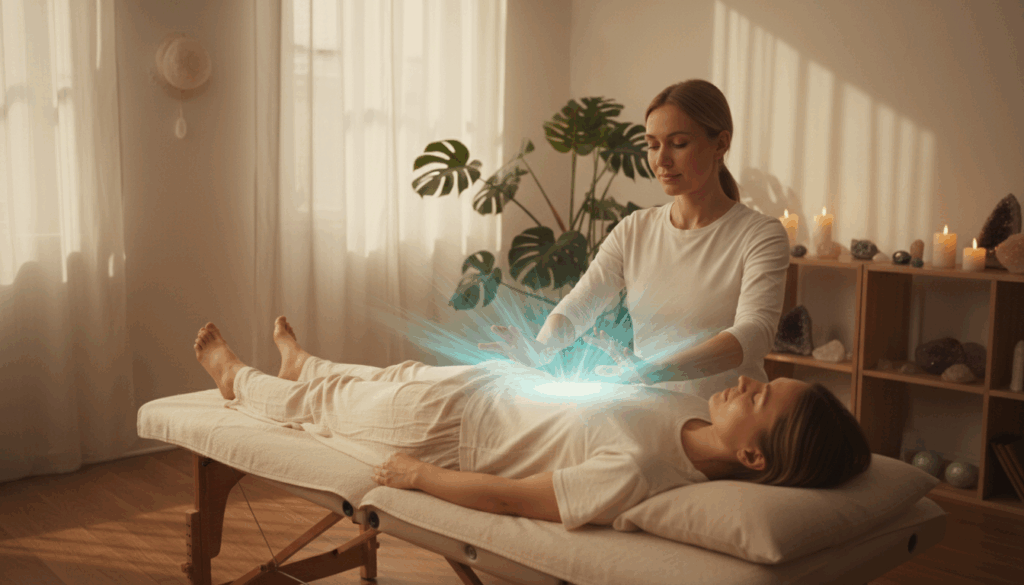
Reiki
Reiki sessions often use specific hand positions aligned with chakras. Practitioners may use light touch or hands-off approaches and describe working with a universal life force.
Therapeutic Touch and Healing Touch
Therapeutic Touch began in nursing in the 1970s with Dolores Krieger. It influenced later, more structured programs.
Healing Touch was developed by Janet Mentgen in 1989 and teaches defined techniques for clearing and centering.
Pranic Healing and Qigong
Pranic Healing focuses on clearing blockages and replenishing vitality; some practitioners use colors or crystals.
Qigong combines movement, breath, and focus. It’s easy to learn for daily self-practice.
Sound and Gentle-touch Methods
Biofield Tuning uses tuning forks placed near the body for relaxation. Craniosacral therapy is a light-touch clinical approach often discussed alongside these modalities.
| Modality | Session Style | Typical Focus |
|---|---|---|
| Reiki | Hands-on or hands-off | Hand positions, relaxation |
| Therapeutic Touch | No-touch, nursing roots | Field assessment, calming |
| Pranic Healing | Hands-off, clearing | Blockage removal, vitality |
| Qigong | Movement practice | Self-regulation, breath |
To learn practical steps from trained guides, see a brief how-to on how to perform energy healing.
Potential Benefits for Stress, Pain, and Overall Wellness
Many people report calmer days and lighter tension after a single session that focuses on rest and gentle attention.

Stress reduction and deep relaxation
Stress often falls when the setting is quiet, the practitioner gives focused care, and the client can let go. This calm can shift the nervous system toward rest.
Practical mind-body balance
Mind-body balance shows up as better sleep, less muscle tension, and an easier time unwinding after a busy day. Many notice a grounded feeling that lasts beyond the session.
Pain and symptom support
Some people and patients report lower pain levels or smoother recovery after procedures. Results vary and evidence remains limited, so use these sessions as complementary support, not a replacement for treatment.
Emotional regulation and mood
Clients often say they feel less anxious and less emotionally “wired” after sessions. Tracking your own patterns can help you judge any lasting effects on mood and symptoms.
| Reported Benefit | Common Reports | Daily habits to extend effects |
|---|---|---|
| Stress reduction | Calm, better sleep | Hydration, gentle movement |
| Pain & symptoms | Reduced discomfort, easier recovery | Rest, follow medical advice |
| Emotional well-being | Less anxiety, steadier mood | Breathing, short walks |
Tip: Combine sessions with simple self-care and keep your healthcare team informed. For guidance on working with a practitioner, consider a psychic counselor.
What the Research Says Today: Evidence, Limits, and Ongoing Studies
Clinical reviewers stress that repeatable measurement and controlled methods are central to accepting any treatment claim. Conventional medicine remains skeptical because the described subtle fields lack consistent measurement and replication.
Current research tends to be small and varied. Many studies test relaxation-based outcomes and compare them to standard care or sham procedures. That makes it hard to separate expectation from direct effects.
Key findings from recent reviews and trials
Reiki: A small 2018 trial with 60 participants who had herniated disks found Reiki performed similarly to physiotherapy for back pain, yet this single case does not prove wide effectiveness.
Mental health reviews from 2022 report some positive signals for Reiki-related improvements, but low quality and small sample size prevent firm conclusions.
Therapeutic Touch: A 2021 review found no high-quality evidence and flagged serious methodology flaws and risk of bias in prior reports.
Pranic Healing: One 2018 study of 52 participants added this approach to antidepressant treatment and reported positive adjunct results, though larger trials are needed.
| Topic | Study Size | Main takeaway |
|---|---|---|
| Reiki back pain trial | 60 participants | Similar short-term outcomes to physiotherapy; not definitive |
| Reiki mental health reviews | multiple small studies | Some positive results but low-quality evidence |
| Therapeutic Touch review | varied | No high-quality evidence; bias concerns |
| Pranic Healing adjunct trial | 52 participants | Promising adjunct case; needs replication |
Bottom line: These approaches may help some people feel better as part of supportive care. Yet the overall evidence remains limited. Better-designed, larger studies are needed to clarify results and rule out bias or placebo effects.

Biofield Energy Healing in Healthcare Settings: Complementary Care, Not a Replacement
Many clinics now offer complementary sessions alongside standard care to help patients manage symptoms and side effects. These options appear in outpatient centers, cancer centers, and integrative clinics to give extra comfort and calm.

How some patients use complementary therapies
Some patients add these sessions to help cope with stress, trauma, pain, or anxiety during medical courses. People report better rest and emotional support while continuing doctor-prescribed plans.
Common conditions where people seek support
Examples: stress management, trauma recovery, immune concerns, and cancer care support. These therapies are used to ease side effects and promote comfort, not to treat cancer or replace medicine.
Talking with your healthcare professional
Before trying a new approach, talk with your clinician, especially if you are in active treatment, pregnant, or immunocompromised. Ask how sessions might interact with current treatments and follow any safety guidance.
- State the symptoms you want support for (sleep, pain, anxiety).
- Note the modality you’re considering and session frequency.
- Ask how to watch for interactions with medications or rehab plans.
Safety, Risks, and How to Choose the Right Practitioner
Before booking a session, it helps to know common safety notes and how to pick a trusted practitioner.
Safety profile: Sessions are typically non-invasive and relaxation-focused. Most people report few side effects. Medical News Today notes these approaches have minimal reported harms but recommends asking a clinician if you are in active medical care.
Practical risks can include delaying needed medical treatment, hearing exaggerated claims, or feeling emotionally overwhelmed after a session. A practitioner who discourages standard care is a red flag.
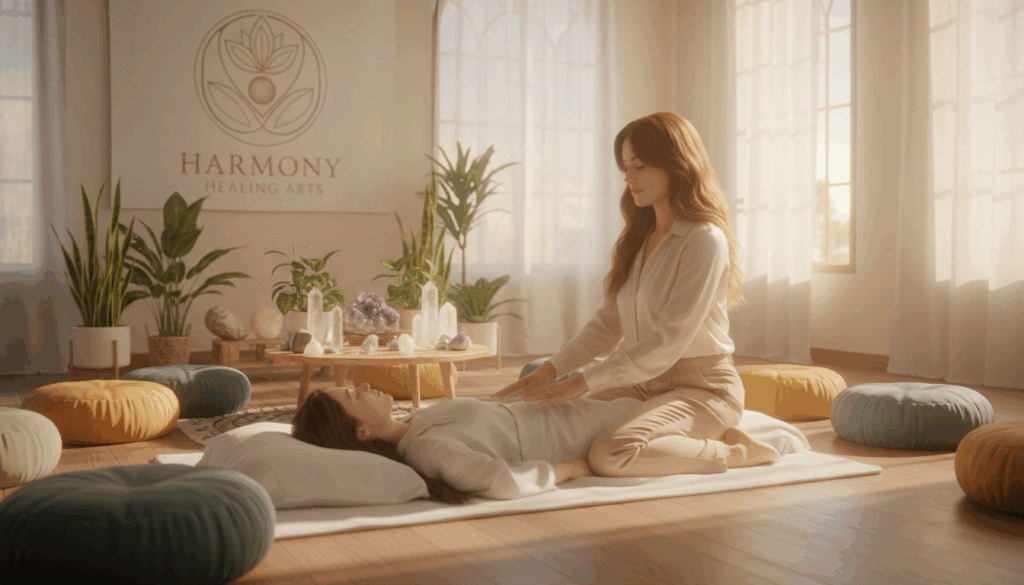
Choosing a practitioner
- Clear scope of practice and honest language about outcomes.
- Transparent training, lineage, and certifications.
- Consent-based policies for any touch and trauma-sensitive options.
- Willingness to coordinate with your health team.
Questions to ask before booking
Ask about session length, touch vs. no-touch options, fees, and follow-up support. Confirm whether the practitioner follows evidence-informed practices and cites recent research.
| Checklist | Why it matters | Where to start |
|---|---|---|
| Scope & limits | Prevents misled expectations | Ask directly during intake |
| Training | Shows skill and ethics | Check professional directories |
| Consent & touch policy | Protects comfort and safety | Confirm before session |
| Collaboration with clinicians | Supports safe adjunct care | Prefer practitioners who welcome coordination |
Reputable starting points: search the International Association of Reiki Professionals and the Healing Touch Professional Association databases for verified practitioners. Choose someone who uses grounded language about benefits rather than guaranteed cures.
Getting Started as a Beginner: Practical Ways to Support Your Energy Balance
Start with tiny, doable steps that bring more calm and balance into daily life. A simple plan helps you test supportive practices without pressure.
Daily self-care you can try
Try short breathing sets, 5–10 minutes of quiet relaxation, and gentle stretching each day. These moves help lower stress and ease muscle tension.
Qigong at home vs. working with a practitioner
Qigong combines movement, breath, and focus and can be learned from videos or classes. Practicing alone is flexible and cost-effective.
Seeing a teacher adds real-time feedback on posture, pacing, and technique. That guidance can speed progress and reduce strain.
Track small changes
Keep a short log for 2–4 weeks. Note sleep quality, pain levels, mood steadiness, and daily quality of life. Look for trends, not instant fixes.
Set realistic expectations and next steps
Remember: these approaches offer support and gradual regulation, not guaranteed cures. A gentle ladder works best: start self-practice, try one professional session, reflect, and then decide whether to continue as part of broader wellness care.

“Small, consistent steps often lead to the clearest results.”
For guidance on safe boundaries and protection during practice, see psychic protection practices.
Conclusion
As a final note, people most often seek this kind of session for simple, practical relief—better rest, less tension, and emotional steadiness.
In beginner terms, this practice presents gentle, relaxation-focused sessions that many add to standard care rather than replacing medicine. Sessions usually include a brief intake, calm setting, and hands-on or hands-off methods such as Reiki, Therapeutic Touch, or Qigong.
Research and evidence remain mixed. Small studies suggest short-term benefits for stress and comfort, but larger trials are needed for firm conclusions. Stay curious while keeping expectations grounded.
Prioritize safe choices: pick trained practitioners, confirm consent and touch policies, and tell your medical team before starting. For many people, the practical value lies in feeling calmer and better supported within a broad self-care plan.