
Remote viewing is a structured method some people use to access information about distant targets without the five senses. It gained public attention from networks like CBS and streaming platforms since the 1970s.
The skill asks for steady training, patience, and an open mind. Regular sessions help you notice subtle impressions and refine your natural abilities. Start small and keep each session brief.
Many seek this path to expand personal awareness and enrich daily life. A disciplined routine turns curiosity into clear results. For deeper background on related skills, check psychic superpowers.
Key Takeaways
- Remote viewing uses structured steps to gather non-physical information.
- Short, regular sessions improve accuracy and confidence.
- Patience and consistency are essential for growth.
- This work can broaden awareness and affect daily life.
- Explore reputable resources to support safe training.
Understanding the Basics of Remote Viewing
At its core, remote viewing is a disciplined form of extrasensory perception that aims to gather verifiable information about a distant target. This method uses a clear protocol so a person can report details without relying on the five physical senses.

Defining Extrasensory Perception
Extrasensory perception covers a range of abilities, from symbolic impressions to clear spatial details. In this approach, trained individuals describe geographic features, structural elements, or other observable things at a location or event.
Remote Viewing vs. Clairvoyance
Clairvoyance often brings spontaneous visions and symbolic messages. By contrast, remote viewing follows repeatable steps that reduce personal bias and conscious analysis.
- Protocol-based: viewing focuses on verifiable data.
- Intuitive: clairvoyance leans on symbolism and insight.
- Outcome: one seeks measurable details; the other seeks meaning.
| Feature | Viewing | Clairvoyance |
|---|---|---|
| Approach | Structured protocol | Spontaneous impressions |
| Focus | Location, event, tangible details | Symbols, messages, feelings |
| Goal | Verifiable information | Personal insight |
For readers curious about related psychic subjects, consider exploring clairvoyant abilities for a deeper look at training and goals.
Historical Origins and Research
Formal research in the early 1970s pushed this field from anecdote into structured experiments. Physicists Russell Targ and Harold Puthoff began work at the Stanford Research Institute, setting clear protocols and test designs.
Government interest grew. The CIA and Department of Defense funded the Stargate Project to assess whether remote viewing could yield useful intelligence. Ingo Swann, an artist and noted contributor, helped shape the method and coined the term.
Researchers ran controlled experiments, logged impressions, and compared notes with known targets. The effort tested training, accuracy, and repeatability. Joe McMoneagle later became a prominent figure who applied these protocols in professional settings.
The Monroe Institute also incorporated viewing into its Gateway Voyage program, exploring natural psychic abilities and the human mind. These projects asked whether remote viewing can produce verifiable information.
- Notable work: lab studies and field sessions.
- Legacy: ongoing research and public debate.
“Early experiments opened a steady stream of inquiry that still shapes modern study.”
How to Practice Remote Viewing at Home
Create a simple ritual that signals your mind it is time to tune in and notice subtle impressions. Choose a quiet place, a low-distraction chair, and a fixed block of time.
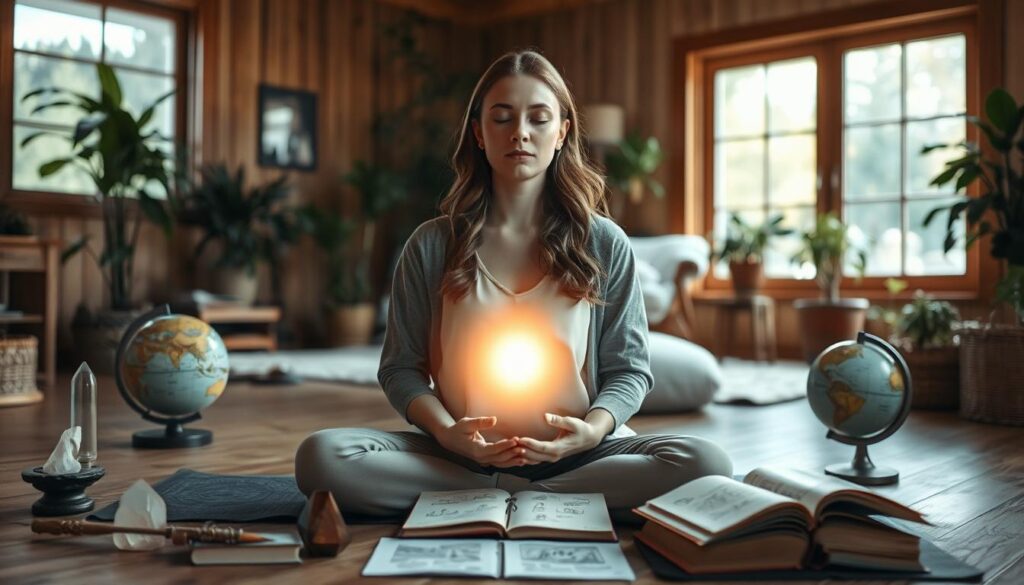
Begin each viewing session with a clear intention: name the target and hold neutral attention. Record raw sensory notes first — shapes, textures, temperatures — before you add meaning.
Keep sessions short and regular. Consistent training helps the mind learn the difference between genuine impressions and imagination. Over weeks, people often notice clearer images and more reliable information.
- Set intention: one sentence about the target.
- Record impressions: write raw sensations, then sketch.
- Review: compare notes after the session for feedback.
| Element | Quick Tip | Outcome |
|---|---|---|
| Environment | Quiet, consistent place | Less mental noise |
| Intention | Short, neutral label for the target | Clearer impressions |
| Recording | Raw data before interpretation | Better feedback for training |
Essential Tools for Your Sessions
A handful of low-tech items can turn impressions into verifiable information.
Start with a simple kit: paper, pens, a clipboard, and sealed manila envelopes. These basics let a person record impressions quickly and without fuss.
Use an assistant to place 5–10 varied images—landscapes, buildings, objects—into opaque envelopes. Keep the target hidden from both the viewer and the monitor for a true double-blind session.

Creating Your Target Envelopes
During each viewing session, the viewer notes raw sensations first. Sketching shapes on paper helps translate mental images into tangible marks.
Over time, regular use of envelopes builds confidence and sharpens subtle sensory notice. Simple repetition trains the mind and refines accuracy.
- Envelope rule: opaque, sealed, and labeled only by code.
- Record rule: capture data before interpreting it.
- Review rule: compare sketches with the image after the session.
| Item | Purpose | Benefit |
|---|---|---|
| Manila envelopes (5–10) | Hold images or objects | Maintains blind testing integrity |
| Paper and pens | Record impressions and sketches | Creates verifiable notes |
| Assistant or monitor | Prepares targets and seals | Enables double-blind conditions |
| Session log | Track progress over time | Improves training and feedback |
For structured methods that support steady growth in these abilities, see this psychic development guide.
Preparing Your Mind and Environment
A short timestamped note can release distracting thoughts and mark the start of focused work.
Write the date and time before a viewing session. This simple step clears the head and creates a baseline for later review.
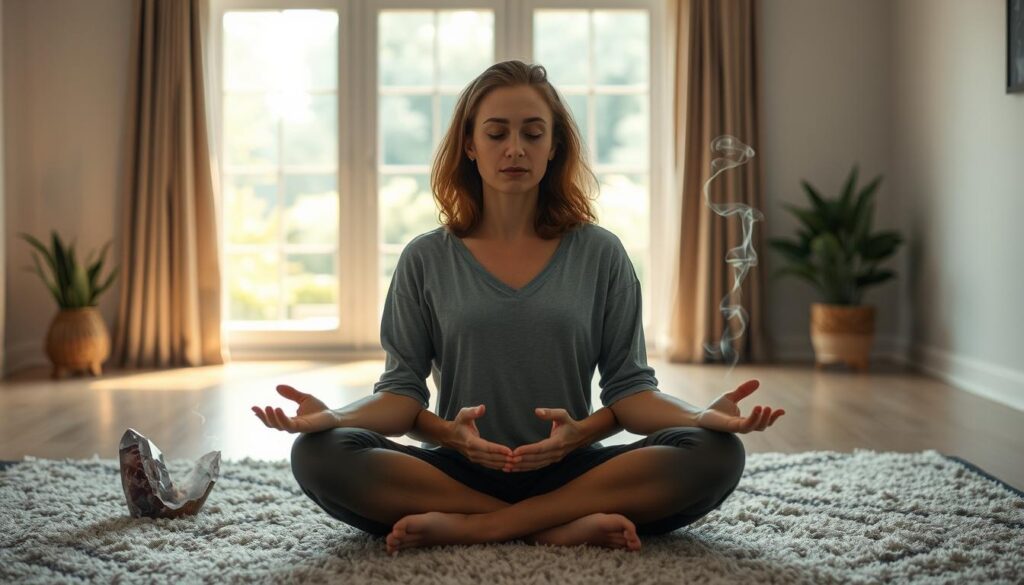
Spend a few minutes on breathing or a brief meditation. Calm breathing steadies the mind and opens a quiet space for impressions.
Visualize a bright light at the third eye area for several breaths. Many people find this awakens subtle abilities and sharpens attention on images or sensations.
Create a dedicated, quiet place where interruptions are rare. A consistent spot signals the self that it is session time and reduces background noise.
Document thoughts and feelings before each session. Recording first impressions gives useful information when you compare notes after the target is revealed.

The Protocol for Describing Targets
A clear protocol helps a viewer turn fleeting impressions into testable notes. Follow a steady order so fresh sensations remain raw and unbiased.

Recording Raw Impressions
Record textures, colors, temperatures, and simple smells first. Write these details without naming objects or places.
Date and time each entry. This timestamp makes later analysis reliable and fair.
Sketching Your Vision
Sketch quickly—basic shapes and relative placement work best. A quick image often matches the real scene better than a delayed description.
Keep sketches beside written notes and the sealed envelope code for verification later.
The Bird’s Eye Perspective
Try a bird’s eye view when details feel cramped. Raising the imagined eye gives broader layout and context for location or event.
Focus on features, not stories. Describe the essential things, places, and objects without judgment so feedback yields clear information.
“Capture raw data first; interpretation comes after comparison.”
For guidance on developing related skill sets, see a short guide to develop clairvoyance.
Developing Your Intuitive Abilities
Regular engagement with subtle impressions trains the mind to notice useful patterns. Begin each short session with a clear focus on the target and record whatever appears, even faint sensations.
Many people find that steady work boosts trust in gut feelings. Small daily sessions help move vague images into clearer notes and sketches.
Skill development is not limited to a few gifted individuals. With consistent sessions, observers often improve accuracy and learn which cues bring reliable information.
Keep a simple log. Mark date, time, raw impressions, and any quick sketches. Later review of logs reveals recurring themes and error patterns that speed growth.
“Trust the faint signal; daily review turns it into usable data.”
- Keep sessions brief and regular.
- Record first impressions before interpretation.
- Compare notes with the revealed target for feedback.
Over weeks, remote viewing becomes a repeatable skill that yields clearer images and practical information.
Common Myths and Misconceptions
Many common beliefs about this subject mix fact with folklore, and sorting them out helps curious people move forward.
Not just for gifted psychics. Research at the Stanford Research Institute suggested the method can be taught. That does not mean every person will get the same results, but it challenges the idea that only a few are born with this skill.
Skeptics note successful trials may reflect chance. Critics also point out there is no single accepted mechanism. Both views have driven calls for more rigorous experiments and better controls.

It is a misconception that a viewer can describe target details with perfect accuracy every time. Sessions often yield partial or symbolic images that need careful review.
Fears that the work harms the mind are largely unfounded. Most trainers compare safety to meditation or guided visualization, and many protocols stress steady training and clear boundaries.
“Whether remote viewing is a genuine psychic phenomenon remains a subject of debate.”
- Takeaway: balance curiosity with critical review.
- Tip: use controlled tests and honest logs for better information.
Spiritual Benefits of Consistent Practice
Consistent sessions often open a quieter, deeper sense of connection that reaches beyond ordinary daily life. This feeling can help a person notice that the mind and spirit are not limited to physical forms.
Many people report that the mental discipline behind regular work brings balance and steadier emotions. That calm often shows up as clearer thinking and less reactivity in daily life.
Over time, development of subtle senses gives an expanded awareness. Practitioners spot patterns and links between events, which makes information feel more meaningful.
Some learners find their sense of self shifts. Self-discovery through steady sessions sparks growth and helps clarify purpose.
Tools like clairvoyance and focused attention often strengthen intuition and make it a reliable guide for personal decisions. For those drawn to this path, remote viewing can become a steady source of inner support.

“Daily attention gently reshapes perception and deepens a sense of belonging beyond the body.”
Navigating the Challenges of Learning
Learning this skill often clashes with a culture that prizes being right over exploring unknown signals. That bias can pressure a viewer into judgment instead of gentle noticing.
A common hurdle is the desire for immediate success. Expecting flawless results can shut down neutral attention and skew information during a session.
Progress rarely follows a straight line. Some sessions bring clear images and firm details about a target. Others feel fuzzy, contradictory, or slow.
Remember: even experienced practitioners face shaky sessions. Errors and vague notes are part of training and honest development.
Keep short, regular sessions and a simple log. Note date, time, raw impressions, and any quick sketch or envelope code. Over weeks, patterns emerge and the mind learns reliable cues.
Stay curious and patient. Treat bumps as feedback, not failure. That steady way of working helps learning and supports lasting growth in clairvoyance, skill, and life.
Conclusion
In closing, steady attention and honest records often yield clearer impressions over time. Keep sessions short and focused, and note first signals before interpretation.
While scientific opinion remains split, historical research such as government-funded studies adds useful context for curious learners. Balance open curiosity with careful checks and honest logs.
Commit to a simple daily practice, sketch what you sense, and review notes. This gentle approach supports steady learning and helps you see progress in small steps.
For structured guidance, consider a concise psychic development course that pairs techniques with clear record-keeping. Stay patient, keep documenting sessions, and enjoy discovering the limits of perception.