

Many Christians in the United States now ask a simple, urgent question as Reiki, chakras, and new age language enter daily life. This introduction frames that question and outlines a clear, gentle path for readers who seek honest answers.
Energy healing is often described as work with an unseen field or force that flows for restoration. Scripture, however, highlights a personal source of repair: God declares, “I am the LORD who heals you.” This distinction shifts how faith communities test claims of supernatural power.
This post offers a Bible-first guide. It compares scriptural accounts of healing to modern practices without assuming they are identical. The focus will be the source credited with power, since Scripture links true spiritual authority to God, not to impersonal fields.
The tone is pastoral and clear. Many pursue care out of pain, so the aim here is clarity, safety, and faithful discernment. Readers will find practical guidance on combining medical care, prayer, and wise boundaries for spiritual practices.
Key Takeaways
- Scripture points to a personal Lord as the primary source of restoration.
- Modern spiritual practices use language of unseen fields; careful discernment is needed.
- Jesus Christ and Old Testament texts shape how Christians evaluate claims of power.
- Prayer and medical care can be pursued together with wisdom and faith.
- The goal is safety, clarity, and pastoral care rather than fear or shame.
Why “Energy Healing” Raises Spiritual Questions for Christians Today
In U.S. conversations, talk of a subtle life force often raises spiritual flags for faith communities. Many people use the word energy for different things — scientific power, emotional vibes, or a spiritual life-force — and that ambiguity creates real confusion for believers.

How people use the term and what energy work claims
Energy work names practices that say they can sense, channel, unblock, or rebalance an unseen force in the body. Common U.S. examples include Reiki, chakra balancing, new age modalities, and tools like Emotion Code/Body Code. Practitioners attach varied beliefs to these systems.
“It helped me” is an important report, but Scripture asks believers to test both fruit and source.
| Practice | Claim | Typical Spiritual Frame |
|---|---|---|
| Reiki | Channel universal force via touch | Impersonal life-force |
| Chakra work | Balance subtle centers for health | System of energy centers |
| Emotion Code / Body Code | Remove trapped emotions to restore health | Energetic blockages tied to past events |
Even gentle methods may make spiritual claims that compete with Christian teachings. So Christians care about health while still testing practices. For background on common techniques, see psychic energy healing techniques.
What Does the Bible Say About Energy Healing and Where Healing Power Comes From
A careful reading shows healing in Scripture flows from God’s presence and authority, not from a manipulative force. This shapes how Christians test claims that promise predictable results by tapping a nameless power.
God as a personal healer, not an impersonal force
Exodus 15:26 names the Lord as “the LORD who heals you,” framing god healing as relational and covenantal rather than mechanical. Healing in Scripture is offered by a Person who meets people, not by an objectified force you control.
Key texts that frame authority over body and disease
Genesis 1:1 reminds readers that God is Creator, so His authority covers life, body, and disease. No created thing or energetic system outranks that source.
Seeking restoration under His terms
Naaman’s story (2 Kings 5:10–14) shows obedience and humility as the way to receive help. God set the means; a servant’s simple action brought cure, not human manipulation of a hidden force.
Why this matters today: Many modern systems promise control—do X to activate Y. Scripture stresses God’s will, wisdom, and presence, inviting faith and honest prayer rather than techniques that treat power like a tool.
“I am the LORD who heals you.”
Christians can ask boldly for health and relief while avoiding attempts to manipulate spiritual power. For background on common modern practices and careful questions to ask, see psychic healing. This leads naturally to the Gospels, where Jesus’ authority clarifies true god healing.
Jesus Christ and the Pattern of Biblical Healing
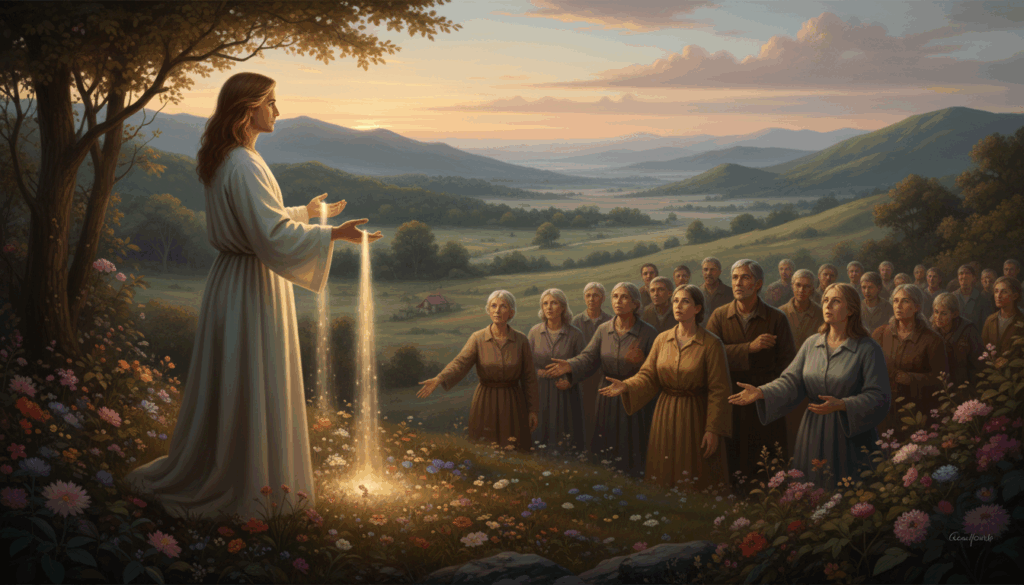
Across the Gospels, a repeated pattern shows Christ bringing restoration with authority and compassion. He often spoke a word or reached out in touch, and bodies responded.
How Jesus healed: authority, compassion, and direct command
Examples include blind men restored (Matthew 9:27–31) and the widow’s son raised (Luke 7:11–15). These scenes show Jesus acting as a person with clear authority.
Why the method is never “vibrations” but the power of God
Sometimes he touched; sometimes he spoke. The method varied, yet the source stayed the same: the power god displayed through the Son.

What miracles teach about faith, touch, and God’s presence
Jesus highlighted faith in a person, not a technique. Faith points to trust in him, and healings signal God’s kingdom drawing near.
How the disciples continued healing in Jesus’ name
After resurrection, the disciples healed by invoking his name (Acts 3:6–8; 3:16). Their actions credit Jesus’ authority, not human skill, and show a clear way for the church.
Biblical Miracles vs. Modern Energy Healing Practices
Biblical accounts present miracles as acts from a sovereign God rather than repeatable methods. Scripture shows intervention that responds to prayer, obedience, and God’s will. This contrasts with some modern methods that promise predictable outcomes through a repeatable system.
Submission to God’s will vs. attempts to manipulate power
Submission in scripture means asking, trusting, and obeying rather than trying to switch a hidden force on or off. Biblical stories reward humility and faith, not human mastery over a cosmic mechanism.
Creator vs. creation
The Bible treats God as Creator, not as an impersonal field. Reducing deity to a universal force collapses Creator into creation and changes core teaching about authority and worship.
Where new age teaching can conflict
Many new age teachings recast divinity, sin, and salvation. A practice might give relief, yet its underlying worldview can still clash with Christian understanding.

For more on evaluating claims that center on manipulating a subtle force, see a helpful overview of energy manipulation.
Warnings and Discernment About Spiritual Practices
Clear warnings in Scripture help guide careful discernment when spiritual practices blur lines. These passages give firm moral limits and a way to test any spiritual claim.

Deuteronomy’s boundary on occult methods
Deuteronomy 18:10–12 forbids divination, sorcery, and occult attempts to access hidden power. This rule sets a clear boundary: God rejects practices rooted in divination, even if they promise help.
Simon the sorcerer as a cautionary example
Acts 8:9–24 shows Simon trying to buy spiritual ability. The problem was control and pride, not merely supernatural activity. Scripture warns against seeking power apart from repentance and submission.
How to test spiritual claims
1 John 4:1 says to “test the spirits” to see if they come from God. Ask who is honored, what theology is assumed, and whether Christ remains Lord in the practice.
“Test the spirits to see whether they are from God.”
Red flags and fruit vs. root
Watch for language about channeling, spirit guides, divination tools, or teachings that place self-actualization above surrender to God. Those are clear red flags.
| Concern | Why it matters | What to do |
|---|---|---|
| Channeling or guides | Invokes non-biblical spirits or sources | Avoid and seek counsel from mature leaders |
| Divination language | Shifts authority from God to techniques | Compare claims to Scripture and pray for clarity |
| Purchasing power/control | Reflects a desire to manipulate spiritual power | Repent, confess, and prioritize submission to God |
| Good feelings but unclear root | Fruit may be real, root may be false | Evaluate theology, worship, and long-term fruit |
In practice, seek wise counsel, pray for clarity, and keep a clean conscience. Test practices by both fruit and source, not only outcomes.
Prayer, Faith, and the Holy Spirit in Christian Healing
A congregation often answers illness with simple, faithful acts that point to God’s care. James 5:14–15 asks elders to pray and anoint in the Lord’s name as a church practice that shows dependence, not technique.

James 5 and church-based prayer for the sick
James 5:14–15 calls for communal prayer and anointing with oil. This is pastoral presence—a tangible sign of care. Oil is symbolic, not magical, and prayer names God as the source of help.
Spiritual gifts of healing and their purpose
Scripture lists a gift for healing among church roles (1 Corinthians 12:9, 28). These gifts serve the body, build up others, and require humility and accountability. Gifts are God’s work, not personal branding.
Wholeness across spirit, soul, and body
1 Thessalonians 5:23 points to whole-person sanctification. Faith trusts a Person at work through many ways, including medicine. Invite the Holy Spirit for wisdom, comfort, and direction when decisions arise.
“Call for the elders to pray and anoint in the name of the Lord.”
| Practice | Purpose | Guideline |
|---|---|---|
| Prayer by elders | Dependence on God | Pray in name of Lord |
| Anointing with oil | Pastoral sign of care | Avoid magic claims |
| Gifts of healing | Build church body | Use with humility |
Chakras, Subtle Body Language, and Christianity
Chakra teachings often claim that a subtle body contains centers through which a life force flows. Modern Western systems typically map seven centers and link them to glands or nerve plexuses to explain how balance affects health.
This system appeals because it seems to bridge spiritual ideas with physiology. Some teachers compare chakras to endocrine or nervous system function, which can feel like an integrated view of body and well-being.
Scripture does not mention chakras by name. Genesis 2:7, the “breath of life,” is sometimes cited to support life-force language, but that verse points to God giving life, not to a chakra map or a repeatable system.

Spiritual safety matters. Historically, chakra work involved invocation of non-biblical divine presences and practices tied to other religious systems. That history can conflict with commands to worship the Lord alone (Exodus 20:1–3; Luke 4:8).
Practical guidance: ask what a teacher, course, or book actually teaches. Verify whether teachings import new age theology or merely borrow wellness language. For a careful overview and further reading, see a helpful psychic energy overview.
Medicine, Science, and the Claim “We Are Made of Energy”
Many readers wrestle with claims that our bodies are “made of energy” and want clear distinction between scientific fact and spiritual authority.
Science shows bodies are built from atoms, electrical signals, and chemistry. That is useful for medicine and explains how cells, nerves, and organs work. This scientific account does not equal spiritual power or divine authority.
Christians can value medicine and still pray. Medical care and honest prayer are not opposed. God may work through doctors, medicines, and unexpected miracles.

Questions to ask before trying Emotion Code or Body Code
- Who is named as the source of help: God, a nameless force, or the practitioner?
- Does the method use pendulums, channeling, or spirit-guide language?
- Is the aim surrender to God and loving service, or personal control and self-focus?
- Will you continue evidence-based medicine alongside any method?
| Claim | Scientific basis | Spiritual framing | Practical response |
|---|---|---|---|
| Body as atoms/electrical system | Well-established in physics and medicine | Neutral—does not imply spiritual authority | Use medical care; pray for wisdom |
| Emotion Code / Body Code | Limited empirical support | Often framed as clearing trapped fields or emotions | Ask source, avoid divination, consult pastor |
| Prayer and pastoral care | Not a laboratory method but has measurable effects on wellbeing | Centered on reliance on God | Include in treatment plan; seek counsel |
“Pray for wisdom” (James 1:5)
For a guided look at related practices and meditation, consider a short course on clairvoyant meditation as a contextual resource while you seek counsel and discernment.
Conclusion
Scripture points readers back to a personal God who restores, not an impersonal method. This strong, steady conclusion invites clear, calm reflection.
Summary: Scripture names God as the source of healing, showcases Christ’s compassionate authority, and records the early church praying in Jesus’ name rather than invoking a nameless force.
Practice wise discernment. Avoid occult claims and test any spiritual teaching by its root and fruit.
For those hurting: seek community prayer, consult medical professionals, and ask God for wisdom before trying methods that mix spiritual language with wellness.
Hold to hope. God’s care across years and time remains sure, and believers can trust him for guidance, restoration, and lasting wholeness.