

Curiosity about old prophecies often meets modern headlines. Many people wonder whether a Renaissance quatrain points to a specific year. The short answer: no quatrain names that year outright.
Still, interpretation keeps the topic alive. A total solar eclipse crossing parts of Europe made commentators revisit these lines. Numerology and place names like Rouen and Évreux also draw readers who map past verses onto today’s news and social media cycles.
We will separate facts from modern reads and show why eclipses and tense moments in the world spark renewed interest. Along the way, you’ll see how scholars caution against retrofitting texts while many people prefer pattern-based readings.
For those seeking wider context or a personal take on signs and symbols, consider a brief look at psychic readings to see how modern practices handle uncertainty.
Key Takeaways
- No quatrain explicitly names the year; keep that fact front and center.
- Eclipses and tense moments often revive interest in old prophecies.
- Place names and numerology can create tempting but weak links.
- Social media speeds up pattern-seeking and confirms biases.
- Readers benefit from clear separation of history, interpretation, and speculation.
Why 2026 Is Suddenly in the Spotlight: Context, Quatrains, and Today’s Tensions
A Europe-wide solar event has become a trigger for people to re-read old verses through a modern lens.
The eclipse temptation plays to vivid imagery: darkened suns, “celestial fire,” and signs in the sky appear in several quatrains. Many readers tie those motifs to the upcoming event. Scholars note, however, that sky metaphors were common in Renaissance astrology and not calendar markers.
The numerology pull around “26” links quatrains I:26 and II:26 to a year. I:26’s bees and II:26’s Ticino spilling with blood get reinterpreted when tensions rise. That move uses number-match logic, not explicit dating in the text.
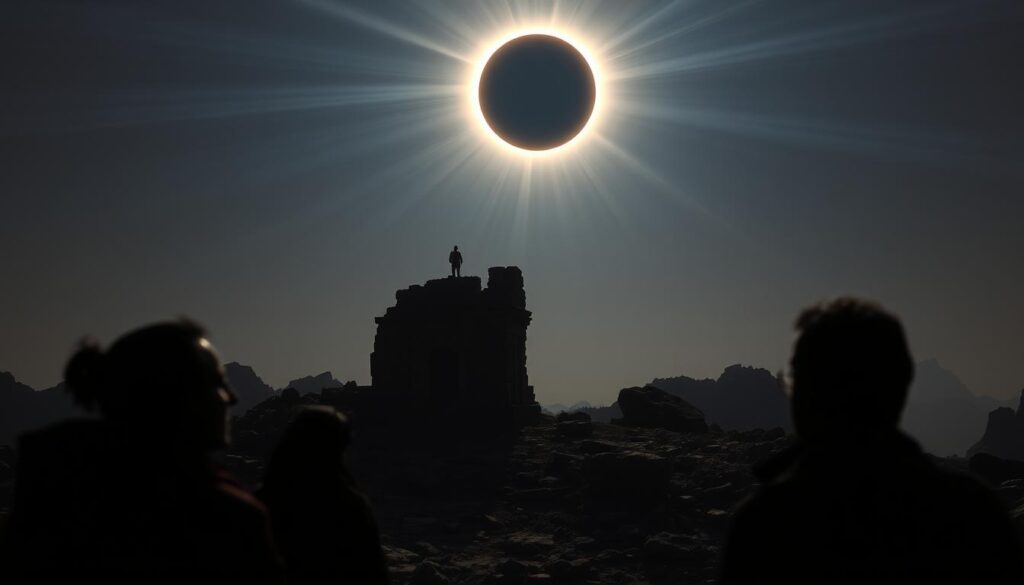
The seven-months verse and modern conflict narratives
The lines mentioning “seven months, great war” and cities like Rouen or Évreux surface in online threads tied to current conflict. Yet those place names reflect 16th-century geography and manuscript variants.
“Read carefully: the original phrasing and variant readings matter more than a neat headline connection.”
- Headlines and social media amplify pattern-seeking and confirmation bias.
- Generic sky signs become dramatic when global tensions feel high.
- Knowledgeable readers weigh Middle French wording and textual variants before drawing links to world war or major events.
| Element | Common Public Reading | Scholarly View |
|---|---|---|
| Solar imagery | Sign of imminent disaster or fire | Astrological motif common in Renaissance texts |
| Quatrains I:26 / II:26 | Numerology ties them to a specific year | Numbers used out of textual context; no explicit dating |
| “Seven months” verse | Linked to current European conflict | Place names and language variants make precise mapping tenuous |
Bottom line: culture, anxiety, and dramatic events push people toward quick links between verses and real-world events. For a measured read, compare text variants and historical context before treating a quatrain as a forecast. For readers curious about modern interpretations, consider a contextual take via psychic predictions.
What is Nostradamus prediction for 2026?
A cluster of vivid images—Mars, three fires, and a darkened West—feeds scenario-building about global change.

Mars in the sky: war, power shifts, and the rise of global tensions
Mars-like imagery often serves as a metaphor for war and heightened tensions. Analysts translate that into rivalry, contested supply lines, and rapid military posturing.
Rather than a single clash, think of pressure points: cyber campaigns, proxy contests, and diplomatic standoffs that reshape power balances.
Three fires from the East: Asia’s technology surge
Readers interpret “three fires” as a rise driven by AI, biotech, and industrial scale-up across Asia. This framing links technology, economic growth, and new centers of influence.
For a modern view on personal and cultural shifts tied to rising tech influence, see a contextual take at Sirian starseed.
The West in shadow: waning dominance and cultural change
Talk of a dimming West points to polarization, institutional strain, and shifting soft power. This reading suggests adaptation rather than outright collapse.
Light mistaken for fire: stars, panic, and reflection
Celestial signs can spark fear. Some imagine a comet-like light that alarms the public, while others see a prompt for reflection and social awakening.
Heat, fires, and waters rising: climate stress and machines
Long summers and rising seas frame readings about climate change. Many suggest innovation and machines will help humanity respond, even under pressure.
“Interpretations make narrative from motif; they map motifs to plausible scenarios, not literal dates.”
| Theme | Popular reading | Practical indicators |
|---|---|---|
| Mars imagery | War, rapid tensions | Military moves, cyber incidents, alliance shifts |
| Three fires | Asia’s technology rise | AI adoption rates, biotech investments, export growth |
| Western shadow | Polarization, institutional fatigue | Political polarization metrics, cultural debates, governance stress |
| Stars and light | Comet-like fear or awakening | Media reaction, civil preparedness, scientific clarification |
| Climate signs | Heat, fire, floods | Temperature anomalies, sea-level reports, tech mitigation projects |
Bottom line: These readings translate quatrains into scenarios—conflict, power shifts, and climate stress—but they remain interpretive. For another interpretive lens on symbolism and guidance, consider this modern perspective.
Text versus headlines: what scholarship and skeptics actually say
Scholars read quatrains cautiously. The original lines were written in Middle French with odd spellings and shifting meanings. Multiple manuscripts and editorial choices create variants that change nuance.
That ambiguity matters. When a verse can be translated several ways, people fit it to recent events. Confirmation bias then turns flexible wording into a claimed success.
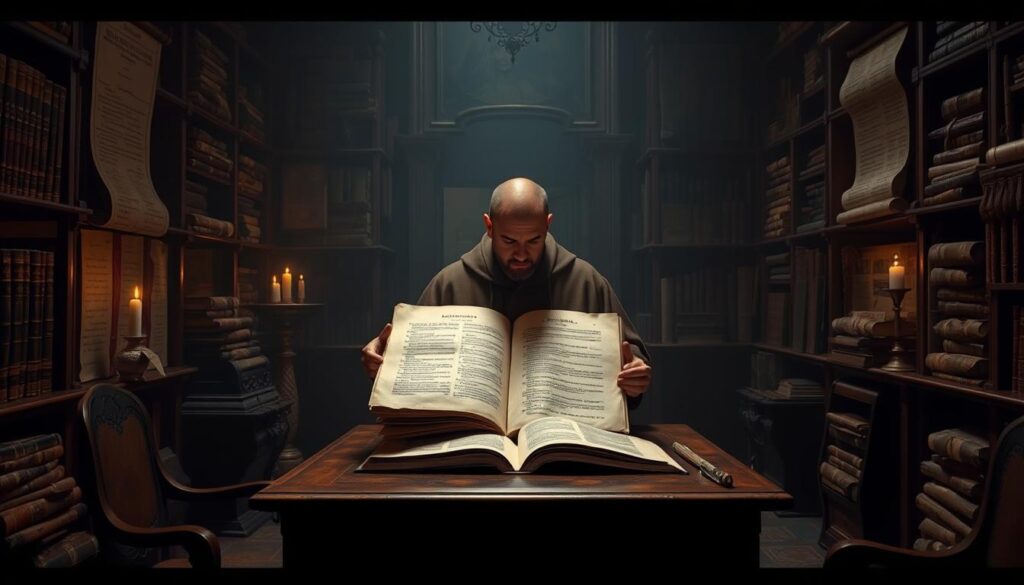
Middle French, variants, and bias
Experts point to three facts: the language, competing copies, and editorial edits. Those facts block confident dating of any single verse to a specific year.
“Ambiguous poetry can be marshaled to serve many agendas, from entertainment to alarmism.”
- Facts to check: earliest wording, manuscript count, and translation consistency.
- Popular pairings with figures like Baba Vanga share the same vulnerability: retroactive reads and selective memory.
- Common celestial motifs—eclipses, fire, war—were standard astrological images, not calendar markers.
| Element | Claim | Scholarly note |
|---|---|---|
| Language | Clear forecast | Middle French phrasing is often vague |
| Manuscripts | Single authoritative text | Multiple competing copies exist |
| After-the-fact matches | Fulfilled verses | Confirmation bias explains many matches |
Use a simple framework to evaluate bold claims: check the source of the verse, trace the earliest attested wording, and ask whether the reading depends on vague metaphors. For a quick self-check, try a short psychic abilities test to see how suggestion and pattern-finding affect judgment.
Trend analysis for the future: mapping prophecies to real-world risk and opportunity
Move from symbolic lines to concrete trend lines that affect supply chains, markets, and daily life. Readings can prompt useful scenario work without treating any verse as a timetable.

Geopolitics and markets
Alliances of necessity form when energy or shipping routes face strain. Expect temporary partnerships that shift power and trade flows.
Watch these signals: commodity spikes, safe-haven flows, and dollar moves that price conflict risk before headlines arrive.
Culture and technology
Social media amplifies fear and can turn light—an unexplained sight—into panic. That pressure shapes policy on control, cyber defenses, and export limits.
“Use motifs as prompts for stress tests, not as literal forecasts.”
| Signal | Risk | Indicator | Action |
|---|---|---|---|
| Energy shock | Supply interruptions | Price spikes, rerouting | Diversify suppliers |
| Coastal flooding | Insurance losses | Claims rise, migration | Invest in resilience |
| Info surge | Polarization | Viral disinfo | Strengthen media literacy |
| Tech rise | Standards battles | Export controls | Build local capacity |
Takeaway: Treat symbolic readings as scenario prompts. They guide planning on climate, market tremors, and social strain while pointing to where machines and technology can aid humanity. For an alternative lens, explore a Lyran perspective at Lyran perspective.
Conclusion
Old verses often act as cultural mirrors when the present feels fragile.
No quatrain names a specific year, and modern excitement around eclipses and sky events fuels renewed interest. Treat prophecies as prompts for thought, not as a timetable.
Use readings to spot risks: conflict, climate change, and social strain. Look for practical light—local resilience, trusted information, and skills that help humanity adapt.
Readers who enjoy speculative takes, including baba vanga-style models, should weigh sources and translation fidelity. For another interpretive lens, see a concise Pleiadian perspective.
Final thought: treat nostradamus predictions as invitations to plan better, seek evidence, and act with humility as the world moves into the future.