

Finding the right deck starts with knowing what a complete offering includes: durable cards, a clear guidebook, and a protective box or keepsake box for safe storage.
New and seasoned readers benefit when a guide lays out meanings, spreads, and context. A well-made deck uses quality card stock and a readable finish so the cards shuffle smoothly and artwork stays sharp.
We’ll show how to weigh price versus value, what details to scan on product pages, and when a Rider Waite-style option is best for learning classic imagery. Learn to compare guidebook depth, included accessories, and how a keepsake box protects your investment.
Want to preview full artwork before buying? You can browse many themed tarot decks and review every image online, and even see practical suggestions like which formats suit travel or professional readings. For a quick look at symbolism in action, check this guide to The Chariot for context and interpretation: The Chariot overview.
Key Takeaways
- Look for sturdy cards and a clear, useful guidebook.
- A protective box or keepsake box keeps your deck in top shape.
- Compare price against production quality and included extras.
- Rider Waite-style decks help beginners learn classic symbolism.
- Review product details and full artwork online before buying.
- Choose a format that fits travel, display, or professional use.
Buyer’s Guide Overview: What Comes in a Tarot Card Set
Knowing the exact inclusions makes it easier to compare quality and value at a glance.
The typical purchase bundles a full 78-card tarot deck, a readable deck guidebook, and a sturdy keepsake box. These three items give beginners and hobbyists the basics to study and practice right away.
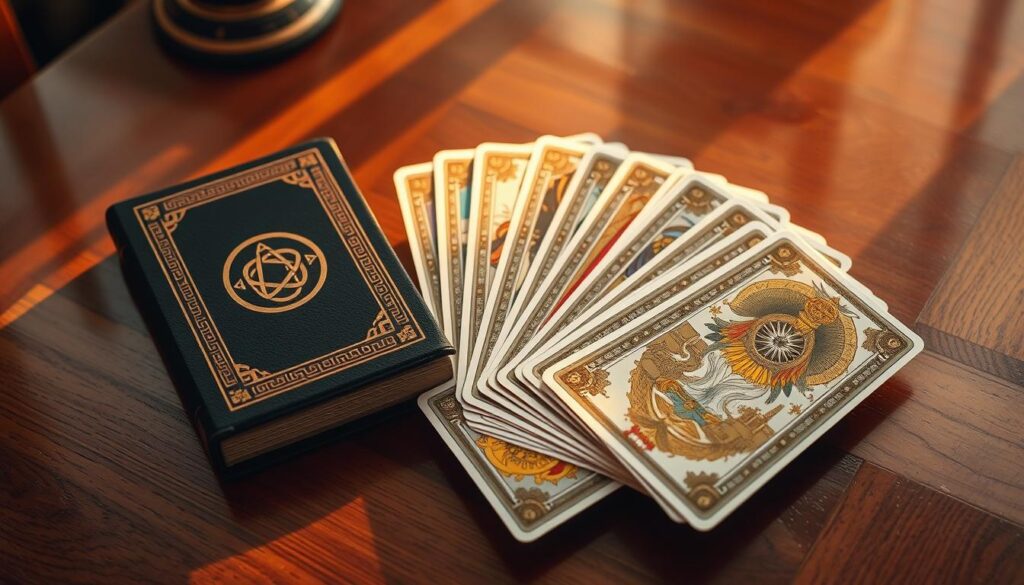
Pay attention to physical details. Cardstock weight and surface finish—matte, linen, or glossy—shape shuffle feel and how artwork appears under light.
Handling and produce notes
Edges can be plain, black, silver, or gold. Ornamental edges look nice but may show wear with fast shuffling. Check print resolution, core stock, and color accuracy so symbols and small details stay crisp.
- Extras: reference cards, pouches, or posters add value if price stays fair.
- Guide depth: basic meanings, sample spreads, and card-by-card notes speed learning.
- Box type: magnetic or rigid boxes protect during travel and storage.
| Component | What to check | Why it matters |
|---|---|---|
| 78-card tarot deck | Material, finish, art preview | Durability and readability for long-term use |
| Deck guidebook | Depth of meanings, spreads, artist notes | Speed up learning and interpretation |
| Keepsake box | Fit, closure type, protection | Preserves edges and finish; eases transport |
Understanding Tarot Basics: Major Arcana, Minor Arcana, and the Fool
Knowing how the trumps and suits divide a deck makes interpretation clearer for new readers. This split gives a framework for reading themes, timing, and personality roles in a spread.
The role of the 22 Major Arcana and The Fool in readings
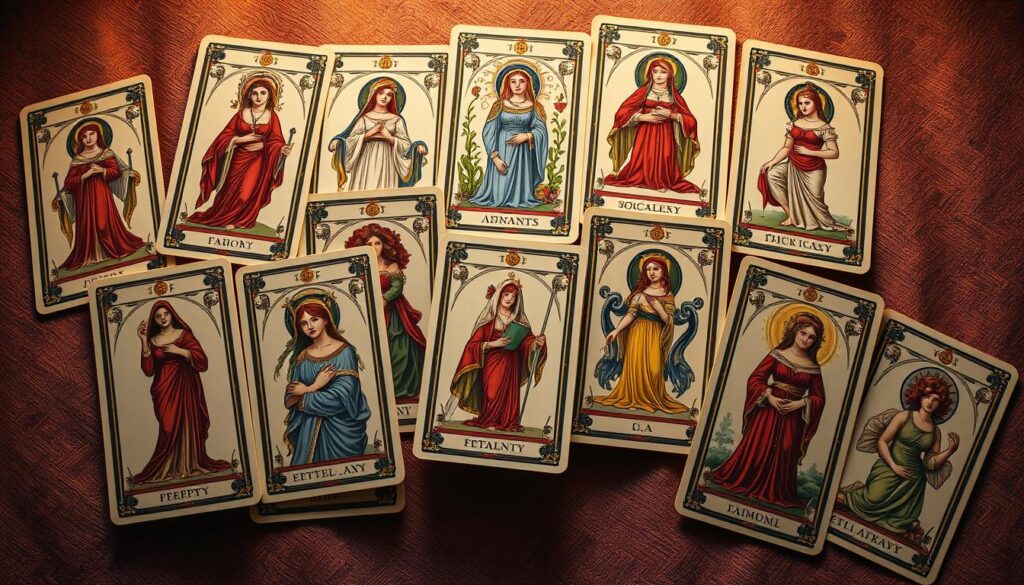
Major Arcana are 22 archetypal trumps, including The Fool. They point to life lessons, major shifts, and long-term themes. The Fool often signals new starts, leaps of faith, and the beginning of a journey.
The Fool’s Journey frames those 22 images as a path from innocence to completion and helps anchor upright and reversed meanings.
Minor Arcana structure: four suits, court cards, and pip cards
The Minor Arcana has 56 cards split into four suits: Wands, Cups, Swords, and Pentacles. Each suit includes ten pip cards and four court figures — King, Queen, Knight, and Jack/Page.
- Function: Minor cards handle daily events, choices, and practical detail.
- Court roles: People, personality traits, or approaches to situations.
- Learning tip: A basic guide explains upright and reversed meanings and suit associations.
Understanding this structure in a 78-card tarot deck makes it easier to compare artwork and symbolism across options. For more on choosing a deck, see our tarot guide.
The Suits Explained: Wands, Cups, Swords, Pentacles
Suits act like lenses: they focus a reading on energy, emotion, thought, or material life.
Wands pair with fire. They stand for will, ambition, and creative spark. In practice, these tarot cards point to plans, initiatives, and the drive needed to act.
Cups align with water. They highlight emotions, intuition, and relationships. Cups often signal healing, connection, or an invitation to check your inner life during readings.
Swords connect to air. They bring logic, truth, and communication into the frame. Expect Swords to ask for clarity, boundaries, or mental discipline and to reveal stress or overthinking.
Pentacles belong to earth. They focus on work, money, health, and stability. Pentacles cards emphasize practical steps, resources, and habits that build long-term security.

Quick Suit Signals
- Symbolism echoes each element — flames for Wands, water for Cups, skies or blades for Swords, and coins or fields for Pentacles.
- Court figures add personality: Pages learn, Knights move, Queens integrate, Kings direct within each realm.
- Balance of suits in a spread shows where to shine more light or focus effort.
- A clear guide or good deck helps you spot motifs fast so you can synthesize meanings with ease.
| Suit | Element | Common themes |
|---|---|---|
| Wands | Fire | Ambition, creativity, action; shadow: impulsiveness |
| Cups | Water | Emotions, relationships, intuition; shadow: moodiness |
| Swords | Air | Thought, truth, communication; shadow: conflict, overthinking |
| Pentacles | Earth | Work, health, resources; shadow: materialism, stagnation |
From Trionfi to Today: A Brief History of Tarot
Fifteenth-century Italian artisans blended four-suit decks with extra trumps, producing the early trionfi that set a new structure for play and imagery.
Surviving Visconti-Sforza examples show hand-painted luxury cards made for nobility. These pieces predate mass printing and reveal how visual detail mattered from the start.
Game origins: The pack spread across Europe and evolved into regional games such as French Tarot and Austrian Königrufen. In many places the focus stayed on trick-taking rather than divination.
In the late 18th century, French occultists reframed the set for esoteric use. Scholarship still confirms the playing-card origins, but the new meanings stuck and influenced later designs.
- Some patterns like Tarot de Marseille and Swiss 1JJ serve both play and cartomancy.
- The Smith-Waite original 1909 design became a teaching touchstone for modern readers and reproductions.
- Read product details to see if a deck aims for historical fidelity or a modern reinterpretation; price often reflects production choices.
Iconic Systems: Rider-Waite-Smith, Tarot de Marseille, and More
Several historical systems remain the backbone of modern practice, each with its own visual language and study benefits.

Rider Waite-based designs are the go-to for beginners because every pip and scene tells a story. The original 1909 Smith-Waite publication, illustrated by Pamela Colman Smith, made symbolism easy to read and memorize.
By contrast, Tarot de Marseille relies on numeric and suit patterns rather than scenic pips. That lineage appeals to readers who like historical minimalism and number theory.
Art Nouveau influences and hybrid approaches add lyricism while keeping core motifs intact. Check product details to see if a deck follows RWS scenes, Marseille patterns, or blends styles.
| System | Visual style | Best for |
|---|---|---|
| Rider Waite | Illustrated scenes | Fast learning |
| Tarot de Marseille | Numeric pips | Historical study |
| Hybrid/Art Nouveau | Decorative motifs | Collectors & readers |
Tip: Preview full images before buying. Familiar systems make using third-party books and resources easier for both private practice and readings for others.
How to Choose a Tarot Card Set That Fits Your Style
Pick a deck that feels right in your hands and sparks a clear emotional response.
Artwork and symbolism guide how quickly you learn. Look for scenes that move you and motifs you can remember. If images click, meanings come faster.
Readability matters for deck beginners. Bold titles, clear numbers, and on-card keywords help new readers build confidence. A balanced guide gives short meanings and practical spreads without overwhelming you.
Physical feel affects daily use. Choose a size that shuffles easily for your hands. Matte or linen finishes reduce glare and help with grip. Durable cardstock prevents edge wear when you riffle or bridge.
Presentation and extras matter if you value care and display. A rigid box protects the contents. Decorative touches like gold edges add flair but check how they age if you shuffle often.

Quick comparison
| Feature | What to look for | Why it matters |
|---|---|---|
| Artwork & symbolism | Scenes that resonate; clear iconography | Speeds learning and strengthens intuition |
| Readability | Bold titles, on-card keywords, concise guide | Helps beginners interpret cards faster |
| Physical feel | Size, finish (matte/linen), sturdy cardstock | Comfortable shuffling and long-term durability |
| Presentation | Rigid box, edition notes, edge finish | Protection, collector value, and aesthetic appeal |
Tip: Compare price to build quality, guide depth, and extras. Try viewing full decks online and consider Starter Tarot, Quick and Easy options, or a Rider Waite classic when you want a reliable learning base.
Best Tarot Decks for Beginners
A thoughtful beginner option blends classic symbols with helpful on-card cues. Start with a deck that makes meanings easy to find and scenes simple to read.
Rider Waite — foundational symbolism
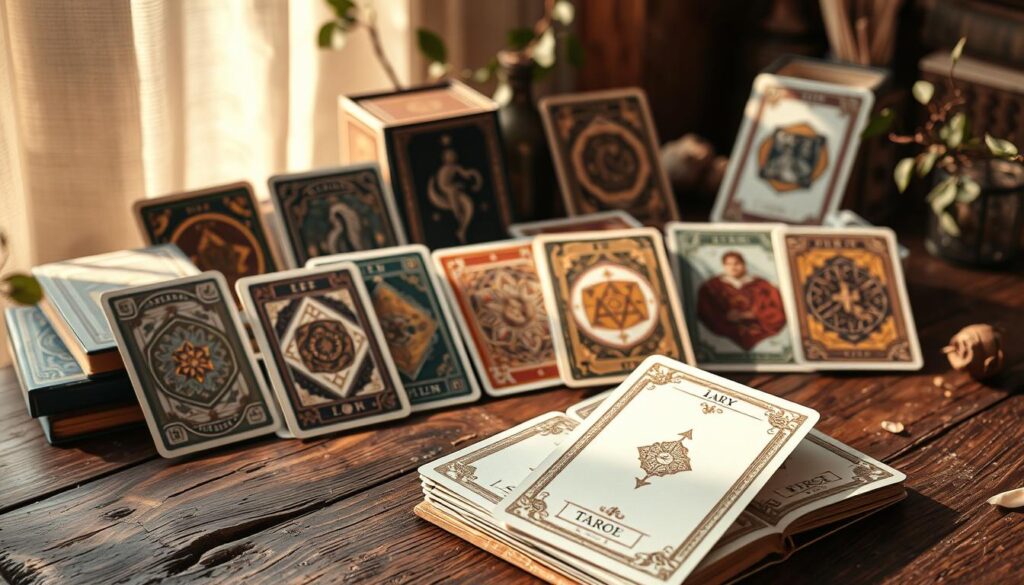
Rider Waite is the go-to for learners. The imagery aligns with most books, courses, and online resources. That makes cross-referencing faster when you study.
Starter deck — printed meanings for faster learning
The Starter Tarot prints short meanings right on the faces. This reduces page-flipping and builds confidence during practice. Look for clear titles and numbers to avoid confusion as you memorize correspondences.
Quick and Easy — RWS art with on-card keywords
The Quick and Easy option merges familiar Rider scenes with concise keywords. Beginners use it to practice spreads and internalize core meanings quickly.
- Preview all cards online to ensure the art style resonates.
- Pick a deck with a good guidebook that explains upright and reversed meanings and sample spreads.
- Choose finishes like matte or linen for better shuffle feel and durability.
Not sure which to buy? Compare the three options and view full images from retailers. For practice, start with simple layouts and try these sample spreads to build confidence.
Collector Favorites and Modern Classics
A handful of editions bridge historic fidelity and contemporary flair, giving readers reliable symbolism with fresh visuals.

Smith-Waite Centennial reproduces the 1909 scenes with careful color work and faithful composition. Collectors praise this edition for historical accuracy and familiar imagery.
Ethereal Visions leans into Art Nouveau lines and luminous palettes. Certain editions add subtle gold accents that lift presentation and make the package feel special.
Modern reinterpretations like Crow Tarot and Modern Witch bring new voices to the archive. These versions refresh classic motifs so readers spot known meanings in a new light.
“Choose an edition that matches both your study goals and display needs.”
Before buying: browse full images, read production details, and note finishes that affect shuffling and edge wear. Limited runs often include upgraded boxes or linen cardstock, so check listings closely.
If you present readings publicly, striking artwork can attract attention. Rotate a few favorites to keep readings fresh and engaging, and consider viewing professional options at professional readings.
Comparing Editions, Print Quality, and Price
Upgrades like linen stock, gilded edges, or a rigid box often explain wide price gaps between versions.
Standard editions aim for a balance of affordability and durability. They usually offer good cardstock and a clear finish that shuffles well.
Special editions swap in thicker stock, matte or linen coatings, and sometimes a small extra booklet. Those extras raise the final price, but they improve everyday handling.
Limited and collector releases
Limited releases add features like hand-numbering, alternate colorways, or decorative gold edges. These touches increase collectibility and the market price.
What really affects cost
- Print quality — color fidelity and line sharpness keep symbols readable under varied light.
- Materials — linen finish, matte lamination, and gilded gold trims add expense.
- Packaging — a rigid box and extra booklets or pouches justify higher tag prices when you’ll use them.
| Edition type | Common upgrades | Why pay more? |
|---|---|---|
| Standard | Basic cardstock, simple box | Good durability at low price |
| Special | Upgraded stock, better finish, booklet | Improved handling and presentation |
| Limited | Numbering, unique print, gilding | Collectibility and potential resale value |
Check listing details — paper weight, coating, and included extras — before you buy. If you read often, a modestly higher price for tougher cards usually pays off in longevity.
For collectors, release notes and full-image previews help assess long-term appeal. For practical buyers, prioritize feel and function. Compare final price to use — a reliable purchase supports confident readings and avoids early replacements.
Guidebooks That Actually Teach: Meanings, Spreads, and Symbolism
A clear, practical guide turns symbolism into usable language for real readings. Look for a manual that pairs brief keywords with short examples and step-by-step spreads.
Beginners’ meanings, card-by-card symbolism, and practice spreads
Good guides give upright and reversed meanings and show how imagery links to tradition like RWS or Marseille. They teach how to notice small details and use them in a one-card daily or three-card reading.
- Practical focus: clear meanings, sample readings, and spread walkthroughs.
- Range: one-card dailies, three-card basics, and a starter Celtic Cross.
- Visual help: side-by-side images that clarify court and pip distinctions.
Deck-specific guidebooks versus universal references
Some deck guidebook volumes explain the artist’s choices and give insider context. Other universal guides work across any Rider-style tarot deck and help when you rotate collections.
Check guide length, binding, and whether reversed meanings, elemental dignities, and timing tips are included. The right guide bridges theory and practice and turns study into confident, compassionate readings.
Reading Use-Cases: Study, Daily Draws, and Full Readings
A few focused pulls each week build a working vocabulary of imagery and intuition. Small routines help you learn meanings without feeling overwhelmed.
Start with simple practice and scale up as confidence grows. Short sessions fit busy days and keep study consistent.
Three-card spreads and the Fool’s Journey
Three-card layouts — like past/present/future or situation/advice/outcome — give clear snapshots. They reveal patterns while staying compact for beginners.
Study the Major Arcana alone to follow the Fool’s Journey. That focused route highlights life lessons before you mix in suits and interactions.
- For study, use one-card pulls and journal links between meanings and images.
- Daily draws give quick, light guidance and strengthen intuition over time.
- Layer suits later to see how Wands energy meets Cups emotion or Swords logic meets Pentacles practicality.
- Ask open-ended questions and reflect after each session to deepen learning beyond the guide.
- If reading for others, set clear expectations and keep sessions supportive and ethical.
| Use | What to do | Why it helps |
|---|---|---|
| Study | One-card pulls, journal notes | Builds memory and context |
| Daily draw | Short reflection, one card | Develops personal vocabulary |
| Full reading | Three-card spreads, Major Arcana focus | Balances depth with clarity |
Tip: Track which spreads give consistent clarity and keep a short list you trust. Over time, blend structure with intuition and let your deck surface what matters most.
Theme and Aesthetic: Choosing Decks by Mood and Motif
A deck’s visual language shapes the tone of every reading more than you might expect. Themes guide feeling, focus, and which symbols stand out.

Classic, witch tarot, star tarot, and world tarot themes
Classic tarot options keep familiar imagery that helps learners and clients connect quickly. They rely on recognizable scenes and clear symbolism.
Witch tarot editions lean modern and empowering. They use ritual motifs, herbal cues, and contemporary characters to create a warm, inclusive vibe.
Star tarot designs feel cosmic and calm. These decks favor night skies, constellations, and meditative palettes that suit introspective spreads.
World tarot themes borrow global motifs and cultural scenes to highlight completion, travel, or broad life cycles. Always preview full galleries to see how consistent the artwork and composition remain across suits.
- Evaluate color palette: muted or vivid changes mood.
- Check symbol placement so key cues remain visible in spreads.
- Pick one everyday workhorse deck and rotate others by season or client need.
| Theme | Vibe | Best use |
|---|---|---|
| Classic tarot | Familiar, instructive | Learning and cross-referencing |
| Witch tarot | Modern, empowering | Client rapport and ritual work |
| Star tarot | Cosmic, contemplative | Meditation and inner work |
| World tarot | Global, narrative | Cultural readings and completion themes |
Authenticity and Editions: What to Look For Before You Buy
A careful look at edition notes and print specs saves you from counterfeit or low-quality prints. Authentic RWS-based releases should credit the original artist and list publisher details clearly.

Publisher marks, artist credits, and print details
Verify authenticity by checking publisher logos, ISBNs, and credits that name pamela colman or pamela colman smith on RWS-derived items.
Review edition notes to learn if the release is standard, restored, or recolored and how it compares to the original 1909 art.
- Examine listing details for paper weight, finish, and country of manufacture to judge production standards and longevity.
- Be cautious of unusually low price points for known classics; faded colors or off-center borders often indicate a fake.
- Preview every image when possible—mismatched fonts or sloppy linework are red flags.
- Buy from authorized retailers or publisher storefronts to reduce risk and ensure correct edition fulfillment.
“Clear edition labeling and honest print details protect both your purchase and long-term use.”
Where to Discover and Compare Tarot Decks
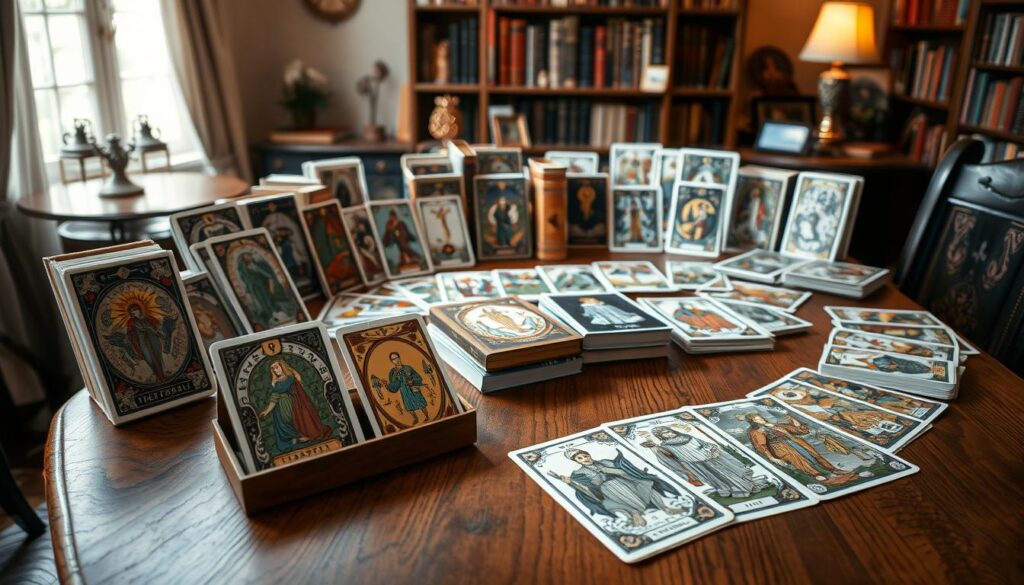
Good discovery tools let you sort by style, preview every image, and compare print details side-by-side. That makes it easier to spot consistent art, symbol placement, and usable titles across all cards.
Browsing by theme and viewing full decks
Use theme filters to find Art Nouveau, Modern Witch, Crow Tarot, Universal Waite, or Smith Waite Centennial galleries fast.
Preview whole galleries so you can confirm color, icon placement, and readability. Read listing details for cardstock, finish, size, and whether a helpful guide is included.
- Compare price across sellers and watch for bundles with pouches or books that boost value.
- Bookmark card deck galleries for side-by-side comparison later.
- If you’re new, try free readings or sample pages to see which imagery clicks.
- Check shipping rules and return windows for limited runs or imports.
- Read community reviews and photos to verify real-world print quality.
| Action | Why it helps | Quick tip |
|---|---|---|
| Filter by theme | Find styles you love faster | Search “best tarot decks” for curated lists |
| View full galleries | Check consistency across suits | Look at every card before buying |
| Compare specs & price | Match feel to handling needs | Choose durable finish for heavy use |
Build a short list of three to five options, then double-check availability and final price before you buy. For symbolism examples, see Three of Swords overview.
Care, Storage, and Longevity for Your Deck
Proper storage and gentle handling extend the life of your deck and keep imagery crisp.

Protective boxes, cleaning, and preserving edges and finish
Use a rigid box to guard corners and reduce compression. A magnetic or two-piece box minimizes scuffs and keeps cards flat in storage.
If your edition has gold edges, prefer overhand or hand-over-hand shuffles to protect the metallic trim. Gilded accents chip faster with rough riffles.
Keep cards clean by washing hands before sessions and wiping edges with a soft, dry cloth. Avoid liquids and long sun exposure that can fade inks and warp surfaces.
- Track wear and switch to gentler shuffles if edges fray.
- Match sleeves or a pouch to your use—sleeves add protection but change shuffle feel.
- When traveling, keep the box inside a padded case to prevent dents.
Many listings state finish and stock in the product details; check those specs before you buy. For related handling notes see four-of-pentacles.
Tarot Card Set
Complete kits simplify the shift from study to practice by bundling a compact guide with protective packaging and a ready-to-use card deck.
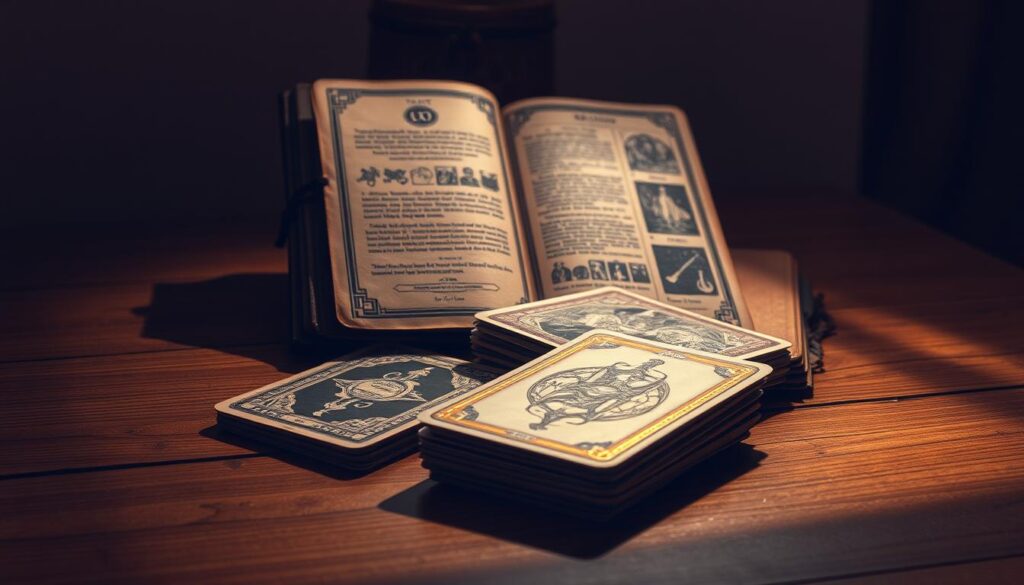
Look for listings that show every card image so you can check art clarity, suit consistency, and how titles appear across the faces.
Compare materials and price. Note cardstock thickness, finish, and any foil or gilding before you choose. Upgraded components can justify a higher price if you expect heavy use.
If you read for others, pick a deck that shuffles comfortably and resists edge wear. Also confirm whether the guide includes quick-reference keywords or tables to speed sessions.
- Portability matters: compact packaging makes travel easier for classes or client visits.
- Check replacement availability and reprint schedules if you rely on backups.
- Match aesthetic and handling needs so the kit becomes a trusted daily companion.
| Included | What to check | Why it matters |
|---|---|---|
| tarot kit | Full gallery, guide length | Confirms consistency and learning support |
| card deck | Cardstock, finish, shuffle feel | Durability and comfort for frequent use |
| Packaging | Box fit, protection, portability | Preserves edges and eases transport |
| Extras | Keywords, bookmarks, replacements | Speeds readings and protects investment; affects price |
Conclusion
Pick tools that make practice easy and inviting. A deck you love, a clear guide, and sturdy production together help you learn faster.
For beginners, classic tarot options and decks with printed keywords ease the leap from study to live readings. Preview full galleries and check how meanings appear at a glance.
Balance price with build quality and guide depth. Paying a bit more for durable finish and a useful manual often saves money in the long run.
Build a short list, choose the best tarot deck that sparks regular use, and keep your cards protected so each session stays bright and light.