

what is intuitive energy healing describes a hands-on, holistic approach that supports wellness by working with the body’s natural flow across physical, emotional, and spiritual layers.
The core idea is simple: restore balance in the subtle system so the body and mind can move toward greater calm and resilience. Practitioners use sensing and gentle techniques rather than strict scripts, adapting to each person in real time.
This guide is an informational, how-to style overview. You’ll find clear sections on how it works, common modalities like hands-on and distant work, the likely benefits (stress relief, calmer sleep, clearer emotions), and how to prepare for a first session.
A brief safety note: use this as complementary care alongside appropriate medical support when needed. If you want a deeper look at related approaches, visit psychic healing resources.
Who this fits: people feeling stressed, stuck, burned out, or simply curious about holistic paths to better health. Experiences vary, and this article will help you decide if the approach matches your needs and comfort level.
Key Takeaways
- Defines the practice and how practitioners work with subtle systems.
- Focuses on restoring balance to support physical and emotional wellness.
- Lists common outcomes like reduced stress and improved sleep.
- Offers a roadmap for techniques, prep, and safety guidance.
- Frames the approach as complementary to conventional care.
What Is Intuitive Energy Healing and Why People Use It Today
A growing number of people prefer wellness approaches that treat physical tension and inner life as one system. This form of support ties together body sensations, mental load, emotions, and spiritual meaning in a single, client-centered session.
How it works in practice: a trained practitioner uses intuition to sense where the system feels blocked, depleted, or overstimulated. The method adapts moment by moment, so the session can blend hands-on touch, hands-above work, or no tools at all.

A holistic approach connecting body, mind, and spirit
This whole-person approach treats physical symptoms and emotional distress as linked. Some people come for sleep or tension relief. Many people also seek emotional clarity and greater self-understanding.
How intuition differs from structured methods like Reiki
Unlike protocol-based systems that follow set steps, this style relies on real-time sensing and adjustment by the healer. That makes sessions highly personalized while still respecting client consent and boundaries.
- Reasons people choose it: stress-heavy lifestyles, gentle non-invasive care, and interest in integrative routines that feel personal.
- Client dynamic: practitioners use dialogue, consent, and aim to empower rather than create dependency.
- Boundaries matter: healthy relationships and clear limits help protect both client and healer when sensitive topics arise.
| Aspect | Intuitive Sessions | Structured Modalities (e.g., Reiki) |
|---|---|---|
| Session style | Adaptive, customized | Protocol-driven |
| Practitioner role | Real-time sensing and adjustment | Follows established hand positions and sequence |
| Client goals | Emotional clarity, sleep, tension relief | Balance, relaxation, standardized outcomes |
| Boundaries | Emphasis on consent and empowerment | Also values consent; structured format limits variation |
Next: we’ll break down how sessions relate to field concepts such as chakras, aura, and flow in the following section. For practical exercises and techniques, see psychic energy healing techniques.
How Intuitive Energy Healing Works in the Energy Field
Practitioners often describe a surrounding field of subtle signals that reflect how the body and mind are functioning together.
Defining the energy field: this refers to the patterns and sensations felt around and within the physical body during a session. It helps professionals notice congestion, depletion, or disrupted flow.
Energy flow and life force: when life force moves smoothly, people tend to feel grounded and calm. When flow stalls, common signs include tension, fatigue, or emotional reactivity.

Releasing blocks and what it may feel like
Releasing blocks can show up as warmth, tingling, deep relaxation, or a sudden emotional shift. These responses do not replace medical care but often signal that the system is shifting toward balance.
Chakras, aura, and lasting patterns
Many practitioners use chakras as a map. For example, the root relates to safety and grounding, the heart to giving and receiving, and the throat to honest communication.
Aura cleansing addresses energetic residue left by stress or intense events. Working with these patterns can reduce recurring issues and support daily health.
Ancient roots and trained skills
Modern practice blends Chinese qi and meridian views with Indian chakra maps. Ethical practitioners develop intuition and technical skills through study and supervised practice.
For guided learning options, consider psychic development workshops for beginners to build safe, effective abilities.
Benefits of Intuitive Energy Healing for Stress Relief and Overall Well-Being
Short sessions that encourage nervous system downshift can make daily stress feel more manageable. Many people seek this form of care to move out of constant alert and toward calm, steady rhythms.

Stress, anxiety, and nervous system regulation for more peace
Practical relief: sessions often help clients downshift from fight-or-flight into rest. This supports nervous system regulation and reduces perceived tension.
Support for sleep, pain relief, and immune function
As balance returns, sleep can improve and nights feel easier. People report less muscle tightness and lower pain when stress plays a role. Over time, calmer routines can help overall health by reducing chronic stress that burdens immune response.
Emotional healing, clarity, and feeling more centered
Emotional shifts: many people notice clearer thinking, less reactivity, and stronger focus after sessions. That leads to calmer responses during conflict and better resilience at work and home.
“Small, steady changes add up: calmer days, clearer decisions, and deeper rest.”
| Benefit | Typical Report | Notes |
|---|---|---|
| Stress reduction | Lowered anxiety, calmer breathing | Often immediate; may deepen with follow-ups |
| Sleep support | Easier wind-down, improved quality | Combine with sleep hygiene for best results |
| Pain & tension | Reduced muscular tightness | See medical care for new or persistent symptoms |
Expectations: outcomes vary. Some notice a change after one session; others benefit from a short series like many supportive therapy plans. For related resources, consider a session or explore spiritual tarot readings for complementary insight.
Intuitive Energy Healing Techniques and Modalities You Can Explore
Below are accessible methods practitioners use to support balance and relief. Sessions often blend more than one approach so work can match your needs.
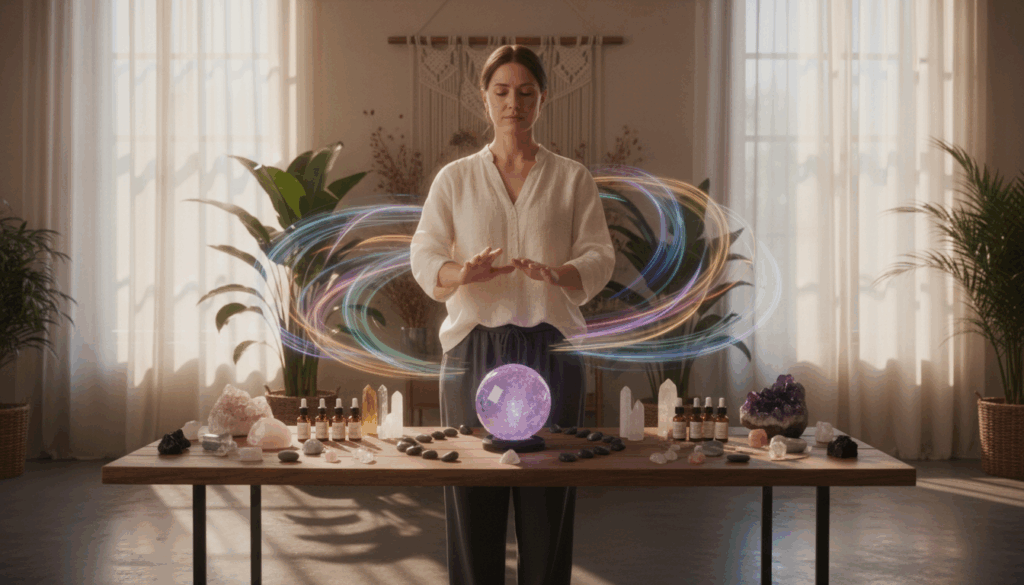
Pure tool‑free sensing
Pure intuitive healing uses no props. The practitioner senses the field and responds with subtle shifts or presence. Many clients feel calm and grounded during this direct, responsive method.
Hands-on and hands‑above
Hands-on involves gentle touch; hands‑above means hovering palms near the body. Both rely on consent and clear communication. These approaches often feel grounding and supportive.
Chakra balancing and aura cleansing
Targeted work focuses on specific centers or the overall field to clear fatigue or heaviness. This technique can help with recurring low mood or feeling drained.
Guided meditation and visualization
Practitioners may lead inner journeys so clients actively co-create shifts. Guided meditation supports focus and helps integrate subtle shifts after a session.
Crystal and color support
Crystals or color choices are selected to focus intention on a theme, such as heart opening or grounding. These tools act as an added support rather than a replacement for other methods.
Sound and voice methods
Bowls, tuning forks, or toning use frequency to loosen stuck patterns. Sound techniques can produce an immediate sense of release or clearing in the field.
Spiritual or shamanic approaches
These may include ritual, nature connection, or ancestral themes. Such work should always align with your beliefs and consent.
Somatic and body‑based work
Body-focused methods help notice stored stress and release it gently. When trauma is present, this work pairs best with trauma‑aware care and professional support.
“Skilled practitioners blend techniques to meet each client’s needs, staying grounded in consent and clear boundaries.”
| Modality | Main Focus | Typical Feeling | When to Try |
|---|---|---|---|
| Tool‑free sensing | Field awareness, subtle shifts | Calm, grounded | Gentle support or first session |
| Hands‑on / hands‑above | Grounding, physical release | Safe, tactile comfort | Tension or sleep issues |
| Sound / voice | Frequency release | Vibrational loosening | Stuck patterns or deep tension |
| Somatic work | Body memory, stress release | Awareness, gradual release | Stored stress or trauma recovery |
Next step: if you want professional guidance, consider consulting a trained practitioner such as a psychic counselor to find the right blend of methods for you.
How to Prepare for Your First Intuitive Energy Healing Session
A short checklist and clear goals set the stage for a calm, focused session experience.
Before the session: pick one intention (stress relief, clearer emotions, better sleep) and write down related symptoms and any current treatment or medications. Share these details during intake so practitioners can tailor care safely.

Typical flow and timing
Most sessions last about 60–90 minutes. Expect a brief conversation, the session itself (hands-on, hands‑above, sound or guided visualization), then a short integration chat.
Choosing in-person or distance
In-person may feel more grounding for a person who prefers a dedicated space. Distance sessions are convenient and often effective for many clients.
- Practical prep: hydrate, eat lightly if needed, wear comfortable clothes, and plan a calm period afterward.
- How to state goals: use clear phrases like “I want calmer nights” or “I need support processing grief.”
- Common sensations: warmth, tingling, colors, emotional release, or sometimes little to notice—each response is valid.
Tip: a short series of sessions may suit deeper goals. For guidance on readings and setup, consider a trusted resource like intuitive readings and guidance.
How to Choose an Intuitive Healer and Keep Your Healing Safe
A careful vetting process helps you find a healer who respects boundaries and supports your goals. Start by asking about training, session style, and the practitioner’s approach to confidentiality.

What qualified practitioners do
Clear communication: a good practitioner explains the plan, invites questions, and checks in during sessions. That keeps consent front and center.
Boundaries and confidentiality: expect written policies on touch, privacy, and record keeping. Professionals avoid pressure tactics and protect your autonomy.
Complementary care with medicine and therapy
Energy healing should sit alongside, not replace, medical treatment or therapy. Tell your doctor or therapist when you add supportive sessions so care teams can coordinate.
After-session care and common reactions
Short-term responses can include emotional release, vivid dreams, or tiredness. Drink water, rest, journal any shifts, and avoid alcohol for 24 hours.
If something feels unexpected or intense, contact your practitioner for guidance.
| Vetting Item | What to Ask | What to Expect |
|---|---|---|
| Training & background | Where trained; supervision | Transparent answers and verifiable info |
| Consent & touch policy | How they handle hands-on work | Clear limits and ongoing check-ins |
| Coordination with care | Comfort discussing therapy/medicine | Encourages teamwork with providers |
“The best practitioner helps you build self-trust and balance over time.”
Conclusion
This guide closes by inviting practical next steps that respect your pace and safety.
Core takeaway: a customizable, whole-person approach can support balance and steady well‑being. Intention plus practitioner skill, simple techniques, and time to integrate form a single clear thread for how change often unfolds.
Common benefits reported by people include reduced stress, calmer nights, and greater emotional steadiness—without promises of quick fixes. Try one session with a vetted practitioner, keep brief notes on your experience, and then decide if a short series makes sense for your goals.
For mentor guidance and vetted professionals, consider a trusted directory of psychic mentors. Remember: combine this supportive approach with healthy routines and appropriate medical or therapeutic care when needed.