

Welcome. This short guide shows a clear, practical method for distance healing that uses calm intention, simple meditation, and gentle visualization.
You will learn a step-by-step practice that centers the heart as an infinite source of love and light. The approach borrows from common guided meditation formats, including a 17-minute track by Nicky Sutton.
Expect varied results. This practice can offer emotional support, stress relief, and comfort while respecting medical care and personal boundaries.
In short: settle the body, bring focus to the heart, picture the person, then direct calm, deliberate healing energy. Many traditions call this a shared energetic connection.
Article layout: meaning of distance healing, intention and heart center, setup, guided technique, signs it is working, consent and safety, and aftercare. Follow each step at your own pace and without pressure.
Learn more about psychic healing if you want background resources.
Key Takeaways
- Simple, repeatable steps make distance healing accessible.
- Heart-centered focus brings love and light into the process.
- Guided meditation formats, like Nicky Sutton’s, offer useful structure.
- Results vary; respect medical advice and personal consent.
- Practice with a calm, low-pressure mindset for best results.
What “Distance Healing” Means and Why People Use It Today
People turn to distance healing when physical presence is limited but compassion can still travel. In plain terms, you focus kind intention on a person and form an invisible bridge across distance that offers calm and support.

Practitioners describe this as moving vibrational energy—an inner current like music heard from far away. Think of a song that lifts your mood even when the band is across town; intention acts like the amplifier that carries the feeling.
Many traditions name that life force differently: chi, prana, and ki. Ancient Egyptians, Buddhist monks, and other cultures used prayer, visualization, or chants to direct this current for comfort and balance.
People commonly use distance work during grief, anxiety, recovery, chronic pain, or when visits are impossible. Research has reported relaxation and reduced discomfort in some studies, though results vary and medical care remains essential.
“Compassion can travel without a body present.”
For a practical, consent-aware method you can practice at home, see psychic energy healing techniques. This guide focuses on safe meditation-based steps anyone can try.
The Role of Intention, Love, and the Heart Center in Energy Healing
Centering the heart brings the practice from concept into felt experience.

Intention acts like a steering wheel. You do not force results. You aim gentle support toward the person’s well-being.
The heart chakra is often framed as an infinite source of loving, healing energy. Guided meditations describe white or greenish light filling the chest and flowing down the arms. This image makes the process simple and steady.
Why love and light imagery works
Love-based focus softens mental noise. It reduces the urge to try hard and makes the mind less jumpy. A single clear picture — a warm light at the heart — helps maintain calm attention and smoother energy flow.
What coherence feels like
Signs of coherence are gentle: slower breath, relaxed shoulders, a warmer chest, and quieter thoughts. You may notice a clearer sense of connection. These sensations can be subtle yet meaningful.
“The heart chakra is an infinite source of loving, healing energy.”
| Sensation | Common Description | Why It Matters |
|---|---|---|
| Breath | Slower, deeper | Supports calm focus |
| Body warmth | Chest or palms feel warm | Signals usable connection |
| Mental state | Less striving, softer thoughts | Helps steady the practice |
Your inner experience may be quiet. Even calm presence counts more than dramatic sensations. Once intention feels clear and the heart center is open, you are ready to set up your space and begin the next steps.
How to Send Someone Healing Energy: Set Up Your Space and Mindset
Create a calm corner where you can focus without interruptions.
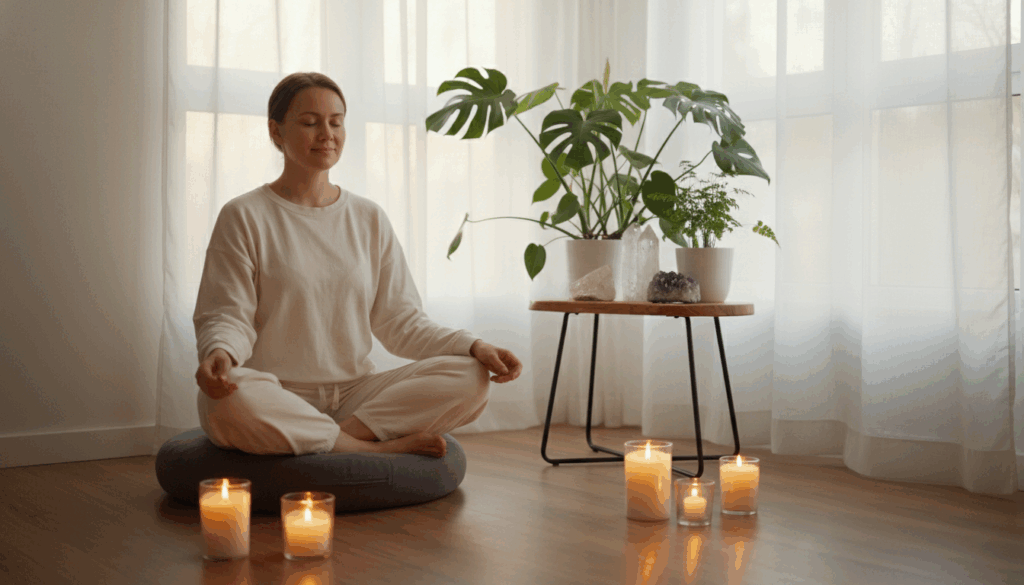
Choose a quiet, undisturbed space and take a moment to settle in
Pick a small space and dim the lights if that helps. Silence notifications and set a clear block of time so you will not be disturbed.
Take a moment to settle your posture. Sit or lie so the body feels supported and safe.
Use a deep breath to relax the body and gather your energies
Close your eyes and take deep breath: inhale slowly for four counts, exhale for six. Repeat three times.
This longer exhale cues the nervous system to downshift and makes focused intention easier. Scan and relax muscles, letting scattered thoughts slow.
Create a clear intention for the recipient and their well-being
Form one clear aim for the recipient—comfort, calm, or strength. Say a simple phrase like “May [name] be supported and restored.”
“Clarity matters more than perfect wording.”
| Step | Action | Why it helps |
|---|---|---|
| Space | Quiet, dim lights, no interruptions | Supports focus and calm |
| Breath | Slow inhale, longer exhale (4:6) | Downshifts nervous system |
| Intention | One clear, positive phrase | Guides the practice forward |
Once steady, you can move into a guided meditation and begin the heart-light steps that follow.
Guided Meditation Technique for Sending Healing Energy at a Distance
Begin by settling into a comfortable posture and letting the breath slow. Close your eyes. Take a few deep breath cycles and allow the body to release tension from head to toe.

Relaxation and preparation
Breathe slowly: inhale for four counts, exhale for six. Repeat this deep breath cycle three times and scan the body, releasing tight spots as you go.
Activate the heart-space light
Sense warmth at the chest and imagine a soft white or green light in your heart. Let that light expand down the arms and into your palms.
Connect without knowing a location
Bring the person gently to mind. Trust that distance holds no sway over clear intention. Let your heart-based awareness form the link.
Direct through the palm or use a light ball
Option A: extend your arm and imagine energy flowing from heart through the palm to their heart or an area that needs care.
Option B: cup your hands, build a ball of white light, grow it to a comfortable size, then release it with quiet trust that it reaches where required.
Complete and return
Soften the heart light, lower your hands, and offer a final wave of well-wishes. Pause in gratitude and feel your feet or chair to ground the body.
“Distance holds no sway over the power of your consciousness.”
How to Tell If You’re “Doing It Right” During a Healing Meditation
A quiet inner knowing can be the clearest sign that the practice is working. Notice what arrives without forcing images or expectations.

What you might notice
Physical cues: warmth in the palms, a soft pulse in the chest, or relaxed shoulders.
Emotional cues: tears, relief, or a sudden sense of calm.
Mental cues: fewer racing thoughts, clearer focus, or brief, vivid imagery.
Why visualization varies and how intuition guides the work
Nicky Sutton notes that the ability to visualize varies for everyone. If pictures do not come, use feeling, words, or intention as your guide.
Quick checks—notice breath ease, whether attention returns gently when it wanders, and if the heart feels warm. These signs show steady energy flow without overthinking.
- Accept subtlety: quiet steadiness counts as progress.
- Use alternatives: sensation, emotion, or a short intention phrase can replace images.
- Adjust intuitively: soften the heart-light or change hand position when it feels right.
“The ability to visualize varies for everyone.”
Self-check: if you feel drained, dizzy, or agitated, pause and ground. A correct session should leave you calm and replenished, not depleted.
For a guided visual approach that supports intuition-based practice, explore a related clairvoyant meditation.
Best Practices for Safety, Consent, and Emotional Boundaries
Clear boundaries and consent make this kind of work respectful and effective. When possible, ask if the person is open and agree on a simple aim such as calm, rest, or comfort.

Aligning intentions when possible
If you can’t ask directly, set the intention: “only if it serves their highest good and is welcomed.” This keeps your focus gentle and respectful.
Staying grounded and avoiding emotional mirroring
Jeffrey Allen warns that mirroring moods happens easily. Notice sudden grumpiness, anxiety, or heaviness as signs you may be absorbing another’s state.
Reset with a grounding breath, feel your feet, or take a short walk outside.
Support, not a replacement for medical care
Make sessions time-bound (10–20 minutes) so the practice stays sustainable. Distance healing and energy healing offer comfort and support but do not replace diagnosis or treatment.
| Sign | What it feels like | Quick reset |
|---|---|---|
| Mirroring | Sudden mood shift | Slow breath, feel feet |
| Overwhelm | Heavy chest, fuzzy mind | Brief body scan, roots visual |
| Aftercare need | Tiredness or low fuel | Short walk, drink water |
Keep clear limits, check in when possible, and aim to help others with steady presence. For related focused intention practices see aligned intention.
Aftercare: Reflect, Journal, and Strengthen Your Practice Over Time
A brief pause after practice helps anchor what you just offered and what you received. Take a moment to breathe and notice any small shifts before moving on with your day.
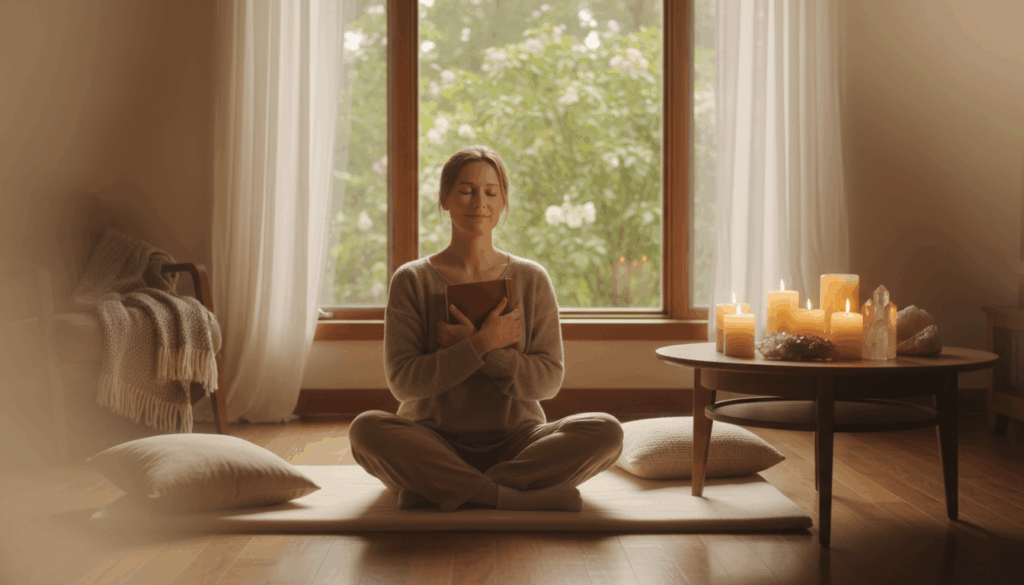
Reflection prompts to track flow, thoughts, and moments of clarity
Right after a session, write one quick note. Ask: how did it feel to connect? Did any moments of energy flow or strong emotion stand out?
Record physical notes: where in the body you felt warmth, tension, or release. Track insights that could deepen future practice.
Simple ways to maintain your own energy between sessions
Keep it practical: hydrate, stretch, and take a short grounding meditation. If you feel sensitive, reduce loud screens and take a brief walk.
Building consistency with guided meditations and a routine
Aim for a sustainable rhythm — for example, 2–3 times per week. Use guided meditations or apps like Insight Timer when the mind wanders; guided meditations help keep focus.
| Action | What to note | Benefit |
|---|---|---|
| Journaling | Moments, sensations, thoughts | Tracks progress |
| Between sessions | Hydration, stretch, ground | Preserves energy |
| Routine | Technique, time, frequency | Builds skill |
Keep boundaries: reflection is learning, not judgment. Offer steady support, then return to your own life calm and present. For related guidance, explore psychic intuitive readings.
Conclusion
,Finish with a brief practice of grounding and gentle gratitude.
Recap: Prepare your space, take a deep breath, activate a heart-centered image of love and light, think of the recipient, and then send healing energy through the palms or a released light ball. Close with thanks and feel your feet or chair to ground the body.
Trust that distance healing deepens with steady practice. Subtle signs — calm, warmth, or gentle emotional release — still matter and show meaningful work.
Keep consent and boundaries central. Align intentions when possible, stay grounded, and treat this as support alongside medical care.
Choose one simple technique, practice at set times each week, and track notes in a journal. Explore guided meditations if you want steady structure and more practice.