

This Ultimate Guide gives a practical, balanced look at the term and how people use it in wellness today.
Readers will find clear descriptions of common techniques, a friendly view of session flow, and simple notes on safety. Many seek this approach for stress relief, better sleep, and improved quality life.
Some people report a warm sense or calm in the mind and body. Others feel relaxed with no strong sensations. Experiences vary, and that is normal.
This piece also points to evidence and guidance in U.S. care settings. It treats the topic as a complementary option, not a medical replacement, and suggests talking to a doctor for health concerns.
For practical resources and further reading, see a concise overview at psychic healing guide.
Key Takeaways
- Clear definitions and session expectations for new readers.
- Common reasons people try it: relaxation, sleep, and well-being.
- Experiences range from strong sensations to quiet calm.
- Consider it complementary; consult a doctor for medical issues.
- Sections ahead cover techniques, evidence, risks, and choosing a practitioner.
What Is Healing Energy? A Clear Definition of what is healing energy
Here we define a life‑force concept and explain key words used across traditions.
Definition: In many wellness systems, healing energy describes a non‑measurable life force linked to balance and well‑being rather than the physics meaning of energy. Practitioners use this idea to talk about shifts in bodily tone, emotional ease, and overall resilience.

Healing terms made simple
Life force and body energy refer to a felt sense of vitality. Balance and flow describe healthy movement of that force. Blockages explain patterns of tension, stress, or emotional heaviness that may crowd the system.
The word energy can confuse readers because in science it means measurable work or heat. In contrast, traditions use the term to point to subtle signals and lived experience. Some groups call the approach energy medicine, while others prefer phrases like biofield, energy work, or energy healing.
- Use these terms as a framework, not a diagnosis.
- Concepts can be helpful even when hard to measure.
- Seek medical advice for symptoms that concern you.
For a practical list of methods that apply these ideas, see energy healing techniques.
Where Energy Healing Comes From: Ancient Roots to Modern “Energy Work”
Many modern methods grew from long traditions that map life across the body and mind.
Traditional Chinese medicine offers one of the clearest maps. It describes twelve major meridians, or pathways, that practitioners use to explain how vitality moves. Acupuncture and related methods target points along these lines to support balance and ease.
Across South Asia, ancient Indian texts describe prana and chakras. References to chakras appear in writings dated roughly 1500 BCE. Chakra traditions frame centers of awareness and circulation that people use in meditation and breath practice.
Today’s scene blends lineages. Some practitioners stick closely to chinese medicine or classical chakra practice. Others mix methods into an integrative style that borrows hands-on work, breath, and movement.

| Tradition | Core map | Common practices |
|---|---|---|
| Traditional Chinese Medicine | Twelve meridians (pathways) | Acupuncture, qigong, herbal support |
| Indian (Vedic/Hindu) | Prana and chakras | Meditation, pranayama, yoga |
| Modern “Energy Work” | Blended maps and models | Reiki, therapeutic touch, combined sessions |
- Timeline: ancient systems → regional practice → wider modern use.
- Some people link these ideas with New Age themes; others present them in secular wellness settings.
- Respect for long histories matters: these approaches persisted for thousands of years because many find them meaningful.
Modern sessions often borrow from several systems. The next section looks at hands-on, hands-off, and movement approaches commonly used today.
How Energy Healing Is Said to Work in the Body and Mind
Practitioners use different methods to guide balance across the body and mind; here we describe how sessions look and what people feel.

Hands-on, hands-off, and distant approaches
Hands-on sessions often use light touch while a client lies fully clothed on a table. Practitioners place palms on or near key areas to support relaxation and flow.
Hands-off work involves hovering palms a few inches above the body. It feels less physical but aims for similar balancing effects.
Distant sessions happen when practitioner and client are apart. The format may include guided focus, visualization, or remote intention.
Why people report sensations and emotional shifts
Many describe warmth, tingling, pulsing, shifts in heaviness or lightness, vivid images, deep calm, or emotional release. Others notice very little; both responses are normal.
Practitioners use “field” language to explain a felt sense of regulation—greater calm, groundedness, and improved flow—though mechanisms remain debated.
- Emotions may surface because deep relaxation brings stored tension and grief into awareness.
- Talk about touch preferences and boundaries before a session. You can pause or stop at any time.
- Different modalities use needles, tapping, breath, or gentle touch, yet many aim for similar balancing outcomes.
Energy Healing Techniques People Use Today
If you’ve heard terms like Reiki or qigong, this short guide explains how each method is typically used today.
Reiki
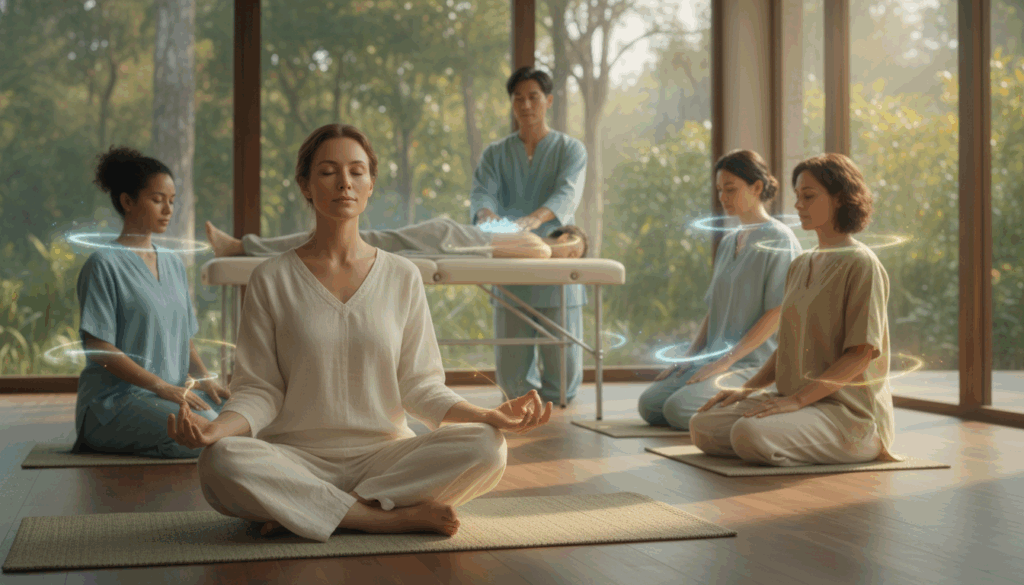
Rei often gets translated as a higher power and ki as life force. Practitioners place their hands lightly on or just above the body to promote deep calm. Many people report relaxed breathing and reduced tension after a session.
Acupuncture (traditional chinese medicine)
Acupuncture uses very thin needles at specific points along body pathways. The goal is to rebalance flow and support symptom relief for issues like pain and stress.
Qigong
Qigong combines gentle movement and breath training to help qi circulate. Regular practice can reduce stress, support sleep, and improve overall vitality.
Pranic healing
This non-touch practice involves scanning for apparent blockages in the aura, clearing, then “recharging” the system. Sessions focus on restoring balance without direct contact.
Therapeutic Touch
Despite its name, this often uses no contact. The practitioner centers, scans the field, and smooths perceived imbalances to aid relaxation and recovery.
Emotional Freedom Technique (EFT)
EFT blends focused attention on an emotion with light tapping on acupressure points while reframing thoughts. It’s commonly used to reduce stress and reframe upsetting memories.
Reflexology
Pressure on hands, feet, or ears targets mapped zones linked to body pathways. Many people seek reflexology for relaxation and pain support.
Polarity Therapy & Quantum Touch
Both combine gentle touch or light contact with breathwork and focused awareness. Sessions may include movement suggestions and lifestyle tips to maintain balance.
| Technique | Contact | Main aim |
|---|---|---|
| Reiki | Hands on / hovering | Deep relaxation, stress relief |
| Acupuncture | Needles | Rebalance flow, pain support |
| Qigong | No contact (movement) | Improve circulation, reduce stress |
| Pranic / Therapeutic Touch | Non-touch | Clear blockages, soothe system |
| EFT / Reflexology | Tapping / pressure | Emotional reframing, pain relief |
Many people try a variety of practices to see which suits them best. Talk with a practitioner about your goals and any medical care you receive.
What Energy Healing Can Help With: Benefits People Seek
Many people try these practices to calm the nervous system and regain daily balance.

Reducing stress and anxiety
Sessions often aim to reduce stress through stillness, paced breathing, and gentle touch or hands-off focus. These steps help the body downshift from high alert to rest.
People report steadier moods and less anxious rumination after regular sessions.
Sleep support and better daily life
When nervous tension falls, sleep tends to improve. Clients describe easier sleep onset and fewer awakenings.
Over time, improved rest can add up to a higher quality life and clearer daytime focus.
Pain, muscle tension, and symptom relief
Many use these practices alongside medical care to ease pain and loosen tight muscles.
Some people notice lower symptom levels, though results vary and should not replace professional treatment.
- Realistic expectations: aim for comfort, coping, and small measurable gains.
- Track changes in sleep, stress scores, and pain to judge benefit.
- Talk with a healthcare provider before changing any medical plan.
What Science Says About Energy Healing and Energy Medicine
The research landscape is uneven, with stronger evidence for a few methods and weak data for many others.

Where evidence is stronger: Acupuncture has a substantial clinical base, and some trials of Reiki report reduced stress and improved well‑being. These studies suggest certain treatments can help with pain, sleep, and anxiety in specific settings.
Where evidence is limited: Many other therapies lack high‑quality randomized trials or consistent results. Reviews often note low sample sizes, variable methods, and unclear success rates.
Why results can still look positive: Patient expectation, the calming clinic setting, natural symptom change, and placebo effects can produce real perceived benefit. Regression to the mean also explains improvement after a bad flare.
| Modality | Research strength | Typical findings |
|---|---|---|
| Acupuncture | Moderate to strong | Pain reduction, some sleep and anxiety benefit |
| Reiki | Low to moderate | Stress and well‑being improvements in some trials |
| Other biofield therapies | Limited | Few rigorous trials; mixed or inconclusive results |
Biological plausibility and debate: Critics question putative biofield claims because they are not physically measurable. Agencies like NCCIH separate veritable modalities (measurable forces such as light or magnets) from putative energy medicine approaches that lack detection.
Practical takeaway: treat these options as supportive wellness tools. Track how you feel, keep regular medical care, and talk with your clinician before changing any treatment plan.
Safety, Risks, and When to Talk to a Doctor
Before trying a session, learn key safety points that protect your health and choices.
Low-risk and non-invasive — and why conventional care still matters
Many people like these practices because sessions are gentle, non-invasive, and often calm the body and mind.
Still, these therapies should complement, not replace, standard medicine. For serious symptoms, new pain, cancer concerns, or mental health crises, see your clinician before changing any treatment.
Red flags and device-related fraud
- Avoid anyone promising a miracle cure or guaranteed results.
- Say no to practitioners who insist you stop prescribed medicine or medical care.
- Be cautious with costly devices that claim to diagnose or cure via unseen forces.
When to contact a doctor
Talk to a physician for persistent symptoms, worsening pain, sleep problems that limit daily life, or anxiety and depression that interfere with function.
Choose practitioners who welcome collaboration with your healthcare team, respect consent, and let you set boundaries. If something feels off, you may pause or stop the session at any time.
For a practical overview of energy therapies, see this trusted resource.
What to Expect in an Energy Healing Session
Before your first visit, you’ll have a short check‑in. The practitioner asks about goals like stress, anxiety, sleep, or pain.
Share current treatments, injuries, medications, and any touch or trauma preferences. This helps set a safe plan and clear intention without pressure.
During the session
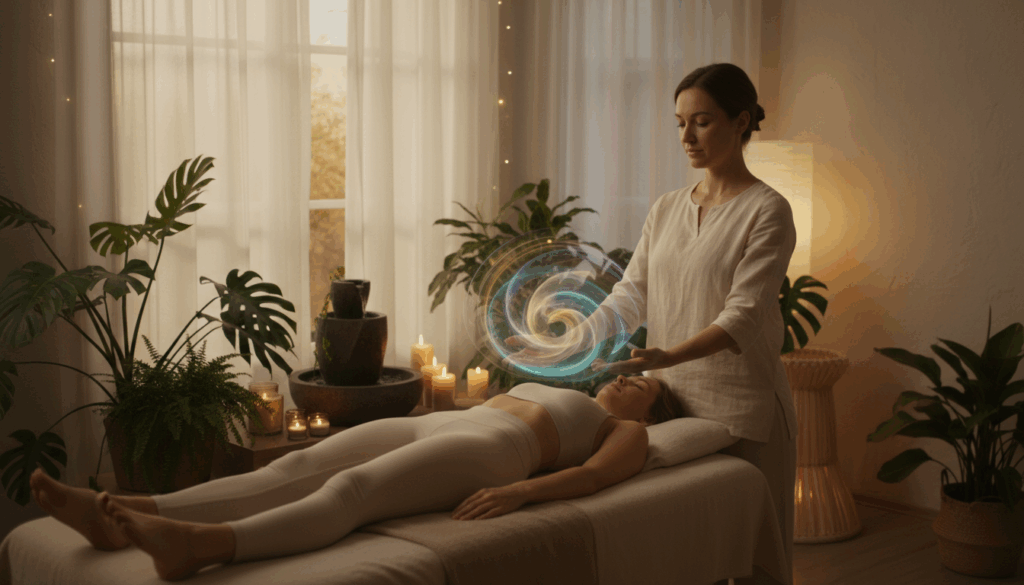
You usually lie fully clothed on a table with blankets and pillows. Practitioners may use light touch or keep their hands hovering above the body. Consent guides every step; you can pause at any time.
Common sensations include warmth, tingling, pulsing, drifting thoughts, vivid images, or quiet calm. Emotional release such as tears or laughter can happen and is normal.
Tools some practitioners use
Many include breathwork, guided awareness, or optional crystals as supportive techniques. These tools aim to help relaxation and focus; they are not required.
After the session
Expect a brief debrief. Practitioners often suggest hydration, rest, and simple follow‑ups like journaling or mindful breathing. Notice sleep and tension changes over the next 24–48 hours.
| Phase | Main focus | Typical note |
|---|---|---|
| Before | Intake & intentions | Share health history and goals |
| During | Comfort & consent | Fully clothed; hands on or hovering |
| Tools | Supportive methods | Breathwork, guided awareness, optional crystals |
| After | Integration | Hydrate, rest, journal, follow up |
For notes on how practitioners frame their methods, see a short guide to energy manipulation.
How to Choose the Right Healer or Practitioner for You
Picking a practitioner matters; small choices shape comfort, safety, and outcomes. Use a brief checklist before booking to protect your time and health.

Questions to ask about training, techniques, and collaboration
Ask directly about training, lineage, and certifications. Request examples of techniques used and why the practitioner favors them.
Important: ask whether they will coordinate with your medical team and honor current treatments and medications.
“I work alongside clinicians and keep all care plans intact,” — a clear sign of professional practice.
Finding the best fit: comfort, boundaries, and style
Notice your comfort with touch, draping, session length, and pricing transparency. Agree on consent and distance options before the session.
Try one visit first. Assess how you feel afterward and whether follow-up sessions support balance and coping.
| Checklist | Ask | Red flag | Good sign |
|---|---|---|---|
| Training & scope | What trainings and certifications do you have? | Promises of cures or medical replacement | Clear scope and referral plans |
| Techniques | Which techniques do you use and why? | Vague answers or pressure to purchase devices | Clear, evidence-aware explanations |
| Boundaries | Do you allow hands or prefer hands-off work? | Insistence on removing clothing or stopping meds | Respect for consent and options |
| Collaboration | Will you coordinate with my healthcare team? | Discouraging conventional medicine | Willingness to communicate with clinicians |
Final tip: choose a practitioner who avoids miracle language and frames results as supportive. Small, clear steps help you find a healer who matches your needs.
Conclusion
This final note ties together practical tips, realistic expectations, and safe next steps for anyone curious about subtle body work.
In short, many traditions describe a life force that supports balance and flow. Practitioners aim to restore that sense so people feel calmer and less tense.
The field offers a wide variety of methods — from hands‑on Reiki and Therapeutic Touch to acupuncture, qigong, EFT, reflexology, polarity therapy, and quantum touch. Each suits different needs and comfort levels.
Realistic benefits often include relaxation, better sleep, and support for pain and daily stress. The science and evidence vary by method, so stay informed and cautious.
Next steps: pick a reputable practitioner, set clear boundaries, keep regular medical care, and notice how your body and mind respond. Be curious and skeptical in equal measure, and choose what helps your life most.
Learn practical session steps at how to perform energy healing.