

Remote viewing began drawing serious attention decades ago when U.S. agencies tested whether inner sight could serve intelligence needs. The practice offered a new way to gather information about targets beyond normal perception.
Researchers reported sessions that challenged common ideas about space and time. Many participants found the process shaped their sense of consciousness and expanded how the mind registers subtle signals.
People who trained this skill often described vivid experiences that felt real and useful. Over decades of study, teams balanced anecdote with method, testing whether such sessions could deliver reliable data for fieldwork.
This introduction frames why an aesthetic look at those sessions matters. Understanding the sensory tone of each encounter helps students refine their mental abilities and judge how the practice differed from instrument-based technology.
Key Takeaways
- Remote viewing has historic use by U.S. agencies for intelligence research.
- Sessions aimed to collect actionable information without physical access.
- Participants reported meaningful experiences that altered consciousness and mind awareness.
- Study combined field reports with structured testing across time.
- Examining the session’s sensory tone helps trainees refine mental abilities.
Understanding the Basics of Remote Viewing
Remote viewing began as a disciplined method to gather information about distant or concealed targets beyond normal senses. Practiced with structured protocols, this work trains people to record impressions about objects, locations, events, or people without relying on gadgets.
Defining the practice
Ingo Swann coined the term in the early 1970s while working with researchers at institutions such as the Stanford Research Institute. That naming helped frame experiments as procedures rather than a vague psychic ability.

Scientific research found that many individuals possess an innate ability that can improve with training. Proper training boosts mental alertness and aids problem solving in daily life.
“This systematic approach yields data that can be useful for both personal growth and professional intelligence work.”
- Trainable skill with repeatable protocols
- Useful for gathering impressions beyond standard technology
- Supports enhanced perception, decision-making, and life skills
| Feature | Practical Benefit | Typical Outcome |
|---|---|---|
| Structured protocol | Consistency in sessions | More reliable results |
| Training emphasis | Skill development for anyone | Improved abilities over time |
| Non-technological data | Access to inner impressions | Deeper understanding of targets |
Defining What Is Aesthetic Impact in Controlled Remote Viewing
A session’s sensory signature shapes the way a viewer assembles raw impressions into usable descriptions. Those first flashes of light, texture, or feeling act as anchors for later detail.

Understanding what is aesthetic impact in controlled remote viewing means noting how sensory cues guide the process. During a session, people often meet symbolic or abstract data that must be translated into clear form.
By focusing on sensory quality, a viewer can avoid early labels and keep perception open. This practice helps pull accurate information instead of layered assumptions.
- Initial cues: light, texture, tone
- Translation: converting impressions to recorded data
- Outcome: balanced results that reflect the target’s essence
Mastering this aspect improves accuracy and deepens the experience. Analysts then interpret richer data, and the practice adds value to everyday life for those who train the skill.
The Historical Origins of Remote Viewing Programs
Classified work during the late 20th century explored whether trained operators could deliver usable intelligence from nonlocal impressions. Agencies funded studies to see if those methods could add value to traditional collection.
The Stargate Project Legacy
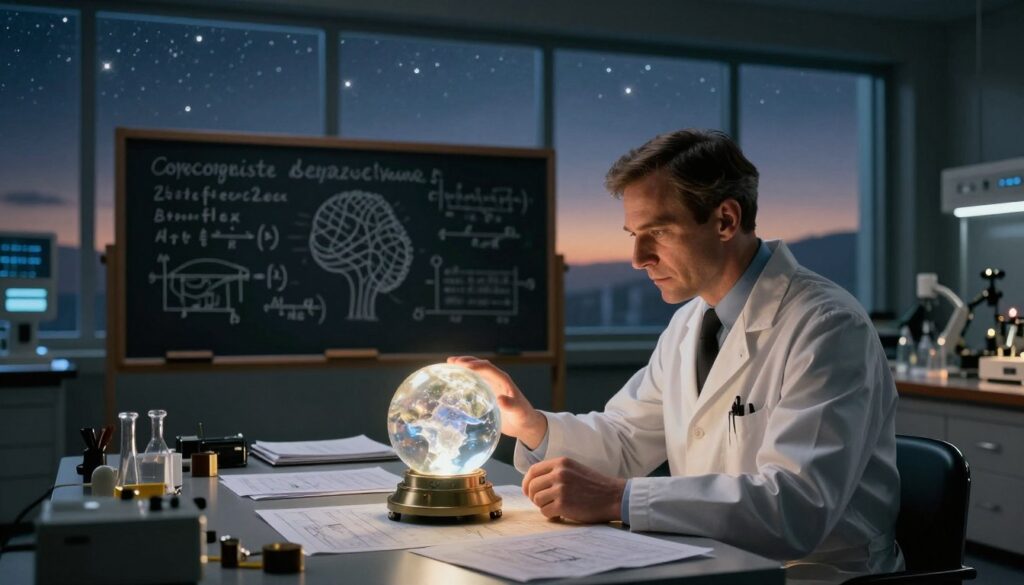
The Stargate Project became the best known program. It was a secret psychic espionage effort run by the CIA and DIA that lasted until 1995. Early research at the Stanford Research Institute, led by Hal Puthoff and Russell Targ, tested if abilities could be trained.
- The program trained ordinary intelligence staff at Ft. Meade, Maryland to work as coordinate operators.
- Teams used a structured approach to gather data about distant objects and events that traditional methods could not access.
- Cold War funding treated this as strategic work with measurable goals and testing.
“The program showed that trained operators could provide useful results under controlled conditions.”
After declassification in 1995, the public gained access to case files and methods. Today, those methods still shape how students and researchers study consciousness and human potential. Learn more from this detailed resource at psychic powers overview.
Core Principles Distinguishing Remote Viewing from Other Disciplines
Twelve guiding principles set this discipline apart and give it measurable structure. They stress intentional process, reproducible protocol, and rigorous training so results can be tested.
The approach is taught as a skill, not an event. A trained viewer learns to hold an objective mind and record impressions without personal bias.
Early work at the Stanford Research Institute framed the method with a scientific outlook. That framework helps separate usable data from casual or mediumistic claims.
Following the principles helps manage perception and reduce analytical overlay. It makes the practice reliable for researchers and practitioners who need clear results.
“A defined process turns fleeting impressions into verifiable information.”
- Structure: stepwise procedure and blind protocols
- Training: builds consistent skill and repeatable performance
- Objectivity: limits personal beliefs when describing a target
For those comparing other methods, studying these guidelines clarifies why this system remains a unique, testable path for exploring human perception. See related notes on clairvoyant abilities.
The Role of Mental Noise in the Viewing Process
Mental clutter can quietly steer a session away from accurate impressions if a viewer does not intervene.

Analytical Overlay (AOL) shows up when the mind fills gaps with memory, logic, or quick guesses. This creates confident but wrong descriptions of a target.
Understanding Analytical Overlay
When a viewer blends prior knowledge with thin data, the result feels like valid information. That mix weakens accuracy and undermines careful research.
Managing Internal Interference
A disciplined practice trains the viewer to notice chatter and return to raw impressions. Techniques include simple breathing, labeling thoughts, and brief pauses to clear the body and mind.
- Pause: slow the process to separate guesswork from perception.
- Label: mark ideas as “memory” or “impression.”
- Reset: use short grounding steps before continuing the session.
“Maintaining awareness is the skill that separates reliable work from casual claims.”
| Challenge | Sign | Quick Fix |
|---|---|---|
| Analytical Overlay | Story-like detail | Label and pause |
| Memory intrusion | Familiar names or scenes | Note then refocus |
| Rushing | Forced conclusions | Slow breathing, restart |
For related techniques that help clear attention and deepen awareness, see energy healing remotely.
Why Intentionality Matters in Every Session
Clear intention gives a session its frame. When a viewer names a single target, the mind has a task to follow.
That purposeful start and stop reduces mental noise and keeps impressions focused on the goal. It also limits the effect of guesswork that often creeps into undirected work.
Commitment matters. Using simple words and quick sketches helps record the raw data while it arrives. This real-time record keeps the process honest.
“A defined aim transforms scattered sensation into clear, testable notes.”
- Set a clear aim: pick one target and state it aloud.
- Mark time: begin and end to protect data integrity.
- Record fast: sketch and speak impressions without editing.
| Step | Purpose | Benefit |
|---|---|---|
| Define aim | Focus awareness | Less speculative detail |
| Start/stop | Boundary the session | Clear audit trail |
| Immediate record | Capture raw impressions | Higher accuracy of the experience |
Intentional practice keeps the viewing process reliable and repeatable. For methods that support focus and subtle energy work, see techniques for sending healing energy.
The Importance of Bilocation and Balanced Perception
Bilocation lets a practitioner hold awareness of both their chair and the distant scene at once.
Balanced perception means staying present in the room while receiving impressions from a target. This state keeps the viewer anchored in the body and able to record notes as data arrives.
Unlike an out-of-body event, the viewer stays physically aware. Staying grounded preserves realtime information and cuts down on memory loss after a session.

Sustaining dual awareness helps you move through space and time without losing clarity. It lets impressions remain tied to the session instead of drifting into imagination.
- Set a clear aim and notice room sensations.
- Label impressions as they come: sketch or speak them fast.
- Return to the body between passes to keep balance.
“Maintaining presence while opening to the target protects the integrity of the data.”
| Skill | Benefit | Outcome |
|---|---|---|
| Bilocation | Dual awareness of space and target | More accurate notes during the session |
| Anchoring | Stays in the body | Less post-session data loss |
| Consistent practice | Builds sustaining ability | Richer, verifiable experiences |
| Protocol use | Reduces imagination | Data tied directly to the target |
Mastering bilocation marks a milestone for any remote viewing student. For related training and to explore broader skills, see psychic superpowers.
Protocols for Maintaining Blindness to the Target
Strict blindness protocols guard session validity by keeping the viewer shielded from the target identity.

Maintaining a single-blind or double-blind condition stops logical deduction from coloring the data. The tasker assigns a neutral code or coordinate that acts only as a pointer.
Trusting the process means the viewer describes raw perception without trying to name the target. This reduces analytical overlay and preserves usable information for later scoring.
“Blind protocols protect the work from expectation and preserve scientific value.”
- Tasker assigns coded target; viewer receives only the code.
- Session notes focus on sensory impressions and sketches, not labels.
- Post-session feedback validates the data against the real target.
| Protocol | Purpose | Benefit |
|---|---|---|
| Single-blind | Viewer unaware of target identity | Reduces guesswork, improves objectivity |
| Double-blind | Neither viewer nor analyst knows target | Stronger scientific control for testing |
| Code/coordinate system | Neutral pointer for the process | Prevents semantic hints that affect perception |
| Strict record keeping | Clear audit trail for each session | Enables verifiable assessment of effect |
The Six Stages of the Controlled Remote Viewing Method
The Stanford Research Institute developed a six‑stage program to guide people through a steady progression. This method helps train the mind to gather layered impressions and convert them into usable data.
Stage 1 gives a brief, top‑level sense of the target’s basic form and energy. It acts as the launch point for further work.
Initial Sensory Impressions
Stage 2 builds on that start by adding specific qualities — color, texture, tone, and simple sounds. These sensory notes form the backbone of later description.
Conceptual Data Gathering
Stage 3 brings spatial perception: shape, size, and dimensional cues. Viewers often sketch now to capture volume and layout.
Stage 4 moves toward concept and purpose. The mind connects context, environment, and function so the data gains meaning.
Advanced Modeling Techniques
Stage 5 acts as an off‑signal‑line pass. Practitioners mine subconscious dumps for additional impressions missed earlier.
Stage 6 is the most complex. Skilled remote viewers may produce three‑dimensional models or scene reconstructions that yield high‑quality results.

“A steady protocol turns scattered sensations into verifiable information.”
- Simple sensory start
- Detailed qualities
- Spatial sketching
- Conceptual framing
- Subconscious mining
- Three‑dimensional modelling
| Stage | Focus | Benefit |
|---|---|---|
| 1–2 | Sensory impressions | Reliable base data |
| 3–4 | Spatial & conceptual | Clearer context |
| 5–6 | Deep retrieval & models | Higher quality results |
Real Time Objectification and Data Recording
Capturing perception as it unfolds keeps raw impressions from fading into guesswork. Real-time objectification means writing and sketching every sense as it appears during a session.
The act of noting words, simple diagrams, and quick models externalizes thought. This practice protects short-term memory and preserves fragile data that would otherwise vanish with time.
Recording as the experience arrives also blocks internal editing. When the viewer resists rushing to labels, later analysis finds fewer errors from interpolation.
Sketches and small models give form to impressions. Those physical traces make the information usable for scoring and for tracking progress across sessions.
Documentation becomes a permanent record researchers can review. It highlights mental noise, shows patterns, and supports group analysis.
Training stresses jotting everything down, even tiny details. Often, small marks or odd words reveal deeper clues about the target and raise the reliability of the technique.
The Necessity of Post Session Feedback
Verifying results against ground truth makes progress measurable and training meaningful. Post-session feedback converts impressions into clear data. It lets the viewer confirm whether notes matched the actual target.
Without feedback, a session stays speculative and the value of the work cannot be judged. Regular review helps remote viewers learn from experiences and refine technique over time.

- Feedback shows accuracy and highlights patterns of mental noise.
- Programs use results to rate performance and improve training.
- Comparing notes to ground truth builds confidence for operational use.
“The feedback loop is where training meets evidence and skills become reliable.”
| Purpose | What it reveals | Benefit |
|---|---|---|
| Verification | Match of notes to target | Clear measure of accuracy |
| Learning | Patterns in errors | Faster skill refinement |
| Program review | Aggregate results over time | Stronger, tested protocols |
For structured training and ongoing assessment, consider linked resources on psychic development courses to support the process and extend practical use in the modern world.
Collaborative Analysis and Consensus Building
Group analysis turns scattered impressions into corroborated data that analysts can trust.
Collaborative work uses multiple people to study the same target. This boosts accuracy by highlighting overlaps and flagging odd outliers.
Redundancy is common in intelligence practice. When several viewers report similar details, the results gain credibility and support a clearer picture.

The analyst’s role is central. They compare session notes, weigh correlations, and place raw data into context so others can draw meaningful conclusions.
- Multiple reports reduce errors from mental noise.
- Consensus builds a robust account of the target.
- Tasker, viewer, and analyst cooperation preserves report integrity.
“A structured consensus process turns individual impressions into actionable results.”
When a program uses this method, remote viewers gain better training feedback. Teams can apply findings to complex problems with higher confidence than solitary work allows.
Conclusion
Clear protocols, steady practice, and honest feedback turn vague impressions into useful results. The program and project work from the past showed that this method can serve intelligence and research aims when handled with care.
As a trainable skill, viewing demands effort. Manage mental noise, follow the process, and document each pass to protect information and raise accuracy.
For the viewer seeking growth, this way links mind, body, and awareness. With proper training and patience, the practice can enrich life and broaden understanding of consciousness and perception.
Keep learning, test your notes, and apply these methods with steady dedication.