

Remote viewing describes a trained skill that lets people gather accurate information about distant targets without standard senses. This practice grew into serious study in the 1970s when a U.S. program explored its potential for intelligence work.
Viewing sessions often begin with calm focus and simple prompts. Practitioners seek to access impressions over time and note how intuition shapes each report.
Researchers study how a person’s mind and consciousness let them perceive non-local data. Improving accuracy means learning to trust subtle cues and hone an ability to describe vague impressions.
Understanding these processes helps anyone who wants more consistent results during a session. This guide will map practical steps and key concepts to improve access to useful information.
Key Takeaways
- Remote viewing is a trained, repeatable skill that can produce verifiable information.
- Early U.S. studies in the 1970s brought scientific attention to this practice.
- Sessions favor impression-based reports over clear visuals.
- Consciousness and focused attention shape accuracy and consistency.
- Practice and structure help more people access natural receptivity.
Understanding the Basics of Remote Viewing
Structured protocols let many individuals turn intuitive flashes into measurable results. This practice is a controlled process that frames impressions with steps a person can follow. It transforms spontaneous hunches into records that others can test.
Defining the phenomenon
Remote viewing is sometimes called anomalous cognition. Researchers began using careful protocols in the early 20th century to check claims under repeatable conditions.

Natural psychic receptivity
Many people report sudden insights in daily life. Those events are informal and vary by age, mood, and context.
By contrast, trained practice asks a viewer to follow clear techniques. That extra focus raises the level of consistency and helps separate signal from noise.
“Practice turns scattered impressions into useful, testable descriptions.”
- Controlled process: a set method for accessing information without standard senses.
- Learnable skill: like learning music, it improves with time and repetition.
- Scientific interest: studies since the 1930s sought evidence using standard tests and mirrors.
For a practical primer and links to further reading, see psychic superpowers, which outlines beginner ideas and community practice tips.
The Role of the Subconscious Mind in Remote Viewing
During a session, quiet inner impressions often arrive faster than conscious thought can follow. This internal channel acts as a conduit that links focused awareness with distant targets. It supplies raw cues—textures, brief scenes, and symbolic shapes—that reach awareness almost instantly.

Speed matters. Because information streams quickly, a viewer must record notes without immediate analysis. Labeling those cues too soon invites distortion when the conscious mind tries to force familiar meanings onto unfamiliar signals.
Practice helps. Training teaches one to witness impressions and let them flow. Over time, it becomes easier to separate signal from noise and to gain clearer access to non-local data.
“Trust starts with quiet observation, not instant judgment.”
- Conduit for otherwise inaccessible information.
- Fast processing that produces sensory fragments.
- Conscious labeling can reduce accuracy.
- Discipline and openness improve clarity during viewing.
Historical Origins of Psychic Espionage
Cold War tensions sparked a search for unusual intelligence tools as reports claimed rival nations trained people to sense distant targets.

By mid-20th century, Soviet interest in psychic practices prompted Western agencies to pay attention. Rumors suggested long-standing training inside military and intelligence units after World War II.
In response, a U.S. office launched a formal remote viewing program in the early 1970s. Officials hoped to gain access to information that standard tradecraft could not find.
“This research mixed curiosity with caution as leaders weighed potential threats and benefits.”
- Driven by reports about Soviet programs.
- Designed to test whether trained perception could yield usable intelligence.
- Marked by secrecy, skepticism, and intense pressure for results.
| Country | Era | Focus | Secrecy | Outcome |
|---|---|---|---|---|
| US | 1970s | Program testing trained perception | High | Mixed, debated value |
| USSR | Post-WWII | Military training experiments | Very high | Records limited |
| Western agencies | Cold War age | Evaluating threats | High | Policy caution |
For deeper context on related abilities, see clairvoyant abilities.
The Stargate Project and Government Funding
From 1975 to 1995, a U.S. research program explored whether intuitive reports could aid operations. This effort, later known as the Stargate Project, ran for more than two decades and tested trained perception under official oversight.
About $20 million supported studies that tried to use remote viewing for intelligence work. Oversight shifted over time, and responsibility moved from the Defense Intelligence Agency to the CIA before declassification and termination in 1995.
Evaluators later found many results vague and not actionable. That conclusion led to program closure, though archives remain public and often cited in debate.
“The project produced intriguing records, yet evaluators judged them insufficient for use in operations.”
Key points:
- Multi-million dollar initiative testing remote viewing for intelligence.
- Roughly $20 million spent over a long time.
- Information gathered was often too imprecise for action.
- After a formal review, the program ended in 1995.
For further context on related abilities and practice, see psychic powers and training.
Stanford Research Institute Experiments
At Stanford Research Institute, early lab work pushed claims into a testable scientific setting. Physicists Russell Targ and Harold Puthoff led experiments that aimed to test whether extrasensory reports could stand up to controlled methods.
Ingo Swann and Quark Detectors
In 1971 Ingo Swann produced a striking result: a shielded quark detector registered anomalies during his session. That outcome attracted serious attention and helped shape future tests.
Expanded Scope of Targets
Swann later helped design coordinate techniques that let a viewer target map points rather than single objects. This change widened the types of targets and improved protocol clarity for each session.
- Key milestones: Targ and Puthoff set laboratory standards for testing psychic functioning.
- Swann’s detector demonstration marked an early evidence claim that moved research forward.
- Coordinate methods allowed remote viewers to access varied objects and locations with a clearer process.
- Private support led to CIA funding and eventually to the stargate project.
“These experiments provided testable records, yet the scientific community stayed divided about their meaning.”
The Mechanics of Coordinate Remote Viewing
Coordinate Remote Viewing (CRV) breaks a session into six clear stages that guide a viewer to record raw impressions first and labels later.
This structure reduces bias. Early steps focus on simple sensory data: textures, colors, temperatures, and shapes. That keeps analysts from forcing familiar meanings onto vague cues.
Military training adopted CRV because its process helps produce repeatable reports. Trainees learn to trust initial flashes and to log them without immediate judgment.

“Trust first impressions; describe senses before naming targets.”
- Six-stage system: standardizes how viewers collect information.
- Signal vs. noise: basic senses come before identification.
- Objective access: program protocols aim to protect accuracy during a session.
Distinguishing Signal from Noise
Separating clear impressions from background chatter is a key skill for reliable sessions. In Coordinate Remote Viewing, this work starts with simple paper and a quiet focus.
Noise often appears as memories, fears, or desires that drift into a report. These intrusions can mask real cues from a distant target.
Recording Session Data
A practical tactic is to mark one area for raw impressions and another for guesses or feelings. Viewers place immediate flashes in a clear column and move labels or stories to a separate zone.
“Most accurate information comes from an early, vague impression—record it first, name it later.”
- Train to spot bias: note emotions and memories separately.
- Log everything: write raw sensory fragments without naming them.
- Review later: separate signal and noise after the session for honest analysis.
Good recording is central to any program that hopes to measure results. For related methods on indirect access and remote practice, see energy healing remotely.
The Paradox of Confidence and Accuracy
A curious paradox in this field is that faint impressions often carry the clearest leads. When a viewer feels sure and vivid, that certainty can signal imagination filling gaps.
Less conviction often means more accuracy. At times, a weak sensory flash points to real information while a bold image leads away.
Beginners struggle because daily life rewards being right quickly. That habit pushes analysts to name images too soon. Over time, viewers learn to slow down and avoid early labels.

Practical habit: note raw fragments first and delay any tidy story. Stay open to ambiguity and accept uncertainty as a helpful sign.
“Uncertainty can be the best cue that you are on track.”
- Faint impressions often beat confident detail.
- The mind will craft meaning fast; watch for that trap during a session.
- Trusting vagueness improves access to useful information over time.
Princeton Engineering Anomalies Research
For twenty years, Princeton’s PEAR lab probed whether focused intention could influence machines and provide usable data. Bob Jahn and Brenda Dunne led experiments that tested how consciousness might affect Random Number Generators and other devices.
During a typical session, a viewer tried to bias an RNG while operators recorded output. PEAR reported striking statistical results—often cited as a 375 trillion to one significance for cumulative effects.
Critics argued many experiments lacked strict controls. Researchers like Hansen and Utts questioned methods and replication. PEAR defended its protocols and pointed to similar findings in parapsychology.
Why it matters: the work pushed questions about whether human intention can yield access to subtle information and affect physical objects over time. Despite debate, Princeton’s studies remain a landmark in consciousness research and in the history of remote viewing.
“Controversial but influential, PEAR shifted how scientists framed tests about intention and measurement.”
- Leaders: Bob Jahn, Brenda Dunne.
- Focus: RNG influence, anomalous phenomena.
- Impact: continued debate and follow-up studies.
Scientific Analysis and Skepticism
Statistical tests and careful critique have kept claims about extrasensory perception under tight scrutiny.
Statistical Significance
Statistical Significance
Some experts argue that lab data shows consistent patterns beyond chance. Statistician Jessica Utts concluded that evidence for psychic functioning met common scientific standards.
Her view rests on pooled results from many trials and different labs. That claim invites further work to confirm reliability over time and varied conditions.

Peer Review Challenges
Other scientists remain skeptical. Ray Hyman and several reviewers say study designs left room for sensory cueing and bias.
In 1995 the AIR report found the stargate project did not yield usable intelligence. Critics also point to scarce independent replication and the lack of a positive theory to explain process or mechanism.
“More rigorous, independent replication is required before claims can be accepted widely.”
| Position | Main Argument | Implication |
|---|---|---|
| Pro-Utts | Statistical patterns across labs | Calls for expanded, rigorous testing |
| Hyman & Critics | Method flaws; sensory cues | Demand tighter controls and replication |
| Intelligence Review (AIR) | Operational usefulness lacking | Program termination; need for applied value |
Bottom line: the community stays split. Careful experiments, transparent methods, and independent peer review will shape future verdicts about viewing abilities and related claims.
For a balanced look at claims and counterclaims, see clairvoyant abilities: real or fake.
Sensory Cues and Experimental Flaws
Careful review revealed that simple cues—dates, sequences, and prior targets—gave judges an easy way to match reports.
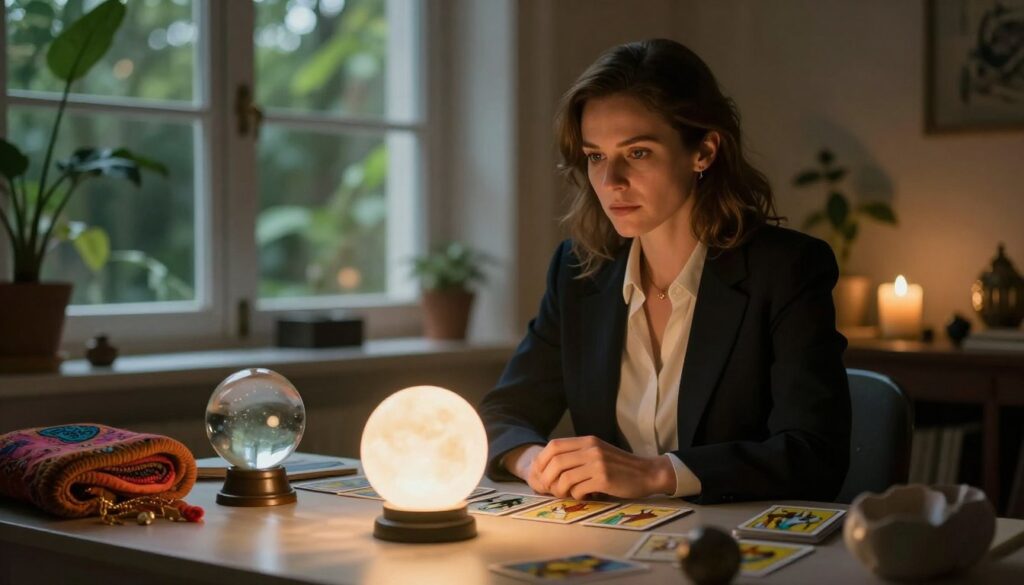
Research by David Marks and Richard Kammann showed many early experiments had inadvertent sensory cues. These details let a judge link a transcript to a correct location without a true ability.
When those cues were removed, hit rates fell to chance. That drop exposed a critical problem with study design and with some program reporting practices.
Critics argue that failure to control for such signals undermines evidence and blocks reliable replication. Many independent tests under strict controls failed to reproduce earlier positive results.
“For scientific acceptance, studies must remove cues and show repeatable outcomes.”
- Key problems: cueing in transcripts and altered reports.
- Impact: results dropped when controls tightened.
- Conclusion: without strict protocols, claims about psychic functioning remain unproven.
The Influence of Human Intention
When intention shifts from control to openness, impressions tend to arrive with less distortion. That change helps a viewer move from pushing for answers to quietly noticing incoming cues.
Many practitioners liken this stance to being a wave inside a larger ocean of consciousness. In that view, distance and physical barriers matter less and access to information feels more natural.
Letting go of needing to be right reduces bias. Over time, this habit often produces clearer reports during a session and gives viewers steadier results.

- Accept vagueness and note impressions without naming them.
- Focus intention on openness rather than on forcing details.
- Adopt an observer stance to let thoughts flow through you.
“By dropping control, many say they feel part of a whole and perceive reality with less interference.”
For a closer look at research and methods that explore this idea, see science behind remote viewing.
Practical Techniques for Beginners
A steady meditation routine helps new practitioners notice subtle impressions. Start with five to ten minutes of breath focus each day to reduce inner chatter and sharpen attention.
Before a session, try simple drills:
- Quiet breathing for two minutes.
- Open awareness for stray images and feelings.
- Short note-taking to capture first flashes without naming them.
Beginner readers should consult books by Joe McMoneagle, Lyn Buchanan, and Paul Smith. Join groups like IRVA for history, training, and peer support. A new remote viewer will gain practical tips from these sources.

“Describe colors, textures, and whether a target seems manmade, living, or natural before guessing.”
Simple goals help build skill: record basic gestalts, avoid quick labels, and keep an open yet balanced attitude. Regular practice improves ability to tell genuine impressions from noise over time.
| Practice | Benefit | Start Level |
|---|---|---|
| Breath focus | Reduces distraction | Beginner |
| Noting gestalts | Improves raw data recording | Beginner |
| Group feedback | Builds honest calibration | Intermediate |
The Importance of an Open Mindset
A relaxed curiosity invites impressions to arrive with less resistance. This simple stance helps a viewer accept whatever appears during a session without rushing to explain it.
Balance matters: mix curiosity with healthy skepticism. That keeps reports honest while preventing wishful matching of images to familiar stories.
Accepting wonder builds trust in inner instincts over time. As viewers grow comfortable with ambiguity, they gain clearer access to subtle information.
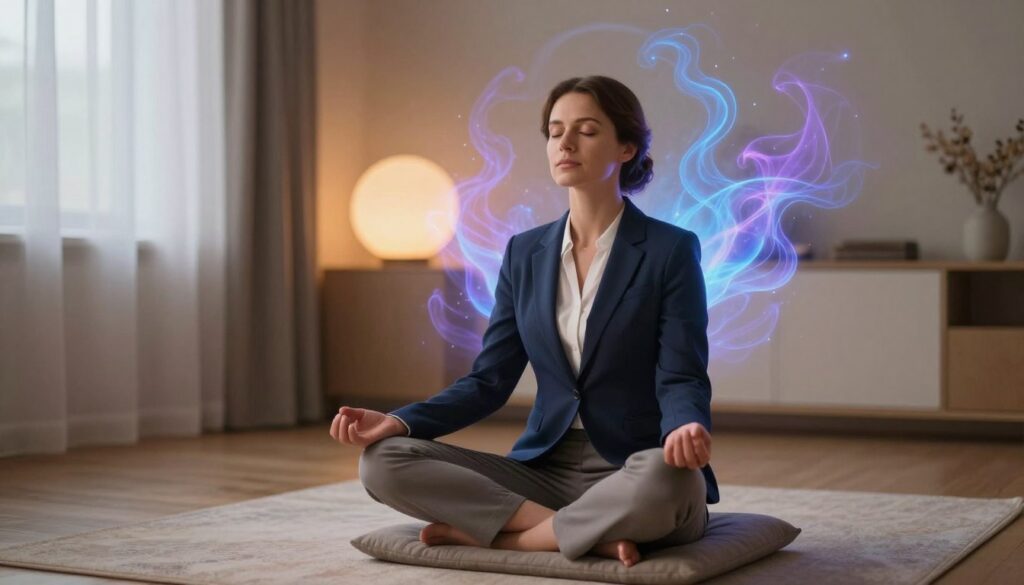
Many find progress comes when practice focuses on noticing, not proving. Move from belief toward knowing by keeping records and reviewing results at a later time.
“Stay curious, stay cautious, and let impressions speak before you name them.”
- Maintain an open mindset to explore consciousness and gain access to impressions.
- Allow ambiguity; avoid forcing quick labels during a session.
- Let steady practice turn surprise into reliable experience and personal growth.
Future Directions in Consciousness Research
A growing group of scientists now use advanced sensors and stats to probe extended perception. Labs aim to validate clairvoyant claims with modern protocols that cut bias and boost reproducibility.
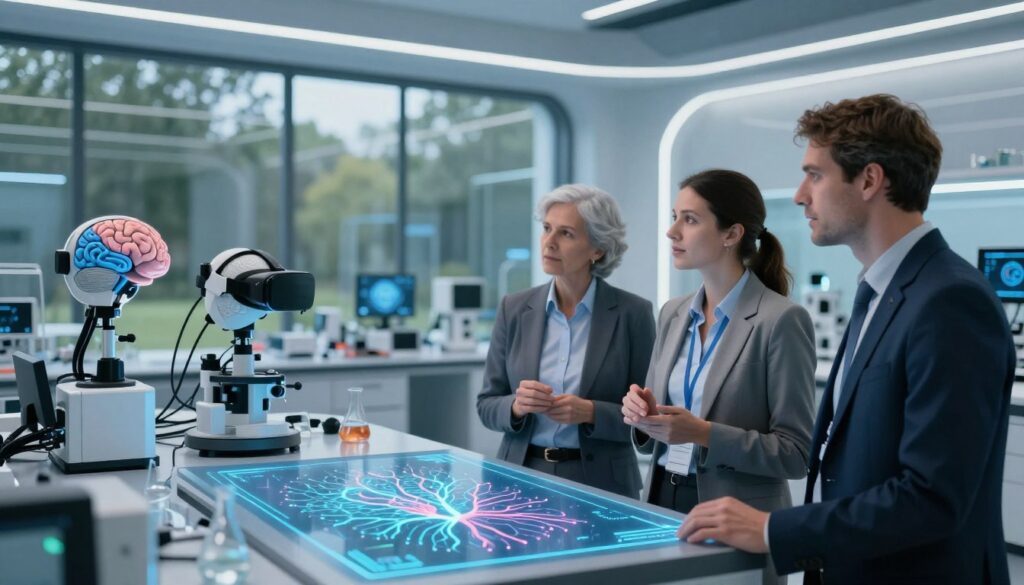
Organizations such as the Institute of Noetic Sciences lead careful studies that blend psychology, neuroscience, and rigorous measurement. These teams explore how a viewer can gain reliable access to distant information during a controlled session.
New tools matter. High-resolution brain imaging, machine learning, and stronger statistical models help separate genuine signals from noise over time.
“Each well-designed experiment brings clearer ideas about what extended perception can reveal.”
- Better protocols: stricter controls and blind testing to reduce cueing.
- Tech integration: sensors and analytics that track subtle correlates of reports.
- Cross-disciplinary work: neuroscience, psychology, and physics testing shared hypotheses.
As science adopts these methods, remote viewing and related phenomena may move from anecdote toward measurable process. That shift will help viewers and researchers learn how to gather useful information with more confidence.
Conclusion
From covert projects to open labs, past work maps a long, complex path. That journey mixed bold hopes, clear limits, and steady curiosity about how people access distant information.
A dedicated viewer learns to balance analysis with quiet noticing. Training helps spot real cues and push aside inner noise.
Accuracy rests on discipline, careful record keeping, and a patient mindset. Whether treated as science or personal practice, this field keeps drawing researchers and practitioners who seek useful insight.
Keep an open mind and a steady method. A thoughtful viewer can continue exploring what is possible and gather better information over time.