
Welcome to a friendly, practical roadmap that treats this system as a tool for self-understanding, not prediction.
The Rider-Waite-Smith tradition, a 78-card deck created in 1909, is a common starting place. You’ll learn how Major and Minor Arcana form archetypal stories and how simple daily pulls build familiarity.
Start small: one-card draws, short journaling sessions, and three-card spreads help you track themes over time. This steady practice makes readings feel natural and useful for real-life decisions.
We’ll blend traditional meanings with your personal context so intuition plays a clear role. There are no “bad” outcomes; challenging images often signal change or chance to course-correct.
Follow a step-by-step path from basics to deeper layouts, and consult trusted layouts like those at tarot spreads when you are ready to expand.
Key Takeaways
- Use the Rider-Waite-Smith deck to learn the 78-card structure.
- Begin with one-card pulls and journaling to build confidence.
- Combine book meanings with personal context for practical insight.
- Practice regularly to notice patterns and support life choices.
- Challenging cards point to change and growth, not doom.
Start Here: What This Beginner’s Tarot Card Guide Will Help You Do
Kick off your learning with one-image pulls and a short journal entry each day. This section shows simple steps to learn meanings, build confidence, and make readings useful in real life.

User intent and outcomes
What you’ll achieve: learn core meanings and put them into action through repeatable spreads that avoid overwhelm.
Start with a one-card daily draw. Record the date, an open-ended question, the card pulled, and your interpretation. A few minutes each day beats occasional marathon sessions.
How to progress
- One-card pulls sharpen focus on a single image and message.
- Move to a three-card spread to connect past, present, and likely next steps.
- Later, explore larger layouts such as the Celtic Cross when ready.
“Confidence grows through small, steady practice — treat this like training with a supportive friend.”
This approach demystifies suits, numbers, and court cards so meanings feel approachable. Use open questions to invite insight and rely on context over prediction.
Tarot Cards vs. Oracle Cards: What’s the Difference?
Some systems follow a strict order; others let creators set the rules — both have clear uses.
Tarot decks have a standardized structure: 78 cards split into 22 Major Arcana and 56 Minor Arcana with suits and court ranks. That fixed order makes learning transferable across many decks that follow the same tradition. It also supports precise, situational guidance during a reading because symbols repeat in predictable ways.
By contrast, oracle decks are theme-driven and flexible. Creators choose the number of cards, the art, and the messages. Popular themes include angels, animals, crystals, poets, and moon phases. These decks often work like daily affirmations or broad inspiration rather than a structured system.
When to choose each
- Use a tarot deck for specific questions and detailed narrative work. Its consistent suits and ranks build a reliable mental map.
- Use an oracle deck when you want a big-picture nudge, uplifting message, or fresh artwork to spark insight.
- Try both: pull a focused reading from the tarot, then add an oracle card for tone or affirmation.
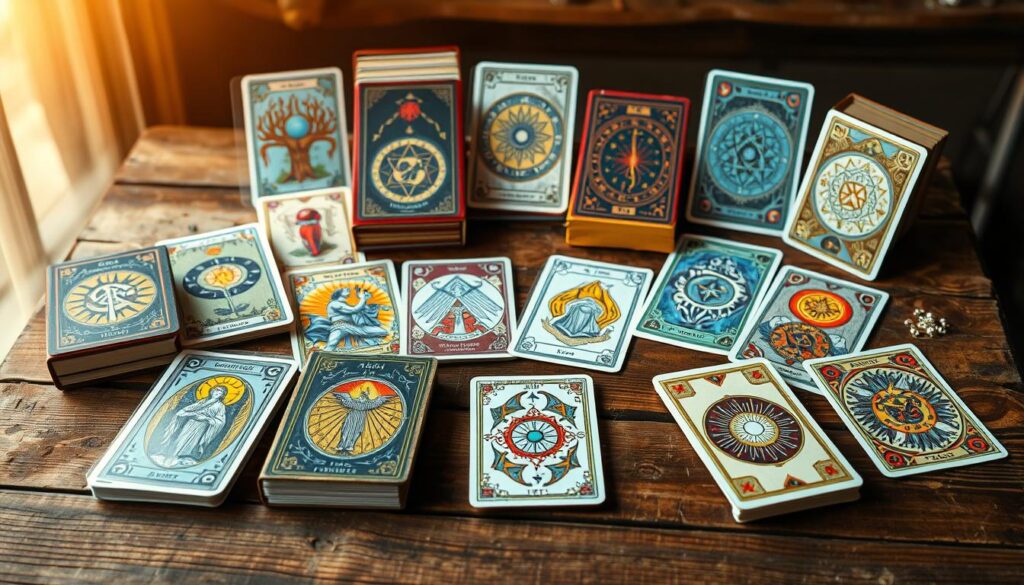
“Intent and clarity matter more than rules — mixing systems is common and useful.”
Meet Your Tarot Deck: Structure, Order, and the Rider-Waite Standard
Understanding a full 78-card system helps you spot repeats and patterns when you study images.

The typical deck contains 78 cards: 22 Major Arcana and 56 Minor Arcana divided into four suits (Wands, Cups, Swords, Pentacles). Each suit has ten numbered cards plus four court ranks, a repeatable order that makes study practical and predictable.
Many beginners choose the Rider-Waite-Smith standard because its clear scenes and bold symbolism translate well to intuition. Published by Rider in 1909, the visuals were painted by Pamela Colman Smith under A. E. Waite’s direction. That art set the vocabulary many modern decks follow.
Pick a favorite deck with readable images so symbols stand out. Flip through the full set before your first reading. Note recurring suit markers and simple visual cues to speed recognition.
- Log first impressions in a journal to build personal meanings.
- Start with a consistent system to transfer meanings to other decks.
- When ready, explore more layouts at tarot deck.
“Learning a steady order helps memory — the more you see, the more patterns reveal themselves.”
Major Arcana Essentials: The Fool’s Journey from Innocence to The World
The Major Arcana map a human life path from fresh starts to full completion. They act as the deck’s backbone, marking growth, crises, and integration along a single storyline often called the Fool’s Journey.

Core archetypes to watch
The Fool signals beginnings and a leap of faith. The High Priestess points to inner knowing and hidden wisdom.
Justice and Strength represent balancing forces; some decks swap their order, so focus on the lesson rather than numbering.
Death rarely means literal end — it signals transformation and the start of something new. The World closes the journey with completion and harmony.
Reframing feared cards
No card is “bad.” The Devil can reveal unhealthy attachments to release. The Tower highlights sudden change that creates space for rebuilding.
“Reflect on which archetype mirrors your current chapter and ask, ‘What lesson is most active for me now?'”
Try pulling one Major Arcana card daily and journal the meaning you feel. Over time, these arcana cards sharpen your lens for all other cards in the deck.
Learn more about completion and integration at The World.
Minor Arcana Made Simple: Understanding the Four Suits
Think of the minor arcana as your practical toolkit for everyday themes—projects, feelings, conversations, and money matters.
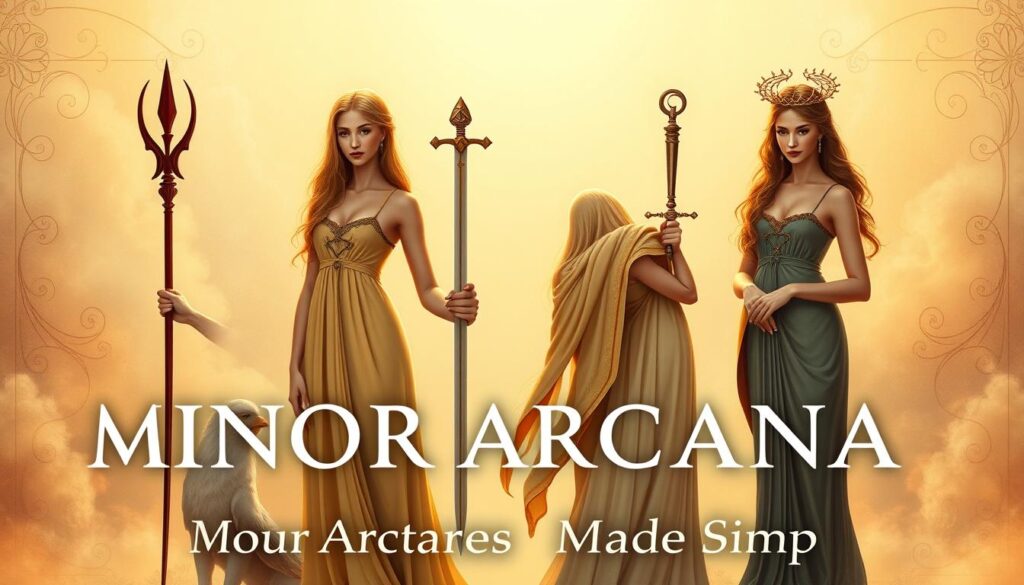
Wands (Fire): creative energy, willpower, and action. Use Wands when asking, Where do I need courage to act?
Cups (Water): emotions, relationships, and intuition. Ask, What emotion needs attention?
Swords (Air): thought, communication, and conflict. Try, What truth needs words?
Pentacles (Earth): stability, health, money, and career. A useful prompt is, What is the next practical step?
Numbers and Courts
Aces spark beginnings, middles show growth or tests, and Tens hint at completion or change. Numbered cards sketch a simple journey you can follow in readings.
Pages bring messages and learning. Knights move things forward. Queens integrate and care. Kings lead with strategy.
- Sort one suit at a time to notice repeating symbols and stories.
- Track suit frequency in your journal to see which life area holds the most energy.
- Balance of suits in a spread reveals whether passion, feeling, thought, or practicality is steering decisions.
“Watch which suits repeat—those patterns point to the areas asking for attention.”
For a focused Major Arcana example, see The Magician.
From One Card to Celtic Cross: Beginner-Friendly Tarot Spreads
A steady practice of short readings helps you turn symbols into practical insight.

One-card daily draw: each morning, ask an open question, pull a single card, and log the date, your question, and a short note on what you see and feel.
Do this for weeks. The repetition highlights repeating suits, numbers, and themes. Over time, meanings become fluent and personal.
Three-card spread for a simple narrative
Use three cards to map past, present, and likely next steps. Card one shows context, card two shows current energy, and card three offers an emerging outcome or advice.
Look for suit dominance, repeated numbers, or shared symbols to connect the three images into one story.
Leveling up: the Celtic Cross
When you feel ready, move to a full Celtic Cross to explore influences, hopes/fears, and probable trajectory. This layout weaves layers and gives a fuller picture.
“Close each session by writing one actionable takeaway to test that day.”
Practice tips: shuffle in a way that feels natural, photograph spreads for review, and keep notes concise so patterns are easy to spot.
| Spread | Purpose | When to Use |
|---|---|---|
| One-card | Set intention; daily focus | Morning practice or quick check-in |
| Three-card | Past, present, future narrative | Decision clarity or short readings |
| Celtic Cross | Context, influences, outcomes | Deep readings when you want detail |
Use Your Intuition: Reading Energy, Symbols, and Context
Let the artwork speak before you flip through lists. Notice colors, posture, and small objects. That first read often lights the clearest path.

Blending guidebook meanings with personal insight
Two-step reading: first, describe what you literally see. Next, match that with a book meaning and your current situation. This creates a balanced message you can act on.
- Start interpretation by scanning the art: gestures, color, and obvious symbols invite personal associations.
- Do a quick body-check: note the first feeling or physical tug—that energetic hint points to core meaning.
- Build a personal symbol dictionary in your journal so repeated images gain private significance over time.
- Read pairs by placing two cards side by side and weaving a single sentence that connects their symbols and energy.
- When reading for a friend, stay objective: focus on what the spread shows, not your own agenda.
“What’s the most supportive interpretation for growth today that still respects the card’s core meaning?”
Reading Reversals with Confidence
Reversed images invite a flexible approach. They can mean an opposite expression of the upright meaning, a blocked flow of energy, inner tension, or timing delays that slow progress. Choose the lens that fits your question and the spread.

Common reversal lenses
- Opposite expression: reversed Justice often shows imbalance rather than fairness.
- Blocked energy: a reversed Ace of Wands may signal stalled inspiration or a project on hold.
- Inner conflict: reversed Four of Cups can point to emotional withdrawal or conflicted feelings.
- Delays/setbacks: reversed Five of Pentacles may mark financial strain or timing issues.
Practical workflow
Start by reading the upright meaning first. Then apply your chosen reversal lens to refine the meaning and add nuance.
Context matters: the spread position and nearby cards usually clarify whether a reversal is timing, blockage, or inner work.
“Reversals aren’t automatically negative — they often signal inner processing before outer change.”
Normalize your choice: it’s perfectly valid to read upright-only until you feel ready. Consistency beats using every technique inconsistently.
Note how often reversals appear in your journal. Track whether certain suits or themes show up reversed and what that timing reveals about balance and growth.
When delays show up, ask practical questions: What support or resource will move this forward? What small step restores balance now? For a close example of balance and moderation in meaning, see Temperance.
Practice, Journal, Grow: Building a Sustainable Tarot Reading Routine
A short morning pull and a quick note can change how you learn and grow. Consistency beats intensity: five focused minutes daily builds memory and trust in your interpretations.

Tarot journaling: record date, question, meaning, takeaway
Set up a dedicated journal. Use the same sections each time: date, an open question, card(s) drawn, a concise guidebook meaning, and your personal takeaway.
Daily habits to strengthen your learning journey
Keep sessions short. Capture a photo of spreads or sketch layouts to lock visual patterns into memory. Rotate your favorite deck now and then to see how new images nudge fresh insight.
“Small, steady practice turns curious interest into real personal growth.”
| Action | Why it helps | How to do it |
|---|---|---|
| Daily five-minute pull | Builds familiarity and routine | Morning question, one card, quick note |
| Photo or sketch spreads | Reinforces visual memory | Use phone photos or simple sketches in your journal |
| Monthly review | Shows themes like career, joy, or relationships | Reread entries and note repeating suits and numbers |
| End with one action | Turns insight into movement | Choose one small step inspired by the reading |
Revisit old entries each month to celebrate wins and spot trends. For focused study of movement and ambition, you can also study The Chariot to see how progress shows up in your spreads.
Conclusion
Here’s a concise roadmap to help you turn daily practice into lasting skill and insight.
Pick a readable Rider-Waite-style deck and keep sessions short. Do one-card daily pulls and three-card spreads. Log pulls, meanings, and symbols in a journal so learning sticks.
Blend book meanings with your own intuition. Start with a core interpretation, then refine it based on context, spread flow, and life events.
Study both major arcana and minor arcana suits, and reframe intense images like the Death card as transformation. Revisit numbered cards and the four suits when meanings feel fuzzy.
Try other decks once you have a practice routine. Trust the process, keep notes, and enjoy steady growth as a confident reader. For a focused example, see the Ten of Wands example.