

Welcome. This curated list helps you quickly find the right title, from gentle introductions to deep historical tomes and practical handbooks.
We sort entries by topic so people can scan by healing, protection, Wicca, ceremonial traditions, or seasonal projects. Each entry notes who it suits and what to expect.
Grimoires began as Latin manuals and evolved into guides for talismans, charms, divination, and invocations. We pair classic references with modern picks so you get both inspiration and reliable, time-tested material.
Practical details—edition quality, translation notes, and scope—are highlighted to aid your search for a book you’ll actually use at home. Safety and ethics are emphasized for newcomers, while deeper resources point advanced readers to documented lineage.
Bookmark sections you like; interests change and the right title can grow with your practice. For further readings and services, check a related resource here: psychic readings.
Key Takeaways
- This list helps you find suitable titles quickly by category and skill level.
- We include both historical grimoires and practical modern guides.
- Edition quality and translation notes matter for real-world use.
- Ethical practice and safety are central for beginners and experts.
- Bookmark sections so a favorite book can grow with your skills.
What Are Grimoires and Spell Books? A Friendly Guide to Terms and Traditions
Grimoires were practical manuals that recorded ritual steps, correspondences, and formal frameworks used across eras.

Grimoire: Textbooks of ritual craft
A grimoire was a historical textbook that explained how to make talismans, perform charms, read omens, and invoke entities. Early examples traced to Mesopotamian tablets and Egyptian heka, then to Solomonic and Renaissance compilations like the Key of Solomon and Picatrix.
From grammaire to grimoire: a brief etymology
The word came from Old French grammaire, once any Latin learning manual. By the 18th century it had shifted to mean manuals of magic, and the term entered English during the 19th-century occult revival.
How grimoires differed from modern guides
Not all ritual writings were grimoires. Some modern titles focused on lifestyle, safety, and step-by-step practice without ceremonial structure.
“A book that names the rites or gives a circle was read as authority by its owners.”
- Historical scope: ancient incantations to printed Renaissance compendia.
- Form: formal invocations vs. accessible rituals for daily use.
- Context: religion, language, and culture shaped use and meaning.
| Feature | Grimoire | Modern guide |
|---|---|---|
| Structure | Ritual frameworks, correspondences | Step-by-step, lifestyle tips |
| Authority | Lineage, attribution | Practical experience, community |
| Use | Ceremony, talisman making | Everyday practice, seasonal projects |
Essential spell books for beginners
For beginners who want clear steps and gentle guidance, these three titles make a reliable starting set. Each entry emphasizes plain language, safety notes, and practical rituals that fit everyday life.

The Everything Wicca and Witchcraft Book — approachable rituals and everyday magick
Skye Alexander’s guide is often recommended on Goodreads (avg ~3.73). It serves as a gentle entry point that covers foundational concepts and accessible practices in plain language.
Why it helps: clear explanations, simple rituals, and safety tips designed for new readers.
Crone’s Book of Charms & Spells — classic, simple charms for practice
Valerie Worth’s compact title (avg ~3.99) focuses on short charms you can try at home. It’s ideal for practicing technique and building confidence without complex ceremony.
Practical note: try one charm at a time, journal results, and reflect on intention.
The Gray Witch’s Grimoire — eclectic guidance for new witches
Amythyst Raine’s guide (avg ~3.88) offers an eclectic mix so readers can explore multiple paths. It encourages personal discernment and healthy boundaries while introducing tools and correspondences.
Tip: pick one core book plus a charm-focused title to balance theory with hands-on practice.
- These titles are commonly available at libraries and shops, so they are easy to obtain.
- Read introductions and ethics sections to ensure alignment with your values.
- Set realistic expectations; steady practice matters more than quick outcomes.
“Start small, journal results, and let practice grow over time.”
For related reading on personal development and intuitive skills, see psychic superpowers.
Compendiums and reference tomes for serious practitioners
Deep study benefits from compendiums that gather techniques, ingredients, and historical notes in one place. These tomes suit researchers and people who want reliable cross-references rather than a cover-to-cover read.
Encyclopedia of 5,000 Spells by Judika Illes (Goodreads ~4.30) is an expansive global reference. It catalogs techniques, ingredients, and origins across folklore and history. Use it to look up correspondences, compare traditions, and inspire safe practice.
Magic on the Edge, edited by Andrieh Vitimus (Goodreads ~4.53), collects experimental essays and practices from a diverse series of authors. It encourages critical thinking and innovation while showing how methods adapt to new contexts.

- Use these as references: index topics, make notes, and flag entries that resonate.
- Context matters: check cultural origin, era, and intended purpose before adapting methods.
- Pair wisely: combine a large reference with a focused practice book to ground study into safe action.
“A compendium grows in value as your knowledge deepens and your practice becomes more focused.”
Classic ceremonial magic: Key of Solomon, Lemegeton, and more
The Solomonic corpus offers step-by-step ritual frameworks that influenced later Western ceremonial magic.
Overview: These manuals emphasize ritual preparation: consecrated tools, timing by planetary hours and stars, precise circles, and layered protections. They are procedural and assume advanced study.
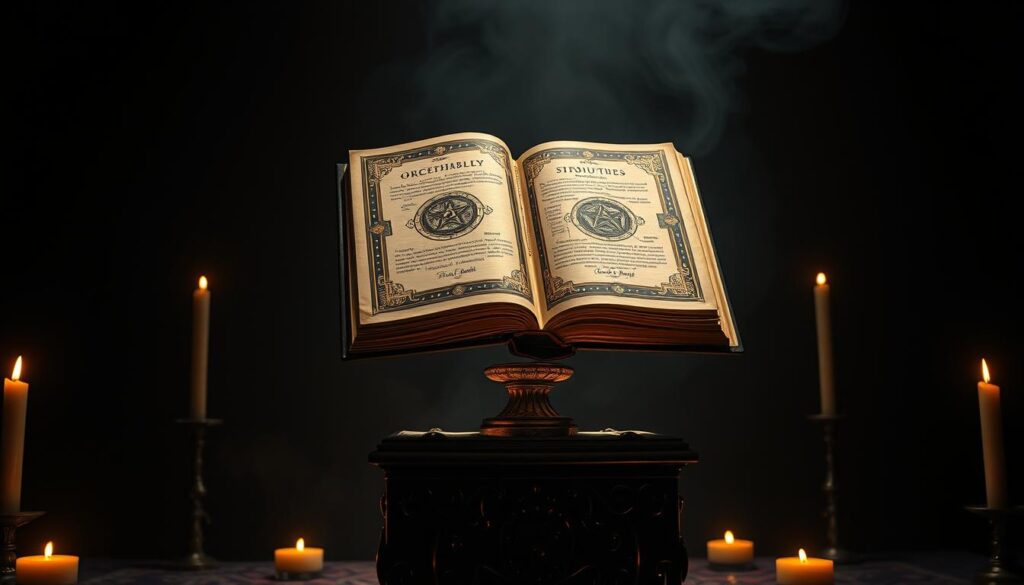
The Greater Key of Solomon — ritual tools, circles, and invocations
The Greater Key of Solomon (Clavicula Salomonis) circulated in Latin and Italian by the 16th century.
Focus: It details circles, blades, pentacles, and invocations used to structure rigorous rituals. Its templates shaped later ceremonial systems and ceremonial manuals listed in many collections.
Lemegeton (Ars Goetia and more) — structure and scope of the five parts
The Lemegeton, or Lesser Key, is fivefold: Ars Goetia, Ars Theurgia Goetia, Ars Paulina, Ars Almadel, and Ars Notoria.
Ars Goetia catalogs spirits and procedures for conjuration; other sections handle planetary operators, visions, and rites. The Pseudomonarchia Daemonum famously lists 69 demons linked to Goetia lore.
Historical context: From medieval manuscripts to printed editions
Manuscripts were prized for perceived potency; later print editions broadened access and introduced variations. The Church once placed some titles on the Index of Prohibited works.
“Study reputable editions and commentary to decode symbolism and avoid copyist errors.”
- Note: These texts are advanced. Approach them with ethics, safety protocols, and respect.
- If your interest is meditation or natural correspondences, other sections may fit you better.
Folk magic favorites: Petit Albert and practical charms
Handy manuals for daily remedies and protective tokens spread by cheap print across Europe. These folk titles focus on household uses and quick remedies rather than formal ritual systems.

The Petit Albert — household charms, curiosities, and Hand of Glory lore
The Petit Albert (first printed 1782 in France’s Bibliothèque bleue) bundles remedies, recipes, and curious instructions like making a Hand of Glory. Many entries read as cultural artifacts rather than practical advice for modern use.
Tip: Treat older directions as folklore. Substitute symbolic or safe materials when adapting any method.
Grand and Black Pullet traditions — amulets, talismans, and narratives
Related titles such as Grand Albert and Black Pullet circulated amulet designs and narrative frames. The Black Pullet blends story—set around Egypt and Napoleon—with diagrams that helped people remember techniques.
Why it mattered: Chapbook-style print made these texts affordable. That print culture shaped shared lore and let ordinary people access talisman-making and practical charms.
“Folk manuals often translate tradition into small, memorable crafts you can try at home.”
- Pair a historic title with a modern, safety-minded guide to adapt recipes responsibly.
- Keep a record of results and personal tweaks so practice grows in a tailored way.
- People drawn to heritage will find these volumes rich in charm and ingenuity.
For guidance on developing intuitive skills alongside practical methods, see develop psychic abilities.
Wicca-friendly guides, ethics, and practice
Wiccan practice centers on ethical intent and seasons, offering gentle frameworks for home ritual work.
The Rede—often summarized as “harm none”—is central. It asks readers to act with consent, care, and clear responsibility.
This stance means curses and work meant to harm conflict with many Wiccan paths.
Wiccan perspective and community notes
Wicca is a religion within the wider world of witchcraft. Not every witch identifies as Wiccan.
Choose a title that matches your values and path.
Candlelight Spells — feasts, healing, and seasonal rites
Candlelight Spells by Gerina Dunwich offers approachable candle-based rituals for family and communal celebrations.
It leans toward seasonal observance and simple healing work. Goodreads averages around 3.30 for accessibility and ideas.

Kitchen Witchcraft — everyday crafts and natural magic
Kitchen Witchcraft by Rachel Patterson focuses on pantry correspondences, crafts, and daily magick.
Readers praise its practical projects and usable tips for home care (Goodreads ~3.85).
“Start small, honor intent, and track what truly feels right.”
- Use lunar and seasonal timing to enrich rites; small shifts in timing can deepen meaning.
- Simple candle workings and healing-focused acts help newcomers build safe confidence.
- Journal intentions and outcomes to learn what resonates and to refine practice.
| Focus | Best for | Practical tip |
|---|---|---|
| Ethics | New practitioners | Follow the Rede; get consent |
| Candle rites | Family & small groups | Use color intent and simple phrases |
| Kitchen craft | Busy schedules | Integrate correspondences into meals |
Respect source cultures and avoid appropriation. Adapt rituals for small spaces and short time frames so practice stays consistent and joyful.
For practical timing and celestial ideas that pair well with these guides, explore tarot spreads. Many people also find guidance by watching moon phases and stars in planning seasonal work.
Book of Shadows: Private practice and respectful sharing
A Book of Shadows often becomes a private map of practice, filled with rituals, notes, and personal reflections.
Many Wiccan practitioners treat it as sacred and prefer it handwritten. A personal ledger holds dates, moon work, outcomes, and ethical notes tied to the Rede.
Learn without breaching privacy. People new to the craft can join public classes, open circles, read beginner-friendly guides, or seek mentorship. Ask for teaching, not for someone’s private pages.

Practical writing tips and respectful habits
- Date entries and note moon phases; tracking helps you see patterns with the stars and timing.
- Annotate outcomes and record ethical considerations after each rite or experiment.
- Keep two notebooks: one private Book of Shadows and one public journal for class notes and shared resources.
- If you use digital notes, protect them with backups and strong passwords.
“Respect for privacy builds trust and strengthens community.”
| Item | Purpose | Practical tip |
|---|---|---|
| Private Book | Personal rites & reflections | Handwritten, dated, sacred |
| Public Journal | Class notes & references | Shareable, tidy, non-sensitive |
| Digital Copy | Backup & search | Encrypt and backup securely |
Be kind to yourself as your writing voice grows. Beginners can get help from community resources while honoring private practice and building a safe, welcoming culture.
Healing, protection, and life enhancement spell books
Find approachable guides that blend self-care, household protection, and simple magic designed for real routines.

Goddess Spells for Busy Girls — prosperity, luck, and confidence spells
Goddess Spells for Busy Girls by Jen McConnel (Goodreads ~3.86) targets women who want quick rites for confidence, prosperity, and luck.
Why it fits: rituals are short, practical, and easy to fold into a packed schedule. The book balances intention setting with realistic habits.
Practical picks for self-care, protection, and home life
Choose titles that focus on grounding—cleansing, warding, and clear intention work. These practices help stabilize emotions and improve daily routine.
- Pick methods that fit small spaces and short time windows.
- Use simple tools: candles, teas, and wearable charms for home protection and self-care.
- Always check a book’s ethical framing and choose what aligns with consent and values.
“Build a repeatable ritual that includes journaling, breathwork, and reflection to integrate results.”
| Focus | Best for | Quick tip |
|---|---|---|
| Self-care | Busy people | Five-minute breathwork plus a candle |
| Home protection | Small spaces | Simple warding charm at entry |
| Confidence & luck | Career & life goals | Daily affirmation and journal note |
| Reference pairing | Deepening practice | Keep a correspondences index for stars, herbs, and timing |
Track outcomes and note what supports long-term change. Small, steady rituals often add up into meaningful shifts.
Stars, divination, and natural magic
Stargazers and herbalists share a long history of aligning days, herbs, and intentions with the sky.

History meets the heavens: medieval astral manuals such as the Arabic Ghâyat al-Hakîm (later called Picatrix) were translated into Latin in the 13th century. Those texts set the groundwork for renaissance correspondences still referenced today.
Elven and star-themed oracles
Modern themed titles like The Elven Book of Dreams and works by The Silver Elves pair mythic imagery with gentle divination and dreamwork. These guides make oracular practice accessible for contemplative people.
Practical timing and natural magic
Try this: begin with simple sky observation and a weekly lunar log. Note moon phase, rising constellations, and any vivid dream symbols.
- Journal: record dreams, timing, and results to build your own symbolic language.
- Use accessible materials: herbs, stones, and small rituals tied to seasons and cycles.
- Cross-check: compare correspondences with historical sources to respect origin and context.
“Slow, consistent practice with reflection deepens intuition more than complex timing.”
Goetia, demonology, and historical caution
From medieval catalogs to printed manuals, records of named spirits guided ceremonial practice across Europe. These registers moved from manuscript prestige into widely printed texts that shaped later ritual craft.

Pseudomonarchia lineage and the Ars Goetia focus
The Pseudomonarchia Daemonum lists 69 demons and informed the Ars Goetia section of the Lemegeton. That lineage helped preserve names, seals, and ceremonial sequences tied to the Key Solomon tradition.
Ethics and safety for serious ceremonial work
Ceremonial texts are advanced. Approach them only after long study, solid grounding, and mentorship from experienced people. The Church historically countered such material with exorcism rites and placement on the Index of Prohibited Books.
- Study first: treat these writings as historical and symbolic unless you are trained.
- Protective practice: learn banishing, grounding, and meditation before any conjuration.
- Cross-check: compare multiple editions and commentary to decode seals and sequences accurately.
“Prudence protects the practitioner and the community.”
| Topic | What to do | Why it matters |
|---|---|---|
| Lineage study | Read Pseudomonarchia and Ars Goetia with annotations | Shows how lists informed later ceremonial models |
| Practice level | Focus on meditation, banishing, grounding first | Builds resilience and mental stability |
| Ethics & context | Respect religion, culture, and consent | Prevents harm and appropriation |
| Safe alternatives | Study history, symbolism, and comparative analysis | Satisfies curiosity without unnecessary risk |
Victorian, occult, and romantic-era grimoires
Victorian-era fascination with mystic style reshaped how people collected and used ritual writing. Decorative layouts, floral borders, and staged ritual scenes made old material feel new and accessible.
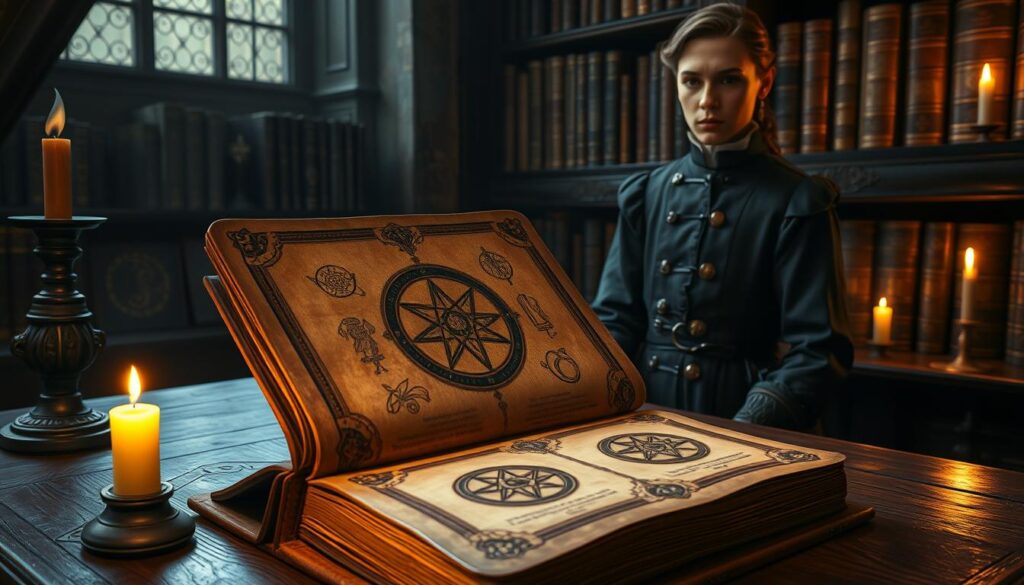
A Victorian Grimoire by Patricia J. Telesco (Goodreads ~4.01) is a period-inspired title that bundles ambiance with gentle practice. It suits readers who enjoy aesthetic charm alongside practical notes.
Occult revivals and 19th-century print
The 18th–19th centuries saw wider print availability in France and beyond. Cheap editions like the Black Pullet and the Grand Grimoire reached a broad audience. Scholars such as Georg Conrad Horst compiled earlier fragments into modern editions.
- Enjoy the romance: let period framing inspire journaling, correspondence tables, and seasonal rites without needing rare tools.
- Check provenance: annotate editions with notes on translation, commentary, and any editorial errors.
- Compare sources: read earlier manuscripts alongside Victorian print to track how language and method evolved.
“Appreciate the beauty, but keep safety and ethics central.”
| Focus | Advice | Why it helps |
|---|---|---|
| Ambiance | Use period motifs | Makes practice engaging |
| Scholars | Verify editions | Clarifies history |
| Practical use | Adapt simple rites | Accessible for modern people |
For a related reading on material culture and symbolism, see ten of pentacles.
Women-centered and inclusive witchcraft books
A growing number of titles focus on practices that honor ancestry and lived experience. These resources center empowerment, clear instructions, and culturally respectful guidance for women and diverse people who seek spiritual tools.
The Black Woman’s Little Book of Spells — empowerment and transformation
The Black Woman’s Little Book of Spells by V.C. Alexander (Goodreads ~4.70) is a practical guide aimed at personal agency and growth. It blends ritual ideas, daily practices, and affirmation work to help readers build confidence and resilience.
Welcoming practices for diverse witches and pagans
Look for language that respects identity and sources traditions ethically. Favor titles that name ancestry, offer alternatives to rare materials, and suggest consent-based approaches.
- Pick works that center representation and clear context.
- Pair empowerment reads with protection and self-care guides.
- Form study groups, mentorship circles, and online spaces that uplift members.
“Choose books that reflect your values and help you grow with confidence and dignity.”
| Focus | What to check | Practical tip |
|---|---|---|
| Representation | Author background, voices featured | Prefer titles that cite lived experience |
| Ethical sourcing | Attribution for cultural methods | Substitute respectful, accessible materials |
| Community | Support networks and resources | Join or form local or online study groups |
Seasonal and Halloween-ready spell books
Autumn brings a chance to slow down, remember, and set focused intentions for the darker months.
Curated reads blend reverence with lighthearted titles. Candlelight Spells is great for cozy autumn rites and feasts that feel homey and intentional. Goodreads also lists playful picks like Satan Is The New Cupid: A Single’s Guide To Halloween Romance for fun, themed evenings.

Curated reads for Samhain vibes and autumn rituals
Gather titles and chapters that favor reflection, remembrance, and gentle release.
- Choose short rituals for solitary practice or tiny circles.
- Use a candle, seasonal scents, and soft music to build atmosphere safely.
- Journal gratitude, lessons, and intentions to anchor the darker half of the year.
Lighthearted extras for Halloween romance and fun
Mix a reverent rite with playful reading to keep gatherings warm and inclusive.
Tip: balance ceremonial notes with accessible, apartment-friendly activities.
“Seasonal practice can be an annual anchor that supports reflection and renewal.”
| Focus | Best for | Quick tip |
|---|---|---|
| Samhain reflection | Solo or small groups | Short altar, ancestor candle, journaling |
| Cozy autumn rites | Families & housemates | Use Candlelight Spells routines for feasts |
| Playful Halloween nights | Friends and parties | Pair a romance list pick with themed games |
| Grounding after rites | Everyone | Herbal tea and a mindful walk |
Keep accessibility in mind: adapt materials for shared homes or dorms and observe fire safety. For timing and paired practices that use stars and moon notes, see related guidance in this seasonal timing guide.
Historic roots of magic: From Mesopotamia to modern print
The story of ritual writing moves from Mesopotamian clay to Renaissance presses, carrying ideas across languages and eras. Early tablets from Uruk (5th–4th centuries BC) preserve the first recorded incantations that shaped later practice.
Ancient incantations, Hermeticism, and Kabbalah influences
Egyptian heka expanded under Hellenistic exchange, while Hermetic literature attributed to Hermes Trismegistus wove philosophy into ritual craft.
Medieval texts like Sefer Raziel Ha-Malakh and Picatrix (Ghâyat al-Hakîm) fed Renaissance thinkers and Kabbalistic currents. These strands linked practical rites to celestial timing and the influence of the stars.
Printing, folk transmission, and the rise of popular grimoires
From chapbooks such as Petit Albert to wider print runs, practical lore reached everyday readers. Still, handwritten grimoires kept a reputation for potency and personal authority.

- Timeline: Mesopotamia → Egyptian heka → Hellenistic syncretism → medieval compilations.
- Transmission: translations, commentaries, and regional adaptations across years.
- Practice: natural magic and astrological correspondences remain visible in many modern guides tied to the stars.
| Era | Source | Influence |
|---|---|---|
| Ancient | Uruk tablets, Egyptian heka | Incantations, ritual templates |
| Medieval | Sefer Raziel, Picatrix | Astrology, Kabbalistic symbolism |
| Early Modern | Key of Solomon, chapbooks | Mass access, folk practice, grimoire tradition |
Practical note: value provenance and edition when you read any historic text. Pair historical study with modern guides to translate symbols into safe, ethical practice that respects source cultures and the role of religion and gods in earlier systems.
How to choose the right book: Format, focus, and ethics
Choosing well saves time and protects your practice. Start by deciding how you learn best: quick lookups, step-by-step rituals, or a private journal you write into each season.

Reference vs. ritual handbooks vs. personal grimoires
Reference volumes list correspondences, histories, and cross-references. They are great when you need an answer fast during study or rite planning.
Handbooks offer step-by-step routines and clear materials lists. They suit people who want practical, repeatable methods to learn technique.
Personal grimoires are private logs. Use them to record outcomes, adaptations, and ethical notes as your practice deepens.
Verifying editions, translations, and practice alignment
Many classics exist in multiple editions and translations. Check the introduction, editor notes, and bibliography to spot errors or editorial changes.
- Sample an intro and a procedure to test tone and clarity.
- Read reviews and view sample pages during your search.
- Prefer editions with translator notes, reliable indices, and clear sourcing.
“The right choice supports steady practice, reflection, and growth.”
| Type | Best for | Quick check |
|---|---|---|
| Reference | Research & cross-checking | Index, citations, translator notes |
| Handbook | Daily ritual & learning | Materials lists, safety, step clarity |
| Personal Grimoire | Private record & adaptation | Durable binding, dated entries, backups |
Checklist: safety guidance, ethics section, clear materials list, and realistic time commitments. Build a small, intentional library that fits goals instead of collecting at random.
For more on choosing between a medium or a reading professional and how sources differ, see this guide.
spell books: Build your personal practice with confidence
A balanced collection helps people move from theory to repeatable home practice.
Pick one core instructional title, one charm-focused companion, and one large reference from this list to form a starter stack.
Begin simply: set aside a quiet corner, gather basic tools, and schedule short, regular sessions so reading turns into steady practice.
Use journaling, reflection, and gentle intention-setting to track outcomes. Periodic reviews let you refine methods that fit your life and the influence of the stars.
- Start with safe, simple workings; add complexity as confidence grows.
- Organize tools and set reminders to make practice consistent.
- Ask for help from mentors or local groups when you need guidance.
“Clarity of purpose plus reliable resources nurtures long-term progress.”
Remember: your library should evolve with you. Treat this guide as a toolkit you return to when you’re ready for the next step and to reclaim personal power.
Conclusion
This guide ties centuries of ritual writing into a practical roadmap for readers. From Mesopotamian origins through chapbooks like Petit Albert and ceremonial works such as the Key of Solomon, the sequence shows how knowledge reached people across years of transmission and shaped later practice and history.
Use this list to match a title to your aim—healing, seasonal rites, folk skills, or ceremonial study. Responsible, ethical practice grows slowly; reflection, community, and careful reading matter.
Bookmark this page, start with one thoughtfully chosen book today, and revisit sections as interests shift. Compare editions, follow the stars for timing, and keep curiosity alive. Thank you, and may your path feel grounded, clear, and kind under the stars.