
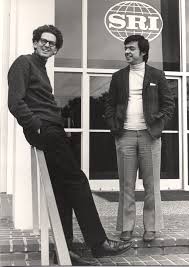
In the early 1970s, two physicists began experiments at the Stanford Research Institute that would spark decades of debate. The program tested whether trained participants could describe distant targets and provide usable intelligence information for national security.
The team developed strict protocols to reduce bias and improve repeatability. Over time, methods were refined to give consistent, verifiable results in lab settings. These steps made the work a focal point for both critics and supporters.
The collaboration of Puthoff Targ became a cornerstone in the history of parapsychology and defense research. This article explores the historical context, the scientific procedures used, and the broader implications for how anomalous perception was evaluated.
Key Takeaways
- Origins: The program began at SRI in the 1970s to test actionable intel claims.
- Protocols: Rigorous controls helped improve reliability over many trials.
- Impact: The work bridged parapsychology and national security concerns.
- Results: Lab evidence suggested repeatable descriptive successes under set conditions.
- Learn more: For an overview of the techniques, see remote viewing.
The Origins of Remote Viewing Research
What began as folklore and anecdote soon moved into systematic tests at university labs and private institutes. In 1934, J.B. Rhine coined the term Extra Sensory Perception while running organized trials at Duke. That early work framed later scientific methods.
In 1970, the book “Psychic Discoveries Behind the Iron Curtain” drew wide attention and helped prompt intelligence interest. Early parapsychology research in new york brought figures like Ingo Swann into experiments that explored distant perception.
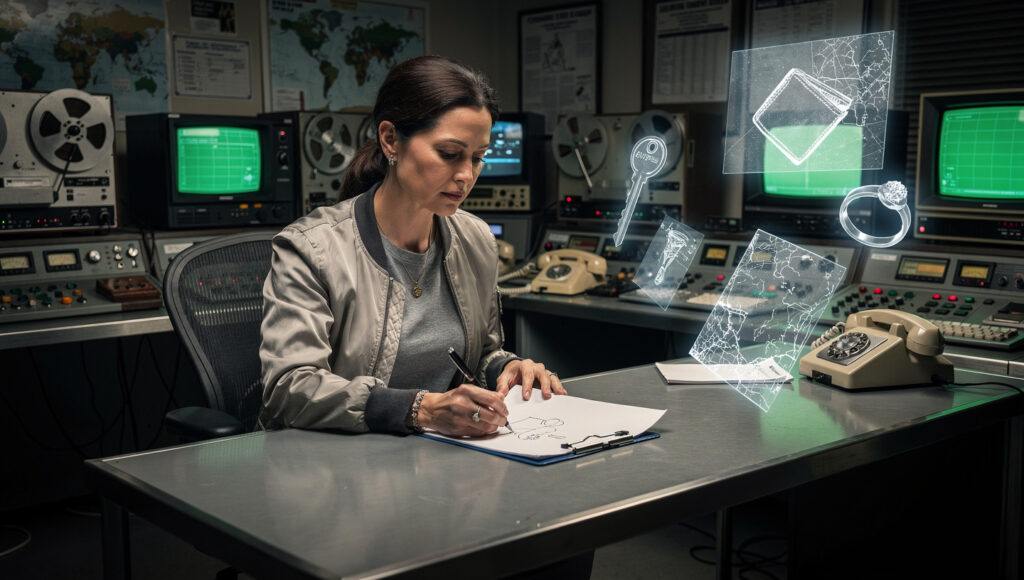
Initial tests used simple card-guessing tasks. Over the years, protocols were refined to reduce chance results and strengthen statistical claims. Researchers shifted from cards to complex geographical targets.
- Milestones: Rhine’s ESP term, the 1970 book, New York trials.
- Method shift: simple guessing → target descriptions.
- Goal: rigorous, repeatable research that met scientific standards.
Understanding these origins means seeing how ancient practice met modern experiments. That convergence set the stage for the government-sponsored program that followed.
Understanding the Stanford Research Institute Program
In 1972 a formal program began at the Stanford Research Institute in Menlo Park to test whether anomalous perception could provide usable intelligence information.
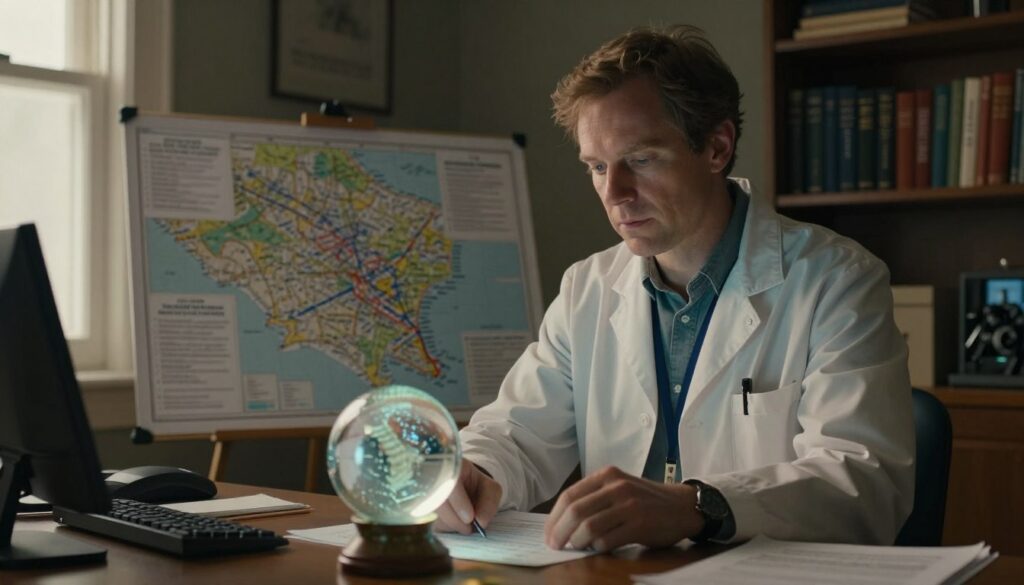
The Role of the CIA
The CIA funded much of the work through the 1970s. This backing made the effort a key part of government interest in unconventional methods. Agents asked whether trained people could describe a distant target from only coordinates.
Transition to SAIC
After many years of lab research and formal protocols, the program moved in 1988 to the Science Applications International Corporation under Edwin May. That shift marked a change from academic lab work to a contractor model.
Ingo Swann played a pivotal early role, showing phenomena that helped secure support from the intelligence community.
| Year | Organization | Key Focus |
|---|---|---|
| 1972 | Stanford Research Institute | Establish protocols; test target descriptions |
| 1970s | CIA | Funding and validation of experiments |
| 1988 | SAIC | Operational transition under contractor oversight |
Double-blind experiments ran for many years to limit bias and strengthen results. The intelligence community required strict validation for every piece of information collected. For background on related clairvoyant research, see clairvoyant abilities and science.
Russell Targ and Harold Puthoff Remote Viewing Studies
Academic journals carried reports from the research institute that chronicled a new perceptual channel for information transfer.
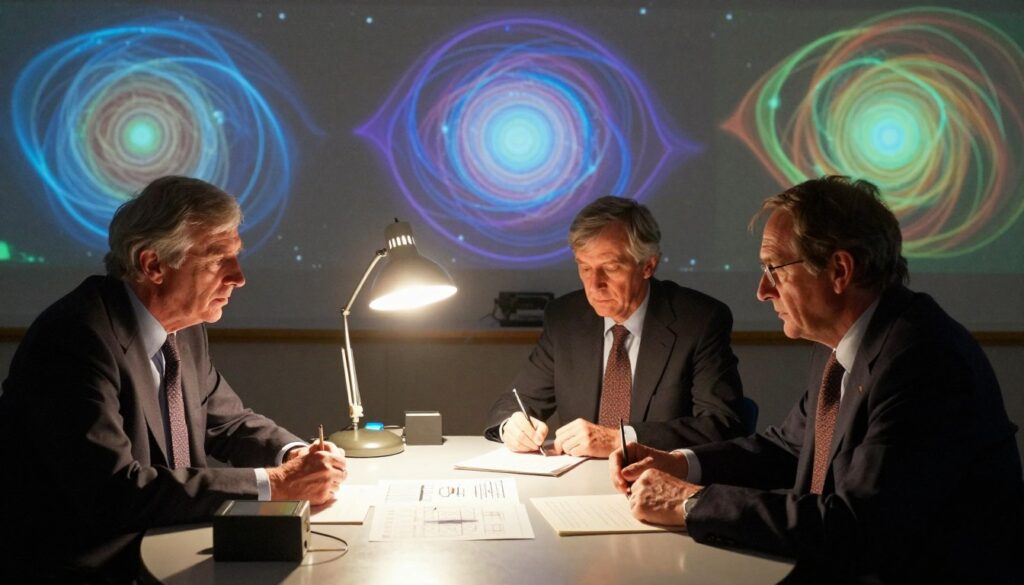
Published findings described experiments at the Stanford Research Institute where trained participants gave detailed descriptions of distant targets. The team used random selection so viewers had no prior knowledge of the location.
Ingo Swann, a New York artist, helped design early protocols at the Menlo Park facility. Over the years, the researchers ran many trials that suggested accuracy across time and distance.
“The data indicated descriptive hits that could not be dismissed as chance.”
- Peer-reviewed papers documented methods and outcomes.
- The perceptual channel allowed consistent transfer of descriptive information.
- By the late 1970s, the body of evidence was substantial.
| Publication | Year | Key Finding |
|---|---|---|
| Journal A | 1974 | Repeatable descriptive hits on distant targets |
| Journal B | 1976 | Protocol validated with random target assignment |
| Conference Report | 1979 | Evidence for nonlocal information transfer over time |
The Role of Consciousness in Information Transfer
The 1997 book “Miracles of Mind” explored how Eastern wisdom aligns with scientific tests of awareness. It argues that traditions and lab work point toward similar conclusions about perception.

At the heart of this view is the idea that information can move without the usual sensory route. Researchers describe this process as information transfer that does not rely on distance-limited signals.
Ancient texts speak of a guiding light or superphysical faculty that reveals distant facts about the physical world. Yogic lore treats mind as nonlocal, a model echoed by some modern theories.
Eastern Wisdom and Modern Science
Quieting the mind creates a spacious state where accurate impressions can arise. Practitioners report access to details that match external targets.
- Shared insight: Both traditions and experiments treat consciousness as active, not passive.
- Practical view: Training and stillness improve reception.
- Broader meaning: This shifts how we see the nature of perception and reality.
“Consciousness may transcend ordinary limits, allowing direct contact with distant aspects of the world.”
Laboratory Protocols and Scientific Rigor
Lab teams at the research institute built controlled environments to rule out ordinary signal leakage. They used Faraday cages for electromagnetic shielding, so no external transmissions could explain a viewer’s impressions.
In the 1970s, every person acting as a viewer was isolated from the target site. Sessions followed double-blind rules: neither the experimenter nor the participant knew the target in advance.
Success was not anecdotal. Analysts measured information accuracy using rank-order analysis to score descriptions against multiple targets. Standardized conditions helped produce consistent results that appeared in peer-reviewed research.
The team’s methods emphasized objectivity and repeatability. Integration of controlled protocols allowed clearer assessment of claimed information transfer between distant places and a single person in the lab.
“Strict controls were essential to separate genuine effects from ordinary explanations.”
For more on related clairvoyant work and how protocols evolved, see clairvoyant abilities.
Notable Successes in Early Test Bed Trials
Several early test-bed trials produced striking outcomes that captured scientific attention. These examples came from controlled, double-blind experiments where protocols, scoring, and shielding reduced ordinary explanations.

The Lawrence Livermore Accelerator
In a 1987 trial a viewer described the accelerator at Lawrence Livermore National Laboratory with high accuracy. The description matched layout and equipment details later confirmed by independent observers. Analysts rated the results as reliable under the lab’s controls.
Discovery of Jupiter Rings
One early session produced a striking prediction: rings around Jupiter. That description preceded Pioneer 10’s flyby and later astronomical confirmation. This example became a key example cited by proponents as evidence that consciousness can access distant information.
Pat Price and the Rinconada Site
In 1974 Pat Price gave a precise account of the Rinconada Park swimming complex. Historical records later confirmed many specific elements he reported. Each such case was documented so outside reviewers could verify the claims.
Why these matters matter: Together, these experiments offered converging lines of evidence. They showed consistent target hits across time, careful documentation, and methods that let others check the results.
| Year | Example | Outcome |
|---|---|---|
| 1974 | Rinconada Park (Pat Price) | Confirmed site details in records |
| Pre-1973 | Jupiter rings prediction | Matched later Pioneer 10 findings |
| 1987 | LLNL accelerator | High-fidelity target description verified |
Operational Assignments for the Intelligence Community
Under urgent conditions, analysts asked viewers to identify high-value locations with no prior hints.
The Defense Intelligence Agency assigned missions to find sensitive sites, such as a radio listening post in the Ural Mountains. Each target was chosen for strategic importance, and the viewer had no background information.

Sessions ran under intense conditions. Reports were often produced quickly and then cross-checked. Many times satellite imagery later verified the descriptions.
One notable example involved a session describing a Soviet nuclear research center at Semipalatinsk. The viewer singled out a unique gantry crane that matched aerial photos.
The intelligence community used these reports as a complementary source to traditional collection. In practice, the method provided actionable information that helped analysts form leads.
“These operational assignments showed that unconventional impressions could yield verifiable, mission-relevant results.”
| Agency | Assignment | Verification |
|---|---|---|
| Defense Intelligence Agency | Locate radio listening post (Ural Mountains) | Satellite imagery confirmed structures |
| Intelligence community | Identify nuclear research site (Semipalatinsk) | Gantry crane matched aerial photos |
| Government analysts | Field target prioritization under pressure | Reports used alongside HUMINT and imagery |
For an overview of the scientific methods behind these operational uses, see the science behind remote viewing.
The Mystery of the Rinconada Park Site
One of the most puzzling cases from the 1970s centers on a municipal park that seemed to defy present-day maps.
In 1974 Pat Price completed a remote viewing session for a selected target at Rinconada Park. He described two water tanks that were not there when investigators checked the site.
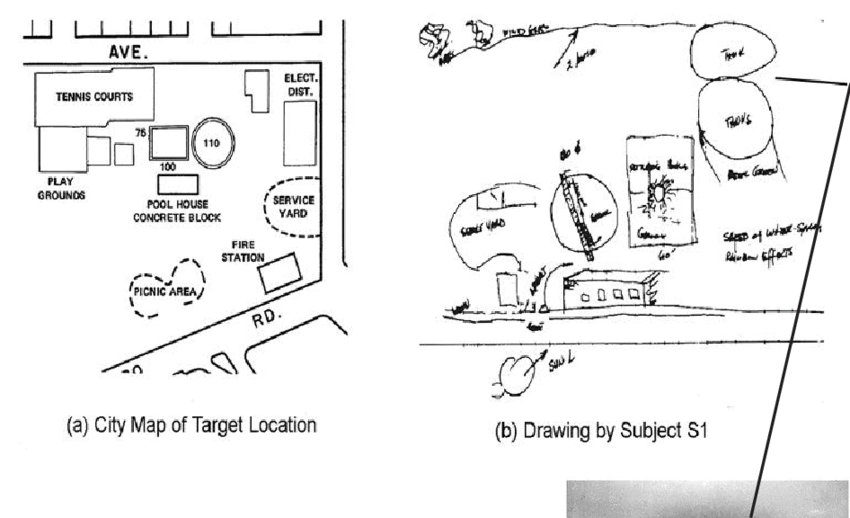
For two decades the tanks remained unexplained. Then, 21 years later, researchers found a 1913 commemorative volume that documented those exact tanks at that location.
This example highlights retrocognition — the ability to access accurate past details. The precision of the viewer’s report, despite their absence in 1974, makes this case notable.
- Key point: Focus on the target allowed perception of hidden historical features.
- Implication: The case suggests that information anchored to a place can be accessed across time.
- Why it matters: It shows how remote viewing can transcend the limits of the present moment.
For those curious about training and related skills, see a short course on psychic mediumship certification to explore how practitioners develop focused perception.
Precognitive Capabilities and Future Sight
Some sessions aimed not just to map places but to describe events that had yet to unfold. These tests explored whether a person could access future facts under controlled conditions.

Predicting the Soviet submarine became a hallmark case. In 1979 Joe McMoneagle described the construction and launch of a massive Soviet submarine months before satellite photos confirmed it. That successful prediction added weight to the idea that consciousness can reach forward in time.
Predicting the Soviet Submarine
Precognitive remote viewing treats the mind as a channel for future information. Experiments used strict double-blind protocols so the viewer had no prior access to data about the target.
Each verified prediction strengthened claims that perception can be nonlocal in nature. By separating the psychic signal from everyday noise, trained persons often produced clear, testable results.
“The ability to look into the future became a core aspect of the program’s claims.”
- Controls: sessions run under tight conditions to prevent leakage.
- Evidence: documented predictions later matched independent verification.
- Implication: suggests a nonlocal channel linking consciousness and time.
| Year | Person | Outcome |
|---|---|---|
| 1979 | Joe McMoneagle | Prediction of submarine confirmed by imagery months later |
| 1974 | Pat Price | Historic site details later corroborated |
| Various | Trained viewers | Repeatable precognitive hits under strict experimental conditions |
Challenges and Decline Effects in Parapsychology
A common challenge in parapsychology is that promising outcomes sometimes erode over time despite careful controls. This drop, known as the decline effect, shows up when early successes fall as trials continue.
Researchers have spent many years changing target materials and tightening protocols to fight boredom, fatigue, and subtle biases. These shifts aim to preserve motivation and keep data reliable.
Meta-analyses help. By pooling results across labs, analysts find growing evidence that the phenomena merit attention, even when single labs show variable performance.
“Standardized methods are essential to separate true signals from noise.”
Other teams replicated key experiments to broaden the base of evidence. Still, variability across sites shows the need for shared procedures and clear scoring rules.
| Issue | Mitigation | Outcome |
|---|---|---|
| Decline effect | Vary target sets; shorten sessions | Improved short-term consistency |
| Lab variability | Standard protocols; cross-site training | Better comparability of results |
| Motivation loss | Incentives; rotation of tasks | Higher engagement in trials |
Addressing these problems will help future research produce clearer, replicable findings. For related work on psychokinetic claims, see what are PK abilities.
Modern Physics and the Nonlocal Universe
Researchers in physics now investigate ways the universe links distant events without using classical signals. This perspective helps bridge laboratory evidence with theoretical work in quantum theory.

Quantum Entanglement
Quantum entanglement shows particles can share states instantly, even when far apart. Lab experiments led by figures such as Anton Zeilinger demonstrate clear correlations that defy simple, local explanations.
Why it matters: entanglement gives a model for how information can appear connected across space without relying on the speed of light.
Retrocausality
Some experiments probe retrocausality — the idea that future events can influence past outcomes. These tests suggest that causation may not be strictly forward in time.
When combined, entanglement and retrocausal results offer a framework where consciousness could play a role in accessing nonlocal information. This does not prove all claims, but it does provide a plausible physics rationale for anomalous laboratory findings.
“Modern experiments expand our view of the physical world and the nature of information transmission.”
The Legacy of the Psychic Spying Program
The project’s legacy reaches beyond archives into current conversations about consciousness and national security.
Many former participants now advocate for continued study of remote viewing. Their accounts and field notes pushed the government to declassify program files. That release helped the public see how these methods were used in real missions.
One notable author has written a book that details the science, methods, and outcomes. These publications made the subject easier to examine in universities and by independent labs.
The Defense Intelligence Agency and other units in the intelligence community have treated such reports as a complementary part of the analytic toolkit. Others in science now study the implications for human potential and how consciousness might access information beyond usual senses.
“The program reminds us to question reality and explore the borders of what seems possible.”
- Declassification raised transparency and debate.
- Veterans press for more rigorous follow-up research.
- Agencies sometimes use impressions as leads alongside imagery and human intel.
Conclusion
, These experiments invite a broader conversation about what the mind may access beyond ordinary senses.
The program combined careful lab protocols with operational tasks. Declassified records show actionable results used by the intelligence community. Such documents make the work a visible part of history.
Modern physics offers plausible links. Ideas like nonlocality and quantum entanglement give a framework for anomalous perception without invoking mystery alone.
As research continues, the legacy remains useful. It encourages clear methods, honest replication, and an open, scientific look at consciousness and how information may connect across space and time.