

This short guide invites a friendly, curious approach to a common human experience.
Many people notice subtle inner images, quiet nudges, or flashes of color that point to useful answers in daily life. These clairsenses are part of how the spirit interfaces with the body and the senses, and they can be trained like taste or smell.
Think of clear seeing as a practical way of seeing—pictures, light, and movement that unfold in the inner eye. This approachable perception helps you make better choices, feel more joy, and deepen your connection to others without absorbing what you notice.
Developing this ability is empowering. It lets you access your own truth and find answers without outsourcing your power to trends or a single post. If you want guidance, explore responsible options like professional readings while keeping consent and compassion at the center.
Key Takeaways
- Many people already experience subtle inner images or nudges as useful signals.
- Clear seeing is a trainable skill, not only an innate gift.
- Visual cues—colors, light, patterns—can deepen perception without overwhelm.
- Building abilities boosts confidence, answers, and daily joy.
- Practice with respect, consent, and a curious mindset for steady progress.
Clairvoyant Energy Basics: Clear Seeing, Clairsenses, and Your Inner Eye
Clear seeing is a practical skill that lets inner vision reveal subtle patterns beneath everyday moments. It names an intuitive 6th sense that perceives subtle information through the spiritual eye behind the forehead.
The third eye or 6th chakra acts like a processing center in the mid-brain. It helps the spirit and body share information so images, colors, and shifting light make sense together.

“Clairvoyance means seeing with the inner eye: colors, symbols, scenes, and movement that tell a story.”
- Visuals can appear as colors that shift or symbols with layered meaning.
- Scenes may unfold like a short movie, showing movement and context.
- Early impressions are often faint; practice and notes help decode meaning.
| Aspect | How it Appears | What it Signals |
|---|---|---|
| Color | Shifts, tones, brightness | Flow, mood, vitality |
| Symbol | Simple images or icons | Personal meaning, recurring themes |
| Scene | Short moving images | Context, sequence, possible outcomes |
To begin practicing, try a focused exercise or read a simple guide to open your third eye practice. Keep notes on colors, movement, and symbols to build a reliable system for interpretation.
Are You Already Tuning In? Signs, Sensations, and Common Blocks
Have you ever felt a sudden picture or color tied to someone else’s story, arriving before words appear?
That quick image often signals an active inner sense rather than a thought. Many people notice this when they sense what others feel or when a visual answer comes during quiet questions.
Clairsentience shows up as feelings in your body—tightness, mood shifts, or even unexplained pain after a tense conversation. Clairvoyant seeing tends to offer pictures, colors, or scenes that stay outside the body and feel more like observation than absorption.
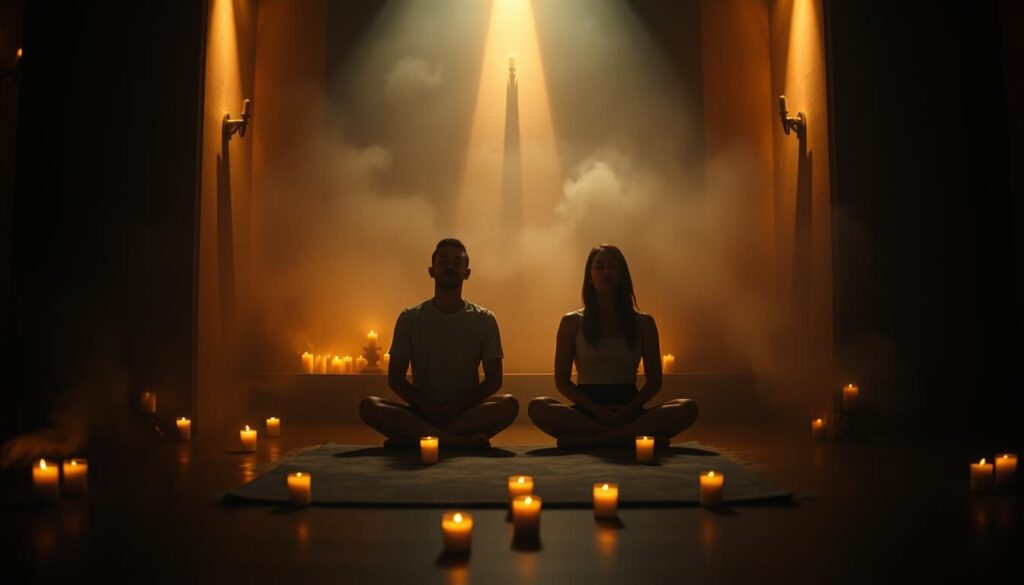
From empathic overwhelm to clear seeing: shifting from feeling to discernment
Overwhelm often appears as fatigue, mood swings, or bodily pain after being near many people. These are signs your perception needs structure and firmer boundaries.
“Your sensitivity is an ability, not a flaw — learning to see rather than absorb helps you witness a situation clearly without entanglement.”
- Notice real-world signs: sensing what someone else feels before they speak, seeing faint colors, or getting images when you ask questions.
- Normalize common blocks like inherited beliefs that intuition isn’t real or fear of being “too sensitive.”
- Try a one-question check-in in present time; note any image and observe it without taking it into your body.
- Capture brief observations after charged moments to separate what belonged to others from what is yours.
With small daily checks and gentle practice, your perception can shift from overwhelm to clearer seeing. For more on training this ability, consider a short course on psychic superpowers at psychic superpowers.
How to Connect with Clairvoyant Energy Today
A simple ritual can open space for inner seeing and give quick, practical answers. Start with a calm seat, steady breath, and a clear intention to stay in present time. Grounding helps your perception stay focused so images arrive without overwhelm.

Set your space
Sit comfortably, breathe slowly, and settle attention in the body. Make a brief, present-time intention: you are here to observe, not to solve. This keeps practice gentle and safe.
Center of the head practice
Place awareness just behind the forehead at the third eye. That placement helps activate the inner eye and gives clearer access to visual information without strain.
See like a movie
Invite an image to unfold like a short scene. Let imagination help—images that move, show light, or shift color often carry clear signals. Watch without forcing a story.
Interpret with the system, not the intellect
Ask images to show their meaning. Let symbols zoom, change color, or transform until they feel clear. This system-based approach prevents overthinking and increases accuracy.
Build your skill over time
- Start with one focused question and write down what you see.
- Practice 5–10 minutes daily or longer sessions a few times per week.
- Affirm boundaries: read only your field unless you have consent.
- Consider structured training to accelerate progress and refine interpretation.
“Small, steady practice creates reliable access to images and answers.”
For related practices on focused mental control and subtle movement, explore a practical guide on how to do telekinesis. Celebrate small glimpses of light or a single clear symbol; they are signs your ability to see is growing.
Working with a Clairvoyant Healer: Insight, Integrity, and Realistic Expectations
A present-time reading aims to show what is congested, why it matters, and which next steps respect your freedom.

What a session offers: a clear look at blocks in relationships, work, money, and major decisions. A reader will describe images and meaning they perceive in your field and translate that into practical suggestions you can test in daily life.
What to expect from information in the moment
Clients often get insight into origins of a pattern—an inherited belief or a repeated choice that keeps showing up.
A responsible practitioner focuses on present facts, not fixed predictions, so your freedom to choose remains central.
Empowerment, boundaries, and finding the right fit
Try a few readers to see whose way of communicating matches your needs. Stay in charge: if a session feels prescriptive or promises a fixed future, end it and find someone else.
| Topic | How it appears | Practical takeaway |
|---|---|---|
| Relationships | Recurring images or patterns around attachment | Identify one small boundary or conversation to test next week |
| Work & Decisions | Scenes showing choices, obstacles, or stalled projects | Break a decision into two concrete steps and try one within 72 hours |
| Money | Symbolic scarcity themes or tightness | Notice one spending belief, name it, and try a small shift |
| Ongoing support | Clearing cadence from as-needed to monthly | Set a follow-up rhythm that matches your goals |
“A reading is a tool for clarity, not a map that replaces your free will.”
- Ask for reflective takeaways so you leave with simple next steps.
- Maintain authority—clients choose what to try and when.
- Explore related resources on types of spiritual power at types of spiritual power.
Conclusion
A trained inner eye turns brief impressions—colors, light, and movement—into clear seeing you can use in daily life.
Clairvoyance is an ability people can develop. With simple training and steady practice, your senses and spirit work together so the body receives useful images and meaning in present time.
Honor boundaries, test beliefs, and choose instruction that teaches the center-of-the-head technique and interpretation inside a reliable system.
Want a quick next step? Sit five minutes, breathe toward the forehead, and notice one small image. If you’d like cues on common signs, see this guide to psychic signs.
Small, consistent practice brings more access to answers, less pain from blocks, and more joy in everyday decisions.