

Warm, stigma-free guidance helps parents notice how a child’s inner sense can show up during everyday moments.
A parent once found wrapped candy canes hidden in a bag after a three-year-old asked for them. Later the same child said they would ride a “blue” horse — and the horse’s name was Blue. They even asked about a heart-shaped cake tucked atop the fridge. These small stories offer real clues about emerging gifts and intuition in family life.
This intro won’t label or alarm. Instead, it points to calm responses that honor a young soul, protect confidence, and build trust over time.
Read on for practical signs to watch for, gentle ways to respond with empathy, and tools that help kids feel safe and seen. For more context on early indicators, see a helpful resource at psychic children.
Key Takeaways
- Notice small, specific moments—like naming hidden items—that hint at inner knowing.
- Respond calmly to protect a child’s confidence and emotional safety.
- Focus on empathy: acknowledge feelings and join imaginative play.
- Use simple routines to teach energy awareness and grounding skills.
- Support gifts without heavy labels so family life stays relaxed and secure.
Understanding clairvoyant abilities in children today
Quiet, precise observations from a young child can point to an active inner awareness. When a child senses energy shifts or names feelings without prompts, this often reflects empath traits and normal development for a highly sensitive young person.
Consciousness and play are closely linked. Imaginative play lets intuition surface naturally, so early life is a time when inner knowledge may be easier to notice and gently nurture.

Some kids feel overwhelmed at school or home because they absorb mood and energy around them. A practical approach helps them put that inner knowledge into simple language that fits daily life.
Parents can follow a simple framework: observe with curiosity, reflect feelings honestly, and respond to reduce anxiety while building trust.
- Kids who are empathic often speak quietly about what they sense rather than seeking attention.
- Adults may miss these clues because logic filters real-time impressions.
- Labeling matters less than steady support that keeps this part of life balanced.
For further perspective on preserving sensitivity rather than training it, see a helpful guide on psychic superpowers.
Everyday signs your child may be psychic
You may notice a child correctly describe a hidden object without ever seeing it. These small moments often feel ordinary but can point to unusual inner knowledge.
Surprising “knowing” about hidden things at home
Notice when a child calmly points out treats or items tucked away. They might name a snack or ask about a cake that was truly hidden.
Names, colors, and details they couldn’t have learned
Pay attention to oddly specific details—names, colors, or exact descriptions—that seem to come from somewhere else.

Heightened sensitivity to people’s feelings and energy
Some kids are empath by nature. They sense others’ moods quickly and may feel tired after big social gatherings.
Nighttime experiences, images, and vivid feelings
Bedtime can bring strong images, spirits, or intense feelings. Respectful listening helps more than dismissal.
“Ask gentle questions and keep your heart open; steady presence matters most.”
For a quick check, try a short quiz like the psychic abilities test to learn more about how a child may show these signs.
Supportive ways parents can nurture these gifts without fear
Simple, calm words can help a child trust what they sense without fear or confusion. Start by naming your own feelings aloud. Saying, “Yes, Mama is sad right now”, teaches emotional language and shows your child it’s safe to notice feelings.
Validate intuition with honest language
When a child mentions a vivid image or feeling, respond with short, honest phrases. Keep answers gentle and factual. This helps an empath child relax and learn emotional literacy.
Join imaginative play to build trust
Follow the child’s lead during imaginary scenes. Act out stories without heavy questioning. Let symbolic play flow so your child feels heard and loved, which strengthens family bonds.
Create bedtime routines to ease fear
Use soft light, a steady sequence, and a calming visual game like picturing a bubble of light. Place a hand on the heart for a moment of calm. Offer a playful “monster spray” ritual for nights when things feel big.

- Limit intense movies before bed and anchor with grounding talk.
- Offer small choices—nightlight color or a comfort toy—to give the child control.
- Revisit what works; routines evolve as your family learns together.
Need further guidance?For calm, practical readings and resources for parents, consider checking a trusted option likepsychic readings.
| Focus | Simple Steps | Result |
|---|---|---|
| Validation | Name feelings aloud; mirror short phrases | Emotional safety, trust |
| Play | Follow lead; avoid heavy questions | Stronger bond, confidence |
| Bedtime | Soft light, bubble visual, monster spray | Calmer sleep, less fear |
Practical energy tools for psychic kids at home and school
A simple game can teach a child to shift their energy quickly, whether at home or during a crowded school day.
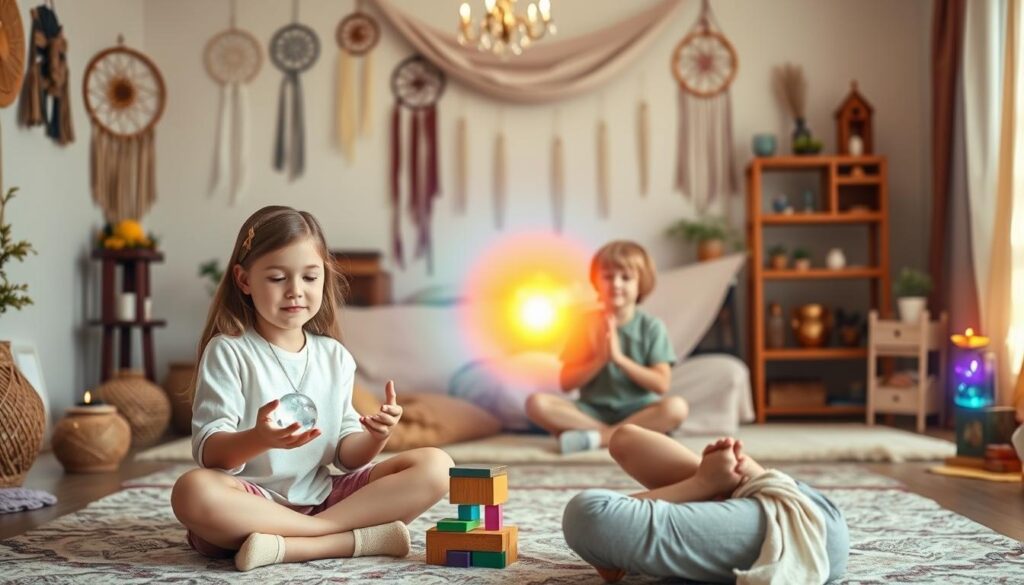
Kid-friendly visual techniques help a young empath learn to protect personal space without worry.
Bubble shield and quick visuals
Teach a bubble-of-light image: imagine a comfy color shield that filters energy while letting calm and love through.
Kids can practice this at home, then use the same image before class to feel steady at school.
Grounding, breath, and tiny rituals
Try “roots to the earth”: stand with feet apart, hands relaxed, and picture roots releasing extra stuff into the ground.
Use a “hand to heart” reset: place hands over the heart, take three slow breaths, and see a small light grow brighter with each inhale.
Music, micro-routines, and choice
Short music clips before class or after recess help kids move from one activity to the next. Sound signals calm and focus.
Offer choices: a pocket stone, a short mantra, or a quick visualization. Let the child test which ways feel natural.
- Before entering busy rooms: squeeze hands, relax shoulders, picture a light boundary.
- After assemblies or lunch: check hands, belly, or heart to notice what feels heavy or light.
- Remind them it’s fine to pause and use a favorite tool anytime they feel overloaded.
Quick reference
| Tool | How to do it | When to use |
|---|---|---|
| Bubble shield | Visualize a soft colored light around the body | Before class, during transitions |
| Roots grounding | Stand, relax hands, imagine roots releasing stuff | After busy play or emotional moments |
| Hand-to-heart | Hands on heart, 3 slow breaths, picture growing light | Quick reset anywhere |
| Music cue | Short track to signal calm and focus | Before class, after recess, bedtime |
When to seek grounded guidance and mentorship
If everyday impressions begin to affect sleep, school, or play, it may be time to find calm support. A short, practical mentoring path can help a parent and child translate strong inner life into steady habits that fit family routines.

How a calm, practical mentor can help integrate skills
Look for a grounded guide who speaks plainly and offers step-by-step tools, not spectacle. Mentor Kiersten Hathcock favors a “less woo woo” approach that teaches quick resets, bedtime rituals, and classroom-friendly visuals.
Real-world outcomes: confidence, inner peace, self-knowledge
Testimonials describe clearer sleep, fewer nighttime fears, and steady calm. Teens like Caden M. and Mckenna Buckley report greater inner peace and progress at their own pace.
- Seek help when a child feels overwhelmed over time or when you have practical questions about school or home integration.
- Ask about concrete outcomes: better sleep, less fear, clearer self-knowledge, and more confidence using empath gifts in daily life.
- Choose someone who honors your family values; the right mentor reduces a lot of worry and supports the heart of the path forward.
“Safe, steady guidance taught me tools I use every day.”
| Focus | What a mentor offers | Typical result |
|---|---|---|
| Daily tools | Short visuals, hand-to-heart resets | Calmer transitions |
| Bedtime | Rituals to ease fear | Better sleep |
| School | Simple cues and choices | More confidence |
Helpful categories of experiences: empath, intuition, past life, and spirit connection
Some parents notice patterns: a child comforts a pet without being told why, then explains a feeling they can’t name.
Map four helpful categories so you can listen with clarity. Start with empath moments, then look for quick intuitive nudges, past life-like memories, and rare spirit mentions.

Noticing empathic “hits” about family, friends, and animals
Empath cues often show up first. A young person may announce that Grandma feels tired or a dog is anxious.
These hits are usually short and specific. Respond with a calm question and simple labels to help the child feel safe.
Remembering or describing past-life-like details without prompting
Sometimes a child may describe vivid scenes or preferences that don’t match known history. These past life-like memories may appear in play or at night.
Keep language simple: ask what the memory felt like and let the child use words that make sense to them.
- Tip: Treat categories as flexible—many moments overlap.
- Use family check-ins so routines and responses stay steady.
- For more ways to notice signs, see a quick guide on psychic signs.
Conclusion
Small rituals and steady words can turn a confusing moment into a chance to teach calm. A child feels safer when a parent meets curious reports with warmth and simple tools. A brief hand-to-heart or a bedtime “monster spray” can ease fear and build trust.
Keep your heart open and practical. Over time, honest talk about feelings, play that follows their lead, and quick visuals to manage energy add up. These ways help empath kids learn healthy routines without pressure.
If questions or a lot of nighttime worry remain, seek a grounded mentor who offers clear steps. Celebrate these gifts with gentle love, steady structure, and a family approach that gives everyone a little more calm and confidence.