

This section introduces an advanced phase of remote viewing practice that evolved from early work by Hal Puthoff and Russell Targ. It explains how practitioners moved from simple sensory sketches to disciplined thought processes for handling complex concepts.
Historical context matters: in 1995 the CIA declassified Stargate Project files, which revealed decades of experimental data and operational results. Those documents helped shape modern methods and training procedures.
By studying figures like Pat Price and the published research, readers can see how perception and information were measured across sessions. The paper outlines protocols, quality controls, and the methods used to compare responses to known objects and concepts.
Expect a clear, practical view of how this phase was tested and applied. We summarize procedures, success factors, and the role of disciplined practice in getting reliable results.
Key Takeaways
- Historical records from the Stargate Project opened access to valuable data and results.
- Advanced practice moved beyond sensory sketches to structured cognitive methods.
- Notable cases, like Pat Price, show how perception was evaluated over time.
- Protocols and quality checks were essential for consistent information gathering.
- Modern research ties past experiments to current procedures and practical uses.
Introduction to Remote Viewing
Foundational research established procedures that let individuals collect non-local information in a repeatable way. This section frames the faculty and the historical ideas that support it. We keep the focus practical and clear.
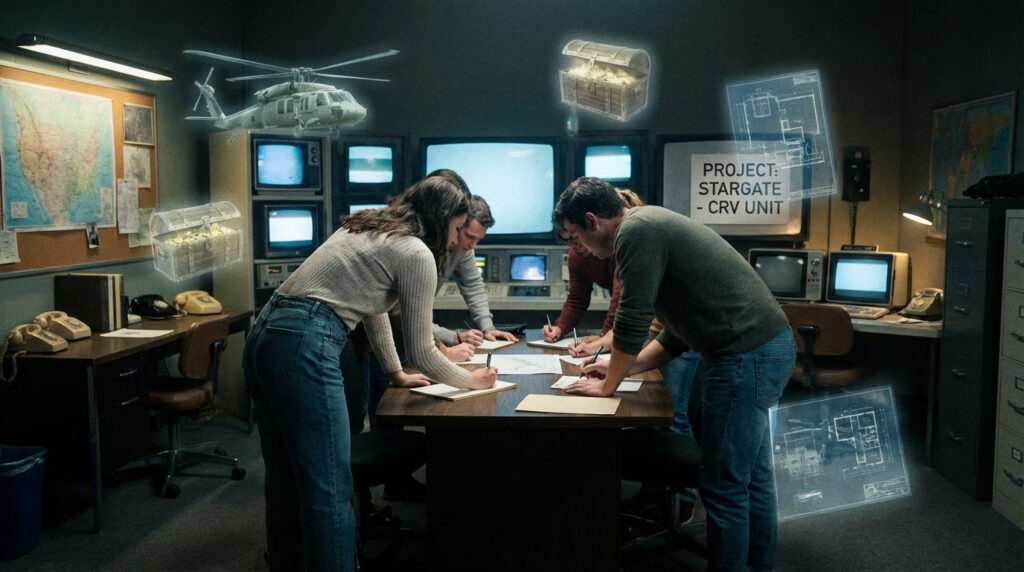
Defining the Faculty
The faculty is the ability to acquire information about spatially or temporally distant subjects without using the usual physical senses. Practitioners work to turn spontaneous impressions into standardized reports.
Modern protocols aim to separate freeform impressions from disciplined reporting. This makes data easier to evaluate and compare across sessions.
The Nature of ESP
J.B. Rhine coined the term Extra Sensory Perception in 1934 to describe this anomalous cognition. Ancient texts also touch on similar abilities, such as Patanjali’s Yoga Sutras describing knowledge of distant objects.
Understanding both modern research and historic references helps clarify how the mind may access non-local information.
| Aspect | Historical Note | Practical Effect |
|---|---|---|
| Definition | Classified under ESP by Rhine (1934) | Provides a working label for study |
| Ancient Source | Patanjali’s ashta-siddhis (c. 400 B.C.) | Shows long-standing cultural recognition |
| Modern Method | Standardized protocols and scoring | Improves repeatability and quality |
For related concepts on clairvoyant abilities, see clairvoyant abilities.
Historical Origins of the Stargate Project
During the Cold War, Washington funded a focused program to test whether trained observers could supply actionable intelligence beyond usual spycraft.
Physicists Hal Puthoff and Russell Targ led the first work at Stanford Research International in Menlo Park. Their methods aimed to bring rigorous procedures to unusual perception studies.
In 1988 the program moved to Science Applications International Corporation under Edwin May. That transfer marked a shift to longer-term operational research and larger-scale sessions.
The CIA declassified program files in 1995. After that, participants and researchers published accounts describing both successes and limits. These records show the program’s scale, methods, and documented results over the years.
- Cold War funding and mission focus
- SRI research led by Puthoff and Targ
- 1988 transition to SAIC under Edwin May
- 1995 declassification and public records
| Period | Lead Organization | Primary Goal | Notable Outcome |
|---|---|---|---|
| 1970s–1980s | SRI (Menlo Park) | Establish methods and protocols | Repeatable procedures and published studies |
| 1988–1995 | SAIC | Operational testing and long-term research | Expanded sessions and program records |
| Post-1995 | Public archives | Historical review and critique | Declassified files and participant reports |
Understanding the Coordinate Remote Viewing Protocol
Coordinate protocols begin by giving a viewer only a set of geographic coordinates to start a session. This removes visual cues and reduces guesswork.
The aim is simple: collect raw sensory impressions first. Practitioners record textures, shapes, and basic spatial cues before naming or labeling what they perceive.
Objectivity matters: using latitude and longitude helps minimize conscious expectation. That approach keeps data cleaner and easier to verify across multiple sessions.

A landmark effort at Princeton’s Engineering Anomalies Research Programme added rigor. Researchers developed a standardized 30-point questionnaire to score accuracy. This method turned impressions into measurable results.
- Coordinates bypass prior knowledge and local cues.
- Early sensory logging preserves the integrity of responses.
- Quantified scoring produces comparable data and results.
| Protocol Element | Purpose | Outcome |
|---|---|---|
| Latitude/Longitude | Remove contextual hints | Cleaner information collection |
| Raw sensory logs | Capture unfiltered impressions | Higher-quality data for scoring |
| 30-point questionnaire | Standardize accuracy metrics | Repeatable, comparable results |
The Role of Consciousness in Remote Perception
Many practitioners report that consciousness acts less like a flashlight and more like an antenna when accessing distant impressions. This view suggests human awareness can be non-local and pull in meaningful cues across space and time.
In practice, sessions feel like a state of heightened awareness. People describe clarity, reduced inner chatter, and an ability to notice textures, shapes, and feelings that match the target. This quality helps convert impressions into usable information.

- Non-local awareness: consciousness can access distant data without ordinary senses.
- Receptive state: viewing becomes a filter that reduces noise and preserves raw sensory material.
- Scientific interest: researchers like Russell Targ cite session successes as support for interconnected cognition.
Developing this skill requires steady focus, often through meditation and disciplined practice. Consistent intent aligns the mind with impressions and improves accuracy. When done well, remote viewing yields clearer perception and more reliable information for evaluation.
Defining Remote Viewing Stage Five Abstract Target Analysis
Here, the work shifts from noting shapes and textures to discerning function, purpose, and symbolic meaning.
This phase requires the practitioner to synthesize raw sensory data into coherent conceptual reports. Instead of describing an object’s color or size, the viewer interprets themes, intent, and relationships.
That transition demands strict mental discipline. Practitioners must avoid analytical overlay, where personal guesswork replaces true impressions.

Success depends on separating internal chatter from genuine information. Use simple checks: pause, note sensations, and relist only what repeats across sessions.
- Gather sensory data first, then form conceptual meaning.
- Use short reporting cycles to reduce bias.
- Compare responses across sessions to confirm quality and results.
Mastering this level opens the ability to handle complex intelligence tasks that no longer fit neat physical description. With practice, the process yields clearer responses and more valuable results for research and operational use.
Preparing for Advanced Analytical Sessions
Good preparation sets the stage for deeper work. A steady room and a short ritual help reduce distractions. This makes complex interpretation easier and improves the chance of clear results.
Setting the Intention
Begin by stating a concise aim aloud or in writing. Note the date, time, and your initial mental state. This simple record helps track changes in performance over multiple sessions.
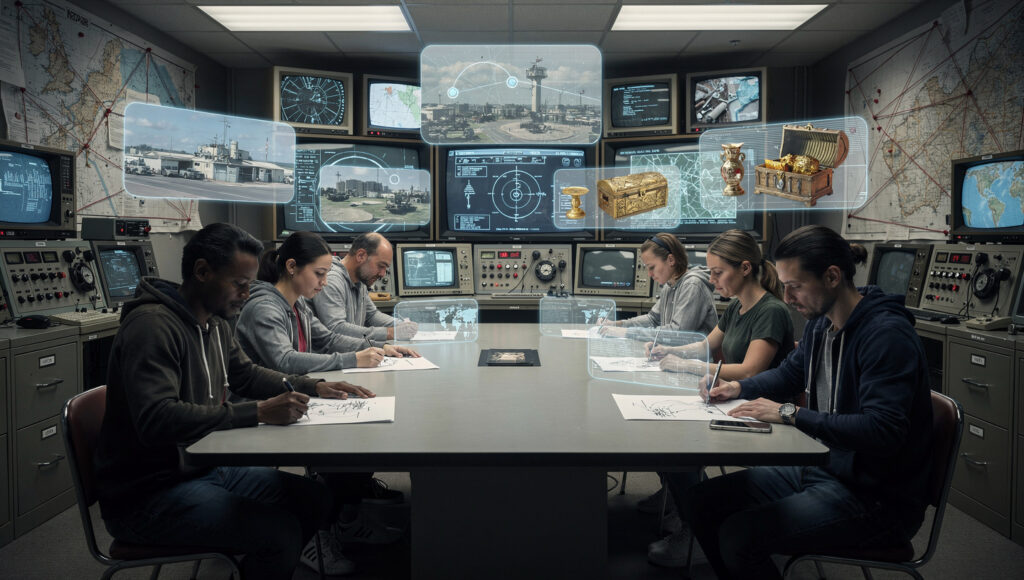
Use breathing or a two-minute meditation to calm mind and body. Keep tools ready: pen, notebook, and a timer. A quiet area and consistent order support better information flow.
- Clear the space of interruptions and noise.
- Set a brief, specific intention before you begin.
- Document time, mood, and first impressions.
- Use short cycles to reduce bias and keep responses fresh.
| Preparation Element | Purpose | Expected Result |
|---|---|---|
| Quiet space | Minimize distractions | Higher quality responses |
| Intention statement | Align focus | Clearer information and faster access |
| Documentation | Track progress over time | Better assessment of methods and results |
When practiced, these steps raise the value of each session and help maintain objectivity. For nearby services that complement mental training, see tarot card reading near me.
The Importance of Sensory Data in Early Stages
Early session notes often begin with simple sensations—color patches, temperature, and texture. These raw impressions form the essential data that later supports higher-level interpretation. Capture them quickly and without judgment.
Record before you name. Writing down basic clues prevents your mind from leaping to labels that can distort incoming information. This preserves clarity and reduces analytical overlay.
Consistent, accurate sensory responses across sessions are a good sign of skill development. They predict how well a practitioner will handle complex processes later.

| Element | Why It Matters | Practical Tip |
|---|---|---|
| Color/Light | Anchors visual perception | Note hue and contrast first |
| Temperature/Texture | Links to physical context | Use single-word descriptors |
| Emotional Tone | Hints at function or intent | Log brief feelings without story |
- Start each session with a short list of sensory items.
- Compare responses across time to check quality.
- Use these methods to build reliable data for later results and research.
Transitioning from Concrete to Abstract Targets
Moving from plain physical description to meaning asks practitioners to hold impressions and ask what those parts do.
This shift changes the process. You must still collect clear sensory data, but then expand into function, intent, and relationships.

Identifying Structural Elements
Start by mapping layout, size, and relative placement of objects. These structural clues give context for later interpretation.
Note parts that repeat across sessions. Repeated responses improve the quality of data and the value of your final report.
Recognizing Symbolic Impressions
Seats, signs, or repeated motifs often signal purpose. Treat symbols as functional hints rather than literal labels.
Remain neutral. Avoid inserting personal stories. Keep questions simple and test interpretations across multiple sessions.
“Keep precision from earlier methods while expanding into meaning; consistency yields reliable results.”
- Collect raw sensory data first, then probe intent.
- Use short cycles to limit bias and preserve accuracy.
- Compare responses over time to validate interpretations.
Managing Mental Noise and Analytical Overlay
The biggest obstacle in precise perception is the mind’s habit of narrating impressions before they are fully received. In remote viewing practice, this mental chatter leads to early labels that corrupt raw data.
Analytical overlay happens when the brain forces past experience onto new input. That creates biased information and weakens results.
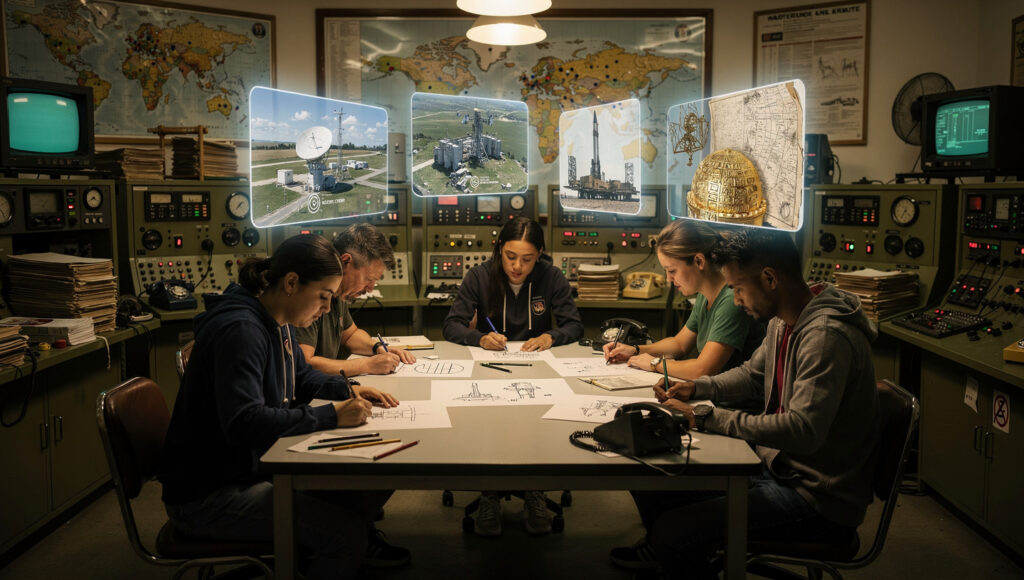
Simple discipline reduces these interruptions. Practitioners are taught to notice intrusive thoughts, note them, and then set them aside. This keeps viewing reports closer to pure sensation.
- Pause and record sensations before naming objects or intent.
- Use short cycles to limit storytelling and protect data quality.
- Compare repeated responses across sessions to spot overlay.
“Learn to treat interpretations as optional notes, not facts.”
Programs from past research years emphasized this training. With steady practice, the group gains the ability to hold passive observation. That habit improves the method and lifts overall performance in later analysis.
Techniques for Refining Abstract Perception
Refining how the mind sorts symbols and meaning starts with strict habits that limit guesswork. Build a routine that separates raw impressions from interpretation. This reduces error and improves the quality of information you log.

Develop simple checks: pause after initial impressions, note single-word descriptors, then wait before forming a conclusion. Short cycles keep responses fresh and cut down on story-making.
Developing Mental Discipline
Use systematic feedback loops. After a session, compare notes to the actual outcome. Mark repeated errors and track which methods correct them over time.
- Practice regular sessions to calibrate your internal sensor.
- Keep a session log with date, conditions, and concise results.
- Focus on data quality rather than speed to raise overall performance.
Patience matters. Improvement happens across years and many sessions. Expect gradual gains as the group refines methods and learns patterns in responses.
“Discipline trains the mind to notice what is consistent and discard what is imagined.”
| Technique | Purpose | Expected Result |
|---|---|---|
| Short reporting cycles | Limit narrative overlay | Cleaner, repeatable data |
| Feedback comparison | Identify error patterns | Improved accuracy over time |
| Regular practice schedule | Calibrate perception | Better consistency across sessions |
Evaluating Results and Data Quality
Clear scoring rules let teams compare a session’s notes to the actual site and judge how well the impressions match.
Systematic comparison starts with rank-order scoring. Reviewers list reported elements and then rate how closely each matches verified features. This converts notes into numbers and helps spot patterns over time.
Data quality is usually measured as the percentage of correct elements. Programs that tracked metrics treated percent correct as central to credibility.

- Use blind scoring to reduce bias and keep the process fair.
- Compare multiple responses from the same person and from a group to gauge consistency.
- Document conditions, time, and method for each session to improve reproducibility.
Historical examples show strength and nuance. Joe McMoneagle reached a noted 77% accuracy and 78% reliability in a 1987 trial at Lawrence Livermore. Pat Price described historical features at Rinconada Park, including 1913 water tanks, illustrating retro-cognition as part of result evaluation.
| Metric | What it shows | Practical use |
|---|---|---|
| Percent correct | Overall data quality | Benchmark performance and compare methods |
| Reliability | Repeatable responses | Assess long-term performance |
| Rank ordering | Objective scoring | Reduce subjective dispute over results |
Establishing rigorous standards keeps the group’s work useful for research and for applied information tasks. For broader context on clairvoyant abilities and credibility, see clairvoyant abilities, real or fake.
Scientific Perspectives on Anomalous Cognition
Debate endures because lab results sometimes show patterns that exceed simple chance expectations.
Some researchers cite controlled trials from SRI and later programs as evidence. Those studies used strict protocols to limit conventional cues and produced quantified data that supporters find compelling.
At the same time, mainstream science often labels remote viewing as pseudoscience. Critics stress that many results fail independent replication under different conditions and methods.

- Proponents: point to published numbers and repeatable outcomes in specific labs.
- Skeptics: highlight replication problems and small sample sizes across years.
- Consensus need: better experimental design and transparent data sharing.
“The ongoing debate shows the field needs stronger controls and open protocols.”
| Aspect | Support | Critique |
|---|---|---|
| Experimental methods | SRI protocols reduced sensory leakage | Different labs report uneven results |
| Data and results | Published success rates argued above chance | Replication and sample size concerns remain |
| Future work | Call for larger, preregistered trials | Need for cross-lab standards and open data |
Practical Applications in Intelligence Gathering
Intelligence units have long tested unconventional methods to get answers when standard tools fall short. Agencies deployed trained observers to supplement photographic and signal data in cases where access was limited.

Notable examples include a 1974 session that pinpointed a Soviet radio listening post in the Urals using only geographic coordinates.
In 1979, Joe McMoneagle’s reports predicted the construction and launch of a large Soviet submarine. That case remains a cited example of operational success in the field.
“These efforts show how complementary perception methods can reveal actionable information that other sources miss.”
Agencies often combine multiple streams—satellite imagery, human reports, and specialized sessions—to build a fuller picture. Integrating different kinds of data improves confidence in final results.
- Use specialized reports to raise leads for follow-up.
- Cross-check session responses with imagery and signals for verification.
- Prioritize repeatable methods and clear documentation to track performance over time.
| Use Case | Example | Practical Benefit |
|---|---|---|
| Hidden facilities | 1974 Urals listening post | Directed surveillance and resource allocation |
| Strategic construction | 1979 submarine prediction | Early warning and operational planning |
| Intelligence fusion | Combined reports and imagery | Greater accuracy in threat assessment |
For more background on official programs and methods, see remote viewing.
Ethical Considerations in Psychic Research
Ethical rules must guide any use of psychic skill when real people and private lives could be affected. Researchers and agencies must balance curiosity with respect for rights.

Privacy risk is the primary concern. Using perception methods for intelligence or surveillance can expose personal facts without consent.
In practice, safeguards matter: informed consent, mental-health checks, and clear limits on how data are stored and used.
Teams should document each session and protect all recorded data. Independent review helps ensure that results are not misapplied.
- Require written consent and clear participant briefing.
- Monitor wellbeing and offer debriefing after sessions.
- Limit operational use to oversight-approved cases.
“Responsible research treats participants as people first and sources of information second.”
Past military examples show why strict rules are needed. Transparency and accountability will help the field earn broader trust and keep responses focused on legitimate, ethical goals.
Future Directions for Consciousness Studies
Scientists are designing studies to measure how human response patterns change when groups share intention and method.
Long-term data collection will be central. Teams plan multi-year projects that pool concise session logs and objective measures. This improves the signal-to-noise ratio and helps spot trends in response over the years.
Quantum ideas now inform hypothesis building. Some researchers test whether quantum models can explain subtle information exchange between minds. Early work blends physical theory with controlled experiments.

New tools promise better verification. Wearable sensors, rigorous scoring, and blind protocols can turn subjective notes into measurable information. That shift may yield clearer results and reduce debate.
Practical process improvements also matter. Standardized methods let groups compare outcomes and refine techniques. Over time, pooled data will guide which approaches show the most reliable response patterns.
For related research and examples of predictive work, see clairvoyant predictions.
Conclusion
Structured practice and historical records together show how disciplined perception can yield useful results. This method moves practitioners from simple sensation to deeper meaning with careful checks and steady habit.
The Stargate-era archives supply valuable data that shaped scoring, protocols, and training. Those records help teams test methods and refine what works in repeatable sessions.
Mastering the shift from concrete clues to conceptual interpretation opens richer insight into complex subjects. While debate continues, consistent results from experienced practitioners suggest the mind may hold untapped ability.
In the end, disciplined practice offers both stronger findings and personal growth. Use clear logs, blind scoring, and steady routine to keep data honest and results useful.