

Coordinate Remote Viewing (CRV) invites curious people into a clear method for perceiving distant targets without using physical senses. The term gained public attention after it was named in 1970 and later featured on major media platforms.
The Monroe Institute offers structured programs that teach participants their consciousness extends beyond the body. Many people report that guided training reveals a natural capacity for extrasensory perception and intuition.
Joe McMoneagle stands out as a leading professional who helped shape research and real-world use of these techniques. By following a simple protocol and keeping sessions brief, a viewer can develop steady accuracy in identifying an object or location.
This introduction lays out what you need: core knowledge, basic protocol, and a friendly way to begin practice. The next parts explain steps, useful programs, and ways to measure results.
Key Takeaways
- CRV was named in 1970 and later reached mainstream audiences.
- Structured programs help people expand awareness beyond the body.
- Joe McMoneagle contributed major research and practical expertise.
- Following a clear protocol improves accuracy with targets and locations.
- This guide gives the basic knowledge and steps for beginners.
Understanding the Basics of Remote Viewing
This method trains the mind to note raw impressions—shapes, textures, temperature—before the intellect steps in.
Remote viewing is a structured form of extrasensory perception that lets a person describe a distant target using only inner awareness. It differs from spontaneous clairvoyance because a clear protocol guides each session. That protocol helps reduce bias and makes gathered information testable.
Researchers at the Monroe Institute stress that many people possess this ability and can refine it with steady, disciplined work. Quieting the mind is central. Forward momentum comes from noticing simple sensory data first, then building details.
- Focus on raw impressions rather than immediate meaning.
- Keep sessions short so the mind stays clear and alert.
- Record all impressions so later comparison yields useful information.
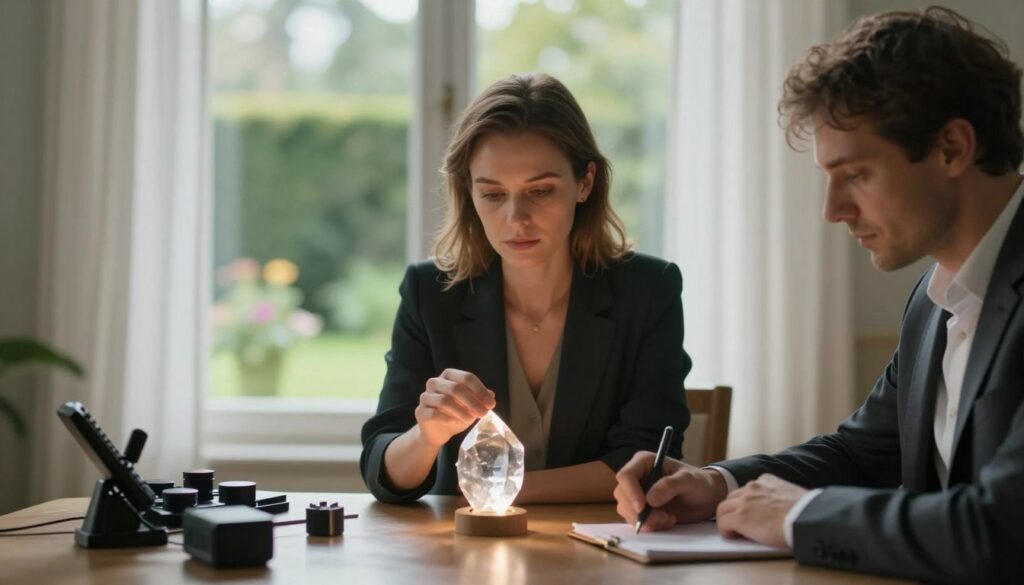
Skeptics call these skills psychic abilities, yet practitioners keep testing limits in labs and spiritual settings. With patience, people often expand their consciousness and separate genuine perceptions from imagination.
The History and Origins of Remote Perception
Early laboratory work moved this subject from anecdote into measurable tests.
In the early 1970s, researchers Russell Targ and Harold Puthoff began controlled experiments at the Stanford Research Institute. Their tests aimed to capture raw impressions and repeatable signals. The effort drew attention because some results reached statistical significance and invited further review.
The Stanford Research Institute
The stanford research institute became the hub for structured methodology. Protocols kept participants free of cues so collected information would be cleaner for analysis. Students and scientists debated methods while data accumulated.
The Stargate Project
During the Cold War, the stargate project explored whether remote viewers could supply intelligence. The program was later declassified and remains controversial.
- The stanford research institute launched the first controlled studies in 1972.
- Government interest funded decades of testing under the stargate project.
- Critics cite weak controls and vague results, while students of the topic note notable data points.
Today mainstream science treats this field skeptically. Still, the history shows how people pursued perception, consciousness, and the limits of human abilities over time.
How to Practice Coordinate Remote Viewing at Home
Begin each session by arranging five to ten varied images and have an assistant place one sealed envelope aside for blind comparison.
Create a quiet, uncluttered space where your body relaxes and distractions fade. Short sessions keep the mind fresh and reduce mental analysis.
When you start, record raw sensory notes: colors, shapes, textures, temperature, and any movement impressions. Do not try to name the target right away. Let simple data come first, then add sketches and single-word impressions.
After the description, open the envelope and compare notes with the actual image. Honest feedback helps you refine accuracy and build trust in subtle impressions.
Consistency is the key. Use a structured remote viewing program if you want stepwise guidance. Over time, regular work can help a viewer develop perception that feels less tied to physical senses and more linked to expanded consciousness.
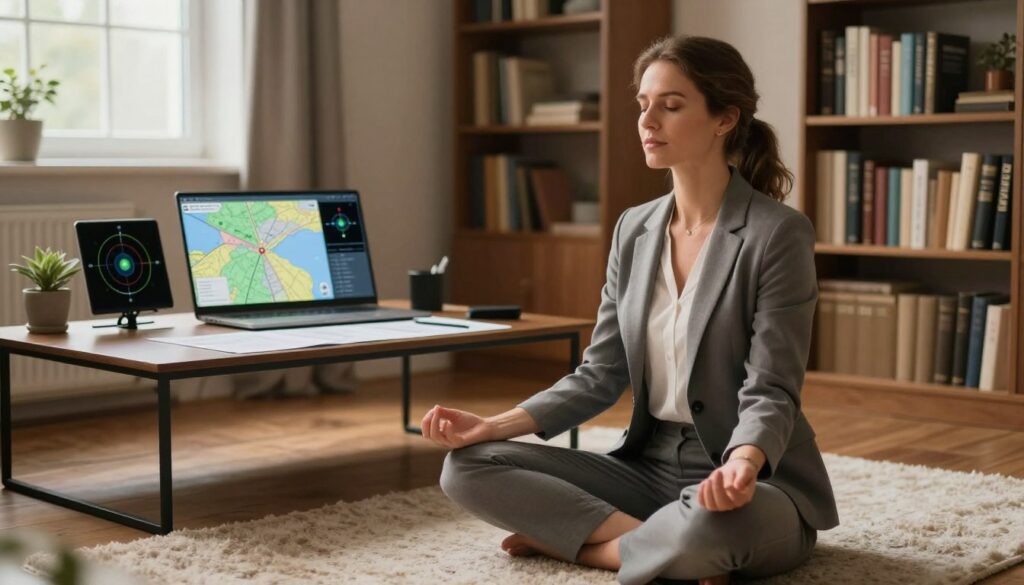
Essential Tools for Your First Session
Begin by assembling a few reliable items that protect the session’s integrity.
Selecting Your Targets
Choose neutral cues kept double-blind. Use sealed envelopes so no one knows the contents. This preserves unbiased results and helps the viewer trust raw impressions.
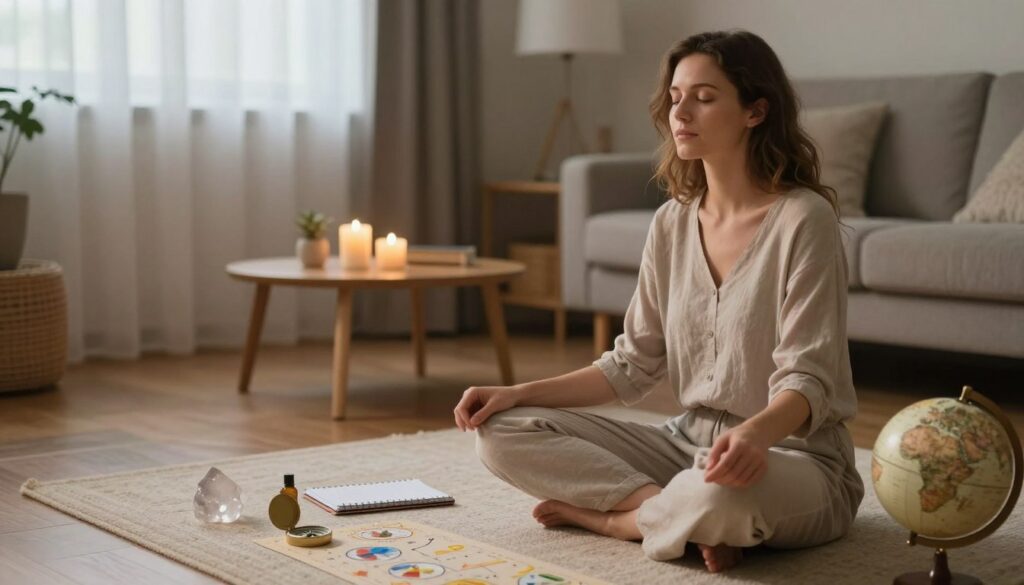
Printed images from magazines work well. Pick landscapes, objects, and people photos to vary the type of information you might sense. A mixed set trains perception across shapes, textures, and environments.
“A simple notebook and pen are the most powerful tools for recording honest data.”
- Select varied images so each target offers different cues.
- Use a quiet, distraction-free room so consciousness stays focused.
- Record raw sensory notes in a notebook to track progress over time.
- Keep targets sealed in envelopes for a true double-blind protocol.
- Consistency of tools helps people maintain a regular schedule and sharpen abilities.
Goal: Bypass reliance on physical senses and gather clear impressions about a location or object. These tools give structure and honest feedback during early sessions.
Preparing Your Mind and Environment
Small rituals before a session signal the body and consciousness that it is time for focused awareness. Choose a quiet room and remove obvious distractions. Writing the date, time, and any stray thoughts helps clear your desk and your mind.

Close your eyes and take several deep breaths. This reduces mental noise and sharpens attention on the target. A relaxed body improves the flow of subtle impressions and supports better perception.
Set a clear intention before you begin. State the aim aloud or in a short note. This anchors your consciousness and reduces the urge to analyze incoming information.
“A steady routine trains the mind to enter a receptive state more quickly and reliably.”
- Choose a calm, consistent time so the mind associates that moment with focused awareness.
- Use brief meditation to calm thought and strengthen intuition.
- Record distractions and impressions briefly; later review helps refine accuracy.
| Focus Area | Simple Action | Benefit |
|---|---|---|
| Breath | Three slow breaths | Calms nervous system |
| Intention | One-line aim | Reduces wandering thought |
| Routine | Same time daily | Signals readiness |
For deeper reading on building natural psychic skills, see psychic superpowers. Small, regular steps help people expand perception and strengthen abilities over time.
The Role of the Monitor and Analyst
The monitor’s role centers on process, not content, ensuring unbiased conditions for the viewer.
Guiding the viewer
A monitor prompts timing, records cues, and keeps the person focused on sensations rather than guesses. The monitor must never know the target; that preserves clarity in the data gathered.
The importance of double-blind protocols
A true double-blind protocol means no one involved — the monitor, analyst, or assistant — has prior knowledge of the target. This rule removes subtle influence and raises the trustworthiness of the results.
“Good process protects perception; it gives the viewer space to notice raw information without suggestion.”
- The monitor guides pacing and brief prompts while staying blind to the target.
- Many students rotate through viewer, monitor, and analyst roles to grasp each perspective.
- Analysis compares notes, finds patterns, and matches impressions against the actual target.
| Role | Main Task | Benefit |
|---|---|---|
| Viewer | Record raw impressions and sketches | Captures first-line data |
| Monitor | Manage timing and prompts, remain blind | Protects data integrity |
| Analyst | Compare data to target, find matches | Measures accuracy and informs training |

Monroe Institute students and professionals like Joe McMoneagle stress that strict protocol and clear analysis make the information useful for research. For structured beginner guidance, see psychic development techniques.
Executing Your First Viewing Session
For a first session, sit quietly and let simple impressions—shapes, textures, temperatures—come forward.
Begin by settling your breath, then close eyes and note every sensation without naming the object. Record short phrases, single words, and quick sketches. Treat each item as valid information, even if it feels random.
When the time ends, open your notes and compare them with the sealed target. Honest comparison helps you learn which impressions match the real location or object.
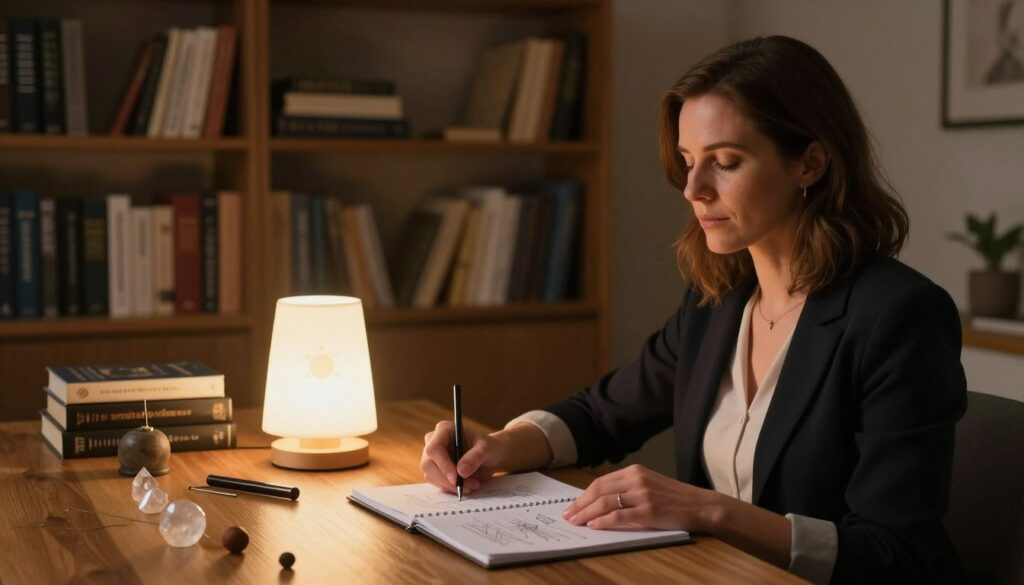
Expect imperfect results. Even an experienced viewer has vague sessions. The aim is mental discipline, not immediate accuracy. Over time, patterns emerge and your skill improves.
“Trust early impressions and record them without judgment.”
- Close eyes, capture raw sensory data.
- Treat every impression as useful information.
- Compare notes to the actual target and learn from results.
For related guidance on focused intention or energy work, see send healing energy.
Analyzing Results and Improving Accuracy
Comparing sketches and notes against the actual target uncovers useful trends.
Start each analysis by reviewing your notes and drawings line by line. Mark impressions that matched the target and those that missed. This honest review builds clear feedback for the next session.
Refining sensory impressions means noticing small cues. Look for mentions of temperature, movement, or texture that you might have missed earlier. These subtle details often become reliable anchors for later perception.

Refining Your Sensory Impressions
Set aside a short block of time after every remote viewing session for quiet analysis. Close eyes briefly, replay impressions, then record any new insights. Over weeks, people see patterns emerge and intuition sharpens.
“Honest analysis of hits and misses trains the mind to favor accuracy over guesswork.”
- Compare notes with the target and note exact matches.
- Separate thoughts from received information during your review.
- Track progress so accuracy improves with regular work.
For extra context on related abilities, see clairvoyant abilities meaning. Small, steady analysis makes your perception more reliable and repeatable over time.
Common Myths Surrounding Remote Viewing
Many people assume remote viewing is only for naturally gifted psychics. In truth, structured training and a strict protocol help most learners develop useful skills. Research shows steady work yields clearer perception and better results.
Another worry is that sessions are dangerous. They are no more risky than meditation or focused visualization when a viewer keeps sessions short and clear.
It is also a myth that a person can access unlimited information at any time. Sessions often return partial or symbolic fragments that need careful analysis.

“Careful method, honest review, and realistic expectations improve accuracy over time.”
- Remote viewing is learnable; it is not reserved for a few.
- Results are often symbolic and need comparison with the actual target.
- Science debates mechanisms, yet decades of research record useful data for some practitioners.
- No viewer has perfect accuracy; human error and interpretation matter.
For a related exercise on focused intention, see move things with your mind.
Spiritual Benefits of Consistent Practice
Many students report that steady sessions often spark a deep inner shift, turning vague beliefs into clear knowledge.
Regular work creates a stronger bond with the universe and helps people see they are more than a physical body.
Over time, this process deepens consciousness and brings calm that carries into daily life. Short sessions can improve balance and reduce stress, giving useful information for decision making.

Developing the ability to remote view often sharpens intuition and raises confidence when choosing a path or assessing a target.
“Discipline and honest review turn scattered impressions into clear information.”
- Many people discover deeper knowledge of their own consciousness and a sense of connection.
- Choosing to develop remote viewing opens a way to explore natural ability and purpose.
- Consistent sessions build patience, resilience, and practical skill over time.
For structured guidance and extra resources, see psychic development resources.
Conclusion
Following a reliable structure helps learners turn scattered impressions into repeatable information. Keep sessions short and honest. Small steps build skill faster than long, irregular attempts.
Consistency, patience, and an open mind are your most useful tools. Use clear records and brief analysis after each session. Over weeks, patterns emerge and confidence grows.
Whether you treat this as a scientific pursuit or a spiritual exploration, the method offers a fresh way to connect with perception. For guided courses and support, see psychic development online.
Start one honest session and track the results. With steady work and clear feedback, many people discover surprising potential within their own minds.