

This guide gives a practical roadmap for learning gentle, ethical methods that support well-being in the United States. You will find clear steps on what energy healing is, what evidence says today, and how to stay safe and professional.
Expect simple, usable advice. The article previews core skills, beginner self-practice, choosing a modality, training options, costs, certification notes, and tips for working with others.
This material frames complementary care as a supportive practice that does not replace medical treatment for serious conditions. Experiences vary by person and by technique, and many people use these methods for relaxation and stress support.
Who this is for: curious beginners, wellness professionals such as massage and bodywork practitioners, and anyone exploring personal stress support. Terms used here include energy field, grounding, scanning, and intention to keep things clear from the start.
Key Takeaways
- A practical roadmap for safe, ethical practice in the United States.
- An overview of evidence, safety, and core skills.
- Beginner self-practice and how to pick a modality.
- Clarification that this is complementary care, not medical treatment.
- Useful terms and who will benefit from this guide.
What Energy Healing Is and Why People Learn It
Many people describe this work as a practical way to calm the nervous system and restore inner balance. In plain language, it involves working with the body’s subtle field to support balance in mind and spirit. It does not promise medical cures but aims for a calmer internal state and clearer awareness.

Why people are drawn to it
Modern life brings constant stress. Folks seek gentle tools for relaxation, better sleep, and emotional steadiness.
Common goals and typical uses
Many pursue this work for anxiety support, chronic pain relief, or to ease side effects of cancer care, alongside conventional medicine. Typical goals are simple: less reactivity, more rest, and a sense of peace.
Traditions and personal fit
The word energy appears in many traditions — from qi and prana to contemporary clinical language — and meanings vary. Some people like hands-on approaches. Others prefer non-touch or movement-based practices. A short session after a hard week often helps someone downshift and feel more connected.
What to Expect From Energy Medicine Today
Evidence is uneven but growing. Clinical trials suggest acupuncture and Reiki may offer measurable benefits for pain, stress, and quality of life. Many other approaches lack high-quality studies, so clear success rates are not yet available.

What research suggests about acupuncture and Reiki
Acupuncture has a relatively larger body of clinical research showing modest benefits for some conditions. Reiki has several trials pointing to relaxation and improved well-being, though study sizes and methods vary.
Why results can vary by practitioner, client, and method
Outcomes depend on training, session structure, client readiness, and the specific methods used. A skilled practitioner may get different results than an inexperienced one. Client expectations and baseline health also shape effects.
Using this work alongside conventional medicine
Treat these approaches as complementary care that can support coping and comfort while following standard medical advice. Do not replace prescribed treatments.
- Be honest with your provider: share plans if you manage chronic illness or take medications.
- Track outcomes: log sleep, mood, stress, and pain to judge benefit objectively.
- Set realistic goals: many people report relaxation; some notice subtle or no change.
Safety, Boundaries, and Ethics for New Practitioners
Safe practice depends on training, clear communication, and knowing when an issue is out of scope. Start by setting a clear safety baseline: state your session limits, obtain informed consent, and keep boundaries professional.

Knowing when to refer out
If a client reports suicidal thoughts, unmanaged psychosis, severe trauma responses, undiagnosed chest pain, or other acute symptoms, refer them to licensed care immediately. A practitioner should not treat these as isolated cases.
Consent, communication, and realistic outcomes
Explain sessions plainly: what you will do, whether touch is involved, what clients may stop at any time, and what results are typical. Avoid cure claims for serious conditions and frame work as supportive care.
Choosing teachers and maintaining standards
- Pick instructors with transparent curricula, ethics policies, and supervised practice.
- Seek clear training hours and an opportunity to gain hands-on experience.
- Join a community of reputable healers for peer review and feedback.
“Ongoing education and sound judgment about when to treat versus refer are central to responsible practice.”
How to Learn Energy Healing: Your Step-by-Step Roadmap
Start by tuning into simple bodily signals; that attention becomes your compass. Spend five minutes daily noticing warmth, tingling, heaviness, or ease. Treat these sensations as neutral data rather than fixed meanings.
Week plan:
- Awareness: track body signals each morning.
- Regulation: add brief centering and grounding before practice.
- Technique: pick one method and study basics.
- Repetition: practice short, daily sessions.
- Reflection: log outcomes and adjust.
Centering is the first move. Use steady breath, feet rooted, and a single point of focus. This keeps sessions calm and clear, not rushed or reactive.
Choose depth over variety at first. Master a single set — Reiki basics, a short qigong sequence, or EFT tapping — before expanding. This builds confidence and clearer effects.

Simple practice log: date | duration | technique | before rating | after rating | notes. Short daily work beats rare long sessions. Use attention + breath + intention, and respect limits.
For guided resources, see a concise overview at psychic healing basics.
Core Skills Behind Most Energy Healing Techniques
A calm, repeatable skill set underpins most methods and helps new practitioners practice with clarity.
Breath, attention, intention: Use slow, steady breathing to shift your nervous system into a focused state. Counted inhales and longer exhales reduce tension. Direct attention and set a clear, compassionate intention before starting a session.

Scanning and noticing
Scanning means gently observing differences: warmth, coolness, tight shoulders, or an emotional change. Note what you sense without labeling it a diagnosis. Track these impressions in a short log so you can measure shifts across sessions.
Blockages as a working model
Some systems describe “blockages” as places where movement feels stuck. Treat this idea as a tool for practice rather than a medical claim. Check for changes in sensation, range, or mood after each session.
Setting space and self-protection
- Create a quiet, comfortable place with soft lighting and minimal noise.
- Use a clear welcome and closing ritual so clients know what to expect.
- Ground before and after, wash hands, and use a simple visualization to protect your own field.
Ethical note: These skills support relaxation and well-being and are not a substitute for medical assessment. For more on practical techniques, see energy manipulation basics.
Beginner-Friendly Self-Practice to Build Confidence
A short, repeatable ritual can anchor your nervous system and make practice feel accessible. Start with five to ten minutes each morning or evening. Small habits build steady results and teach your system what calm feels like.

A simple daily grounding routine
Sit with feet flat on the floor and notice contact points. Breathe slowly and lengthen each exhale.
Follow with a 30–60 second body scan. Name areas of tension, then soften them with gentle breaths. This creates a clear sense of safety and presence.
Short breathwork sessions
Try paced breathing at 4–6 breaths per minute for 3–5 minutes. Count an inhale and a longer exhale. This pattern reliably shifts the nervous system toward calm.
Basic energy hygiene for daily reset
Close your day with three minutes of clearing: imagine setting work concerns down, take three deep breaths, and list one small win. These practices help separate stress from personal life and restore a sense of peace.
- Quick routine: feet-to-floor, 1-minute scan, 3–5 minutes paced breath.
- Watch for small gains: better sleep, calmer reactions, easier focus.
- Repetition builds confidence and personal power.
Note: These tools support relaxation and improved life quality. If anxiety becomes overwhelming, consult a licensed clinician while using these supportive practices.
Explore Popular Energy Healing Modalities and Choose Your Fit
A clear menu of modalities helps you pick a practice that fits your goals and comfort.

Reiki
Reiki is a relaxation-forward form that uses hands on or hands above the body. Sessions feel calm and gentle. Beginners often find it approachable and reassuring.
Qigong
Qigong is a movement-and-breath system. Short daily routines train flow and bodily awareness. This type suits learners who prefer an active, body-based practice.
Pranic Healing and Therapeutic Touch
Both are mostly non-touch. Practitioners scan the field and clear perceived blockages. Sessions may feel subtle, sensing shifts in warmth or ease.
Polarity Therapy and EFT Tapping
Polarity blends gentle touch, movement, and lifestyle guidance for gradual balance. EFT uses acupressure-point tapping plus reframing for stress relief between sessions.
Acupuncture and Reflexology
These are point-based methods often delivered by licensed professionals in the U.S. They use needles or pressure on hands and feet to influence pathways.
Tip: Choose based on goals—relaxation, self-regulation, or pain support—comfort with touch, and preference for a structured course or an intuitive practice.
Learn Through Classes, Retreats, or Online Training
Good programs combine history, guided practice, and a firm emphasis on client safety. A solid beginner curriculum covers foundational theory, perception of the subtle field, and repeated technique practice with clear steps.
What to look for: structured practice hours, safety and ethics content, supervised feedback, and measurable learning outcomes rather than only inspirational talks.
Common curriculum items:
- History and theory of the practice.
- Exercises for sensing the field and body awareness.
- Step-by-step technique training and session protocols.
- Ethics, consent, and referral guidelines.
Online classes can fit busy schedules. They often cost less, allow replay of demonstrations, and help build consistent practice rhythms. Notable masterclass-style offerings include work by Jeffrey Allen, Donna Eden (with Dr. David Feinstein), Anodea Judith, and breath instruction from Niraj Naik—use these as starting points and vet claims carefully.
Ask before enrolling: who teaches, are prerequisites required, is supervised practice included, and are ethics rules clear? For many, a blend—weekend retreats for immersion plus weekly online modules for follow-up—gives the best balance of community and steady experience.

Training Timelines and Costs to Plan For
Plan training with realistic blocks: short introductions can spark curiosity, while structured study builds lasting skill.
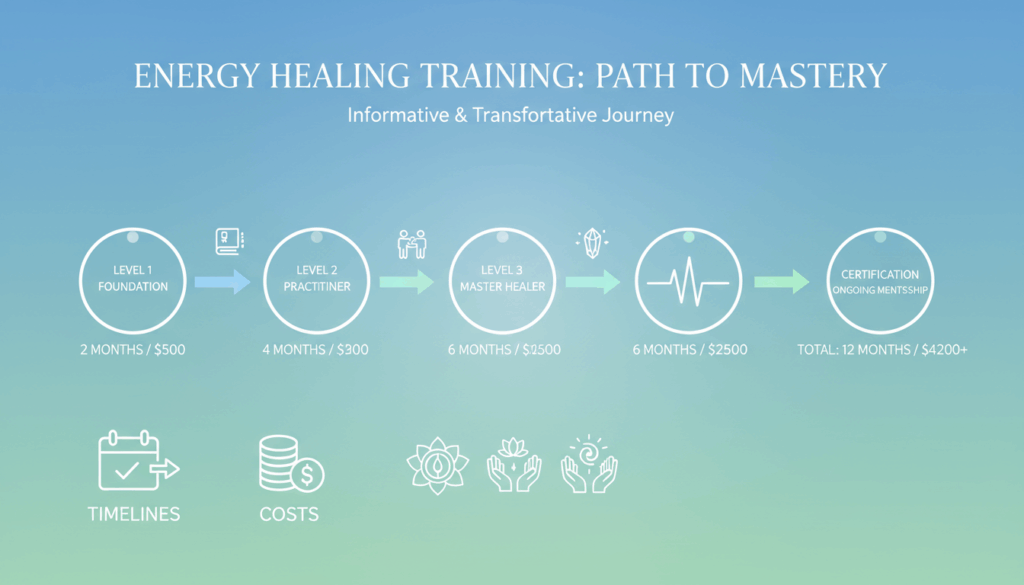
Quick options: weekend workshops give basic technique and immediate practice. They are great for exposure and a low-cost start.
Longer paths and practical hours
More depth comes from multi-month or multi-year programs that include supervision and repeated practice. Reiki basics often fit a weekend, while Master-level study commonly takes a year or longer.
When training is bundled with bodywork or massage programs, expect 400–1,000 formal hours that count toward certification and clinical experience.
Budgeting and hidden costs
- Intro courses: a few hundred dollars.
- Comprehensive programs: roughly $5,000–$15,000, depending on faculty and travel.
- Include extras: supervision, liability insurance, room setup, and continuing education.
Smart sequencing: start small, confirm fit, then commit to deeper study. For an overview of practical course options, see a brief course overview.
Certification, Credentials, and Legal Considerations in the United States
Understanding credential types helps you choose training that fits practice goals and local rules. You’ll see three common categories: a course certificate of completion, professional certification from an organization, and state licensure for regulated professions.
Certificate of completion shows course attendance. Professional certification usually requires documented hours, standards, and an ethics policy. State licensure is government-regulated and applies to massage and clinical trades.

Examples and practical notes
The International Association of Reiki Professionals (IARP) is one example of an association that offers certification and directories; review their requirements carefully before applying. In the U.S., there is no single, universal license specific to energy medicine, so standards vary widely.
If you blend sessions with massage or body work, check your state massage board rules. The National Certification Board for Therapeutic Massage and Bodywork (NCBTMB) commonly expects roughly 500 hours as a benchmark for advanced credentials.
- Use safe marketing language: emphasize relaxation, stress support, and well-being rather than disease claims.
- Keep records: training documents, consent forms, session notes, and referral lists for medical and mental health professionals.
- When choosing training, compare syllabus, supervision, and ethics policies; see relevant program listings like psychic counselor certification programs.
“Clear credentials and careful advertising protect clients and help practitioners build a sustainable practice.”
Practicing With Others and Growing as an Energy Healer
Working with clients and peers is where training turns practical. A clear session structure protects both practitioner and client and helps build reliable results. Keep intake brief, set goals, ask about touch preference, and note any medical or mental health red flags.

Structured session elements
Begin with a 5–10 minute intake: reason for the visit, desired outcome, and consent for touch or non-touch work. State what will happen during the session and offer simple aftercare suggestions.
Sample 45–75 minute flow
Example: grounding (5–10 min), gentle scanning (5–10 min), method application (25–40 min), quiet integration (5–10 min), brief debrief (5 min). End by noting client observations and follow-up plans.
Integrating with massage or acupressure
When combining modalities, keep scopes separate. Explain which part is massage or acupressure and which is energy healing. Avoid medical claims unless licensed and refer out when issues exceed your scope.
Growing confidence and professional habits
Repeat short, focused sessions, swap practice with peers, and seek mentor feedback. Review session notes to refine methods and build experience. Set boundaries: schedule buffers, hydrate, ground after sessions, and protect emotional energy.
- Pricing: many independent healers charge $100+ per hour in the U.S.; offer discounted multi-session packages.
- Professional tips: clean practice place, consistent start/end times, transparent fees, and signed consent forms.
- Keep learning: join local groups, attend supervised workshops, and follow clear ethics as you grow.
For structured beginner workshops and supervised practice options, see an introductory program here — psychic development workshops for beginners.
“Clear intake, honest consent, and steady feedback form the backbone of a sustainable practice.”
Conclusion
Wrap up your practice with small, steady habits that add up over months and years.
Start with awareness and grounding, practice consistently, and pick one modality until you feel stable. This clear path helps build skill and gentle confidence in energy healing without rushing into many methods at once.
Be evidence-aware: this work often supports relaxation and overall health, but results vary. Use these practices as complementary care alongside medical advice and track outcomes for honest insight.
Keep safety front and center: get consent, set boundaries, and refer out when a client’s health needs exceed your scope. As a next step, try a 5-minute grounding routine or start a short practice log today.
Small, steady shifts create lasting balance in life. Stay curious, keep clear notes, and value the connection you build with your own well-being.