

What is scalar energy healing is a phrase readers use when exploring non-drug approaches to better wellness. In plain terms, the method is presented as a way to work with subtle fields and standing waves that supporters say can aid pain relief, clarity, and vitality.
Practitioners often describe a session as gentle and non-invasive. People report support for stress, recovery, and overall health while researchers continue to study outcomes. Expect later sections to explain standing wave language and the idea of a biofield, so technical terms feel familiar.
Realistic expectations matter: this approach is framed as complementary, not a medical replacement. The article will compare these notions with conventional electromagnetic ideas and offer tips for safe, responsible use. For an introductory guide to related modalities, see psychic healing.
Key Takeaways
- Describes a non-invasive approach aimed at supporting vitality and pain relief.
- Uses standing wave and biofield terms that will be defined later.
- Presented as complementary to standard medical care.
- Sessions tend to feel gentle and drug-free.
- Research is evolving; safety and skepticism are important.
What Is Scalar Energy Healing?
This method frames health work as a steady wave that encourages the body’s self-regulation. Practitioners use the standing wave idea to promote calm, balance, and gentle support rather than forcing a specific outcome. Body natural healing focuses on boosting the body’s own systems.

Standing-wave approach to wellness
Supporters describe standing or static waves that do not travel from point A to B. Instead, these patterns act near the body and aim to balance the biofield. This can feel like deep relaxation and improved rest.
Relation to body energy fields
Practitioners link sessions to the body’s natural energy fields and broader body energy fields. The intent is overall balance, not symptom-only fixes. Sessions may be done by a practitioner or via a device.
High-level contrast with electromagnetic waves
At a glance, traditional waves move and carry measurable signals. By contrast, proponents say standing fields behave differently. This framing avoids medical claims and stays focused on supporting balance.
| Feature | Standing/static waves | Electromagnetic waves |
|---|---|---|
| Motion | Static pattern near the body | Travel through space |
| Goal | Support biofield balance | Transmit power or data |
| Delivery | Practitioner or device | Antennas, cables, transmitters |
How Scalar Waves Are Thought to Work With Your Energy Field
A simple way to picture the model is a tuning fork placed near a violin string: a gentle pulse nudges the string back into tune. Practitioners use that image to explain how longitudinal pulses act through tissue, encouraging the body toward a calmer, more regulated state.

Longitudinal vs. transverse waves
Think of sound as compression along a line; that describes longitudinal, compressional waves. By contrast, light and radio waves move sideways to their direction of travel — transverse waves.
Analogy: a slinky pushed end‑to‑end shows compressional motion; a rope flicked up and down shows transverse motion. This helps explain the proposed difference in how each interacts with matter.
Penetration through matter and claimed advantages
Supporters say longitudinal pulses pass through tissues without losing strength. They argue that this allows deeper influence on internal processes and greater potential for systemic support.
Homeostasis, chaos vs. coherence
Homeostasis means the body prefers stable balance and self‑regulation. Practitioners describe disruption as chaotic patterns and wellness as coherent, ordered patterns.
Goal: nudge chaotic rhythms toward coherence so organs and systems regain smoother function and calm.
Distance influence and non‑local claims
Some proponents suggest effects can occur across distance without direct contact. This non‑local framing is controversial and not settled in mainstream science.
People hope for calm, improved balance, and recovery support, but robust proof for long‑range effects remains limited. For a practical primer on related approaches, see psychic energy techniques.
| Feature | Longitudinal (compressional) | Transverse |
|---|---|---|
| Motion | Along direction of travel | Perpendicular to travel |
| Interaction with matter | Claims deep penetration | Often absorbed or scattered |
| Common analogy | Sound / slinky | Light / rope |
The Science Behind Scalar and Where the Concept Comes From
Historical figures in physics and experimental electricity often surface when tracing the roots of modern frequency-based wellness.
James Clerk Maxwell and early detection
Maxwell—the 19th‑century physicist—appears in many origin stories. Writers credit his equations for predicting varied field behaviors and use his name to lend scientific weight to later claims.
Nikola Tesla and radiant experiments
At the turn of the 1900s, Nikola Tesla explored high‑voltage, high‑frequency devices and wrote about “radiant” effects. Modern device-makers cite these experiments to explain why certain waves or frequencies might interact with the body.
Dr. Valerie Hunt and healer frequencies
UCLA researcher Dr. Valerie Hunt observed patterns she linked to healer activity and described illness as chaotic patterns versus well‑being as coherent rhythms. Practitioners point to her work when discussing practitioner-led sessions.
“Coherence in patterning often correlates with stable function,”
These origin stories give historical grounding but do not equal clinical validation. For an introductory overview connecting history to modern practice, see this guide.

Benefits of Scalar Energy Healing for Mind and Body
Many people turn to subtle-field practices to calm the nervous system and rebuild daily resilience. Sessions are often described as gentle, supportive care that people use alongside standard treatments.

Stress relief, relaxation, and emotional harmony
Stress relief and relaxation are the top reasons folks try these sessions. People report feeling calmer under pressure, sleeping better, and handling tough days with more ease.
Mental clarity, focus, and improved mood
Users often note clearer thinking and better focus during work or study. Reports include less mental fog and improved mood, which many attribute to restored balance in their daily rhythms.
Vitality and day-to-day wellness
Reported gains in vitality show up as steadier energy and fewer afternoon crashes. That practical boost can make movement, healthy eating, and routine tasks feel easier.
Supporting overall well-being through balance
Proponents say benefits scalar energy work come from rebalancing fields to support whole-body harmony. View these approaches as supportive care rather than a cure; outcomes are usually described as experienced or reported by users.
| Reported Benefit | Real-life outcome | Typical report |
|---|---|---|
| Stress relief | Calmer response to pressure | Less reactivity, better sleep |
| Mental clarity | Improved focus at work | Less fog, quicker decisions |
| Vitality | Steadier daily energy | Fewer crashes, more activity |
| Overall well-being | Balanced mood and rest | Greater resilience week-to-week |
For practical steps on adding sessions to your routine, see a short guide on how to perform energy sessions.
Common Uses for Pain, Recovery, and Chronic Conditions
Chronic conditions often push individuals to try gentle, drug-free approaches for steady support. Many turn to subtle-field work to seek relief for ongoing pain and to improve daily comfort.
Chronic pain support for arthritis, fibromyalgia, and migraines
People often try sessions for long-term pain tied to arthritis, fibromyalgia, or frequent migraines. These conditions commonly prompt a search for added tools that may ease symptoms and support function.
Reducing inflammation and discomfort without invasive procedures
The non-invasive, drug-free positioning attracts those who want relief without adding medications or surgery. Reports describe lowered inflammation and less discomfort, though these are user reports rather than clinical claims.
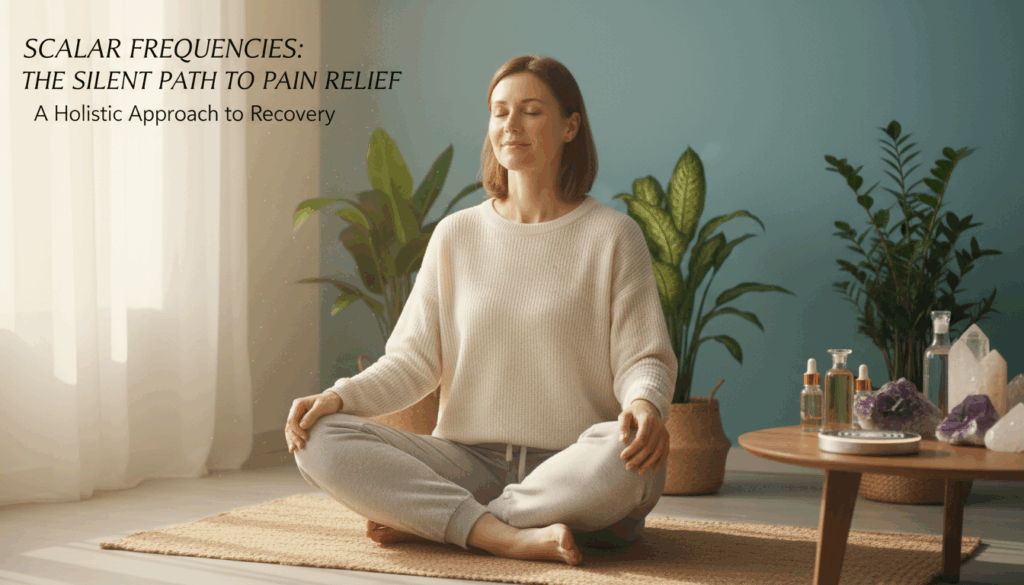
Cellular regeneration, wound healing, and tissue repair support
Marketing often highlights potential boosts to cellular regeneration and faster wound repair. Individuals describe shorter recovery timelines and steadier tissue repair, which many track across multiple sessions rather than expecting immediate results.
Immune system support and recovery after illness or injury
A common goal is to support immune response during recovery from illness or injury. People report improved resilience and steadier recovery, though outcomes vary by person and require consistent use to assess the effects scalar approaches may offer.
Practical note: Experiences vary. Track changes in pain levels, sleep, and daily tasks over weeks to judge benefit. For guidance on working with a professional, consider a consultation with professional psychic coaching services.
How to Apply Scalar Energy Healing in Your Wellness Routine
Choosing the right delivery—guided sessions or home devices—shapes how this practice fits into daily life.
Working with a practitioner vs. DIY approaches
When to see a practitioner: clients who want guidance, a tailored plan, or deeper support should choose a trained provider. Professional therapy helps personalize session length and approach.
When DIY fits: try self-led methods if budget or curiosity drives you. Start slow and use clear instructions.
Using devices at home or in clinics
Common device applications include beds, chambers, pendants, and wands. Look for product transparency, safety info, and simple user guides.

| Type | Setting | Tip |
|---|---|---|
| Beds / chambers | Clinic or home | Follow timing guidelines |
| Pendants / wands | Daily wear or short sessions | Check materials and claims |
| Portable panels | Therapy rooms | Use with practitioner input |
Creating a consistent routine and combining modalities
Keep sessions regular: 20–45 minutes, 2–5 times per week to start. Hydrate, rest after longer sessions, and set a clear, simple intention without magical thinking.
Many clients pair sessions with sound, light, or other frequencies to enrich the session. Treat these as supportive tools alongside solid sleep, movement, and stress care.
Track effects over 2–6 weeks. Record sleep, pain, mood, and body changes to judge real benefit rather than a single experience.
What a Scalar Session May Feel Like and How to Measure Results
Sessions often bring quiet shifts that feel small at first but add up over repeated visits.

Typical sensations people report
Common cues include a gentle warmth, a feeling of calm, lightness or heaviness, and clearer thoughts.
Some feel no clear change right away; that is normal.
Understanding “energy shifts” in plain terms
Energy shifts describe mood changes, deeper sleep, less reactivity to stress, or faster recovery after activity.
These are practical effects that show up in daily function rather than dramatic instant fixes.
Simple ways to track outcomes
Compare your baseline to trends over weeks. Note pain levels, stress, sleep quality, and mental clarity.
| Measure | How to track | Goal |
|---|---|---|
| Pain levels | Rate 0–10 daily | Lower average over 2–6 weeks |
| Stress | Short weekly journal | Fewer high-stress days |
| Sleep & clarity | Record hours and focus notes | Improved rest and mental clarity |
Look for steady trends rather than a single-session result. Small gains in relaxation and overall state matter and can show real value over time.
Misconceptions, Skepticism, and Safety Considerations
Public discussion often blurs technical terms, so clear language helps readers weigh claims. A common mix-up compares traveling electromagnetic waves with described standing field patterns. Keep in mind that different sources use labels unevenly, so explanations vary.

Clarifying confusion about waves and fields
Traveling waves (like radio or light) move through space and are measurable. By contrast, proponents describe standing patterns that act near the body without the same measurable travel. This distinction matters when judging potential effects and device claims.
Placebo debates and testimonial influence
Skeptics point to limited clinical trials and strong placebo effects in many studies. Yet testimonials persist because individuals often report real, useful changes in sleep, mood, or pain.
“Personal reports can be meaningful, but they do not replace controlled evidence.”
Drug-free, non-invasive role alongside other care
These approaches are usually framed as non-drug and non-invasive. They are best used as complementary support rather than a replacement for medical diagnosis or treatment.
Choosing practitioners and devices responsibly
Look for providers who offer:
- Transparent claims and realistic promises.
- Clear pricing and informed consent.
- No pressure to abandon physician-led care or ongoing therapy.
| Check | Why it matters |
|---|---|
| Transparent claims | Prevents unrealistic expectations |
| Informed consent | Protects clients and clarifies risks |
| Complementary use | Supports whole-system health safely |
For a practical primer on related approaches, see an energy manipulation primer. Remember that benefits vary. A reputable provider focuses on supportive outcomes for individuals, not guaranteed cures.
Conclusion
Ultimately, proponents present this approach as a gentle way to support balance in the body’s subtle fields. Body natural healing is framed as complementary care that aims to ease stress, boost clarity, and restore daily vitality.
Reported benefits include stress relief, relaxation, emotional harmony, improved mental clarity and focus, and support for chronic pain and recovery. Many users note steadier energy and better sleep over weeks rather than instant fixes.
Try one clear application, build a short routine, and track baseline notes—sleep, pain levels, and mood. Choose reputable providers or devices, keep expectations realistic, and use these sessions alongside proper health care.
If you want to explore related services, consider starting small and measuring changes. For a practical next step, see spell casting services to learn more about available offerings.