

This short guide explains how many people use the phrase to describe a mind-body wellness approach that blends intention, meditation, and subtle-field ideas.
Note: this article offers information, not medical advice. Folks often try these practices as complementary support, not as a replacement for clinical care.
In today’s U.S. wellness scene, interest in meditation, mindful routines, and alternative approaches is common. The umbrella term often links older traditions like qi or prana with modern intention-based methods.
This article will give a clear definition, show how physics language gets referenced, trace ancient roots, outline practical techniques, and state realistic limits. Expect friendly, grounded language that separates personal experience from scientific proof.
Who this is for: curious beginners, meditation practitioners, and people exploring stress support who want a balanced, practical overview.
Key Takeaways
- Term covers a range of intention-focused, mindfulness-based practices.
- Many report stress relief and greater self-awareness, though evidence varies.
- Use as a complement to medical care, not a replacement.
- Ancient ideas like qi/prana often appear alongside modern language.
- For more context on related practices, see psychic healing resources.
What Is Quantum Energy Healing and Why People Are Talking About It
C
C
C
A simple definition: energy, intention, and the body’s natural healing ability
Across wellness studios and apps, guided focus and breath work are being framed as tools for self-care. In plain terms, this approach asks a person or practitioner to focus attention and intention to support balance in the body and mind.
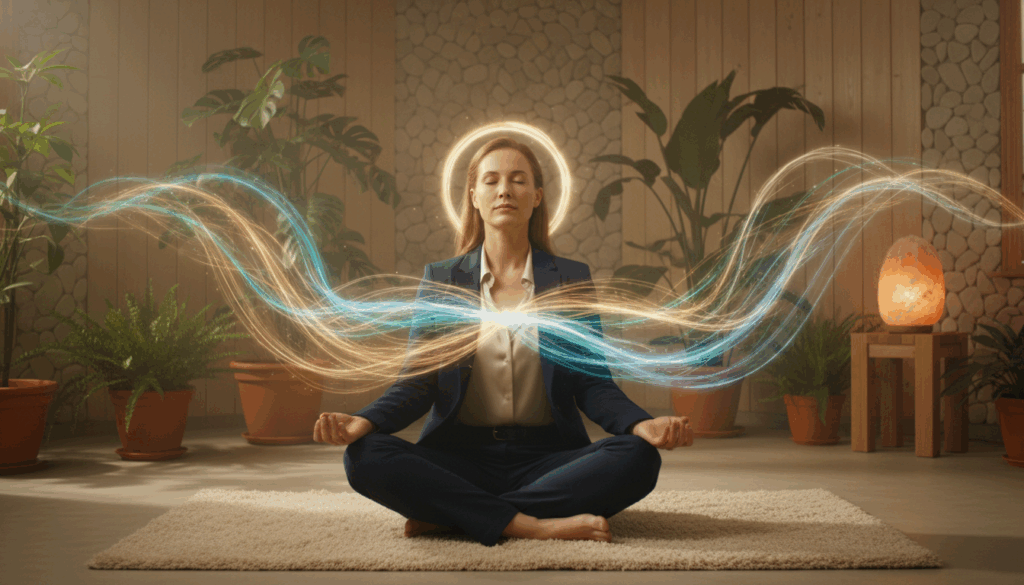
How this approach is positioned as an evolving wellness method
People use the word energy to describe a felt field around the body that can shift with breath, touch, or meditation. That language links old systems like Ayurveda and yoga with newer mindfulness tools.
Teachers and coaches vary in terms, tools, and session style. Proponents call the field evolving because practices change as communities add ideas from meditation apps, research, and lived experience.
Where it fits in U.S. health and wellness conversations
Rising stress, burnout, and interest in holistic self-care help explain the buzz. Many individuals try these sessions for calm, better sleep, or a stronger sense of connection between emotions and physical well-being.
Note: Reported benefits can feel meaningful, but they are not a medical diagnosis or guaranteed cure. Use these methods as a complement to standard medical care when needed.
How Quantum Physics Ideas Show Up in Quantum Healing Concepts
Language from physics sometimes serves as a poetic bridge between meditation and a felt sense of connection.
Everything as tiny particles and pattern
Many teachers borrow terms from quantum physics to help people picture interconnection at a small level. This often becomes a motivating idea rather than a lab-tested claim.
Ripple effects and broader shifts
Practitioners describe tiny shifts — breath, attention, or gentle movement — creating wider changes in the body or world. The metaphor of a ripple helps explain why small actions feel meaningful.
Frequency, vibration, and mood
Words like frequency and vibration show up as shorthand for mood, stress, or arousal. People may say calmer nervous systems equal a “higher vibration,” even though medicine frames that as reduced stress arousal.

Takeaway: the use of physics terms often supports a hopeful view of reality and connection. If you want practical steps or guided tools, see related psychic energy techniques.
Ancient Roots Behind Modern Energy Healing Practices
Many modern wellness ideas trace their roots to ancient systems that map a subtle life force across the body. These long-held frameworks frame health as balance and continuous flow, not just the absence of symptoms.
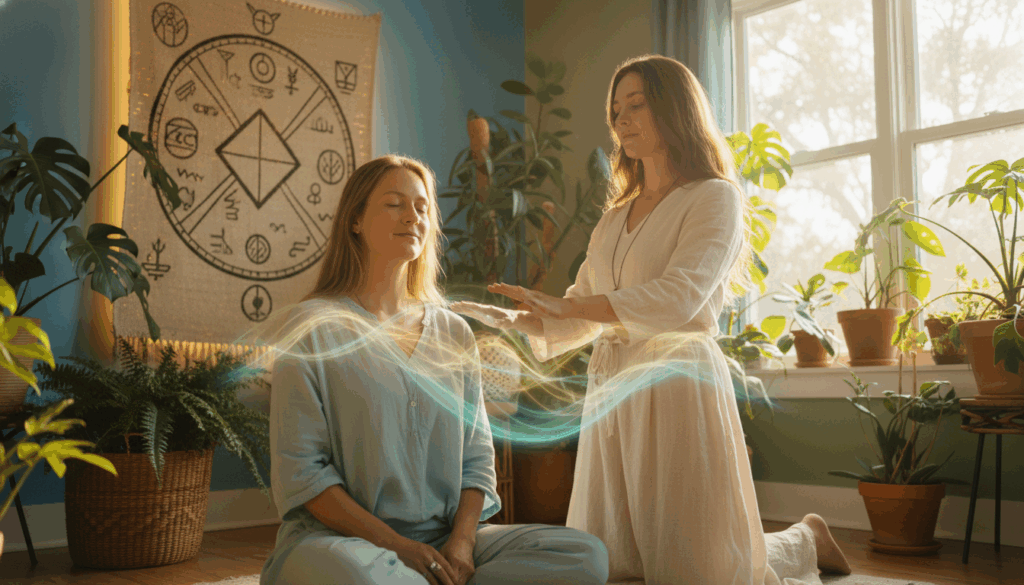
Qi and meridians in Traditional Chinese medicine
In Traditional Chinese Medicine, Qi moves along meridians. Practitioners use acupuncture, qigong, and tai chi to support smooth flow and reduce blockages.
Prana, breath, and nadis in yogic systems
In yogic and Ayurvedic thinking, Prana links to breath and moves through nadis. Pranayama, postures, and meditation aim to steady breath and improve energetic flow.
Life force language and modern phrasing
Today’s labels often reframe these teachings as a singular “life force” and sometimes adopt newer terms. That modern naming does not erase the long history behind the system of practices.
Energy balance: flow, blockage, and wellbeing
The common idea across traditions: balance supports wellbeing, while blockages show up as stress, heaviness, or feeling off. Many studios and holistic coaches use these models to help people build simple routines for greater self-awareness and health.
For more on historical context, see this ancient context.
What Is Quantum Energy Healing Doing on a Mind-Body Level
Many practices guide the mind into calmer states so the body can enter repair mode. On a basic level, the approach aims to influence attention, thoughts, and emotions so the nervous system shifts away from fight-or-flight and toward rest.
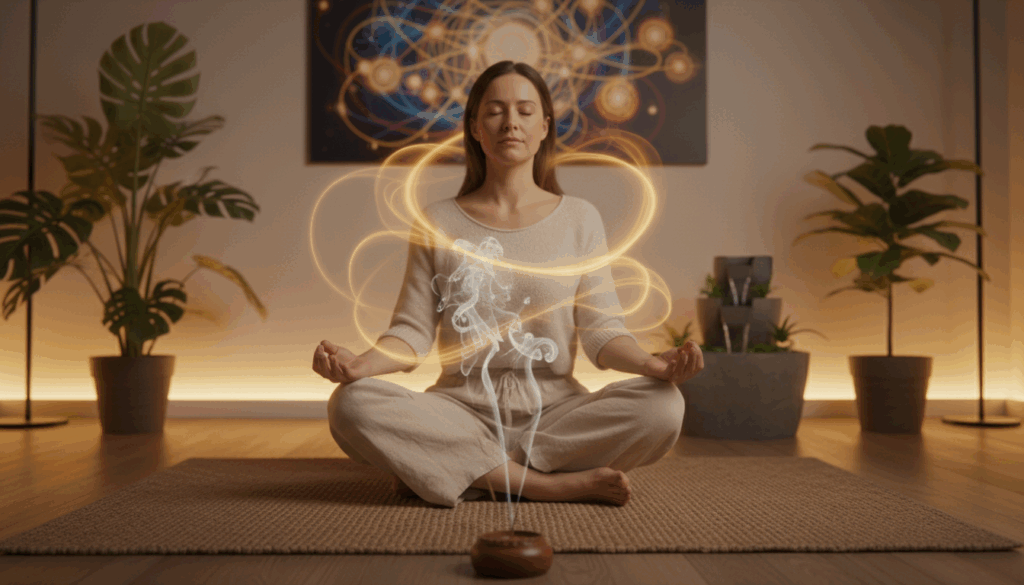
Consciousness and deeper states
Meditation helps quiet mental noise and deepen consciousness. In that quieter state, people notice sensations without reacting. That noticing can reduce stress and make calming habits easier to learn.
Intention as a practical tool
Setting clear intention gives the mind a simple direction—how you want to feel or respond. This is not a magic trick; it’s a gentle way to steer attention so behavior and perception follow.
Imagination, autosuggestion, and everyday change
The autosuggestion ideas from Émile Coué remind us that thoughts shape perceived reality. Repeating helpful phrases or visualizing calm can change emotional loops and pain perception.
- Practical takeaway: try a short meditation before bed to shift a tense state into calm. That small change can improve rest and decision-making.
- For related guides on practice and practice energy manipulation practices, see linked resources.
Quantum Energy Healing Techniques You’ll Commonly See
Practical tools often focus on breath, imagery, and gentle touch to shift how the body feels. Below are the common techniques you may meet in a session and simple ways to try them safely at home.
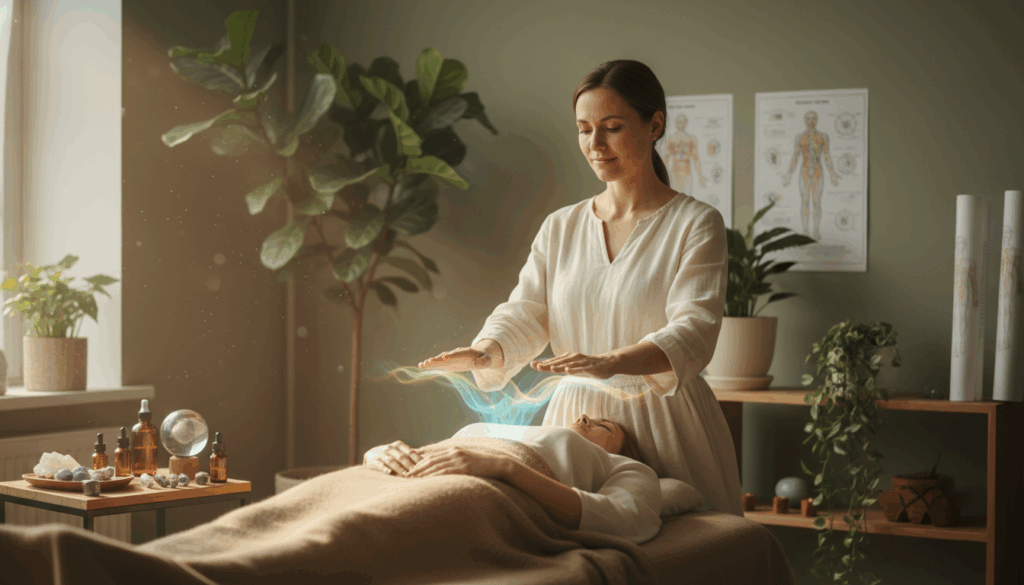
Visualization and guided imagery
Short, 5–10 minute visualizations help with relaxation and emotional clarity. Picture a calm scene and notice sensations in the hands or chest to anchor the process.
Breathwork for nervous system calm
Slow, steady breathing aims to activate the parasympathetic system. Try a 4-4-6 pattern (inhale-hold-exhale) during a busy work break to lower stress.
Meditation practices with intention
Combine a clear intention with a quick body scan. Name tension, breathe toward it, and watch small shifts over time rather than expecting instant change.
Reiki-style sessions
Practitioners use hands on or near the body to address felt blockages. Treat this as a complementary option and seek credentialed providers for persistent pain.
“Quantum jumping” visualization
This method asks you to imagine connecting with an already-healed version of yourself to borrow skills like calm or confidence. It works best with short, repeated practice.
| Technique | How it looks | Try at home |
|---|---|---|
| Visualization | Guided imagery, 5–10 min | Close eyes, picture calm scene |
| Breathwork | Paced breathing, parasympathetic focus | 4-4-6 pattern during breaks |
| Reiki-style | Hands on/near body, gentle touch | Seek trained practitioner |
| Quantum jumping | Imagined meeting with healed self | Short daily visualization |
Note: People report benefits for stress, pain perception, and mood, but results vary. Consistency often matters more than a single session. For related resources, see psychic superpowers.
Potential Benefits People Report From Quantum Healing
Many people report gentle, practical benefits after adding short sessions of guided imagery and breathwork to their daily routine. These outcomes are best framed as reported and possible—results vary by person, practice, and consistency.

Stress and anxiety support when you feel out of balance
Reported effects include feeling calmer, sleeping better, and reacting with less intensity during busy days. Some individuals notice shorter recovery time after stressful events.
Practical signs of progress: fewer spirals after a tough conversation, more patience in traffic, or steadier sleep patterns. Use these practices to complement therapy or primary care when needed.
Mental clarity and focus through yoga, meditation, and mindfulness tools
People commonly report improved focus and less mental clutter after regular practice. Short routines can help with prioritization and clearer decision-making.
Consistency matters more than duration. Simple daily habits often lead to measurable shifts in attention and overall wellness.
Emotional resilience: working with stuck patterns, fear, and self-doubt cycles
Many individuals use visualization and affirmation to change limiting belief patterns. Over time, that rehearsal can soften fear responses and reduce self-doubt.
Some also report a gentler relationship to physical pain, with less tension around discomfort—framed as supportive, not curative, for health goals in the U.S.
What Quantum Healing Is Not: Evidence, Controversy, and Realistic Expectations
Many readers expect clear-cut proof, yet this field often works with subtle, subjective shifts rather than hard measures. That makes rigorous evidence hard to produce with standard trials.

Why it’s hard to quantify: working with what can’t be seen
Practices often target felt states like calm or focus. Those outcomes rely on personal report and context, so they resist neat measurement.
Complementary care: why many teachers say it shouldn’t replace medicine
Important: use these methods as an adjunct. If you have symptoms, seek medical evaluation promptly. Don’t delay diagnosis or stop prescribed medicine.
Separating inspiring language from scientific claims about physics
Metaphors can inspire but also mislead. Watch for absolute promises, pressure to abandon medical treatment, or claims that swap metaphor for proof.
- Choose practitioners who list training, transparent boundaries, and referral options.
- Avoid anyone who urges you to drop medicine or skip tests.
Takeaway: it’s reasonable to explore this approach for relaxation and self-awareness while staying realistic about scientific proof and relying on standard medical care for health needs.
Conclusion
Quantum healing is best seen as a modern label that blends intention, breath, and visualization with older ideas about life flow.
Core themes include simple practices for mind-body regulation, the use of energy language to describe felt shifts, and tools like meditation, breathwork, and imagery as common entry points.
Roots in systems such as qi and prana show how ancient frameworks inform today’s offerings. Modern framing repackages those ideas for current wellness seekers.
Try a short breathwork plus visualization routine each day for a week. Track sleep, mood, and stress to see small changes.
Stay curious and discerning, keep your healthcare team informed, and use these methods as supportive care. Many people find steady practice helps them feel more balanced over time. For related support, visit our psychic guidance page.