

Welcome. This short guide explains what a typical session looks like and shows a safe, simple at-home practice you can try. The aim is clear: offer practical, supportive wellness ideas that sit alongside regular medical care.
We keep the tone curious and grounded. You will read a step list later that covers centering, scanning, intention, and closing. Each step is broken down so the journey feels structured and easy to follow.
Note that the phrase energy healing covers many modalities. That means you can pick techniques that match your comfort and goals. Most approaches are non-invasive and meant as a complement rather than a replacement for care.
For more context on related practices, see this short guide on energy healing. If you have serious symptoms, please keep medical providers involved.
Key Takeaways
- Learn what to expect in a session and a safe at-home method.
- The guide is informational and aimed at a US audience.
- Follow a simple four-step process for practice.
- Choose modalities that fit your comfort level.
- Use these methods alongside standard medical care.
What energy healing is and how it’s used today
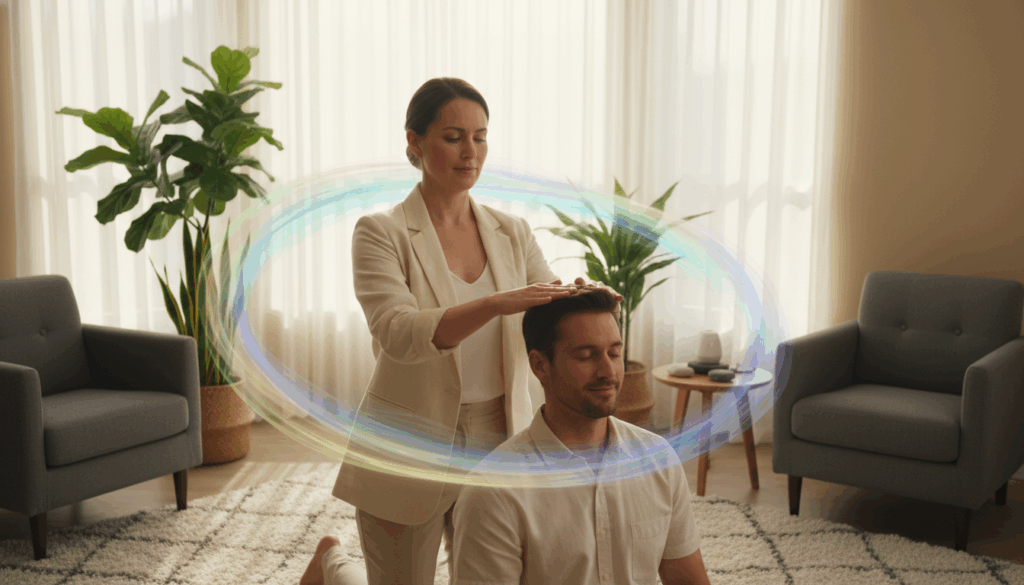
These complementary practices rest on the idea of a subtle life force that moves through focal centers in the body. Practitioners speak of centers (often called chakras) as points that affect mood, stress, and comfort.
Core concepts
Centers and flow. Chakras and other centers are a framework for noticing shifts in physical and emotional states.
Field scanning
Energy field models are used in modalities like Therapeutic Touch and Pranic work. Practitioners describe scanning the field for imbalance and then using non-invasive methods to restore ease.
What research shows
Clinical trials give cautious support for acupuncture and Reiki in some outcomes. Many other methods still need stronger, high-quality studies. Personal experience can feel meaningful, but promising findings are not the same as proof.
- Common uses: stress relief, emotional support, better rest.
- Complementary care: these practices are usually paired with conventional medical treatment.
| Modality | Evidence | Common use |
|---|---|---|
| Reiki | Some clinical trials show benefit for relaxation and pain | Stress relief and comfort during medical care |
| Acupuncture | Moderate evidence for pain and nausea in trials | Chronic pain, headaches, and postoperative symptoms |
| Therapeutic Touch | Limited and mixed study results | Calming, support for anxiety and rest |
For a practical primer on techniques and sessions, see this short guide on energy healing techniques. Always coordinate with licensed medical care for diagnosis and treatment decisions.
Benefits and realistic expectations for healing energy sessions
Clients often notice calmer nights and lower tension after a supportive session.
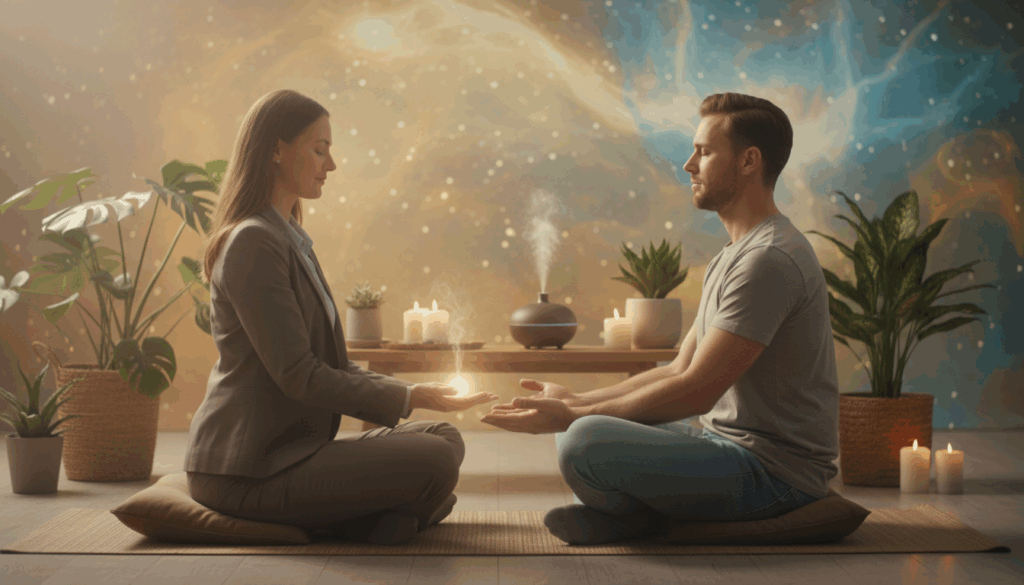
Common benefits include deep relaxation, reduced stress, clearer sleep, and an improved quality of life. Some people report feeling more present and able to rest. These are common but not guaranteed outcomes.
Realistic expectations matter: some feel immediate calm, others notice small shifts over several sessions, and a few feel little change. Track simple markers like sleep hours, tension level, and mood before and after each session to measure progress.
Emotional support goals
Sessions often aim to ease anxiety, help process grief, and reduce persistent, “stuck” thoughts. They can support people with depression as an adjunct, offering moments of relief and clearer perspective. A session may increase emotional regulation, not replace psychotherapy or medication.
Safety and limitations
These approaches are generally low risk and non-invasive. Discomfort is rare but emotions can surface during deep relaxation. A session may leave someone feeling drained briefly; rest and water afterward help recovery.
| What a session can do | What it cannot do |
|---|---|
| Promote relaxation, sleep, and lower stress | Diagnose or cure medical conditions |
| Support emotional processing for anxiety or grief | Replace therapy, medication, or specialist care |
| Help clients feel more resourced and regulated | Guarantee consistent results for every person |
Practical advice: Do brief pre- and post-session checks (rate sleep, tension, mood). Share any serious symptoms or current treatments with your healthcare provider. For more guidance on calming practices and short meditative routines, see this primer on clairvoyant meditation.
Preparing your body, mind, and space for an energy healing practice
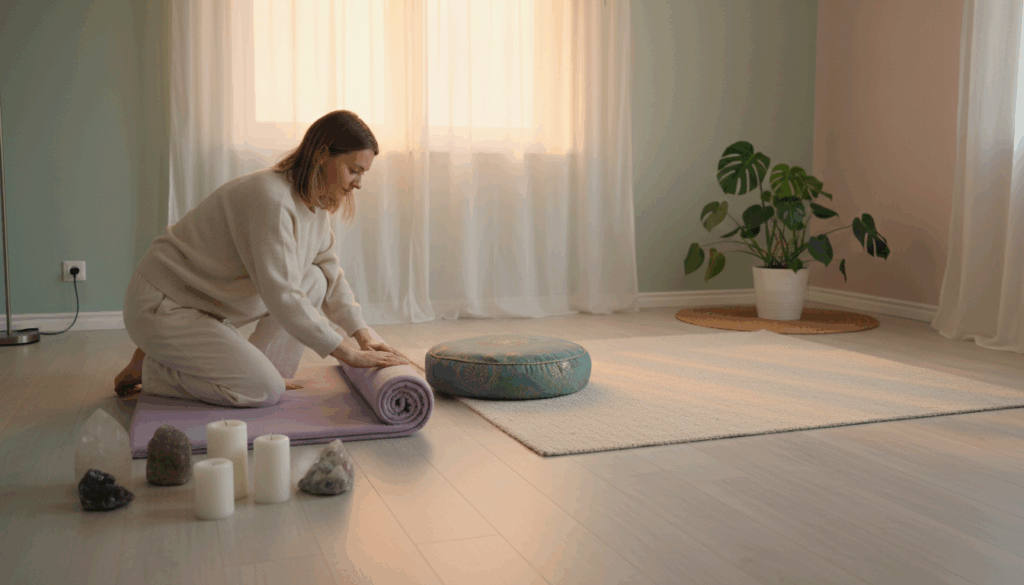
A calm setup helps you notice subtle shifts and stay present. When the body and room are quiet, sensations are easier to follow and the session flows more smoothly.
Creating a calm environment
Simple checklist:
- Quiet room and comfortable temperature.
- Supportive chair or bed and minimal notifications.
- Dim lights, optional soft music, and one personal item that feels grounding.
Grounding and focus
Breath grounding: Sit or lie comfortably. Inhale for a count of four, hold one, exhale for five. Repeat four times. This slows the nervous system and brings attention into the body.
Try a short guided meditation (60–90 seconds): close your eyes, notice three parts of your breath, then say a simple intention like, “I’m inviting calm.” Treat the intention as a focal tool, not a guarantee.
| Step | Why it helps | Quick tip |
|---|---|---|
| Quiet place | Fewer interruptions aid focus | Put phone on Do Not Disturb |
| Breath grounding | Reduces stress and anchors attention | Use 4-1-5 counts for four rounds |
| Set the space | Creates a safe, consistent environment | Dim lights and add one comforting item |
These small steps work whether you sit, lie down, or take a short break at work. When you’re ready, this setup supports clearer scanning, hand placement, and a smoother closing. For related tips on learning simple energy manipulation methods, see the linked guide.
Energy healing how to do it step by step
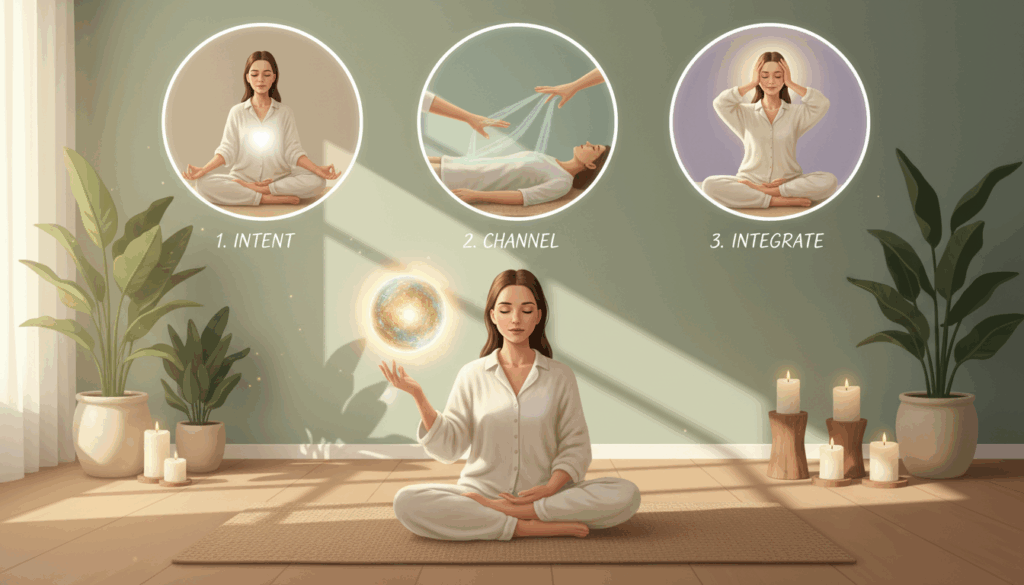
A short, steady centering step helps the rest of the session feel clear and safe. Below is a simple numbered flow you can follow for personal practice or when supporting someone else. Aim for calm attention and consistency rather than perfection.
Centering before you begin
Step 1: Sit or lie with a relaxed spine. Breathe in for four, hold one, exhale for five. Repeat twice.
Hands and attention
Choose what feels right: place your hands lightly on the body or hold them an inch above. Respect boundaries and ask permission when working with another person.
Scanning for imbalance
Move slowly along the body. Notice warmth, tingling, heaviness, or emotion. Treat observations as information, not a diagnosis.
Sending healing energy with intention
Anchor your attention with a clear intention of love and wholeness. Visualize the person healthy and steady while you focus for several minutes.
Distance method — bright light link
Prepare yourself, imagine a vivid bright link between you and the recipient, and optionally say their name silently. Hold that image while you send support.
Distance method — surrounding with warm light
Visualize the recipient wrapped in a warm, glowing light that restores balance. Keep the image steady and filled with compassion.
Timing and structure
| Phase | Minutes | Notes |
|---|---|---|
| Centering | 2 | Breath and posture |
| Scanning | 5 | Slow, nonjudgmental observation |
| Sending | 5 | Use intention and visual light |
| Closing | 2 | Gratitude, gentle reorientation |
Closing the session
Bring your hands back, thank the moment, and sip water. Rest for a few minutes and journal what you noticed so each session becomes a learning loop.
Energy healing techniques you can explore for different goals
A short menu of methods helps you match a practice with your goals and comfort.
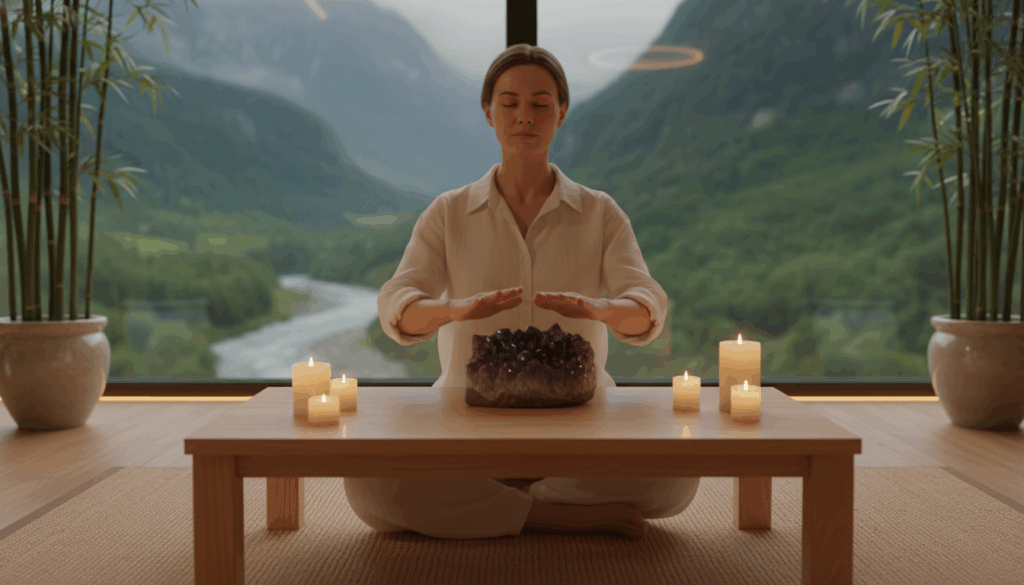
Pick by touch, access, or desired outcome. Below are clear descriptions so you can choose a way that fits your comfort and schedule.
Reiki
What it is: Hands-on or hovering with calm intention during a structured session.
Use: Often chosen for relaxation and gentle support.
Acupuncture and acupressure
Traditional Chinese Medicine uses thin needles at specific centers, and acupressure applies firm touch at those points.
Note: Acupuncture is one of the more researched methods for pain and nausea.
EFT tapping
Tap acupressure points while naming feelings and shifting thoughts. Many people use this at home for anxiety and quick emotional relief.
Qigong
Breath-led movement that trains vital flow through gentle motion. Reported benefits include better sleep and lower pain for some users.
Pranic healing and Therapeutic Touch
Non-touch approaches that include scanning and clearing perceived blockages in the field around the body.
Reflexology and Polarity Therapy
Hands-on methods that press points on feet, hands, or body and pair with lifestyle or movement guidance to restore balance.
Quantum Touch
Combines breath, focused attention, and noticing subtle sensations. Emphasis is on body awareness and consent during the practice.
Choosing what to try first:
- Touch vs non-touch — pick what feels safest.
- Practitioner-led vs self-practice — consider access and cost.
- Single session vs ongoing practice — some methods show benefit with repeat work.
| Method | Touch | Best fit |
|---|---|---|
| Reiki | Light touch or hover | Relaxation, nonclinical support |
| Acupuncture | Needles | Pain, nausea; clinic-based |
| EFT tapping | Self-touch (tapping) | Anxiety support, home use |
| Qigong | Movement-based | Daily wellness, sleep, pain |
Try one method at a gentle pace and note changes. A curious, steady journey usually yields clearer insight than jumping between many practices.
Conclusion
In closing, remember that small, consistent sessions often yield clearer results than one big effort.
This guide presents energy and healing as low-risk, supportive options that many people use for calm and better rest. Treat them as complements, not replacements, for medical care.
The repeatable arc is simple: prepare, center, use hands or hovering attention, scan, send intention, and close. Make the practice brief at first and note changes in sleep, stress, or mood.
Start with short sessions and a simple journal. If needed, seek licensed care for diagnosis or urgent concerns, and explore options like a short breathwork self-session as a steady way into regular practices. For related guidance, see psychic readings and guidance.