

This guide introduces a plain-language view of a complementary approach that many people use alongside conventional care.
Energy healing refers to traditions that describe the body as having a subtle field or life force. Practitioners aim to balance that field rather than diagnose or cure disease.
In this article you will see core frameworks—life force concepts, fields, meridians and chakras—and clear notes on what a typical session feels like. Expect step-by-step descriptions, common sensations, and tips for choosing a practitioner.
Safety first: sessions are usually non-invasive, but they are not a substitute for medical evaluation for serious symptoms.
The tone is balanced: we summarize reported benefits and review clinical evidence, including trials for acupuncture and Reiki, so readers can judge what is well supported and what remains uncertain.
Key Takeaways
- Energy healing is a complementary practice meant to support, not replace, medical care.
- Expect non-invasive sessions and a range of reported sensations from relaxation to tingling.
- Learn basic frameworks: life force, fields, meridians, and chakras.
- Evidence varies; acupuncture and Reiki have more trial data than many other approaches.
- This guide suits U.S. readers managing stress, sleep, pain, or seeking relaxation and emotional support.
What energy healing is and why people use it today
Many Americans add complementary practices to self-care routines to reduce stress, sleep better, or find extra support during illness.
Energy medicine is a term coined in the 1980s to describe a group of complementary approaches that focus on subtle fields or life force. These services are used alongside medical care, not as replacements. People often choose them because they are non-invasive and fit into busy schedules.

Energy medicine as a complementary approach in the United States
Complementary means the practice is intended to add to conventional care. Many people book sessions for stress management, relaxation, or symptom support while keeping regular medical treatment.
Key terms you’ll hear
Online labels vary: subtle energy, vibrational medicine, and mind-body therapy often point to similar ideas about balance and flow.
- Modalities range widely — from hands-on Reiki to needle-based acupuncture.
- Training, regulation, and evidence differ by method.
- Popularity does not equal proof; scientific support varies across therapies.
“Choose practices that match your goals and ask clear questions before booking.”
This article will compare common approaches, describe a typical session, and offer practical questions to ask a practitioner so readers can make informed choices for their health.
Core principles behind energy healing: life force, energy fields, and balance
Across cultures, practitioners describe a subtle life force that links body, mind, and daily function.
Life force across traditions
Qi in Traditional Chinese Medicine and prana in Ayurveda are parallel ways to name this vital current. Both terms point to vitality, movement, and the body’s natural rhythms.
These labels are cultural frameworks. They help practitioners explain symptoms and guide treatments without implying a single scientific mechanism.
What an energy field means in simple terms
Think of the field as an invisible layer some traditions say surrounds and interacts with the body. It is described as shaping daily mood, alertness, and resilience.

Stuck flow and symptoms
When flow is disrupted—by stress, injury, or emotional strain—many systems link that disruption to tension, fatigue, or low mood.
Practitioners say clearing blockages can ease these symptoms and support overall health.
“The goal is balance, not quick fixes — restore the system so the body can respond more effectively.”
| Concept | Traditional term | Common claim |
|---|---|---|
| Life force | Qi / Prana | Vitality that supports bodily and mental function |
| Energy field | Subtle field / Aura | Invisible layer that interacts with the body and mood |
| Blocked flow | Stagnation | Linked to tension, fatigue, and mood shifts |
| Shared goal | Restore balance | Support the body’s natural self-repair and resilience |
Practical note for readers: Because definitions vary by tradition, ask a practitioner how they define imbalance and what they aim to change. For a quick primer on common methods and definitions, see this overview at psychic energy techniques.
How energy healing works in the body and mind
Practitioners often explain sessions in two parts: the subtle framework they use and the physical relaxation people report.
Hands-on versus non-touch approaches
Hands-on methods place light contact on clothed skin or hover just above the body. Non-touch methods work with the field around the body without contact.
Channeling and practitioner role
In Reiki, the practitioner is described as a conduit rather than the source. This is one reason sessions feel gentle and paced for comfort.

Maps people use: meridians and chakras
Many systems use meridians (pathways) or chakras (centers) to explain flow. Traditions vary, but both aim to describe where tension or balance may appear in the body.
Why deep relaxation matters
When the body shifts into a parasympathetic “rest and digest” state, stress measures often fall and muscles ease. This nervous system shift can reduce perceived symptoms and support mental health.
Common sensations include warmth, tingling, pulsing, heaviness, or a peaceful calm; not feeling dramatic change is still a valid result.
For a practical overview of reiki and other methods, see this primer on psychic healing.
What to expect in an energy healing session
Before you book: note your main concerns, set a brief intention, and jot down relevant health history and current care plans.
Preparing and sharing details
Bring a short list of conditions and medications so the practitioner knows your context.
Ask whether the healer coordinates with medical providers or prefers to work independently. That keeps expectations realistic.
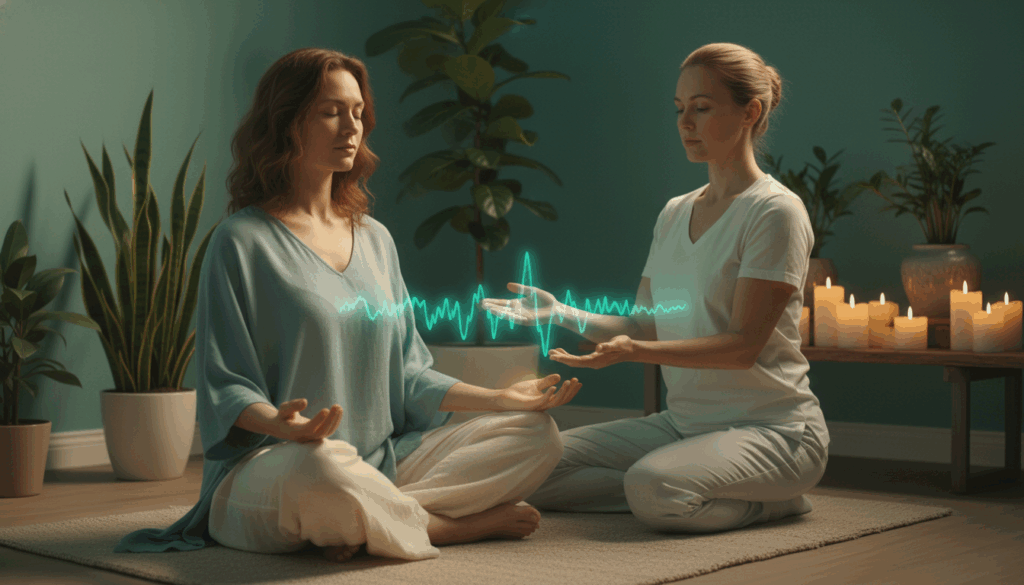
During an in-person visit
You will usually lie down fully clothed. The treatment often uses a sequence of light hand placements or hovering hands over the body.
The room is quiet. Breath cues or gentle guidance may appear. Most people notice deep relaxation rather than instant symptom change.
Aftercare and tracking
Drink water, rest, and avoid busy plans for the rest of the day. Track mood, pain, sleep, and stress for 24–72 hours to spot any changes.
If symptoms persist or worsen, seek medical advice. Use this work as supportive care, not a substitute for treatment.
Remote sessions by video
For distance visits, set up stable Wi‑Fi, lie down with your camera positioned, and use headphones if helpful. Expect a brief check-in, guided breathing, and a short debrief.
Bring a blanket and plan a calm transition back to your day after the session. For related guidance on services, see psychic intuitive readings and guidance.
Popular energy healing techniques and how each method aims to improve energy flow
Modality map: many distinct practices aim to restore balance in the subtle field, but they use different tools and theories to affect flow.
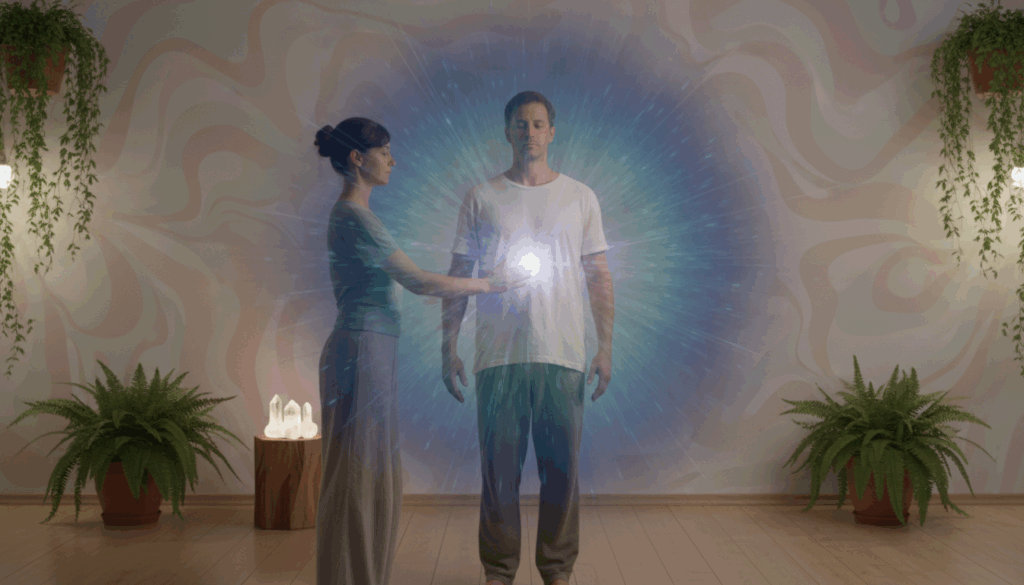
Reiki
Rei and Ki describe a universal life force. Practitioners place their hands on or just above the body, acting as a channel to support relaxation and balance. Sessions can be in person or remote.
Acupuncture (Traditional Chinese Medicine)
Thin needles target acupressure points to rebalance qi and reduce pain. This form requires in-person treatment and is widely used in clinical settings.
Qigong
A movement and breath practice that trains qi flow. Many people report better sleep, lower blood pressure, and less pain with regular practice.
Pranic healing
Non-touch scanning of the aura to clear blockages, then recharging the field with fresh force. Sessions focus on the energy field rather than physical contact.
Therapeutic Touch
Practitioners center, move their hands above the body, assess the field, and rebalance life force without touch. It is commonly offered remotely or in person.
Emotional Freedom Technique (EFT)
Tapping 12 acupressure points while naming an emotion and stating a positive phrase. The goal is to shift an upsetting pattern in the energy field.
Polarity Therapy
Combines gentle pressure, guided movement, and lifestyle shifts like yoga and mindful eating to reduce blockages and restore balance.
Quantum Touch
Light touch at an area of concern plus breath and focused awareness. Practitioners aim to influence sensations and pain perception.
Reflexology
Pressure on hands, feet, and ears to affect 12 pathways tied to nerve endings. It is framed as a way to support whole-body balance.
Note: Many non-touch forms—Reiki, Therapeutic Touch, and some aura methods—can be offered remotely. Needle-based treatments such as acupuncture must be in person.
Benefits people report from energy healing
Clients often describe feeling calmer and better able to manage daily demands after sessions. These are commonly reported benefits, presented here with realistic context.

Stress relief and relaxation that supports emotional balance
Deep relaxation is a frequent outcome. When the body shifts from constant alertness to a calmer state, mood and resilience can improve.
Support for anxiety, mood, and other mental health symptoms
Many people use this work alongside counseling, medication, and lifestyle changes. It may ease anxiety and mood symptoms but is not a replacement for mental health care.
Pain relief and improved quality of life, including alongside cancer care
Pain relief is often reported, though responses vary by person and method. Some reviews note improved symptoms and quality of life when these therapies are added to standard cancer care.
Better sleep and feeling more restored over time
Improved sleep is practical and trackable. Small, consistent gains in rest and calm can add up across multiple sessions.
Tip: Keep a simple log—sleep hours, stress rating, pain score, and mood—to measure change over time.
For a concise primer on common approaches, see this energy manipulation overview.
What the evidence says and what energy healing can’t do
Scientific studies give a mixed picture of benefits, with the strongest data for acupuncture and some support for Reiki. Clinical trials and randomized studies are the best tools researchers use to test whether a therapy helps more than a placebo. In plain terms, randomized trials assign people by chance to different groups so results are less biased.

Where research is strongest
Acupuncture has the largest body of clinical work and shows benefit for certain pain and nausea conditions.
Smaller trials and reviews suggest Reiki may reduce pain, anxiety, and fatigue in some settings, but findings are preliminary.
Why results vary
Many studies are small, use different methods, or measure subjective outcomes that are hard to standardize.
Practical takeaway
- Do not use these services as a replacement for medical diagnosis or treatment.
- Set clear goals (stress relief, comfort, sleep), track changes, and reassess after a few sessions.
- For more context on trial findings and methods, see this psychic energy overview.
“Evidence supports some benefits for symptom relief, but there is no proof these practices cure specific diseases.”
Conclusion
,Finally, consider these practices as complementary aids that can boost coping and calm in everyday life. Energy healing and related methods aim to restore balance and promote deep rest rather than replace medical care.
We covered core ideas: life force, subtle fields, and flow. These frameworks explain why sessions—both in person and remote—feel calming and centering.
Many people use this work for stress relief, better sleep, and steady coping. Reported results vary, so set realistic goals and track simple measures like mood and rest.
Evidence is strongest for acupuncture and some Reiki studies; other approaches need more research. Stay curious but discerning, and keep routine medical guidance at the center of your health plan.
If you try a session, pick a reputable practitioner, ask about training and scope, set one clear goal, allow post‑session rest, hydrate, and note changes for a week. That simple plan supports safe, useful exploration.