

Curious readers in the United States often ask the same plain question: the century-old book Les Prophéties contains 942 quatrains that invite many readings. This introduction separates poetry from headlines and shows how a single line about the sky once became global news.
We will trace how verses written centuries ago get tied to modern events. A famous quatrain about a “King of terror” missed its mark in 1999, yet media cycles and influencers keep reviving the lines.
This section previews how the book’s wording lets interpreters link phrases to war, climate, plague, and tech. You’ll see why sales spikes followed a royal death, and how timing shapes a story more than clear prophecy.
Key Takeaways
- Les Prophéties uses vague language that invites many interpretations.
- One striking sky-themed verse became viral and then a cautionary tale.
- News cycles and influencers often stretch lines to fit current fears.
- We map common nostradamus predictions to modern risks in later sections.
- By the end, you’ll know what the quatrains can—and cannot—claim about the future.
Why people ask what does nostradamus say about 2030
Many readers turn to centuries-old quatrains when headlines make the future feel urgent. The media often pairs vague lines with modern events, which leads people to search for a clear prediction tied to a specific year.

Search intent: separating sensational news from sourced prophecy
Point one: readers want a cited verse, not a rumor. News roundups and social clips bundle quatrains with other seers and stretch 2024–2025 interpretations into later years.
Scope: quatrains versus modern interpretation
We contrast the original poetry with lists of events that pop up in news cycles. Few quatrains include a precise year, so dating becomes the main source of confusion.
- Look for a cited verse, not a screenshot claim.
- Check whether an interpretation links to a specific quatrain.
- Note how dramatic events change public perception over time.
| Source type | Common claim | How to verify | Quick take |
|---|---|---|---|
| News roundup | “Cruel wars” forecast | Find the cited quatrain and translation | Often loose linking to current events |
| Bestseller interpretation | Royal upheaval tied to verses | Check publisher notes and sources | Sales spike after major events |
| Social media | Future disaster clips | Trace back to an original line | High share, low citation |
Practical tip: for guided summaries and broader prophecy roundups see popular prophetic summaries. This helps separate sourced prediction from recycled headlines.
Nostradamus in context: the French astrologer, Les Prophéties, and quatrains
Born from print-era curiosity, Les Prophéties became a living book people re-read through every crisis. Michel de Nostredame was a 16th-century french astrologer and physician who set out to write a thousand short poems. About 942 quatrains survive, and that loose form helps each line travel across a century and into new debates.

The book, the verses, and centuries: how 942 quatrains fuel centuries of prophecies
The ten “centuries” are groups of four-line poems called quatrains. Their elliptical verses lack precise dating, so readers and publishers can attach them to modern headlines. Historians note how the rise of print spread ideas fast; the printing press played a role similar to today’s media in boosting reach and rumor.
Vagueness and “posticipation”: why predictions seem to fit history after the fact
Scholar Steven Connor calls the habit of retrofitting events “posticipation.” In practice, a single death or dramatic event lets readers say a line matched an outcome. The famous jousting story about Henry II highlights timing problems: a verse linked to his mishap appeared after the injury, raising questions about how often a line was really prophecy.
“Prophecy gains force only after an occurrence; readers then map lines onto the new reality.”
Symbolic words like “dry earth” and “great floods” keep resurfacing as climate concerns rise, so people often find modern meaning in old phrasing. For further context on how patterns repeat in modern prophecy readings, see prophecy patterns.
How credible are the “2030” claims? Methods, biases, and misreadings
Some recent headlines tie terse lines to precise calendar dates, but the link is thin.
Date-indexing and retrofits
Date-indexing tries to map quatrains to a specific year or day. Mario Reading’s method, for example, linked a 10/22 reading to royal headlines. That interpretation surged after Queen Elizabeth II’s death and helped sell nearly 8,000 copies in a week.
Critics note this practice can retrofit a prediction to fit an outcome. The Guardian’s 1999 “King of terror” note shows how a failed date link weakens credibility.

Media amplification and bias
U.S. news cycles and social clips accelerate a single reading into a national narrative. Bestseller spikes, viral posts, and hot takes reward certainty over nuance.
“When a big event happens, people look back to find a matching line.”
- “Seven months the Great War” gets reapplied to different war scenarios, showing elasticity.
- Confirmation bias pushes people to see accuracy where methods are vague.
- Compare bold end claims to the actual text before accepting a firm timeline.
| Method | Example | Issue |
|---|---|---|
| Date-indexing | 10/22 royal headlines | Retrofit after the fact |
| Literal reading | “Seven months” war lines | Flexible to many events |
| Media spread | Bestseller surge after royal death | Amplifies weak links |
Bottom point: enjoy interpretations, but weigh methods and history before applying a verse to a future year.
War and “cruel wars”: mapping 2025 interpretations to 2030 risk
Modern compilers tie memorable lines to current battles, then project those links into the next decade.
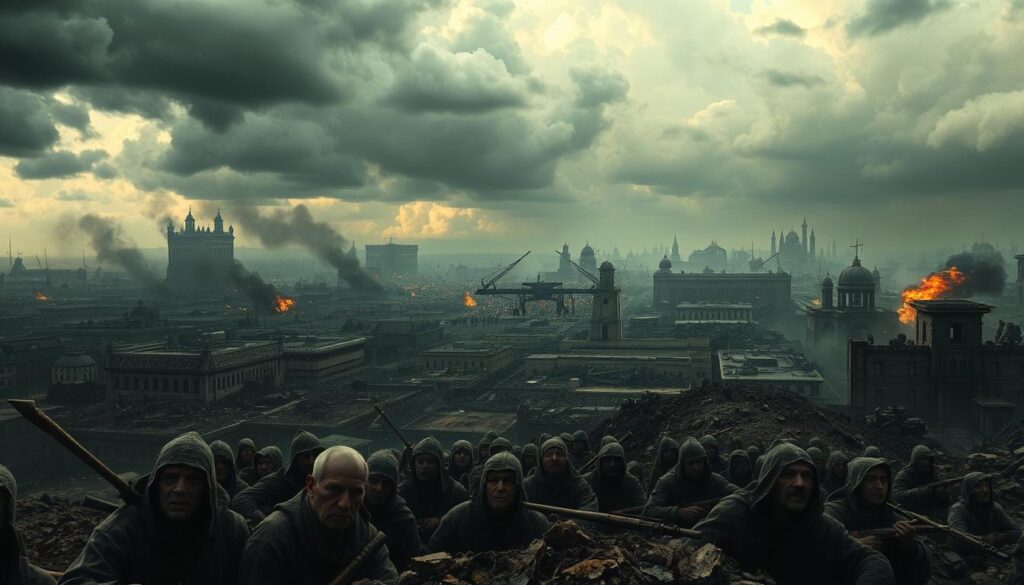
Seven months, Great War, and Europe-England tension
Media lists for predictions 2025 often highlight a vivid “seven months” phrase. That short time marker feels decisive, so readers latch onto it.
Editors also attach a “cruel wars” motif to narratives about Europe and England. This adds throne instability themes and invites royal angles into the story.
From Ukraine and Middle East conflicts to decade-end outlook
Analysts use ongoing violence in Ukraine and the Middle East as scaffolding for longer timelines. Those events become trendlines, not single incidents.
Interpreters then stretch a cited verse across years, which inflates perceived certainty about future events.
Conflict tools of the future: cyber, economic coercion, and space-linked events
Forecasts update old imagery by adding cyber attacks, financial pressure, and satellite disruptions to the list of threats. These are plausible vectors for world instability by mid-decade.
“Short, vivid markers feel persuasive even when history refuses neat timelines.”
Quick guide: check whether a quoted line is actually cited or if a headline filled the gaps. Treat confident war timelines cautiously; a verse reused across a year or more loses precise meaning.
| Claim | Source tendency | Modern anchor | Reliability |
|---|---|---|---|
| “Cruel wars” in Europe | Media compilations | Ukraine, regional tension | Low–moderate |
| “Seven months” Great War | Bestseller lists | Short campaign framing | Moderate (symbolic) |
| Throne instability | Social and tabloid pieces | Royal headlines | Low (speculative) |
| Future conflict tools | Analyst updates | Cyber, economic, space | High (plausible) |
Climate change and extreme weather: droughts, floods, and a hotter world
Evocative phrases about earth and sea gain traction when modern storms break records.
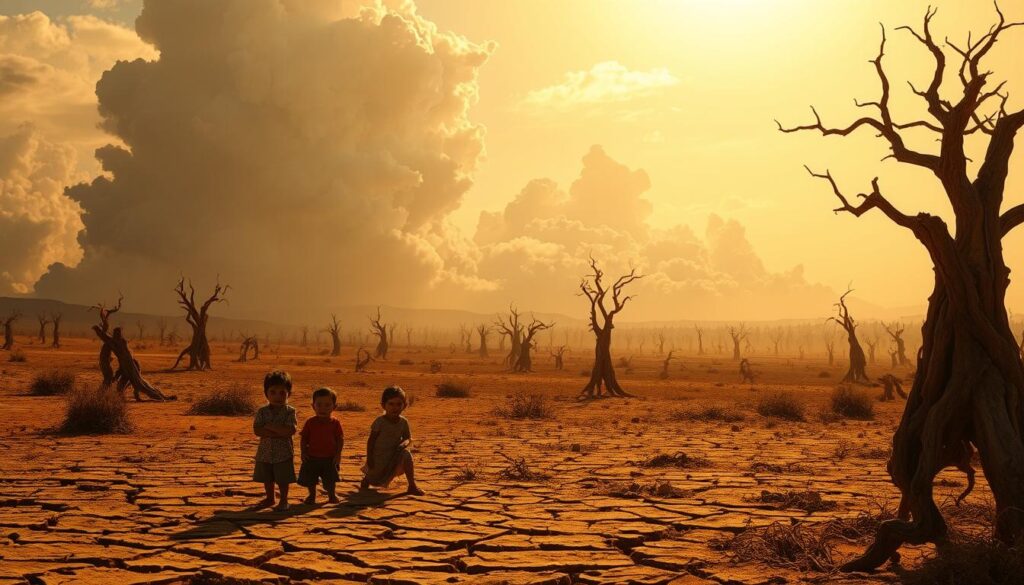
“The dry earth… great floods” is a quatrain often cited in climate conversations. Interpreters point to 2024–2025 extremes—like Hurricane Beryl’s early Category 5 strength and major European floods—to show why the verse feels timely.
“The dry earth… great floods”: 2024–2025 weather and the trend to 2030
Recent years saw unusual patterns: stronger storms, earlier peaks, and severe rainfall. Those events make poetic lines seem prophetic.
Still, forecasts for the next decade come from climate models and observations, not a dated poem. Science traces rising sea temperatures and atmospheric moisture to an increased chance of intense storms and floods.
Sea, sky, and storms: U.S. hurricanes and global flood risk trajectory
U.S. hurricane seasons now show warmer seas that can fuel faster storm growth. That raises flood and storm surge risks along coasts.
Friendly takeaway: the verse captures a mood about a changing planet, but credible predictions for the future rely on data. Treat poetic lines as mood-setting, and use science for risk planning.
“Verses and weather headlines often speak the same fear; trust models for timing and poems for tone.”
- Why the verse resonates: vivid imagery matches recent weather headlines.
- 2024 signals: record early storms and notable floods increased public attention.
- By the next year milestones, risk assessments expect a continued rise in extreme events.
Plague and pestilence: do quatrains imply new or returning diseases by 2030?
Claims of a returning pestilence hinge more on modern anxiety than on dated quatrain specifics.
Roundups for 2025 often quote verses that mention pestilence and death, then link them to recent outbreaks. That pairing makes a dramatic narrative, but the lines rarely name a pathogen or give a precise year.
Biographical notes matter. Nostradamus worked as an apothecary during plague years, and interpreters use that life story to suggest he knew cycles of disease. Yet drawing a direct, dated prediction from that biography stretches the evidence.
“Pestilence lines gain weight after an outbreak; context, not prophecy, often does the heavy lifting.”
Compare claims that a specific event is imminent with the actual text of the quatrains. Many modern lists mix warnings with upbeat notes on medical advances. That balance shows cultural fear and hope, not a clear forecast of a returning plague.
| Claim | Evidence offered | Strength | Note |
|---|---|---|---|
| Great pestilence returns | Vague verses mentioning disease | Low | No pathogen named or dated |
| Seer’s apothecary knowledge implies foresight | Biographical fact | Moderate | Contextual, not time-specific |
| Medical breakthroughs offset risks | Analyst optimism in lists | Variable | Depends on tech and surveillance |
Quick take: the prophecies capture human fear about returning disease, but public-health data and surveillance offer the best guidance for risks in the next few years. For a related overview, see this summary on angel number guidance: angel number 4040 insights.
Economy and crisis: prophecies of hardship vs. 2030 global markets
Interpreters link wartime scarcity in the verses to modern fears of debt-driven breakdown. That line sets up claims that long conflict will strain money, push prices up, and reshape who controls payments.
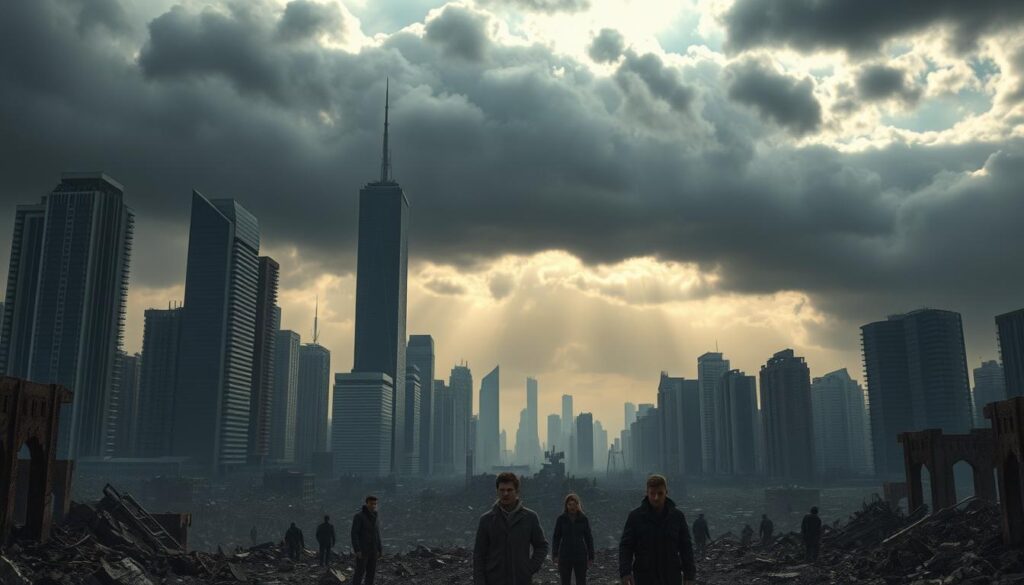
Global economic collapse narratives and debt overhangs
Media lists for predictions 2025 often stretch a poetic image into forecasts of broad collapse. Rising public debt and slower growth make those stories feel timely.
Yet the quatrain’s language is metaphorical. It captures anxiety about scarcity after years of war, not a calibrated macroeconomic model.
Leather for coin: inflation, currency shifts, and digital money control
Lines like “leather for coin” are read as images of devaluation or barter. Modern readers add digital control fears—central-bank digital currencies and state oversight appear in many talk pieces.
“Instead of gold or silver, they will come to coin leather” —readers treat this as a vivid sign of monetary stress.
Quick guide: poetic phrasing maps well to public fear in years of high prices, but policy, growth rates, and debt dynamics tell the real story for the world economy at the end of the decade.
| Claim | Evidence cited | How to check |
|---|---|---|
| Global collapse | Vague quatrain lines + debt headlines | Compare economy forecasts and sovereign debt data |
| Inflation / barter | “Leather for coin” metaphor | Review CPI trends and currency conversion events |
| Digital control | Media linking to CBDC plans | Read central bank policy papers and legislation |
For broader prophecy roundups and cultural patterns, see a related overview on ancient themes in modern lists at ancient echoes in prophecy. The friendly takeaway: the book offers striking images, but the best economic prediction rests on data and clear models, not an open-ended verse.
Technology and the future: AI, medicine, and the “living Nostradamus” angle
As tech leaps and medical milestones converge, modern seers and commentators frame the moment as a pivot for the century. Lists linking Athos Salomé’s warnings to practical advances tie dramatic language to clear trends in the near future.

AI reach and medical breakthroughs: from predictions 2025 claims to 2030 possibilities
Some forecasts claim a rapid rise in AI, quantum gains, and personalized medicine by 2025. Others pair those claims with a single dramatic turning point.
Reality check: many advances arrive in stages. Clinical trials, regulation, and scaling slow headline leaps into steady progress.
Implants, mind‑machine links, and privacy risks
Brain‑AI interfaces and implantable chips raise clear privacy and control concerns. Policymakers and developers will shape adoption through rules and safety frameworks.
“Innovation can reshape tools and rights; time and oversight shape how people feel safe using them.”
Quick guide: treat vivid lists as prompts to ask practical questions about safety, consent, and who controls data in a changing world.
Cosmic threats: “fireball from the cosmos,” asteroids, and 2030 plausibility
A single fiery sky image can turn routine asteroid news into an urgent narrative.
Media lists often borrow a vivid “fireball from the cosmos” line and attach it to modern predictions. That repeats whenever agencies report a close approach of a small planet-crossing object.
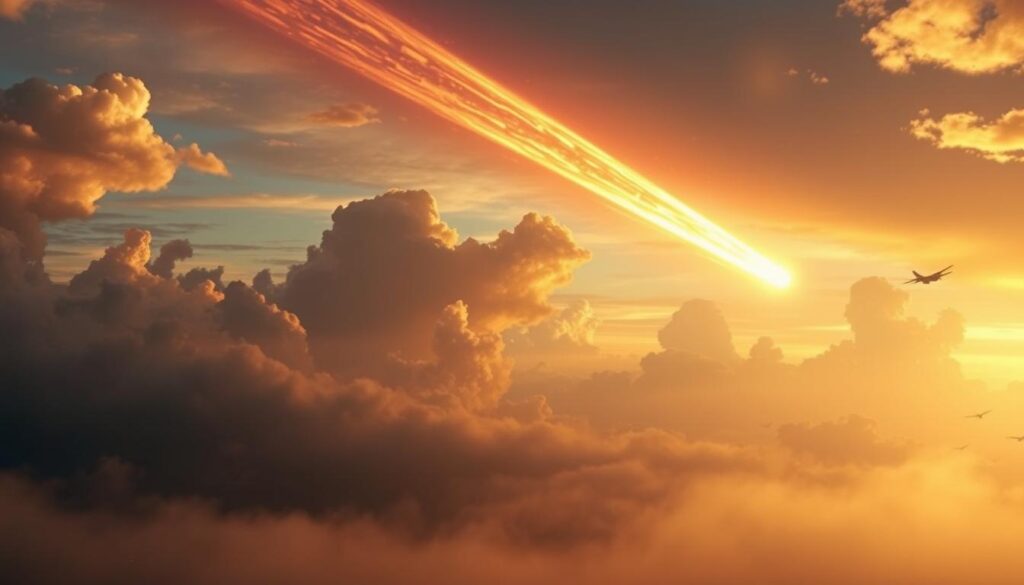
Poetry and headlines work differently. The quatrains offer mood and symbol, not a named rock or a dated strike. Modern summaries may imply a ticking clock, but the verses lack a clear year or named object.
By contrast, NASA and other programs assess risk month by month. They publish impact probabilities and size estimates for each near‑Earth object. That scientific monitoring gives a concrete view of any possible event.
“Celestial fear travels well in headlines; technical tracking tells us whether to worry.”
Bottom line: enjoy the celestial symbolism, but trust current data for real risk. Poetic death imagery sells clicks; impact likelihood and mitigation plans come from science, not verse.
| Claim | Source tendency | Practical check | Reliability |
|---|---|---|---|
| Fireball imminent | Viral lists linking quatrains | Check NASA impact probability updates | Low |
| Planet-crossing threat | Headline amplification | Review object size and trajectory data | Variable (data-driven) |
| Short-term alarm (months) | Social shares after close approaches | Follow agency monthly watch summaries | Moderate to high if backed by observatory alerts |
Comparative prophecies: Baba Vanga, modern seers, and cross-echoes to 2030
Media roundups commonly stitch together voices from different eras, creating a blended narrative about the near future. Such lists make repeating themes feel urgent and coherent.

War in Europe, earthquakes, and medical advances: overlaps and divergences
Popular compilers place Baba Vanga, living prophets, and the old french astrologer lines side by side. That pairing highlights common motifs: cruel wars, tremors, a rise in medical breakthroughs, and even sea‑linked images like “aquatic empires.”
Some claims echo wars and leadership death. Others stress tech cures or earthquakes. The overlap shows shared cultural fears more than matched evidence.
How non-Nostradamus forecasts shape public perception of 2030
Stacking many voices amplifies a chorus effect. When multiple seers predict similar outcomes across years, readers treat the trend as more likely.
“Comparative lists reflect what people fear and hope; they do not synchronize into a single clock.”
Practical tip: check original sources and read balanced roundups. For a related collection, see psychic dreams predictions. Treat comparative prophecies as cultural mirrors of a changing world, not precise calendars for the next year.
Conclusion
Ultimately, the verses act as mirrors of each era’s fears rather than precise timekeepers. Scholars stress vagueness and posticipation; media cycles then turn a single line into viral claims. For readers this point matters: treat nostradamus predictions as literary images, not locked calendars.
The friendly bottom line: recurring themes—climate, wars, plague, economic crisis, and cosmic sky images—reflect a changing world and human anxiety across centuries. If you want to plan for the future, rely on data about weather, conflict risks, and markets. Enjoy the prophecies for tone, study history for context, and ask for the verse and its evidence when a dramatic prediction arrives on any given day.