
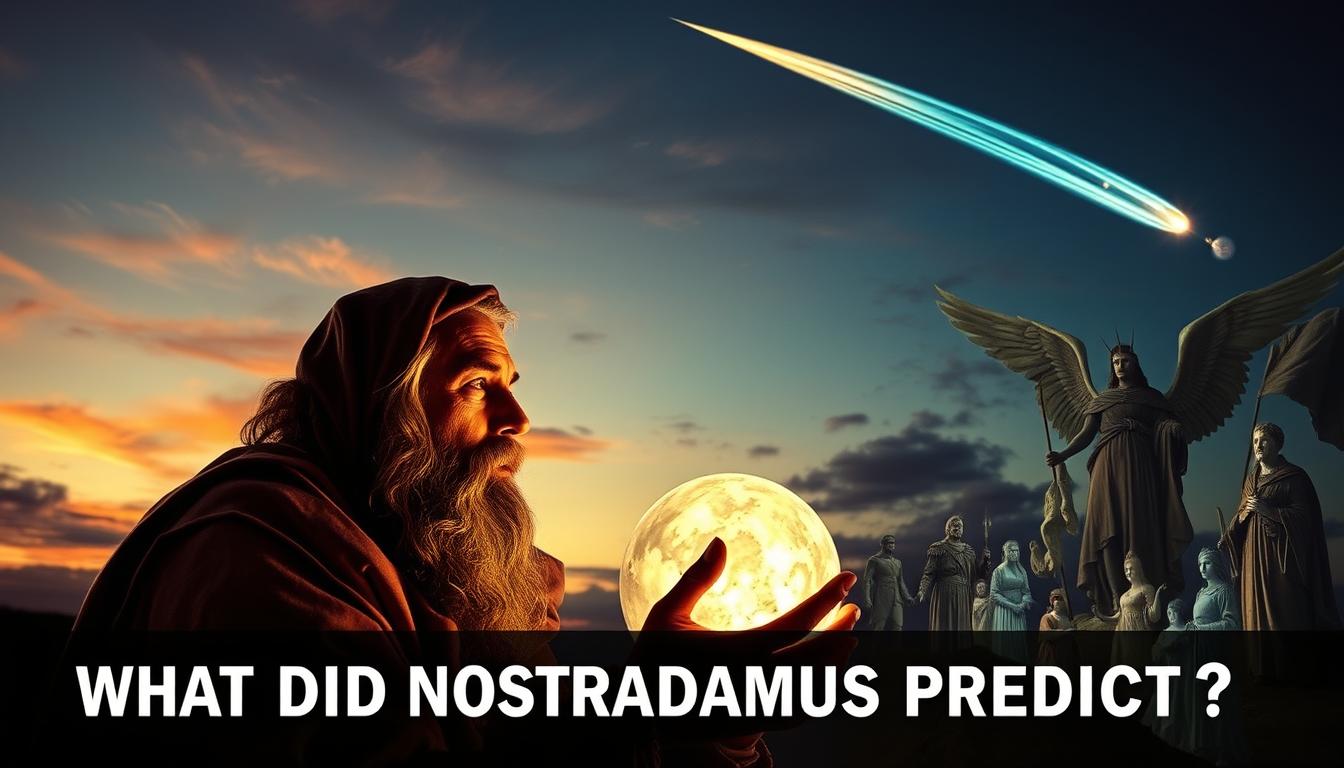
Michel de Nostredame was a 16th-century French physician and seer who published Les Prophéties in 1555. Those cryptic quatrains read like short poems, and their vague phrasing helped the prophecies travel through time.
Readers link these quatrains to major world events across history, from royal deaths and city fires to 20th-century crises. Later commentators hook modern headlines to those words, creating a long debate about true foresight versus hindsight.
This article maps memorable claims to the lines often cited as evidence. It notes how publication history, translation choices, and poetic form affect how nostradamus predictions are read. Expect a listicle that shows early modern examples and later ties to broad world events, while weighing scholarly caution.
Key Takeaways
- Les Prophéties first appeared in print in 1555 and shaped later readings of the poems.
- Quatrains use vague language, which makes linking them to events easy and disputed.
- Many famous associations rely on translation and hindsight more than clear phrasing.
- The guide compares early examples and 20th-century claims to show the range of interpretations.
- Readers should weigh both the allure of prophecy and the role of storytellers and scholars.
Setting the stage: the seer, his quatrains, and why interpretations vary
His tight, elliptical quatrains invite shifting readings that change when fresh events enter the public eye. These short poems mix French, Latin, and local references, so the words often read as flexible clues rather than fixed statements.
Court attention amplified the reputation of this early modern seer. Catherine de’ Medici consulted him in the 1550s, asking about threats and a child in the royal line. That royal audience gave his prophecies a public weight they lacked before.

Compact phrasing and archaic terms make it easy for people to spot a place, a sign, or a famous name when new events occur. Scholars and enthusiasts then read the same lines very differently.
- Layered verses allow broad links that shift with context.
- Some fits look sharp at first; careful analysis often raises timing and meaning questions.
- Translation choices can turn plain imagery into alleged prophecy.
Later sections apply this lens to early and modern claims and keep curiosity balanced with clear-eyed analysis. For related modern claims see a collection of psychic predictions.
Early echoes: prophecies many link to early modern Europe
Some verses from the collection have long been read as hints about major early modern incidents. Readers often pair striking lines with famous episodes, but simple wording can stretch to fit several outcomes.
The death of Henry II of France: “young lion” and a fatal joust
Many believe the “young lion” quatrain points to Henry II’s fatal joust in 1559. The verse mentions a younger lion overcoming an older one, two wounds, and a face guard or “golden cage.”
That fits the splintered lance, the eye injury, and the later sepsis. Yet the line also speaks of a single field battle, which clashes with a ceremonial tournament. This shows how elastic readings can be.
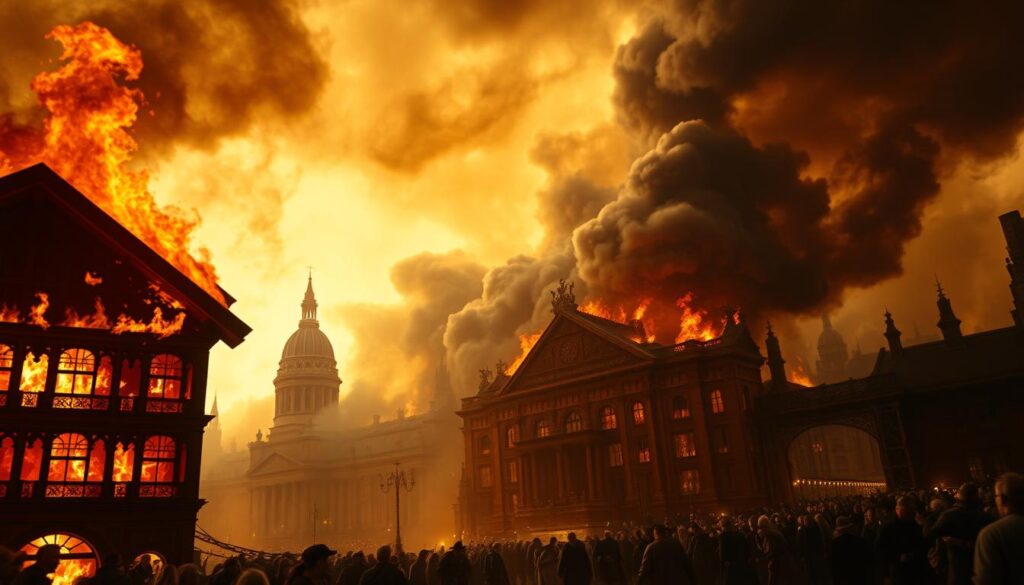
The Great Fire of London: “twenty threes the six,” an “ancient lady,” and London in flames
Another quatrain names London and the “blood of the just” alongside “twenty threes the six.” Enthusiasts calculate 1666 from that phrase and link it to the great fire.
The poem adds “ancient lady” and “lightning.” The real great fire london began in a bakery, not from lightning, so the poem’s images and the recorded cause diverge.
Songs of revolt: a quatrain read as the French Revolution
Lines about an enslaved populace, chants, imprisoned princes, and “headless idiots” are read by some as the French Revolution and the Terror.
These readings echo bold detail, but the language is broad enough to suit multiple events in European history. Selective emphasis helps create neat matches.
“The blood of the just will commit a fault at London, / Burnt through lightning of twenty threes the six.”
| Claim | Quatrain detail | Historical fact |
|---|---|---|
| Henry II death | “young lion” / two wounds / golden cage | Joust splinter pierced eye; died of infection |
| Great Fire | “twenty threes the six” / ancient lady / lightning | Fire of 1666 started in bakery; widespread London destruction |
| French Revolution | slogans, imprisoned lords, “headless” | Mass uprisings and guillotine executions during the Terror |
Major world events of the 20th century often tied to Nostradamus
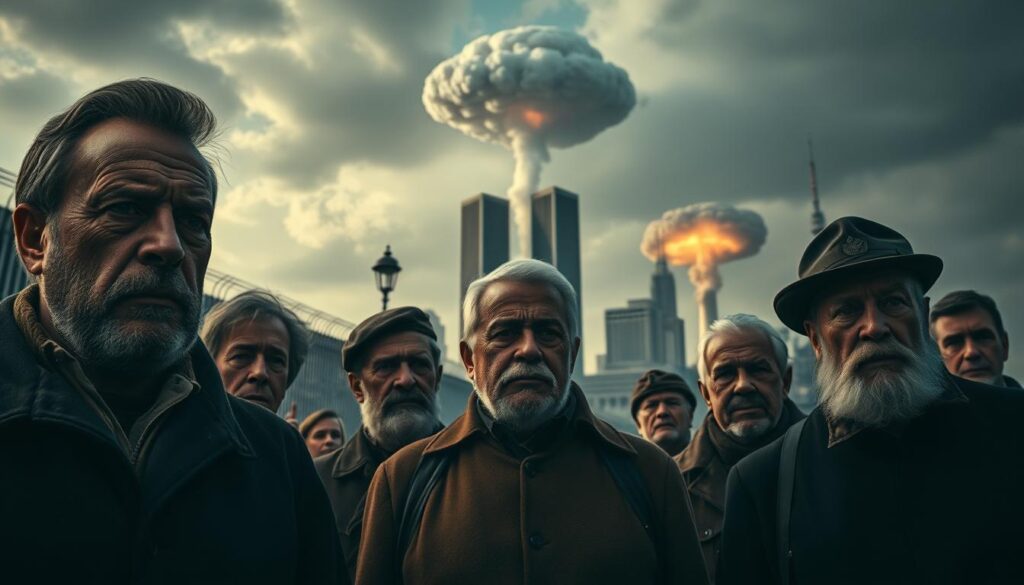
Modern readers often point to a few verses that appear to map onto the violent shifts and new weapons of the 1900s.
The rise and a “young child” who gathers a great troop
One quatrain mentions a “young child” who by his tongue will seduce a great troop and whose fame moves eastward. Enthusiasts link this to adolf hitler and his rise through fiery oratory and mass mobilization.
Scholars note, however, that the word “Hister” historically names the Danube. That shows how a single term can anchor sweeping attributions.
“Within two cities”: steel, famine, and radioactive harm
A quatrain that begins “Within two cities” speaks of “famine within plague” and “people put out by steel.” Readers interpret this as the bombings of Hiroshima and Nagasaki and the planes that delivered them.
Poetic lines about fire, blood, and steel make the match feel plausible. Yet the language remains elastic and fits several modern calamities.
The great man struck in the day by a thunderbolt
Another verse says a “great man” will be struck in the day by a thunderbolt and another falls at night. That phrasing is often tied to john kennedy’s assassination and the later shooting of his brother.
Contextual details in the quatrain—cities and timing—do not align neatly with historical records, which fuels both belief and skepticism.
“The great man will be struck down in the day by a thunderbolt; An evil deed predestined by fate.”
| Claim | Quatrain detail | Notes |
|---|---|---|
| adolf hitler rise | “young child” / seduce a great troop / fame to the East | “Hister” likely refers to the Danube; Hitler born in Austria to a middle-class family |
| Hiroshima & Nagasaki | “Within two cities” / famine within plague / people put out by steel | Interpreted as atomic blasts and radiation sickness; imagery remains broad |
| john kennedy assassination | “great man struck” / thunderbolt by day / another falls at night | Applied to JFK (1963) and RFK (1968); other verse details complicate the fit |
Summary: Dramatic images of lightning, fire, and blood help verses feel prophetic for major world events. Yet careful reading shows the lines often lack clear names, dates, or precise settings. That gap keeps debate alive between fame-driven readings and skeptical, historically precise answers.
Contested modern readings: from 9/11 to natural disasters
Modern claims often flare after shocks, when short, image-rich lines are bent to fit new attacks and disasters.
One famous viral passage that began, “Two steel birds will fall from the sky on the Metropolis…,” circulated widely after 9/11. That line does not appear in authentic 16th‑century texts, yet many still share it as a prophecy.
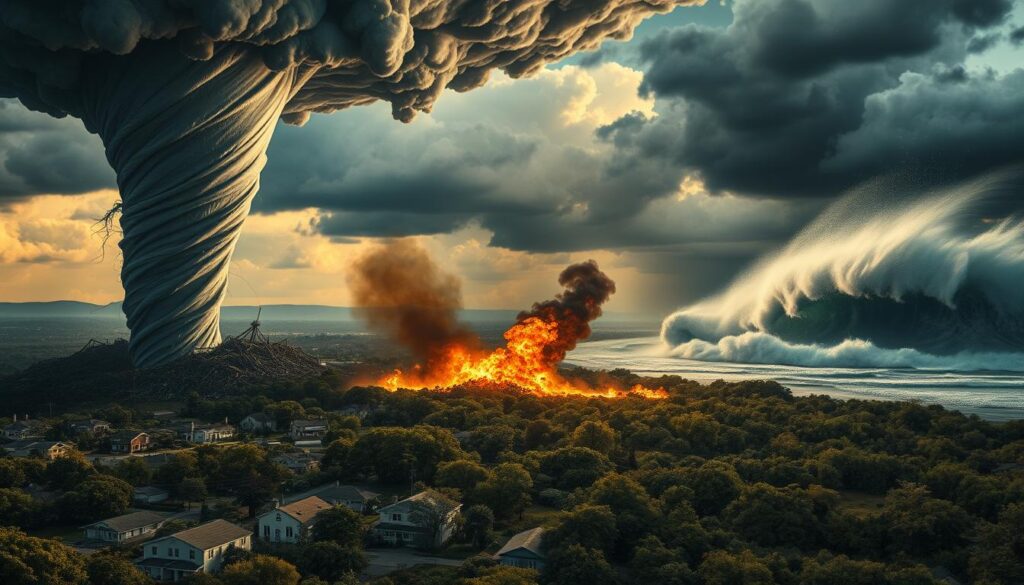
September 11 and the “two steel birds” verse: viral claim versus credible text
Fabricated quotes spread fast because they are short and dramatic. People repost them in panic and grief. Careful editors and scholars, however, point to reliable editions and verifiable words before accepting a link to any modern attack.
Natural disasters and climate change: floods, droughts, and the pull of pattern-seeking
Lines about floods, droughts, storms, and lightning get reused whenever the world sees severe weather. Broad poems feel predictive precisely because they can match many different events.
- Viral fabrications beat careful sourcing in speed and emotion.
- After trauma, pattern-seeking makes many believe an old verse must fit a modern tragedy.
- When checking claims, look for verifiable wording and trusted editions.
“People will read history into short lines and call that fate.”
Ultimately, debates over these modern readings reveal more about contemporary anxieties than about a single 16th‑century author. For related modern claims see related modern claims.
What did Nostradamus predict: separating prophecies, people, and events from hindsight
A careful read shows many quatrains act more like mirrors than maps, reflecting events after they happen. Scholars note the original 16th-century language and compressed form leave plenty of room for reinterpretation.
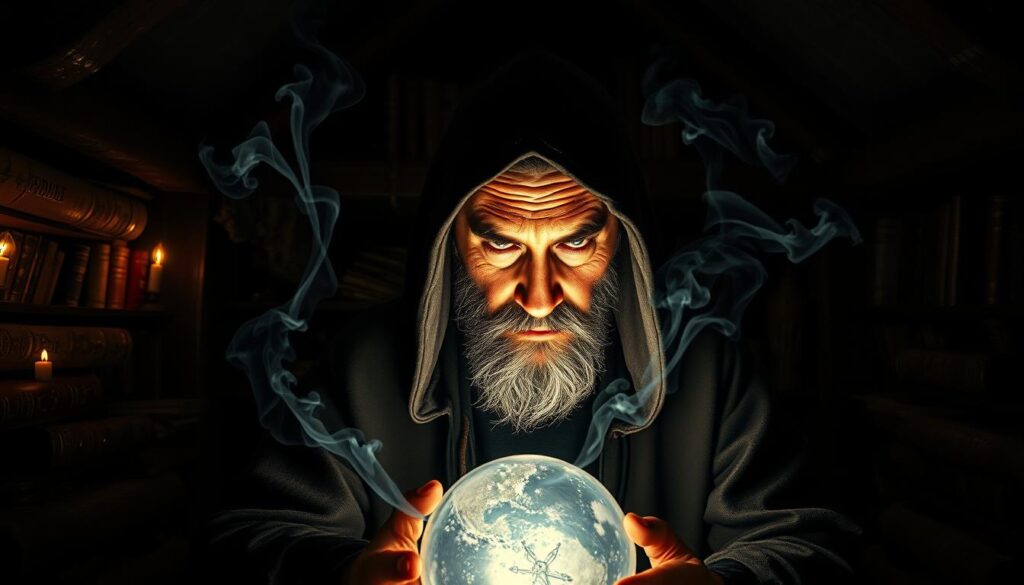
How quatrains fuel interpretations: ambiguity, translation, and timing
Ambiguity lets a single verse point to different people and events, especially when readers already know an outcome.
Translation choices shift tone. A neutral line can read ominous if a translator picks darker words. That change can turn coincidence into apparent prophecy.
Timing matters. A line feels convincing when applied after an event; the same line rarely guided action beforehand.
Accuracy and skepticism: prophecy, coincidence, or retrospective match-making?
Most academic commentary finds that many claimed matches depend on interpretive leaps and hindsight. Broad imagery—fire, floods, kings—recycles easily across world events and centuries.
- Specific name-date-place verses are rare; most quatrains are reusable images.
- Confirmation bias steers readers toward lines that seem to confirm a favored story.
- Treat striking resemblances as starting points, not final proof of foresight.
“Check whether the same verse could fit another moment; if it can, treat the match cautiously.”
For readers interested in modern readings or contemporary psychic work, see a related resource on psychic readings.
How the legacy endures in history and pop culture
Centuries of reprints and screen adaptations have kept the poems and quatrains in front of new audiences.
Books, documentaries, and films remind people of the prophecies nostradamus and push lines back into public view.
Audiences are drawn to stories of the rise and fall of leaders, especially when a single child or a thunderbolt-like shock frames the tale.

Pop culture favors vivid beats—assassination, an unforgettable day, a dramatic man—over cautious academic caveats.
The cycle is simple: major world headlines spark fresh predictions, and older verses get reused to explain the future or to soothe fear.
- Fame grows as each generation applies these short poems to its own anxieties.
- Scholars debate literal meaning while storytellers and media keep the mystery alive.
- Classroom debates and streaming specials alike mix critical analysis with imaginative retellings.
“The name endures less because answers arrive and more because people love to ask again.”
For readers curious about related modern claims and curious skills, see a short guide to supernatural abilities.
Conclusion
A few memorable phrases have become cultural hooks that people use to frame major world events.
That allure explains why readers link verses to the Great Fire, Adolf Hitler, the 1945 bombings, and the great man… day… thunderbolt language tied to john kennedy and later assassination narratives.
Scholars stress translation gaps and hindsight. Verify exact wording before accepting broad claims about attacks or high-profile deaths.
Enjoy the mystery, but weigh how much of any match comes from the verse versus the interpreter. Use this framework when evaluating future centuries-old lines linked to the next headline.
For related modern curiosities see a short piece on angel number 777.