

This introduction answers one clear question: did a sixteenth-century seer name a date for an end world moment, or did later readers attach dramatic meaning to a few poetic lines?
Michel de Nostradame was a French physician and apothecary whose almanacs and Les Prophéties made him a lasting cultural reference. His words are often vague, and that vagueness fuels modern excitement.
One famous line about July 1999 — “from the sky will come a great King of terror” — helped spark late-20th-century Y2K talk about calamity in the sky. We’ll separate that single dramatic prediction from patterns across his texts.
Along the way we’ll weigh events tied to his reputation, such as a royal death in 1559 and later reinterpretations during crises. Expect a fact-forward look at dates, disputed readings, and why people still look to old quatrains to imagine the future.
Key Takeaways
- We will answer where a specific date claim comes from and how strong the text is.
- His life as a physician and author shaped how readers trusted his lines.
- The July 1999 line drew attention because exact dates are rare in his work.
- Many famous events were later read back into vague quatrains.
- Speculation often outpaces evidence; we’ll note clear references and weak links.
- For more on similar prophetic claims, see this psychic predictions resource.
Why people ask “when did Nostradamus predict the world would end”
People often seek a single, clear date because it feels like control in uncertain times. Polls show this tendency: a 2012 survey across 20 countries found over 14% believed an end would occur in their lifetime. In the UK in 2015, 23% thought an apocalypse likely, and most named nuclear war, not a Last Judgment.
Fears and fascination help explain why these questions persist. Psychologists say simple, dramatic predictions reduce complex risks into one story. That makes them easier to share and to use when anxiety or a sense of powerlessness rises.
Historical crises—plague, war, economic collapse—have long pushed people toward prophecy. Short, evocative lines and a famous name make certain texts easy to copy and repeat online. Once a specific date spreads, it can outpace the original source.
We’ll next look closely at what the quatrains actually say about any date tied to death or final end, and why simple claims deserve careful checks.
- Young people and lower-income groups report higher belief in apocalyptic predictions.
- Prior plague memories shape how outbreaks trigger fresh comparisons.
- For broader context on similar themes, see ancient prophecies.
Nostradamus in context: the man, the astrologer, the plague doctor
The life of Michel de Nostradame began in Saint-Rémy in December 1503. He trained in languages and medicine, then traveled treating plague victims for several years. That mix of study and hands-on care shaped his early reputation.
As a practicing man of medicine and an astrologer, he combined herbal remedies, advice on clean water, and era-specific practices with chart reading. These methods fit the medical history of the sixteenth century, when disciplines overlapped rather than stood apart.
Personal loss marked his path. His first wife and two children likely died of plague in the 1530s. A 1538 heresy charge over a remark about a statue ended in acquittal and a return to itinerant practice.
In the 1550s his annual almanacs increased his work beyond clinics. Royal clients, including Catherine de’ Medici and Charles IX, sought his counsel. He died July 1, 1566, likely of gout, leaving a legacy that outlasted his years.
| Year | Event | Role |
|---|---|---|
| 1503 | Born in Saint-Rémy-de-Provence | Early education |
| 1530s | Family deaths, plague outbreaks | Practicing physician |
| 1550s | Published almanacs | Author and astrologer |
| 1566 | Death (likely gout) | Legacy cemented |
How his prophecies were written: quatrains, centuries, and coded language
Simple quatrains, grouped into named Centuries, gave an appearance of order without spelling out exact dates.
He began with annual almanacs in the 1550s and then published a landmark book, Les Prophéties, in 1555. That shift turned short yearly notes into a sweeping collection of cryptic prophecies.
Each four-line quatrain packs layered metaphor and archaic language. Translation and multilingual echoes make many words slippery. Readers can favor one reading or another with little textual pushback.
Astrology shaped how he framed a prediction. In his era this practice was a learned way to discuss fate and public affairs, not fringe magic.
“Vague phrasing worked as protection in a tense political age.”
Deliberate ambiguity limited the risk of being accused after a failed line. That design invites modern searches through each quatrains and makes anchoring any specific end claim to a single verse difficult.

For readers who want a guided entry, this concise guide to prophetic patterns pairs well with a recommended reading on symbolic numbers: best book on angel numbers.
Documented hits attributed to Nostradamus—and why they matter today
A handful of vivid quatrains have been repeatedly mapped onto major crises, giving those verses outsized attention.
Henry II’s death and the “young lion” reading
After a fatal jousting injury in 1559, readers linked a line about a young lion to that death. This retrofit set a pattern: dramatic events get fitted to suggestive lines after fact.
London in flames: 1666 and the “fireballs” line
The phrase about “fireballs in thrice twenty and six” seemed to echo the Great fire of 1666. That match shows how a striking year and disaster make a short verse feel prophetic.
From Napoleon to Hitler: the elasticity of interpretation
Broad descriptors were later tied to figures like Napoleon and Hitler. Political rise, war, and national trauma help readers force-fit quatrains into modern narratives.
Plague references and state use matter too. Joseph Goebbels used prophecies to sway opinion during conflict, showing how fame for a few lines can be weaponized. Each apparent hit fuels more searches for another, keeping interest alive despite broad language and ambiguous time cues.
“Retroactive matching turns vague poetry into apparent prediction.”
The dates most often cited for a Nostradamus “world end” prediction
A single quatrain tied to July 1999 has been the most cited date linked to an end-world claim.

July 1999: “from the sky will come a great King of terror”
That terse image of something from the sky felt ominous. Paired with late-1990s Y2K fears, it became a headline-ready cue. Media attention and a tech countdown made a single line seem like a calendar call.
Modern spins on 2025: wars, plague, and a fireball
Recent chatter pushes a 2025 date tied to long wars, a new plague, or a catastrophic fire. These are overlays, not explicit calendar notes. Commentators read dramatic signs into vague phrasing.
Why none of these add up to a definitive end-time
His quatrains rarely give exact calendar logic. A striking image differs from a clear claim that the world would end on a set date. Readers should separate quoted lines from added meaning.
“A vivid image can spark a prediction; it does not equal a firm calendar.”
when did nostradamus predict the world would end
Many readers expect a neat calendar date, but his quatrains rarely offer that clarity.
The difference between “end times” anxieties and exact dates
Short answer: the corpus contains evocative scenes, not a clear timetable that claims a final destruction on a fixed date.
End times feelings come from vivid imagery and crisis-era reuse, not explicit calendar logic.

What the sources do and don’t show in the quatrains
Readers find metaphors, coded references, and historical color. They do not find a precise date that says the world would end.
- Powerful lines, like the July 1999 image, become remembered as a date-driven prediction.
- Quatrains invite multiple readings; hindsight often fixes one reading as fact.
- Time pressure and media cycles intensify these retrofits as a deadline nears.
“Read the primary text first, then weigh commentary; many claims go beyond the words.”
Summary: The texts spark end-of-era moods, but they do not state a definitive end-of-world date in clear terms.
Papal prophecies and 2027: where Nostradamus meets Saint Malachy
A lion on a throne is a vivid image that readers connect to popes named Leo. That link feels natural: a name evokes a symbol, and symbols invite readings about fate and order in church history.
The “lion on the throne” motif and popes named Leo
Many commentators point to a lion image and a papal name to create a tidy story. A pope who chooses Leo becomes a target for such readings.
Why it resonates: names and animal symbols are easy markers for pattern-seekers during crises.
Saint Malachy’s “Prophecy of the Popes” and “Peter the Roman”
Saint Malachy’s list assigns short mottos to 112 pontiffs and ends with “Peter the Roman.”
Some interpret that final line as a sign of great tribulation and even Rome’s destruction.
Speculation around Pope Leo XIV and a 2027 horizon
Numerological counters and interpretive leaps produce a 2027 date in some modern timelines.
Writers often pair Malachy with other prophecies to give a stronger narrative arc for that year.
Why scholars classify these as interpretations, not facts
Textual evidence for a lion phrase tied to a clear calendar claim is weak. The quoted wording and any firm date are largely constructed by readers.
“Cross-prophecy mashups are cultural storytelling, not documentary proof.”
- Saint Malachy’s book is a late medieval text often treated with suspicion by historians.
- Papal name, religious order, and biography supply flexible fodder for pattern-making.
- Pairing Malachy with quatrains or numerical grids increases drama but not verifiability.
Takeaway: these ties make engaging headlines, but they belong to interpretation. Treat mashups as cultural artifacts rather than firm evidence that the world would end on any given date. For related symbolic reading, see Sirian starseed.
Apocalyptic predictions across centuries: the bigger historical trend
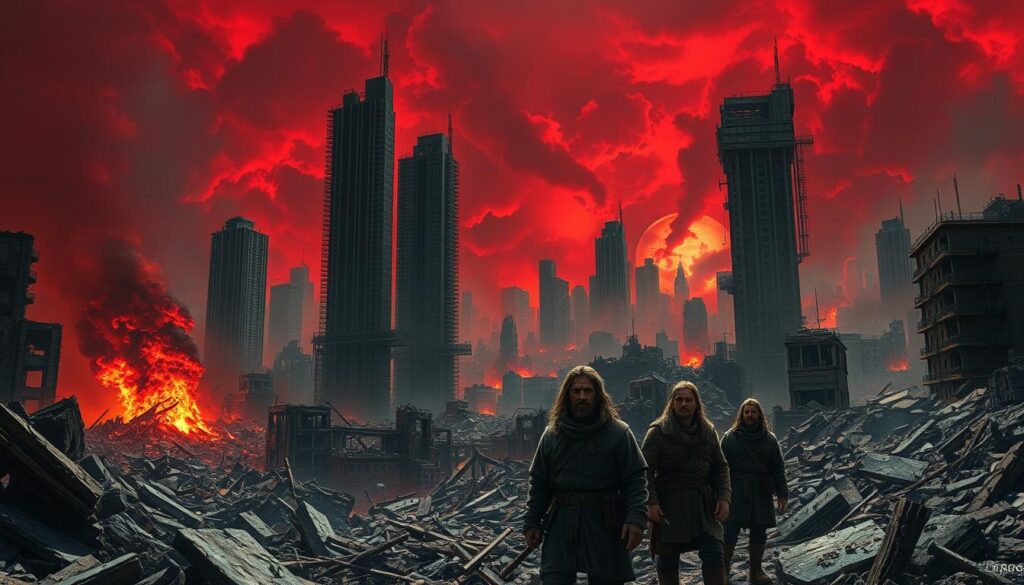
From ancient sects to modern forums, calendar-based forecasts rise in times of crisis. Groups from the Essenes around 66–70 CE to Reformation preachers proposed dates that spoke to their era. These claims often reflected immediate fears, not distant science.
Religious cycles repeated across centuries. Each surge came during wars, famines, or plague years. That made prophetic dates feel urgent and plausible to those living through them.
Religious end-times cycles from 66–70 CE to the Reformation
Communities tied sacred texts and numerology to current events. Leaders named a date within their lifetime to urge reform or warn of judgment. Those messages spread through sermons, pamphlets, and later printed books.
Scientific doomsdays vs. scriptural and numerological reckonings
Modern science frames long-term threats on vastly different timescales—hundreds of thousands to billions of years for some risks. That contrasts with short-range, date-driven religious reckonings.
“Each generation reads its anxieties into inherited prophecies.”
How events anchor meaning:
- Wars, plagues, and social upheaval boost interest in exact dates.
- New media—from pamphlets to social platforms—amplify quick cycles of rumor and revival.
- The rise of predictive styles reflects technology, not a change in the basic human pattern.
| Era | Typical driver | Common form of prediction | Impact |
|---|---|---|---|
| 1st century CE | War, sectarian unrest | Scriptural timetables | Local mobilization, sect growth |
| Medieval–Reformation | Plague, religious reform | Pulpit declarations, pamphlets | Policy shifts, persecution |
| Modern era | Wars, pandemics, tech fears | Print, radio, internet | Viral myths, policy concern |
Across centuries, the persistence of dates shows a human pattern: people seek anchors in tumultuous years. That pattern helps explain ongoing interest in any single prediction. Despite many specific dates, life continues, so claims merit close scrutiny.
How vague language fuels fresh predictions every year
Vague, metaphor-laden lines let readers fit old quatrains to new headlines with little strain. This language invites multiple, often conflicting readings.
One short phrase can be pressed into service for many modern events. Translation choices shift tone: some renderings sound ominous, others read plain.
Older words leave gaps where words once tied to now-lost context. That gap makes it easy for readers to project current fears onto the text.

- A single line supports multiple interpretations linked to recent events.
- Quick headlines under time pressure favor dramatic takes over careful analysis.
- Memorable terms get recycled across years and feel evergreen to new audiences.
“Translations shape meaning as much as the original verse.”
Tip: compare versions side by side. Spot how key words move between translations to see where additional meaning and modern predictions are being added.
The role of translation, selection, and confirmation bias
C selection of a quatrain after a disaster gives that verse outsized cultural power.
Confirmation bias works like this: people pick a short set of words that resemble an event and call it a hit. They ignore hundreds of other lines that do not match. That makes a single match feel much stronger than it really is.
Retrofit readings after major wars, plagues, and fires
After big catastrophes — from wars to great fires and epidemics — readers often hunt the book for a line that fits. This retrofit method reshapes narrative by matching a quatrain to a known date or death.
Famous examples include selections tied to London’s fire, battlefield upheavals, and plague years. Each case shows how easy it is to find a phrase that seems to describe disaster once the event is known.
How wording choices steer headlines and public fears
Different editions and translations change key words and tone. A mild phrase in one edition can read apocalyptic in another.
Headlines favor sharp, fearful wording. Editors highlight the most dramatic fragment to grab attention. That nudges people toward believing a clear date or dire prediction exists.
“People remember hits and forget misses; shareable snippets make hits dominate memory.”
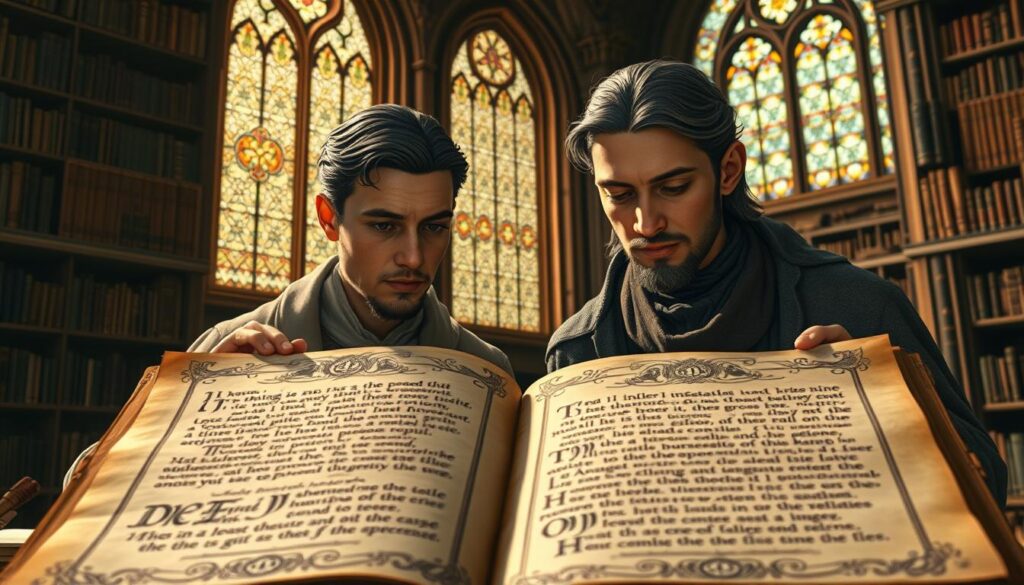
- Check edition dates and translators before trusting a quoted line.
- Remember many quatrains never match events; selection skews perception.
- Short, viral quotes accelerate belief by repeating dramatic words out of context.
| Factor | How it skews meaning | What readers should do |
|---|---|---|
| Selection | Chooses a fitting quatrain after an event | Compare many verses, not just the highlighted line |
| Translation | Alters tone and specific words | Check original language and multiple editions |
| Media framing | Highlights dates and fearful terms | Read full quatrain and source context |
Practical tip: before sharing claims about a date, verify the source and edition. For related cultural readings and symbolism, see a short guide on the Knight of Cups.
Media, propaganda, and culture: why Nostradamus endures
Short, vivid prophecies function as ready-made motifs for persuasion across eras.
State actors have long used cryptic lines as a subtle reference to shape public mood during war and crisis. Joseph Goebbels, for example, cited prophecy tropes to lend drama and authority to propaganda. Ambiguity let officials point to fate without risking clear promises.
From Goebbels to viral posts: prophecies as persuasion
Modern platforms recycle those same motifs. Short clips, listicles, and viral posts turn a few lines into clickable claims about major events.
Entertainment value, fear appeal, and the attention economy
Fear sells. Dramatic predictions score clicks, and algorithms reward engagement. That creates a feedback loop: big events spark fresh reads, and fresh reads keep the prophet’s work in circulation across centuries.
“Familiar names and symbols lend borrowed authority to modern narratives.”
Understanding the messenger helps decode motive. Some uses aim to persuade, others to entertain. Either way, these tactics explain why interest keeps rising and why many people still treat cryptic lines as urgent warnings that the world would end soon.
Trend analysis: when interest spikes in “world end” prophecies
Certain years act like flashpoints: they let an old quatrain become a headline-ready claim overnight.
Attention clusters around a clear date or vivid image. Media cycles and public fears turn a line into a story that feels immediate.
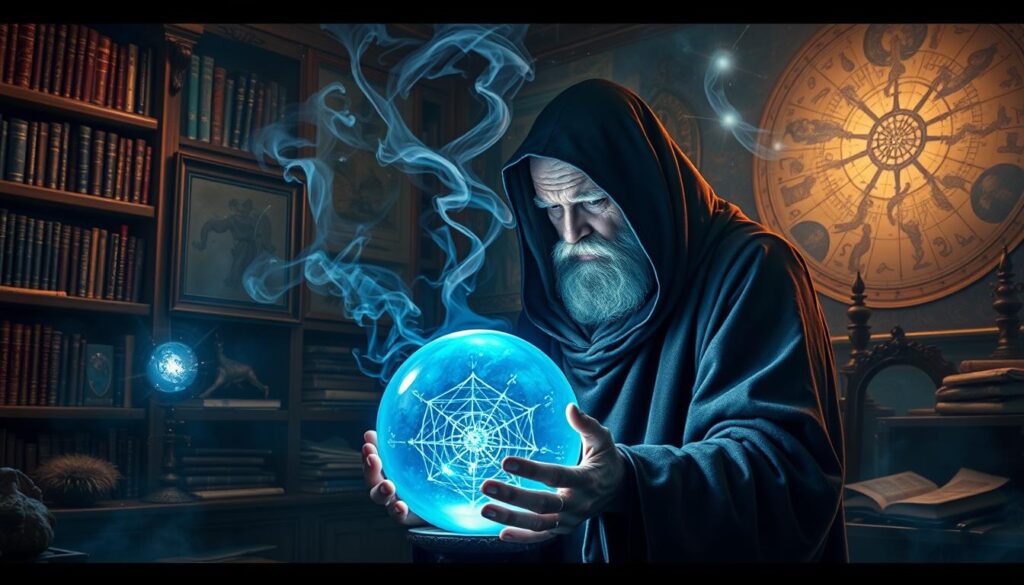
Y2K and 1999: a perfect storm of tech panic and prophecy
The late 1990s make a useful case study. A specific phrase tied to July 1999 met a looming year-end tech worry and created intense coverage.
Headlines linked the sky-themed verse to Y2K alarms, folding an image about the sky into millennial fears about digital failure. That blend pushed old lines back into mainstream conversation.
Conflict, climate, and pandemics: drivers of fresh reinterpretations
After major events, readers hunt for verses that seem to fit. Modern war, extended conflict, wildfire seasons, and outbreaks revive plague-era comparisons.
Platform algorithms amplify dramatic takes. A viral post can reframe a quatrain as a near-term warning and change public order in discourse for a short burst.
- Even if a hopeful date passes uneventfully, attention resets with the next crisis.
- Fire seasons and pandemic memories make certain imagery feel newly relevant.
- This rhythm ensures sustained interest in end-time predictions across each high-profile year.
“Crisis plus a memorable line equals a ready-made narrative that news cycles love.”
What the public believes vs. what historians say
Surveys reveal that many people favor a tidy calendar over scholarly nuance.
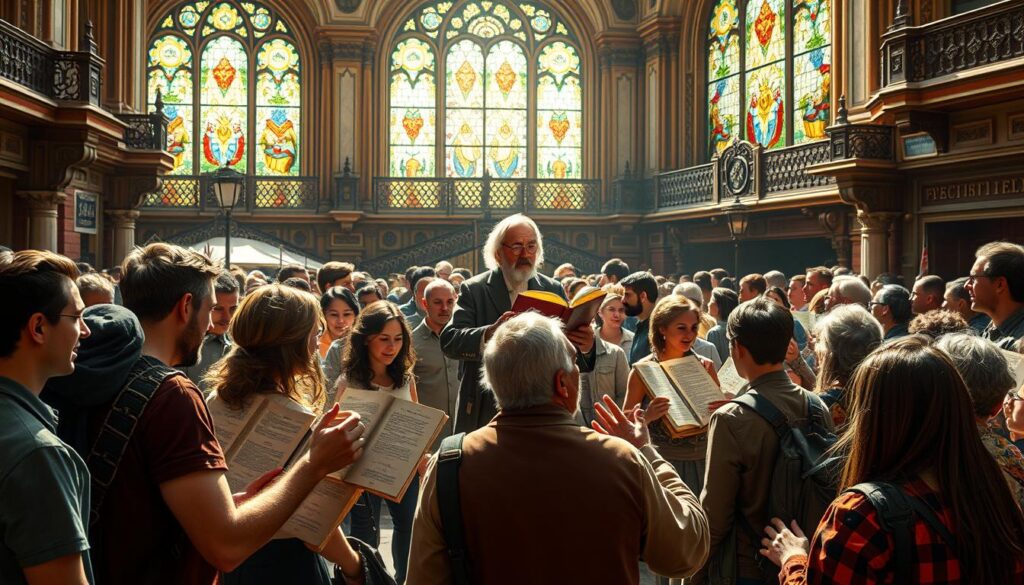
Polls show a notable share expect an apocalypse within their lifetime. This impulse favors clear years and a single date to mark risk.
Historians reply differently. They note the quatrains are vague and varied across editions. Scholarly work stresses context, language, and changing translations.
Experts resist firm claims because the texts rarely state that the world would end on any specific day. Readings shift across years and versions, so a neat calendar rarely appears in primary sources.
“Powerful stories often outlast failed predictions.”
Belief persists even after dates pass. That resilience comes from emotional storytelling and viral sharing, not new evidence.
Education can narrow the gap. Explaining sources, showing multiple translations, and noting editorial choices helps people weigh evidence over virality.
- Contrast: public appetite for certainty vs. scholarly caution about ambiguity.
- Why scholars caution: wording varies and no clear calendar claim exists.
- Result: beliefs persist across years despite missed dates.
| Perspective | Main focus | Practical advice |
|---|---|---|
| Public | Clear dates and dramatic predictions | Seek sources and note viral framing |
| Historians | Textual ambiguity and context | Compare editions and translations |
| Educators | Reduce misreading through explanation | Teach source-checking and critical reading |
Takeaway: weigh textual evidence, not headlines, when assessing claims about any date linked to grand predictions.
Conclusion
Bottom line: No clear, explicit date in the original quatrains says the world would end on a set day. Most famous calendar claims come from later readings layered onto poetic lines.
His prophecies are vivid and adaptable. That makes them durable cultural material but a weak basis for firm predictions about the future.
When a new date trends, check the exact wording, the original book location, and what others added. Apply healthy skepticism and favor sources that trace quotations back to primary texts.
Fear and fascination keep these stories alive. Use careful reading to guide your view of the future, not headlines or viral snippets.