

Michel de Nostredame lived in 16th century France and left a mixed legacy as an apothecary, physician, astrologer, and author. Born in Saint-Rémy-de-Provence in December 1503, he later died in Salon-de-Provence in July 1566. These are the basic facts that anchor his life.
He wrote Les Prophéties, a book of 942 quatrains that shaped his global reputation. He also published popular almanacs and served elites, winning patronage that spread his name across the world. His family had converted to Catholicism a generation before his birth, a fact that shaped his early identity.
The mix of medical practice, plague years, and religious tension colored his work. His prophecies and predictions spurred debate for years and still draw interest today. This article will move from biography to methods and then to scholarly verdicts, so readers can separate claim from evidence.
Key Takeaways
- Michel de Nostredame combined medicine, astrology, and writing in the 16th century.
- His book, Les Prophéties, made him widely known beyond France.
- Family conversion and social tensions influenced his early life and name.
- Almanacs and elite patrons shaped his reputation during his years.
- The article will trace his methods, famous predictions, and modern assessments.
- Explore deeper context and readings at psychic readings.
What was Nostradamus: framing a 16th-century life, work, and reputation
A practitioner turned author whose books and almanacs made him a familiar name across towns and courts. He Latinized his name in print, following a common Renaissance habit that linked learned men to classical learning.
Beginning in 1550 he sold annual almanacs that mixed weather notes, calendars, and short prognostications. In 1555 he published Les Prophéties, a larger collection of quatrains that later readers read as layered prophecy.
He denied the formal title of prophet in his prefaces, yet many people and powerful patrons treated his forecasts as serious. That tension helps explain his rise: a french astrologer moved easily between household audiences and the court.

Critics in his own century and in later centuries questioned methods and clarity. Different readers, across time, have made very different claims about the same lines.
- Books and almanacs expanded his reach.
- Poetic, ambiguous language made prophecies open to many fits.
- Patronage and public demand turned private forecasts into public reputation.
| Role | Activity | Impact |
|---|---|---|
| Apothecary & physician | Medical practice and plague work | Local reputation for care |
| Author | Almanacs (from 1550) and Les Prophéties (1555) | Wider readership; books shaped name |
| Astrologer | Forecasts for people and court | Patronage and public notice |
For readers curious about interpretation and later reception, see a recommended guide like the best book on angel numbers to explore how symbolic texts get re-read across centuries.
Origins and early life in 16th-century Provence
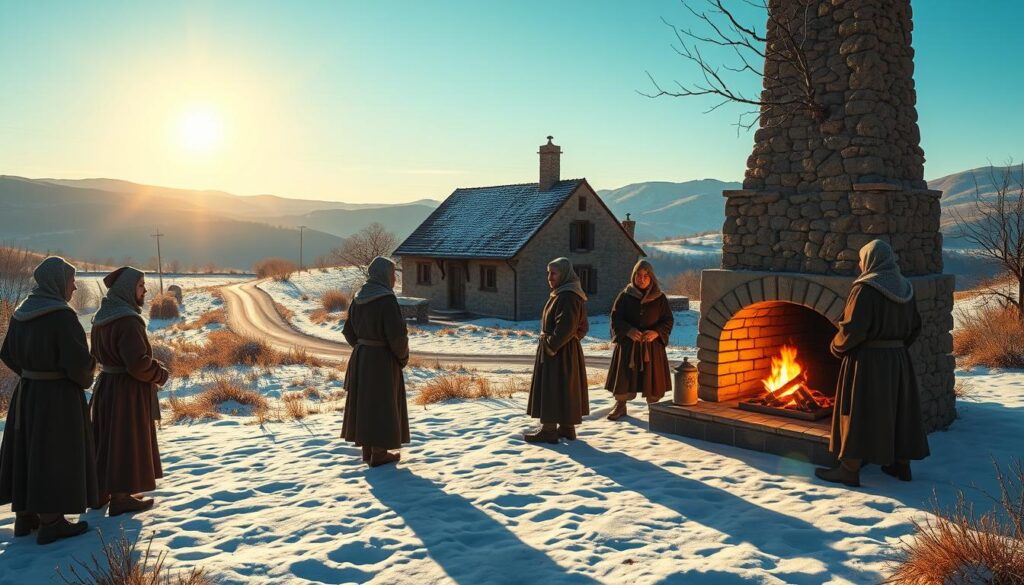
A child born in late december 1503 entered a world of narrow lanes, parish registers, and shifting religious loyalties. Records give two possible dates—14 or 21 December—an ordinary archival ambiguity for the 16th century.
He was baptized Michel and grew up in Saint-Rémy-de-Provence. His father, Jaume (Jacques) de Nostredame, worked as a notary. The household included at least nine children, so daily life mixed public paperwork and busy family routines.
Family name and faith
The family history matters. Around 1459–60 the paternal line converted from Judaism to Catholicism and took the name Nostredame. That choice shaped public identity and the word by which the world later knew him.
Childhood influences and local setting
Tradition links a maternal relative who taught him basic Latin and reading, but documentary traces end after 1504. We must separate confirmed fact from story when tracing early life.
- Saint-Rémy offered legal offices, parish life, and access to local books.
- Growing up as one son among many children exposed him to practical skills and household learning.
- Local events and changing religious culture set context for later interest in prophecy and public writing.
Student years: from Avignon to Montpellier
At about fourteen he entered the small university at Avignon to study the trivium: grammar, rhetoric, and logic. The term gave him a basic academic frame, but the town closed after just over a year because of a plague outbreak.
Avignon studies interrupted by the plague and the era’s trivium education
That early interruption pushed him into practical trade. He spent several years apprenticing and working as an apothecary, learning herbs, compounding remedies, and treating local patients.

Apothecary practice, expulsion at Montpellier, and early medical reputation
In 1529 he sought formal medical training at Montpellier to become a physician, but university statutes barred those with manual trades. The expulsion is recorded (BIU Montpellier, Register S 2 folio 87) and stands as a clear fact in his history.
Over the following years his practical skill grew. He gained notice for a famed “rose pill” used during plague waves. At the same time, medical teaching often mixed herbal remedies with astrology, so consulting the stars fit common practice.
This period of travel, patients, and books shaped both medical work and the later turn to writing. Encounters with teachers, civic events, and readers helped form a hybrid identity between learned medicine and hands-on care. Those experiences laid a foundation for future prophecies and public predictions.
Apothecary, physician, and plague years
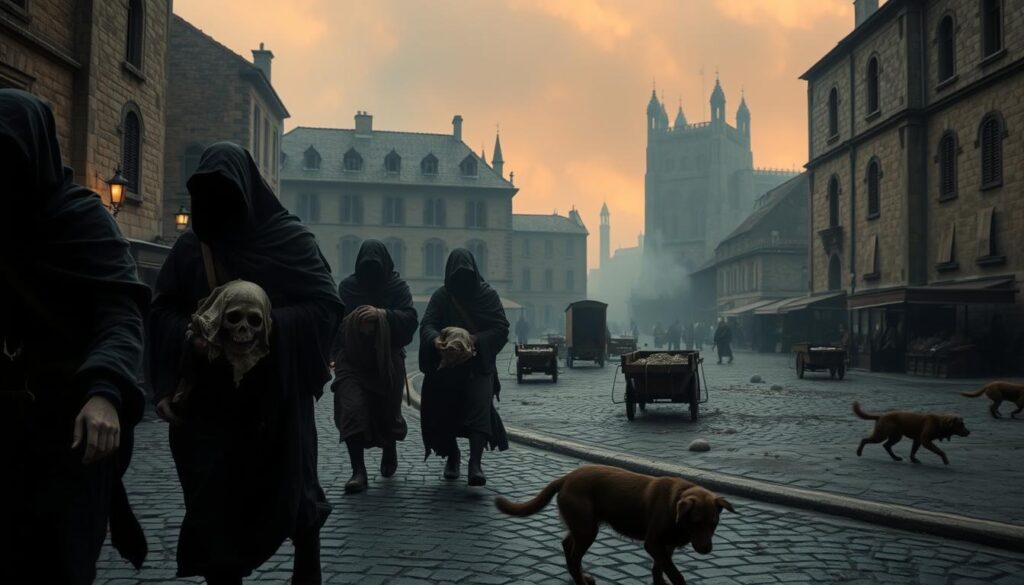
His work during epidemic seasons combined an apothecary’s mixtures with practical public-health advice. Records show he assisted the physician Louis Serre in Marseille during a major plague in 1545 and then treated outbreaks in Salon-de-Provence and Aix-en-Provence.
Herbal remedies, the famed “rose pill,” and hands-on responses
Local accounts and his Traité des fardemens describe herbal salves and the famed “rose pill.” People credited the pill with protection, though later study treats that claim cautiously as a mixed fact.
He emphasized cleanliness, isolation, and simple remedies—steps that likely reduced infection spread more than bloodletting, which his own texts also recommend despite its limits.
Work in Marseille, Salon, and Aix
Serving in city hospitals and private homes, he built a reputation across several years of crises. Direct care during these events gave him social standing and practical credibility.
These plague years helped shape his later writings and the public’s appetite for predictions and prophecies. For readers curious about broader claims tied to healing and unusual skills, see supernatural abilities.
Family life, loss, and return to Salon
Personal tragedy and later family rebuilding shaped his daily routines and public life. Around 1531 he married in Agen. By 1534 his first wife and two children had died, likely in plague years.

After that loss he traveled for a time. He finally settled in Salon-de-Provence in 1547. There he married Anne Ponsarde, a wealthy widow who brought stability and resources.
First marriage and the death of wife and children during plague
The early deaths left a mark on his private life. Grief shaped how he managed patients and books. It also changed his priorities and use of time.
Marriage to Anne Ponsarde, six children, and the Canal de Craponne venture
With Anne he raised six children: three daughters and three sons. The household became a practical support network for writing and public work.
| Year(s) | Event | Impact |
|---|---|---|
| 1531–1534 | First marriage in Agen; loss of wife and two children | Personal loss; renewed travel and reflection |
| 1547 | Marriage to Anne Ponsarde; settled in Salon | Stability; larger household; time for books and predictions |
| 1556–1567 | Share in Canal de Craponne | Investor role; civic engagement; added income and social ties |
People close to him helped shape later prophecies and the public name he kept in the wider world. Family duties and local events linked domestic life to his book output and public predictions in the century’s tense climate.
From medicine to astrology: almanacs, patrons, and rising fame
By 1550 he began selling a compact yearly almanac that readers opened each new year for guidance. The small book mixed calendars, weather notes, and short forecasts that mattered to farmers and merchants alike.
Annual almanacs offered practical value: planting dates, simple horoscopes, and quick predictions. This steady output turned a physician into a working astrologer and occasional french astrologer consulted for household and civic planning.

Court interest followed. Catherine de’ Medici read his 1555 almanac and invited him to Paris to prepare horoscopes for the royal children. He later served as Counselor and Physician-in-Ordinary, helping his public rise during Henry II’s reign.
“People sought clarity in turbulent times.”
Books and quatrains worked together: the yearly almanac provided immediate guidance, while longer prophecies aimed at broader events. This blend sold well in a century hungry for predictions about politics, war, and the future of the world. It set the stage for Les Prophéties and the enduring interest in nostradamus prophecies across the centuries.
Les Prophéties: how the quatrains and prophecies were crafted
Les Prophéties gathers 942 quatrains organized into labeled Centuries. The arrangement favors eras over dates, so lines speak to a broad future rather than a single year.

Sources and methods
He drew freely from Livy, Suetonius, Plutarch, medieval chroniclers, astrological manuals, and the Mirabilis Liber. Scholars note that nostradamus used many earlier texts as raw material.
Obscure language and style
The verses mix French, Latin, Italian, Greek, and Provençal. This hybrid, often Virgilianized, syntax makes literal reading hard and invites varied readings.
Printing quirks and survival
Early printing introduced variant spellings and punctuation. Some quatrains (for example parts of Century VII) do not survive in all editions, which complicates linking lines to later events in the world.
| Source | Type | Role in the book |
|---|---|---|
| Classical historians (Livy, Suetonius) | History | Provided names, episodes, models for prophetic framing |
| Mirabilis Liber (1522) | Portents compendium | Offered motifs of wonders and omens used in quatrains |
| Astrological manuals (Roussat) | Astral lore | Shaped timing ideas and the language of prediction |
Predictions and world events: from Henry II to the Great Fire of London
Over centuries, interpreters have linked a few striking verses to royal deaths, city conflagrations, and political dramas.

“Young lion” and the death of King Henri
The famous “young lion” quatrain is often read as referring to king henri of france and his fatal jousting wound on July 10, 1559. Readers point to the image of a mounted challenger and a mortal lance blow as a close match.
London’s Parliament, a beheaded king, and the Great Fire
Another line about “The Senate (Parliament) of London will put their King to death” has been tied to Charles I’s 1649 trial and beheading.
The phrase about “thrice twenty and six” has been linked to the great fire london of 1666, when flames devastated much of the city. Many found the numeric phrasing evocative of that disaster.
Attributions to Napoleon, Hitler, and apocalyptic drama
Later readers claimed his verses forecast Napoleon, Hitler, or end-of-world scenarios in 1999. Such claims helped spread the idea that nostradamus predicted modern upheavals.
| Quatrain image | Event | Scholarly caution |
|---|---|---|
| Young lion vs. older | Death of king henri / henry france (1559) | Symbolic language allows many fits |
| Senate kills king | Charles I beheaded (1649) | Translation and timing debated |
| Thrice twenty and six | Great fire / fire london (1666) | Numeric readings often after the fact |
Bottom line: these dramatic matches show how ambiguity lets prophecies gain traction. For readers curious about symbolic patterns and modern readings, see a related guide on nostradamus predicted interpretations.
Heresy, skepticism, and the question of prophecy
Claims of error and suspicion shadowed his public rise, pulling him between learned practice and popular fame. Centuries of debate followed as clerics, rivals, and readers probed the limits of prediction and faith.
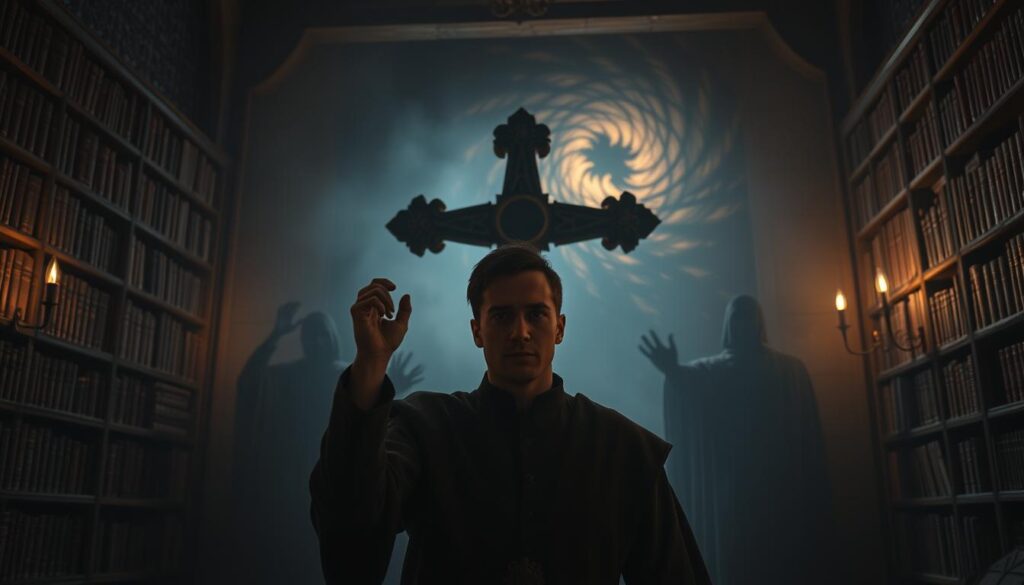
Accusations came early. In 1538 he faced charges in Agen but was acquitted. Later, in late 1561, a brief imprisonment in Marignane followed the publication of an almanac without a bishop’s permission.
Accusations, brief imprisonment, and the gray zone of astrology
At the time, heresy meant explicit anti‑Catholic acts or invoking forbidden magic. Astrology and many predictive practices sat in a gray zone. Physicians and apothecaries commonly used astrological charts without automatic condemnation.
Academic critiques: vagueness, mistranslation, and retrospective fits
Scholars argue the quatrains and verses are often vague. Translation shifts and after‑the‑fact matching make firm links to events weak. Believers and skeptics keep reading the same lines in very different ways.
| Issue | Evidence | Effect |
|---|---|---|
| Legal trouble | 1538 acquittal; 1561 detention | Heightened scrutiny, not conviction of heresy |
| Method | Astrology mixed with medical practice | Kept him inside accepted learning for many peers |
| Critique | Vague quatrains and retrospective fits | Limits claimed predictive power of the book |
Readers seeking modern takes on prophetic claims can find relevant context at psychic predictions. He denied the title of prophet in his prefaces, yet his prophecies kept fueling questions about the end world and the future for generations.
Final years, death, and the legacy living on today
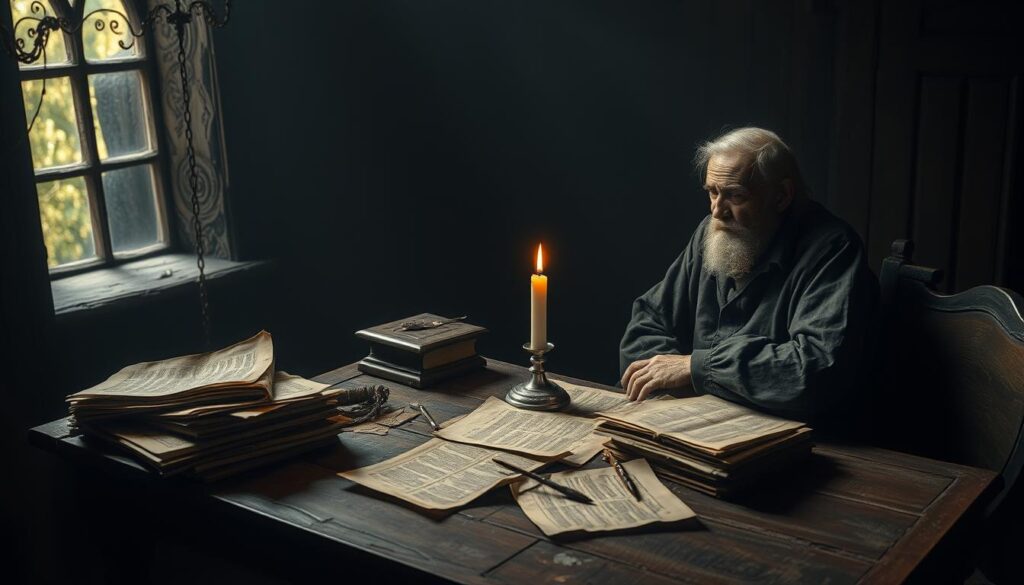
In his final months, severe gout gave way to edema, and family papers record a careful will drafted before his death. He left property and 3,444 crowns to his wife, held in trust for their children.
He died on 1 or 2 July 1566 and was first buried in a Franciscan chapel. During the French Revolution his remains were moved to the Collégiale Saint‑Laurent in Salon‑de‑Provence.
Medical decline and the will
Gout worsened into swelling of the limbs and chest edema. Before his end he settled legal matters to protect his household and heirs.
How history and astrology shaped a lasting name
Nostradamus used classical history and astrological lore together in his verses. That mix made the book and its quatrains both literary and ciphered.
Memory, family, and modern fascination
His son, César, painted a portrait about 1614 and family records helped preserve a public image. Across the centuries, editors, translators, and media repeated claims that he predicted modern events.
“Poetic ambiguity lets lines travel through time and find new readers.”
Today popular headlines still echo phrases like “predicted” after major news. That pattern keeps his reputation alive and feeds interest in the future, the end world, and cultural mythmaking.
For visitors curious about the legacy in art and record, see a note on the portrait and records at this short feature. The blend of a physician‘s care and a writer’s eye explains why his impact endures into our time.
Conclusion
A December 1503 birth led to a career that mixed hands‑on medicine and the craft of quatrains and verses. He served as an astrologer in plague seasons, treating patients and shaping texts that readers still parse today.
Plague outbreaks shaped his practice and sharpened the urgency in many lines. Accusations of heresy and the label of prophet followed him, yet debate often reveals more about later readers than about his intent.
Others have reshaped the meaning of these quatrains and verses across centuries. For a sensible read of nostradamus prophecies and the future, value the poetry, check the history, and question sweeping claims.
His , lasting legacy links a recorded death in early July to a name that invites scholars, skeptics, and curious readers into ongoing conversation.