

Recent headlines have revived interest in a set of quatrains that fans link to the coming year. Claims range from dramatic celestial events to slow political shifts, and many readers want clear, calm context.
We’ll outline the most-cited verses from Les Prophéties and explain why translations and selective quoting often stretch meaning. Historians note that the quatrains are vague and rarely tied to exact years.
Alongside poetic lines about war, plague, and strange signs, scientists and agencies such as NASA provide practical checks on celestial claims. This piece aims to separate sensational headlines from verified information and to show how people map old verses onto modern events.
Key Takeaways
- Popular summaries mix vague quatrains with modern events, often retrofitting dates.
- Scholars caution that Les Prophéties is ambiguous and open to many translations.
- Scientific agencies do not confirm catastrophic celestial threats in the near term.
- The article will compare common online claims and expert perspectives.
- Readers can follow linked resources like psychic predictions for wider context.
Why 2025 is in the headlines: a news brief on revived Nostradamus prophecies
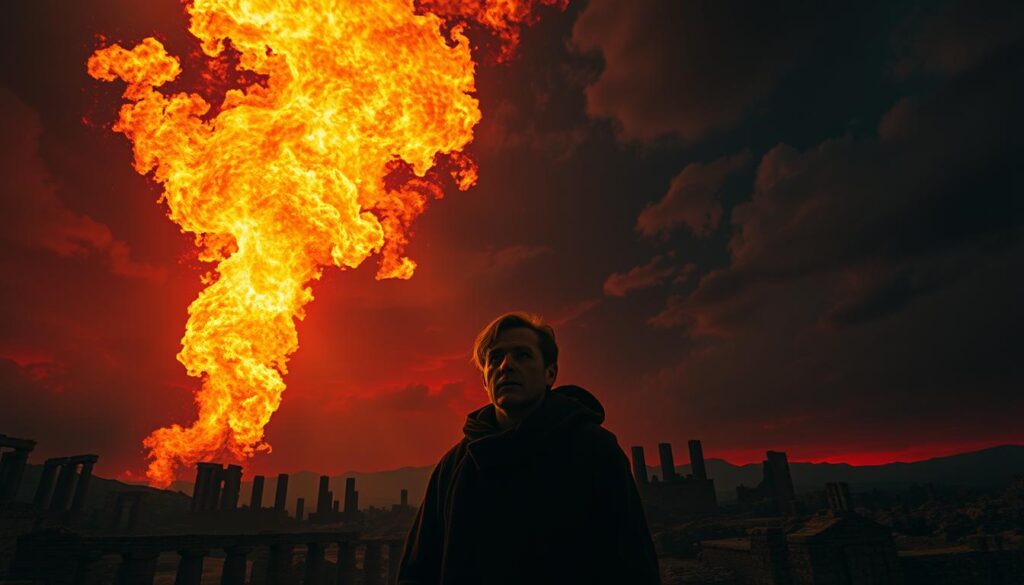
A sudden surge of viral posts has pushed an old quatrain back into headlines. Social feeds turned a phrase about a blazing sky into urgent chatter about a looming end of the year event.
The line often appears as a fireball image, and outlets cast it as a harbinger of meteor strike, nuclear blast, or broad world calamity. That mix of vivid language and current anxieties helps stories spread fast.
Viral claims and how they spread
- Posts tie the verse to trending crises—economic strain, war, or environmental disaster—to boost clicks.
- One vague reference can be read three different ways: cosmic impact, atomic blast, or symbolic change.
- Threads moved from niche forums into mainstream timelines within hours, showing rapid rise in attention.
“Historians note that many quatrains lack date markers; modern readers often retrofit lines to match current fears.”
Quick take: The year-specific angle is a modern overlay. The original texts do not carry a stamped date, and translations vary. For broader context on similar claims and public reaction, see a roundup of related predictions.
Who Nostradamus was and how Les Prophéties fuels yearly predictions
An astrologer and physician in 16th-century France wrote a compact collection that still sparks debate. The book known as les prophéties contains many short quatrains that resist single meanings.

The man behind the verses worked with patients and charts. His writing mixes dialects and symbols, which gives each line room to breathe.
Readers across years revisit the same stanzas and map them to new headlines. That habit keeps the writer’s power alive; people find patterns that match their moment in time.
Quatrains, ambiguity, and the enduring myth of the seer
The quatrains are brief and image-rich. Their shape invites broad reading and selective quoting.
Historians warn that many claimed hits rely on post-event matching. Fans, by contrast, point to the poetic pull and the odd coincidences that feed the myth of the seer.
“Ambiguity is at the heart of the text: it lets each generation rewrite meaning.”
For related cultural topics, see a roundup of telepathic and related practices at telekinesis resources.
what nostradamus predicted for 2025
Some translations use striking monetary and lunar symbols to suggest urgent resource and power shifts. These images fuel modern interpretations that tie old verse to current conflicts and climate worries.
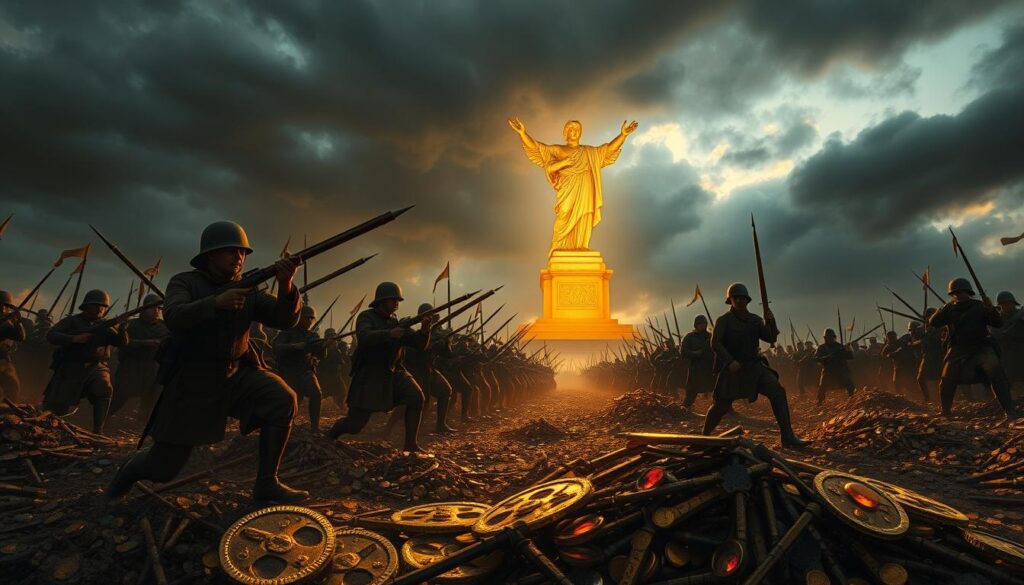
“Long war” exhaustion and money for soldiers
Through long war lines mention exhausted armies and scarce money. Readers latch onto words like gold, coin, and Gallic brass to argue that a state can no longer pay its soldiers.
The phrase about the crescent sign moon is often read as a cultural or religious marker, though it can be symbolic. Such imagery fits many eras, so claims that it pins to one year remain speculative.
England upheaval and the “ancient plague” line
Lines about England show “cruel wars” and an “ancient plague” worse than the enemy. Interpreters debate whether this signals literal disease, palace intrigue, or social breakdown.
“In England, cruel wars will rage. The ancient plague will be worse than the enemy.”
“World’s garden” under threat
References to a “world’s garden” have been linked to Amazon devastation and “sulfurous water.” Readers map that image to deforestation, polluted rivers, and broader environmental decline.
The rise of an “aquatic empire”
Flood and sea imagery spawn the idea of an “aquatic empire”—a metaphor for shifting power or literal coastal change. Rising waters and a new ruler amid floods form the backbone of that interpretation.
- Key point: These readings rely on metaphor-rich quatrains, not on dated manuscripts.
- Takeaway: Vivid lines make strong predictions attractive, but they allow many modern fits.
| Image | Core phrase | Common modern reading | Historical note |
|---|---|---|---|
| Gold, coin | Money for soldiers | Resource shortages, inflation | Coin terms were common in period economy |
| Crescent sign moon | Lunar/cultural mark | Association with certain nations or symbols | Open to multiple symbolic meanings |
| World’s garden | Sulfurous water | Amazon harm, polluted waterways | Evocative environmental image, not specific |
| Floods | Aquatic empire | Power shifts or coastal crises | Metaphor used across quatrains |
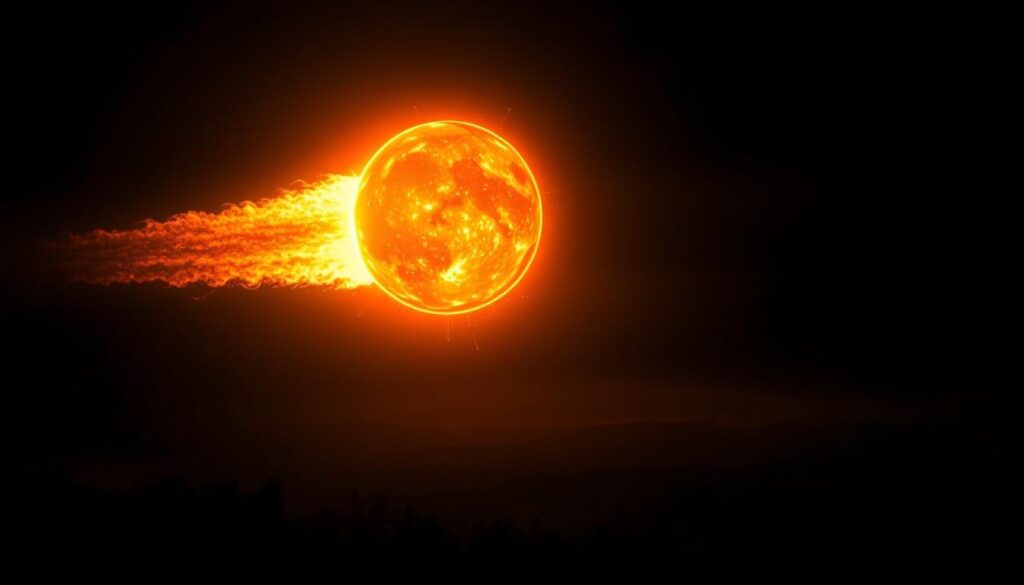
The “fireball from the heavens”: asteroid, atomic fire, or metaphor?
Many readers now parse a single fiery phrase as literal impact, human-made blast, or poetic upheaval. The short quatrain that speaks of a fireball has inspired three main readings: an asteroid strike, an atomic flash, or a sweeping metaphor for social collapse.
Interpreting “harbinger of fate” and a “second chance”
Lines that call a blazing sign a harbinger fate also mention a second chance, which invites hopeful interpretations amid dire predictions. Scholars warn that translation shifts can change whether a line feels fatalistic or redemptive.
NASA’s outlook versus online speculation
Scientific agencies list no confirmed collision by a tracked asteroid in the near term. That public record contrasts with viral posts that treat the verse as a literal alarm about the end.
Science, fate, and cultural reflection
Ultimately, cosmic language blends science and myth. The same passage can act as a cultural reference point, giving each group a different chance to see its own fears or hopes.
“From the cosmos, a fireball will rise, a harbinger of fate… The fate of the Earth, a second chance.”
- Key point: Cross-check translations and seek original references before assuming a date.
- Takeaway: Cosmic imagery often mirrors public anxiety more than it predicts events.
Why 2025 draws apocalyptic attention now
Online trends compressed vague quatrains into crisp, shareable end‑time narratives. Short clips and looping graphics make it easy to turn poetic lines into an urgent clip.

Social media amplification: #Nostradamus2025 and the cycle of anxiety
Hashtags like #Nostradamus2025 and #Endof2025 concentrated the buzz, inviting videos that frame a single phrase as an asteroid, a nuclear flash, or a solar storm.
Creators link current climate warnings, geopolitical shocks, and rapid tech change to those lines. That mix makes a short story feel timely and urgent.
People see friends sharing the same clips and that repetition creates a feedback loop. The more it spreads, the more viewers assume the claims have weight.
- Quick note: Short‑form video compresses ambiguity into vivid visuals.
- Result: Millions of impressions can follow from a handful of striking lines.
- Practical tip: Test big claims against traceable sources and expert views.
“Audiences often project present anxieties onto old verses, creating a repeating cycle of attention in uncertain times.”
Next, we’ll look at what historians and scholars conclude about dating and accuracy of those quatrains.
For related context, see a discussion on symbolic numbers like angel number 2525.
What historians and scholars say about dating quatrains and accuracy
Critical historians argue the book’s language resists precise dating and invites retrospective fits. Academic reviewers note that many claimed matches were made after the events, not before.
The early modern astrologer wrote in mixed dialects. That mixture makes single translations unreliable. Terms like feu céleste can mean divine wrath, political turmoil, or a literal sign.
Ian Wilson and other scholars stress that the short quatrains act as poetic prompts about fate and human action. They do not list clear years to pin events down.

Historians show how readers highlight one part of a verse to settle interpretive conflict. That choice often reflects the reader’s moment, not the author’s intent.
- Takeaway: The text is symbolic, not a dated ledger of the world.
- Practical tip: Check original-language editions and trusted commentary before accepting dramatic one-line readings.
- Related cultural context helps explain why groups keep returning to these verses.
“Ambiguity does not erase value; it shifts the conversation toward cultural interpretation.”
Conclusion
This wrap-up separates dramatic threads—long war, fireball, aquatic empire—into clear takeaways.
Readings that link a long war to drained money, odd coin phrases like Gallic brass, or a crescent sign moon tend to be metaphorical. England’s wars and ancient plague lines are open to many meanings.
The fireball verse reads as asteroid alarm or a harbinger fate; the aquatic empire image echoes climate and coastal power shifts. None of these lines give a firm year in original texts.
Trust science updates on asteroid risks and climate signals, and treat dramatic predictions as prompts to verify rather than panic. Watch army and soldiers themes as metaphors for resource strain.
Stay curious, check sources, and explore related context like Sirian starseed resources to round out your view.