

Curious about how a few vague quatrains grew into a global story? This intro frames that big question and sets a clear path. We’ll define the idea, place the name in history, and show why it still registers today.
Michel de Nostradame rose to fame with almanacs and his book of verses in 1555. Later readers and modern media — including a popular TV series — linked lines to major crises. That link feels convincing after events unfold, not before.
This piece will map how quatrain structure, translation choices, and confirmation bias shape attributions. We focus on cultural history, not supernatural claims, and aim to give practical tips.
Jump ahead to a short biography, quatrain mechanics, or media influence. Along the way you’ll learn red flags to watch, why stories surface in times of stress, and where this narrative might head in the future.
Key Takeaways
- How vague verses gain meaning after major events.
- Why a 16th-century name reached global fame via timing and media.
- How translation and open imagery invite many readings.
- Red flags for spotting backward-fit predictions.
- Where to learn more about modern claims and related abilities: supernatural abilities.
Defining the Nostradamus Effect: How Vague Prophecies Become “True”
Open poetic lines gain sharp meaning once modern incidents provide a narrative. That process turns symbolic verses into apparent confirmation. Readers scan for familiar nouns, a place name, or a dramatic image and then stretch the text until it fits current events.
From symbolism to certainty: why open-ended quatrains feel specific
Quatrains used mixed languages, metaphor, and coded symbolism to avoid political trouble. That style gave writers plausible deniability and kept verses useful across many eras.
Translators and interpreters then shape meaning. Selective quoting or loose translation often presents agenda-driven evidence. A metaphor becomes a literal forecast once readers accept a match.
“After an event, narratives tighten; before it, readings multiply.”
After-the-fact matching vs. real-time prediction
Before an event, predictions vary widely. Afterward, hindsight aligns those readings into a single story. That shift makes a retrofitted line look like it had precise foresight.
| Feature | After-the-fact Match | Real-time Prediction |
|---|---|---|
| Specificity | Flexible, read to fit | Requires dates, names, details |
| Evidence | Selective citations | Time-stamped records |
| Interpretation | Converges after event | Diverges before event |
| Memory bias | Hits remembered, misses forgotten | All claims testable |
Historical context helps explain credibility. In the 16th century, astrology linked the stars to health and public life. That association made poetic forecasts seem like learned practice rather than mere guesswork.
- Ask whether an interpretation existed before an event.
- Look for time-stamped prediction or only later commentary.
- Assess how literal the claimed details were.
For a broader look at modern claims and recorded predictions, see psychic predictions.
Nostradamus in Context: The Man, the Times, and the Making of a Seer
A Provençal childhood and practical training set the stage for a career that mixed remedies with star charts.
From apothecary to physician: plague years, “rose pills,” and mortality
Born in 1503 to a family marked by conversion, his early life included a learned grandfather who likely passed on languages and a curiosity about celestial links to health.
He left the University of Avignon during plague outbreaks and worked as an apothecary, then later pursued medical study at Montpellier.
During plague years he favored hygiene, fresh air, mild diets, and an herbal “rose pill” made from rosehips and herbs. Those measures often helped where bleeding failed.
Personal tragedy struck in 1534 when his first wife and two children died, probably of plague. That loss shaped public views of his practice and intentions.

Astrology as accepted practice in 16th-century medicine
Astrology formed part of formal medical training then. Physicians treated bodies and stars as linked systems.
This overlap made celestial charts a credible tool for diagnoses and forecasts in everyday life.
Latinizing a name and building a mystique
Around 1550 he Latinized his family name, a common scholarly move that added authority. That rebranding helped his reputation spread beyond Provence.
“Practical cures, a learned cast, and a branded name created a persona ready for wider interpretation.”
- Grounded remedies: apothecary skills built trust.
- Cosmic framing: astrology gave practice cultural legitimacy.
- Public appetite: Europe’s high mortality made pattern-seeking common.
Almanacs, Quatrains, and Centuries: The Framework of the Prophecies
Early printed guides blended practical forecasts with showmanship, testing readers’ appetite for yearly counsel. By 1549–1550 he published his first almanac, which offered charts and short forecasts for the coming year.
Almanac content then mixed astronomical dates, seasonal notes, and plain forecasts. Readers used those pages for planting, travel, and health tips. As demand rose, successive almanacs appeared and kept a name in circulation each year.
The book of quatrains and how Centuries formed a legend
In 1555 Les Prophéties collected many quatrains into groups called centuries. That label denoted a nominal number per group, not calendar time.
The exact number of poems shifts by edition, so scholars count and compare to track changes. Short, numbered groupings gave readers a neat scaffold to cite lines and spread editions across generations.
- Annual reach: almanacs kept interest year to year.
- Long view: quatrains offered timeless, wide canvases.
- Archival feel: numbered Centuries invited citation and reuse.
“A steady flow of annual guides plus a lasting poetic collection created a system ripe for later interpretation.”
Ambiguity as a Feature: How Style Fuels the Nostradamus Effect
A deliberate veil of ambiguity let single verses serve many readers and many moments.

Obscure references, mixed languages, and dense metaphor were not accidents. They helped lines avoid censure and stay usable across generations.
Obscure references, mixed languages, and metaphor by design
Short fragments and classical allusions give a feel of hidden order linked to the stars. That style makes readers feel like decoding a cipher.
When words come from different tongues, they invite extra interpretation. Fans can slide new facts into gaps and reshape meaning.
Plausible deniability and the safety of cloudy obscurity
Plausible deniability protected a seer: claim a hit when an interpretation fits, retreat to ambiguity if it fails. That doubled as smart practice for reputation management.
Contemporaries sometimes noted mistakes and vagueness. Their criticisms oddly boosted mystique by implying secret knowledge outsiders could not read.
“Cloudy lines scale across eras: one set of verses, many fulfillments.”
| Feature | How it works | Benefit | Modern parallel |
|---|---|---|---|
| Hazy phrasing | Leaves room for added facts | Flexible matches | Selective quoting online |
| Mixed languages | Suggests depth and age | Perceived authority | Memes that omit context |
| Classical allusions | Evokes hidden order | Feels like decoding | Viral interpretations |
| Plausible deniability | Allows retreat after misses | Protects demand | Clickbait headlines |
Readers often import facts from outside a line to form a complete story. That habit turns suggestive prophecies into seeming direct hits.
In short, ambiguity was a design choice that made verses endlessly reusable. Online sharing and selective citation now amplify that way of reading, keeping the pattern alive.
Famous Retrofits: From Henry II’s Death to Modern Disasters
A single quatrain can become a mirror that reflects many later catastrophes.
The jousting accident and the “young lion” quatrain
In 1559 King Henry II suffered a fatal wound during a joust when a lance splinter pierced above his eye. That odd death led readers to cite a quatrain about a “young lion” overcoming an older one and “eyes put out in a cage of gold.”
Scholars note clear mismatches: ages, the image of a golden cage, and exact eye details differ from recorded fact. Flexible reading smoothed those gaps and made a neat narrative.
Great fires, world wars, and leaders: reading history into verses
Over centuries, the same lines were linked to the Great Fire of London, Napoleon, Hitler, 9/11, and the atomic age. Wide symbols like “cities,” “kings,” or “war” let one short text serve many claims about events and prophecies.
The lure grows near an end of rule or life, when anxiety makes predictions feel inevitable. Ask whether a reading existed before an event or arrived after. Retrofitting rewards good stories, not precise predictions, and that habit turns history into a confirmation engine.
| Claim | Common Target | Fit Quality | Why it sticks |
|---|---|---|---|
| “young lion” quatrain | Henry II joust | Loose | Striking image, post-event linking |
| “cities burned” | Great Fire of London | Vague | Applies to many fires |
| “rising leader” | Napoleon/Hitler | General | Maps to many rulers |
“Understanding retrofit habits helps guard against mistaking dramatic coincidence for causal prophecy.”
Translation, Editions, and “Evidence”: Where Facts Get Bent
Translations, reprints, and viral excerpts often reshape lines until they meet modern headlines.
Many modern quotes never appear in original text. A famous example, “two steel birds,” gained traction online despite not existing in early editions.
Different edition choices and loose translation create room to massage facts. Editors pick words, drop lines, or add punctuation. Each change shifts meaning and offers selective evidence for claims.
Mistranslations and agenda-driven interpretation
Agenda-driven translators favor words that support a chosen narrative. They may skip nearby lines that weaken a desired reading.
Reputable reference works can err. Even major encyclopedias have listed wrong dates and book titles, showing how easy it is for mistakes to spread.
Apocrypha and internet-era inventions
Viral images and screenshots often present composite quotes without sourcing. A shared image looks like proof but is not timestamped evidence.
“Compare earliest edition and exact wording before accepting a dramatic quote.”
- Ask for the earliest edition and exact phrasing.
- Check multiple translations and scholarly notes.
- Prefer time-stamped, pre-event records over retroactive framing.
| Mechanic | How it bends facts | Impact | Quick check |
|---|---|---|---|
| Edition swaps | Alters line order or wording | Creates new readings | Compare early prints |
| Loose translation | Chooses evocative modern words | Pushes interpretation | Check literal vs. poetic renderings |
| Viral apocrypha | Fabricates memorable phrasing | Makes false authority | Search for original source |
| Selective citation | Omits inconvenient context | Feels convincing | Read surrounding lines |
Practical tip: when you see a striking claim, follow the trail: earliest edition, exact wording, and scholarly notes. For related modern claims and tests of unusual abilities, see a careful study of psychokinetic reports.
Media Amplifiers: The Nostradamus Effect on TV and in Popular Culture
On-screen dramatizations reshaped sleepy texts into serialized omens that felt immediate. Television specials and a named series repackaged quatrains as countdowns to an end, giving old verses a new pulse.

Producers format episodes to maximize tension. They use dramatic voiceovers, selective quotes, and roundtable panels that push viewers toward doom narratives.
Why this works: in anxious times, audiences want clear answers and emotional release. Broad, decisive stories beat nuance on air. That makes apocalyptic frames easy to sell.
The pull of serialized apocalypse
Each special or series reintroduces the work to fresh viewers around the world. That feedback loop cements a name as shorthand for foreboding forecasts.
“Repetition turns ambiguous lines into remembered fact.”
- Visuals of the stars lend a pseudo-scientific feel.
- Short clips that favor sensational lines get shared most.
- Balanced reporting exists, yet viral highlights skew toward drama.
| Element | How producers use it | Audience effect | Critical check |
|---|---|---|---|
| Dramatic voiceover | Frames quotes as urgent | Heightened belief | Ask for original sources |
| Selective quoting | Omits context | Feels specific | Compare full text |
| Expert panels | Offer authority | Boosts credibility | Check credentials |
| Celestial imagery | Links lines to stars | Scientific veneer | Distinguish metaphor from data |
For viewers who want a deeper look at related modern claims, consider this accessible guide on angel numbers and patterns: angel number 777.
Why People Believe: Pattern-Seeking Minds and Times of Crisis
When uncertainty grows, people sharpen their appetite for patterns that promise order.
Psychology plays a big role. Commentators like Michael Shermer note humans are wired to spot meaning. We prefer hits over misses, so one vivid match sticks while dozens of misses fade.
Belief spikes during hard times. Wars, plagues, and political turmoil make the future feel dangerous. Prophetic stories supply a neat arc that comforts a worried life and helps people feel less lost.
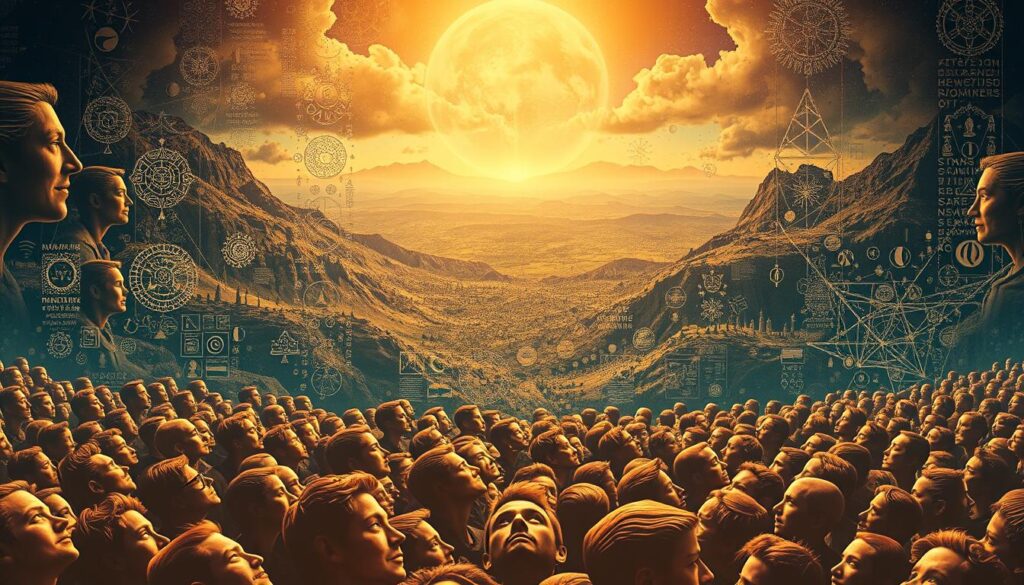
How belief spreads and holds
Social sharing matters. Friends pass striking lines as warnings or comfort. That social act makes a claim feel part of care, not just a literal claim of foresight.
News cycles compress events into dramatic arcs. That editing makes it easy to map short poetic lines onto current world events and treat them as fits.
“Pause before sharing—ask how else a line could read and whether we supply missing details.”
| Driver | How it works | Effect |
|---|---|---|
| Pattern bias | Sees order in randomness | Rewards remembered hits |
| Stressful times | Raises anxiety about future | Boosts appetite for neat narratives |
| Social spread | Shares striking lines as care | Normalizes belief quickly |
Seeking meaning is human. Pair that urge with healthy skepticism and good sourcing before passing a dramatic line along. For a related look at modern pattern claims, see angel number 2323.
What Is the Nostradamus Effect Today in the United States
Today in the united states many outlets recycle a small set of quatrains into bold predictions for the coming year. Year-end listicles, cable panels, and morning shows pick dramatic lines and attach them to geopolitics, royal rumors, or disaster scenarios.

Fast news cycles amplify guesses. As events change, producers rewrite captions and rerun clips that reward certainty over careful sourcing. Short social clips strip context, making flexible verses feel razor-specific to unfolding events.
Producers also borrow star-themed language to lend authority, even when original lines were astrological metaphors rather than testable forecasts. Each year’s narratives borrow old labels, so the same lines surface with new spins across years.
“Demand pre-event timestamps and clear sources before accepting a dramatic match.”
- Checklist: exact verse, translation source, post date, and a plausible mechanism linking verse to event.
- Track edits after an event; frequent rewrites signal retrofit.
- Remember: annual prediction culture entertains and lowers risk for publishers.
For a guide on modern pattern claims, see a focused look at angel number 2929: angel number 2929.
Conclusion
Across years, readers often stitch vague quatrains into neat narratives after a major event.
This pattern—retroactive matching fueled by time, loose translation, and selective memory—defines the Nostradamus Effect as a recurring habit: people decide a prophet predicted specific events only once facts arrive.
His life amid plague, a learned grandfather, and an apothecary-to-physician path helped a name carry weight through centuries. Early almanacs (first almanac by 1549–1550) and Les Prophéties kept quatrains in circulation across years and editions.
Modern series, astrology-flavored language, and star imagery add a quasi-scientific sheen that media love. In the united states and around the world, stress and sudden death make audiences hungry for tidy prophecies.
Before sharing a claim that he predicted an event, ask for exact verse, edition, translation, and dated evidence. Curious readers can also explore related pages like a concise Sirian starseed profile for context on modern pattern claims.
History will keep producing dramatic events and others will retrofit quatrains to them. We can answer with curiosity, context, and one simple habit: check facts, compare editions, and keep wonder alive without surrendering to wishful certainty.