

Nostradamus organized his visions into a tight four-line form called a quatrain. These short, image-rich poems leave room for wide interpretation. That style is why many believe lines point to major events across centuries.
At the same time, historians warn that vague language can fit many outcomes after the fact. Translators and readers often rewrite lines to match events, so accuracy is hard to measure.
This article walks through headline cases — royal tragedies, the great fire, revolutions, a three-time leader, scientific leaps, and modern disasters — and shows why people find these links compelling. We focus on context, original lines when available, and how readers make connections.
Expect a friendly, clear look that explains both strong matches and thinner fits. Reasonable people can disagree. By the end, you will better see how the quatrain form shapes what readers take away from these centuries-old verses.
Key Takeaways
- Quatrain style invites many readings and debate.
- Many believe some verses match big historical events, but caution is wise.
- Historians stress vagueness and after-the-fact fitting as limits.
- We will examine famous examples and their original lines.
- The goal is context and clarity, not absolute proof.
How Nostradamus Wrote His Prophecies: Quatrains, Ambiguity, and Reinterpretation
The 1555 Les Propheties arranges visions into compact quatrains, each open to many takes. These four-line pieces trade plain dates for layered symbols, anagrams, and old place names. That style invites readers to fit lines to later events.
Why brief four-line form clouds accuracy
A quatrain uses metaphor and tight phrasing instead of clear forecasting. A single word, an archaic place name, or an anagram can shift a line’s perceived target. Translations change tone and a name that looks exact in one version reads vague in another.
Many believe versus scholarly caution
Popular readers often accept a vivid match as proof. Yet many historians warn about retrofitting: readers pick lines after events to create a convincing reference.
- Flexible wording allows multiple readings.
- Translations and editions alter meaning.
- Claims about the end or culmination depend on chosen text.
| Feature | How it reads | Interpretive risk |
|---|---|---|
| Metaphor | Evokes images, not dates | Fits many events |
| Anagrams/place names | Hints at locations or people | Translations shift meaning |
| Short form | Compact, memorable lines | Timing and identity unclear |

What Has Nostradamus Predicted: A List of Famous Claims from the Past
This list pairs a historical event with the quatrain lines readers cite, then gives a short context note. Each entry shows why a phrase attracted attention and where interpretation stretches.
How this listicle is organized
- Event first: the moment people know, from royal jousts to modern attacks.
- Quatrain lines: a short excerpt or paraphrase often linked to the event.
- Why readers connect them: brief context, philological puzzles, or vivid imagery.
The selection spans royal courts, revolution, science, world wars, and modern terrorism. Expect entries on the great fire london claim, the Napoleon anagram “Pau, Nay, Loron” and the phrase refuse entry to the magpies, king philip spain and the odd “young onion,” and debates around louis pasteur’s fame.
Assassination cases like JFK and the New York City notes about “forty-five degrees” and the World Trade Center appear later. Each segment weighs public enthusiasm against textual fidelity.

For related analyses and more lists of claims, see classic psychic predictions.
The Death of Henry II of France: “The young lion will overcome the older one”
A clear quatrain often links directly to a famous joust in 1559. The verse reads:
“The young lion will overcome the older one,
On the field of combat in a single battle;
He will pierce his eyes through a golden cage,
Two wounds made one, then he dies a cruel death.”
In summer 1559, France’s king Henry II faced Gabriel, comte de Montgomery, in a tournament. Montgomery’s lance splintered. One fragment passed through the visor and into the monarch’s eye; another struck his temple.
The golden cage is widely mapped to a gilded helmet visor. That image makes the quatrain feel uncannily specific to this one man and moment.
Jousting accident, “golden cage,” and the “field of combat” debate
Supporters note the quatrain’s precision: dual injuries that become a single fatal outcome mirror the lance fragments. Some accounts also mention lion emblems, which fuels the lion motif.
Critics argue over language. Does “field of combat” require formal warfare, or may it include a ritual joust on a marked field? That dispute shows how the quatrain’s phrasing both narrows and widens possible matches.
- Specific lines: young lion, golden cage, two wounds made one.
- Historical fit: splintered lance, eye and temple injuries, death after days of suffering.
- Interpretive tension: tournament versus battle, emblem evidence varies.
Ultimately, this case endures because the quatrain reads cinematic and precise, yet still allows readers to judge whether ritual combat counts as a true battlefield in the spirit of the stanza.

The Great Fire of London: “The ancient lady will fall from her high place”
One quatrain mentions a year marker and an image that many tie to London’s great blaze. The lines commonly cited read:
“The blood of the just will be lacking in London,
Burnt up in the fire of ’66:
The ancient Lady will topple from her high place,
Many of the same sect will be killed.”
On Sept. 2, 1666, a spark in Thomas Farriner’s bakery on Pudding Lane sparked a blaze that raced through streets for three days. Thousands of buildings were lost while human death counts remained uncertain.
Why readers link the verse to the event: the “’66” marker and “ancient lady” image make the verse feel anchored to one of the cities and dates in history.
Many historians point out a gap: some translations mention lightning, yet eyewitness accounts show a bakery origin. That mismatch tempers claims of exact forecasting.
- Fire and imagery: “ancient lady” often reads as personified London.
- Blood and plague: some interpret “blood of the just” as a nod to changing plague patterns after the fire.
- Casualty debate: structural loss was vast; human tolls remain debated.
| Element | Quoted Line | Interpretive Note |
|---|---|---|
| Year marker | “’66” | Appears to point to 1666; anchors readers to a date |
| Urban image | “The ancient Lady” | Personifies London as a fallen city |
| Cause detail | Reference to burning | Translations differ: lightning vs. bakery spark |
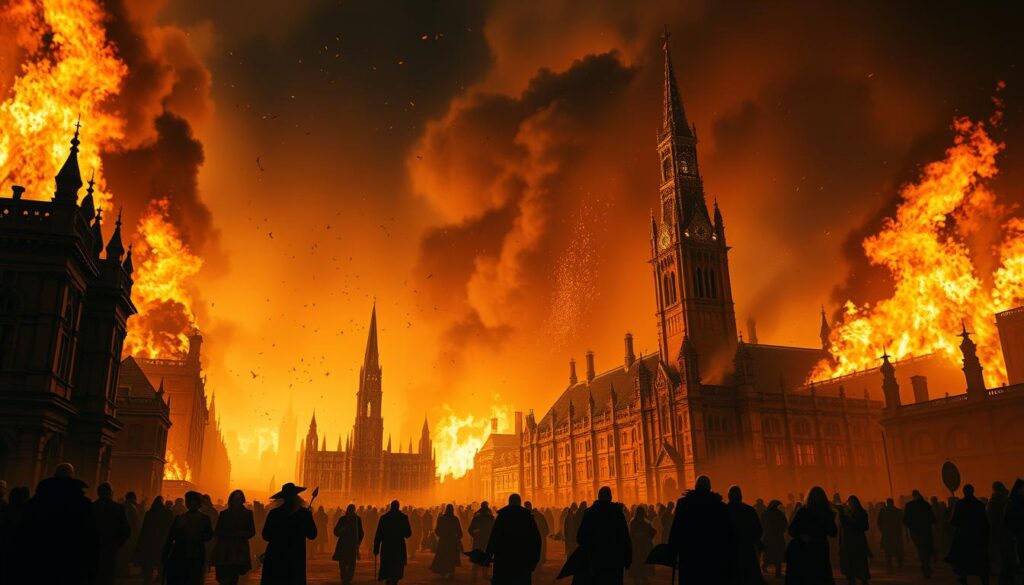
The match between verse and event is compelling for its numerals and tone. Yet differences over the ignition source and some phrasing keep many historians cautious.
Revolution and Empire: From the French Revolution to Napoleon
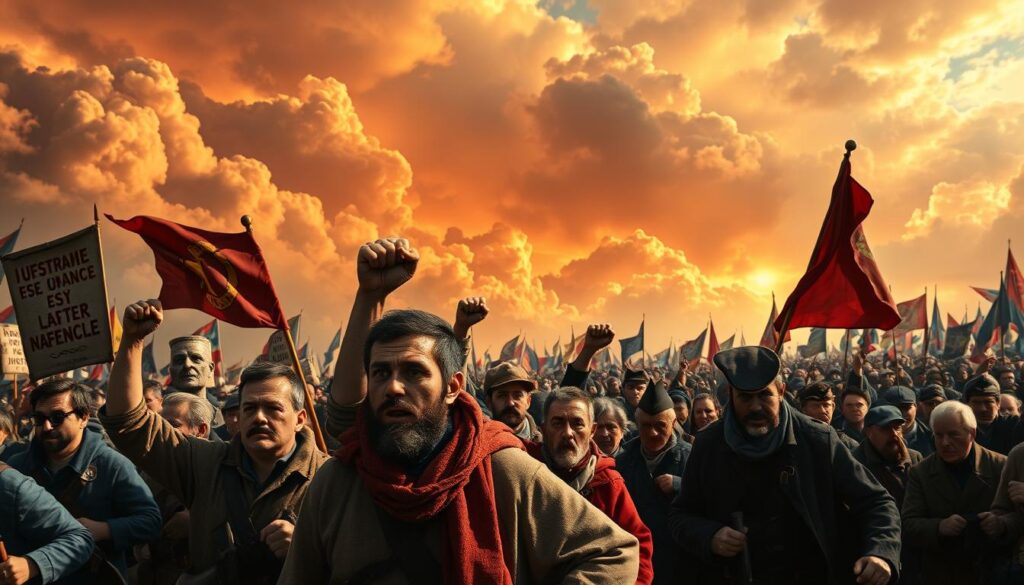
A verse about songs and chants reads like a snapshot of popular anger spilling into public squares. Songs, chants, and demands appear to mirror crowds who marched on the Bastille and forced old orders to respond.
The revolutionary quatrain talks about prisoners and voices rising from the oppressed. Readers see this as a fit for 1789: people asserting power against entrenched elites and a sudden shift in political life.
From anagram to emperor
The stanza with “Pau, Nay, Loron” drew intense attention because many rearrange the letters into a name-like cipher. Fans of the anagram read it as a coded nod to Napoleon—an appealing link given his later fame.
“Pau, Nay, Loron, more fire than blood… He will refuse entry to the magpies.”
Interpretation ties “more of fire than of the blood” to a rise by force and talent rather than bloodline. The phrase refuse entry and the image of magpies often get connected to papal confrontations and Napoleon’s limits on Popes Pius VI and VII.
- The crowd verse fits the Bastille-era surge of people demanding change.
- The anagram reading depends on specific spellings and invites skepticism.
- Campaign triumphs and battle accounts helped cement the link between text and actor.
In short, the lines about songs and anagrammatic name play offer dramatic hooks. Yet careful readers should separate the drama of crowds from the mechanics of letter-play and later fitting.
Kings and Crowns Beyond France: King Philip II of Spain and shifting fortunes
A short quatrain sketches a ruler who prospers for seven years, routs an eastern foe, then faces a mid-reign reversal marked by a puzzling image.
“For seven years Philip’s fortunes will prosper,
He will reduce the Arab army,
Then, halfway through, things will perplexedly turn against him,
A young onion will destroy his fortune.”
Philip II ruled from 1556 during Spain’s high point. The victory over Ottoman forces at Lepanto in 1571 bolstered Spanish and allied prestige across the Mediterranean and on the naval field.
Later setbacks, most famously the failed 1588 Armada against England, signaled the strategic end of unbroken Spanish ascendancy. Losses at sea and stretched finances changed how Europe balanced power.
Arab army, Armada setbacks, and the “young onion” reference
Readers link the stanza’s eastern foe to Lepanto and the “young onion” to Henri IV, a younger man whose rise complicated Spanish aims in France. Religious divides, shifting alliances, and repeated campaigns reshaped dynastic fortunes.
- Prosperity: initial victories and wealth under king philip spain.
- Reversal: Armada failure and mounting costs that undercut power.
- Enigma: the young onion as a coded rival rather than a literal vegetable.
The cluster of images — long success, eastern triumph, and dramatic reversal — keeps the quatrain appealing. Still, readers should weigh poetic metaphor against hard chronology and avoid overreading symbolic lines.

For a related character study of symbolic court figures, see the Knight of Cups profile.
Modern Science and Fame: Louis Pasteur “celebrated almost as a God-like figure”
A rare quatrain directly names a modern scientist and pairs acclaim with later scandal.
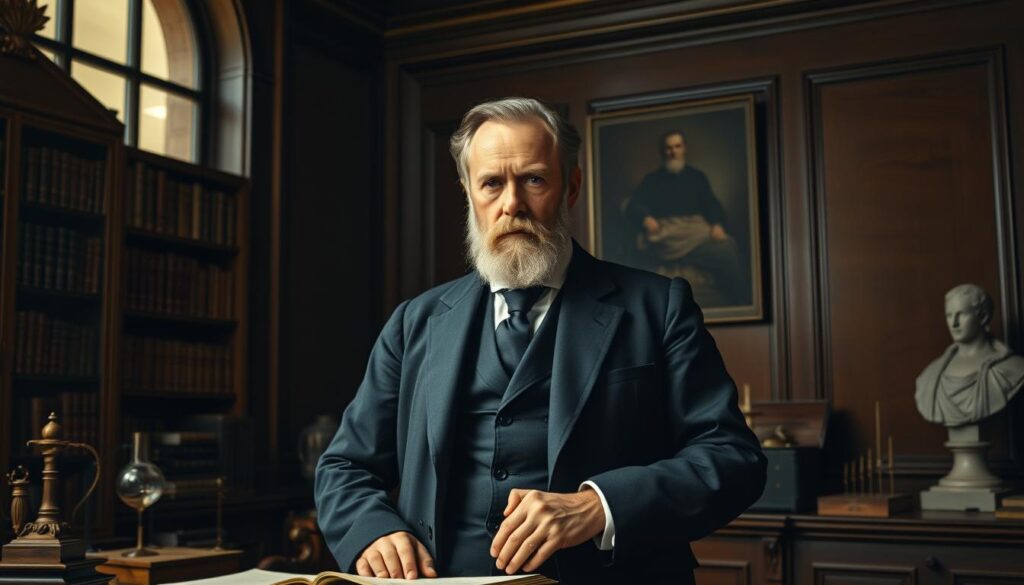
“The lost thing is discovered, hidden for many centuries. Pasteur will be celebrated almost as a God-like figure… But by other rumors he shall be dishonored.”
Louis Pasteur helped overturn the idea of spontaneous generation by showing microbes drive fermentation and disease.
His lab work led to pasteurization and vaccines that cut infections once blamed on miasma and plague. These advances saved lives and built international fame for his name.
Later archival studies raised questions about his use of rival data in anthrax vaccine work. Those critiques did not erase his impact, but they did temper the public narrative and stain reputational blood for some historians.
The quatrain is unusual because it reads like a biography: acclaim, near-deification, then rumor-driven dishonor. That pattern makes this case one of the clearest mixes of verse and a named, real-world figure.
- Line cited: explicit name and rise to god-like fame.
- Scientific role: germ theory, pasteurization, vaccines.
- Reputational note: later controversy over research practices.
Hitler’s Rise and World War: “A young child will be born of poor people”
A quatrain reads:
“From the depths of the West of Europe, A young child will be born of poor people; He who by his tongue will seduce a great troop; His fame will increase towards the realm of the East.”
This stanza ties the image of a child born poor to a man who wins followers through speech. Readers link that pattern to Adolf Hitler—born near the Danube, rising on forceful oratory and political skill.
Hister appears in a separate verse and may refer to the Danube. That geographic term sits near Hitler’s birthplace and gives a concrete angle to the reference.
- Born poor: the verse notes humble origins.
- By his tongue: highlights rise through rhetoric and mass persuasion.
- Fame eastward: echoes Axis alignments and Japan’s wartime partnership.
The broad strokes — a low-born child turned famous leader in a continental conflict — make the match feel compelling. Yet the reading depends on language choices and whether “Hister” is taken as a near-name or simple Danube reference.

For an alternate symbolic lineage tied to starseed lore and related profiles, see Sirian starseed.
Atomic Age Catastrophe: Hiroshima, Nagasaki, and “the heavenly dart”
A short stanza reads: “Within two cities, there will be scourges the like of which was never seen… famine within plague… people put out by steel.”
“Within two cities, there will be scourges the like of which was never seen… famine within plague… people put out by steel.”
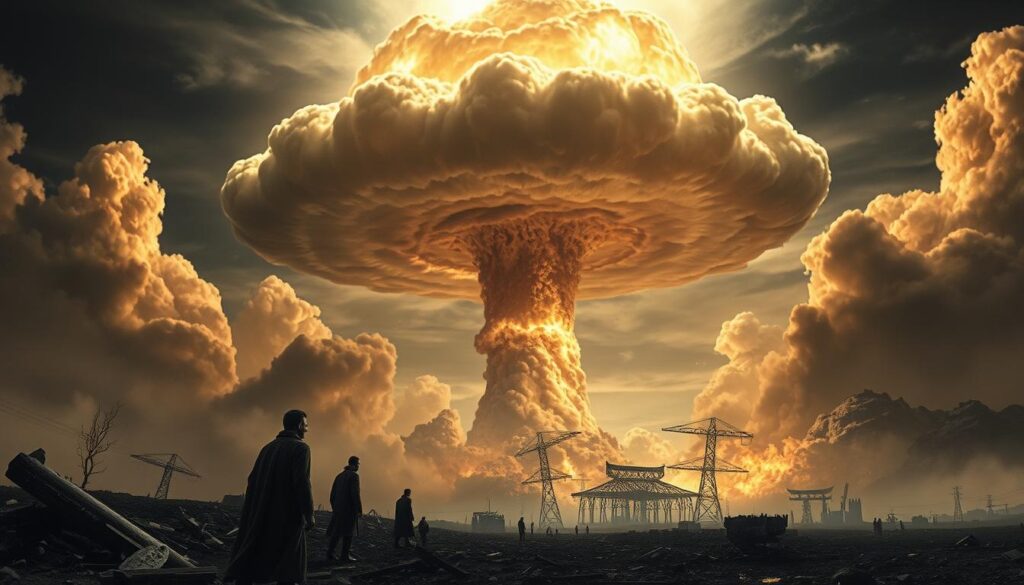
Two-cities motif maps cleanly to the paired targets of August 1945: Hiroshima and Nagasaki. The pairing makes the verse feel linked to twin strikes that changed the course of world war history.
“Heavenly dart” imagery evokes weapons delivered from the sky. That image matches bomber aircraft and the aerial delivery of the bombs.
Lines about “famine within plague” and long suffering mirror radiation sickness, ruined infrastructure, and shortages that followed the blasts. “People put out by steel” reads as a reference to planes, bombs, and modern metal warcraft.
| Phrase | Possible reading | Historic tie |
|---|---|---|
| Within two cities | Paired urban targets | Hiroshima and Nagasaki |
| Heavenly dart / steel | Aerial weapons, bombs, planes | B-29 bombers and atomic devices |
| Famine within plague | Long-term sickness, shortages | Radiation casualties and social collapse |
These images fed early debate about an end world threat once nuclear arms existed. Yet some readers warn the stanza’s language is flexible enough to fit other mass disasters, so interpretive caution remains. For related symbolic readings, see ancient-aliens.
America Struck: JFK Assassination and “from on high,” to New York City at “forty-five degrees”
Two quatrains are often tied to modern American tragedies: one linked to the 1963 jfk assassination, the other to attacks on a skyline in new york city.
“The ancient task will be completed; From on high, evil will fall on the great man; A dead innocent will be accused; The guilty one will remain in the mist.”
“A dead innocent will be accused”: Oswald and enduring conspiracy
Readers map “from on high” to a rifle shot from above and the “great man” to President Kennedy. Lee Harvey Oswald was accused, then killed before trial.
The short stanza feeds continued debate because the accused died and many questions stayed. That mix of a public death, an early suspect, and missing clarity keeps theory alive.
“Fire approaches the great new city”: World Trade Center and forty-five degrees
Another quatrain reads: “The sky will burn at forty-five degrees. Fire approaches the great new city…”
Some link “forty-five degrees” to latitude or to angles seen when towers fell and tie the verse to the world trade center attacks. The image of fire and falling structures makes the pairing emotionally vivid.
| Line | Common reading | Modern tie |
|---|---|---|
| From on high, evil will fall | Shot from above | jfk assassination |
| A dead innocent will be accused | Accused dies before trial | Oswald, conspiracy |
| Sky will burn at forty-five degrees | Angle/latitude image | world trade center, new york |
Both cases show how brief lines of blood, a single man, and sudden loss can be matched to complex events. The language is powerful, but its openness also allows many later fits.

Conclusion
Many believe compact quatrains link vivid images — lion, cage, fire, bombs — to real moments in history, while many historians warn that brief lines invite broad fits. This tension drives most debate.
Assassination cases such as the jfk assassination and its lingering conspiracy talk sit beside world war echoes, the great fire London tale, and hiroshima nagasaki pairings. New York City images like forty-five degrees and the world trade center show how modern trauma finds old words.
Lines about a young leader, the young onion, or anagram plays like refuse entry magpies meet named figures such as louis pasteur or king philip spain. Treat quatrain matches as starting points for discussion, not final proof. For site details, see our privacy policy.