Nostradamus wrote poetic quatrains in 1555 that readers still parse for clues to our times. Short, symbolic lines invite many readings, so clear context matters.
Popular themes linked to this period include long European conflict fatigue, mentions of cruel wars, and an “ancient plague” near England. Some interpreters point to environmental risks in a “garden of the world,” often read as Amazon/Brazil floods or volcanic trouble.
One vivid line about a cosmic fireball is a modern paraphrase, not a dated quatrain, and space agencies report no Earth‑threatening asteroid. Claims tying a pontiff’s death and Rome’s seven hills to recent Vatican events remain debated.
This introduction previews how we will list the most-cited predictions, check them against data, and explain why a few evocative quatrains drive headlines each season. For further context on modern forecasting and related topics, see psychic predictions and supernatural abilities.
Key Takeaways
- Les Prophéties are poetic and open to many readings.
- Common themes include war fatigue, plague talk, and environmental disasters.
- Some famous lines are paraphrases, not direct dates.
- Scientific monitoring finds no asteroid threat for this timeframe.
- Vatican‑related links to quatrains are contested by scholars.
Setting the Stage: How to Read Nostradamus’s 2025 Prophecies in Context
Begin by meeting the author and his style: Michel de Nostredame, born 1503, wrote Les Prophéties as hundreds of four‑line verses grouped into centuries.
The quatrains are short and symbolic, which makes them easy to map onto later events. That adaptability keeps these predictions in the world’s headlines.
Modern writers often link a few famous lines to current conflict or climate stories. Historians warn that many fits are retroactive. Without dates, verses are easy to bend to news cycles.
Method matters
How interpretations form: brief poetry invites pattern finding, while contemporary authors supply context and timelines to match events.
We pair poetic claims with verifiable checks — such as near‑Earth object tracking or historical records — so readers can see where a claim rests on evidence.
- Who: a 16th‑century physician and astrologer.
- How: symbolic quatrains reused across eras.
- Why verify: to separate fitted stories from documented events.
| Approach | Effect on Interpretation | Verification |
|---|---|---|
| Symbolic verse | Makes lines adaptable to many events | Compare to dated records and scientific monitoring |
| Retrofitting | Aligns quatrains to recent headlines | Check primary text and historical context |
| Evidence checks | Limits speculative claims | Use agencies (e.g., NASA) and archives |
For related modern interpretations and angelic number ties, see angel number 2525.
What does Nostradamus say about the year 2025: key prophecies, themes, and interpretations
Interpreters repeatedly link a handful of lines to stretched armies, renewed plagues, and swollen rivers. Below we unpack those core images and compare poetic wording to real-world trends.
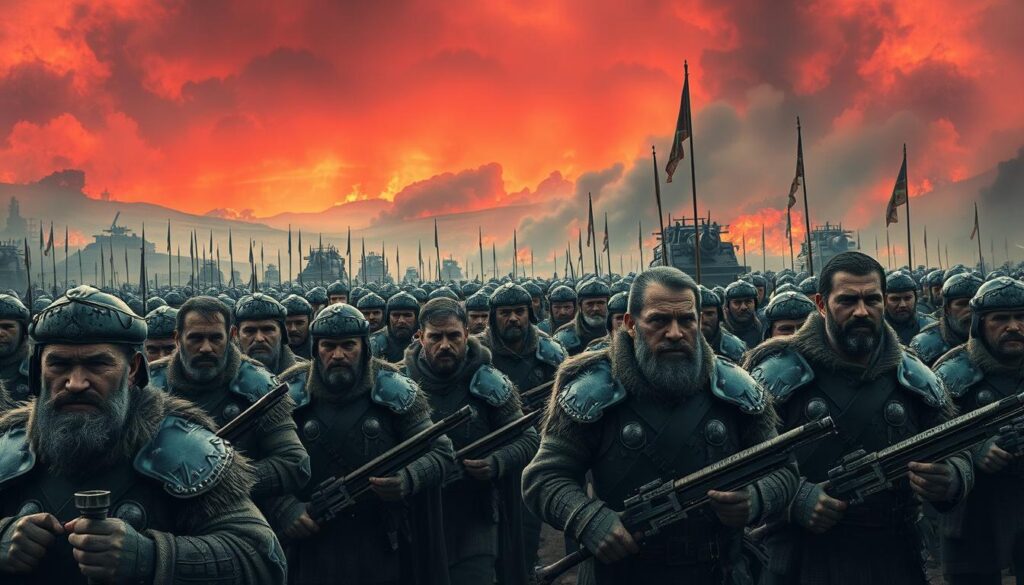
“Through long war all the army exhausted”
“Through long war all the army exhausted…”
This verse is read as a picture of resource drain: fewer money supplies for soldiers, substitutes for gold, and the odd phrase Gallic brass with a crescent sign hinting at national actors. Analysts use it to discuss prolonged war and diplomatic pressure.
“Cruel wars” and an “ancient plague worse than enemies”
Some lines point to renewed public health fear alongside conflict. Mentions of cruel wars and an ancient plague worse than foes fuel headlines about unrest in the lands europe and England. Still, no dated event ties these verses concretely to one season.
Garden world, floods, and an aquatic empire
The “garden of the world” near a new city gets linked to the Amazon and Brasília. Observers read “waters poisoned by sulphur” as flood or volcanic risk among broader natural disasters.
Aquatic empire imagery usually signals rising floods rather than a literal sea-based ruler.
Fireball rise and papal succession talk
The cosmic “fireball” note is mostly a modern paraphrase. Space agencies report no confirmed impact risk for this timeframe, so apocalyptic claims lack evidence.
Papal phrases mentioning an elderly pontiff and Rome’s seven hills appear in some readings, but experts warn against dating those lines to a single season.
- Key takeaway: poetic ambiguity often meets trend-based analysis; link carefully to verified events.
- For related symbolic readings, see Ten of Wands.
Trend analysis: separating signal from noise across war, plague, and disasters
A clear look at trends helps separate fitted drama from reliable signals in contemporary readings.

Evidence snapshots: conflict fatigue economics, climate extremes, and near-Earth object monitoring
Conflict has real budget effects: prolonged combat drains funds, cuts morale, and shifts negotiation timelines. Analysts note defense spending fatigue can change outcomes even when a poem offers no theater name.
Climate reporting shows more intense storms and floods. That pattern makes aquatic images in old verses feel immediate, and it fuels dramatic takes on disasters and sudden rise in river levels.
Near-Earth object programs publish risk updates. Current monitoring finds no verified impact threat tied to a viral fireball claim, which undercuts apocalyptic readings that claim certain end events.
Ambiguity and pattern-finding: how media headlines shape predictions 2025 narratives
Media often replay a few quatrains each season and fit them to new events. This pattern amplifies apparent specificity and sidelines careful trend checks about peace prospects or shifts in power.
People can guard against hype by asking two things: what the verse actually states, and which data sources confirm recent events. That simple filter helps keep future readings grounded and useful.
For symbolic context on related ideas see Lyran insight and Sirian starseed.
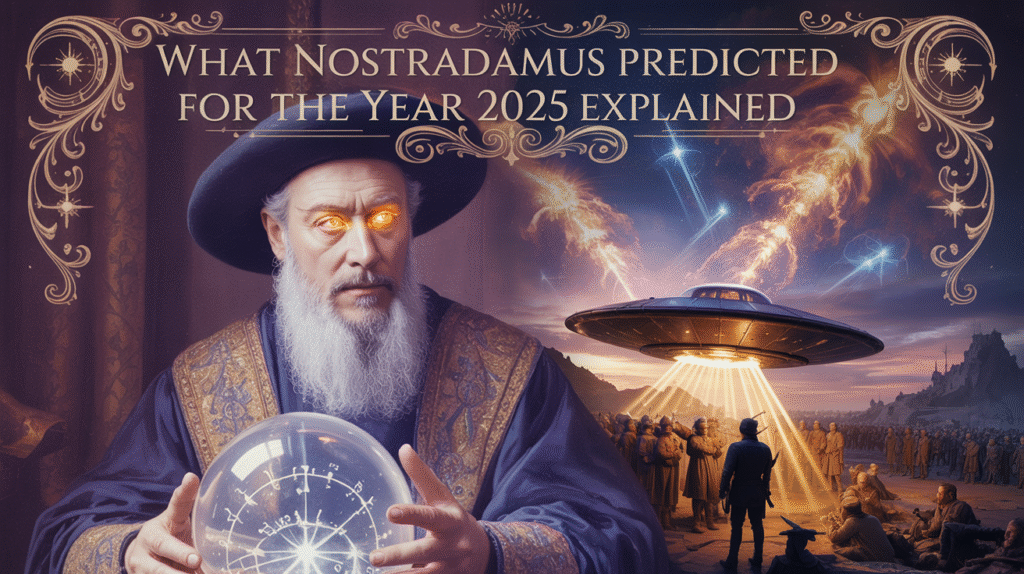
Conclusion
In summary, symbolic poetry fuels headlines while hard data anchors real risk planning. Treat recurring motifs — long war, cruel wars, an ancient plague, and a garden world near a new city — as invitations to examine trends, not as fixed outcomes.
Gallic brass, a crescent sign, mentions of gold, army, soldiers, and money add color but rarely set a date. Flood and aquatic empire imagery maps well to climate-era natural disasters, so plan for risk rather than chase an end narrative.
The dramatic fireball lines remind readers to pair striking language with monitoring updates. For related symbolic context, see angel number 5858. Treat predictions as starting points, favor measurable signs, and aim for peace where you can.