
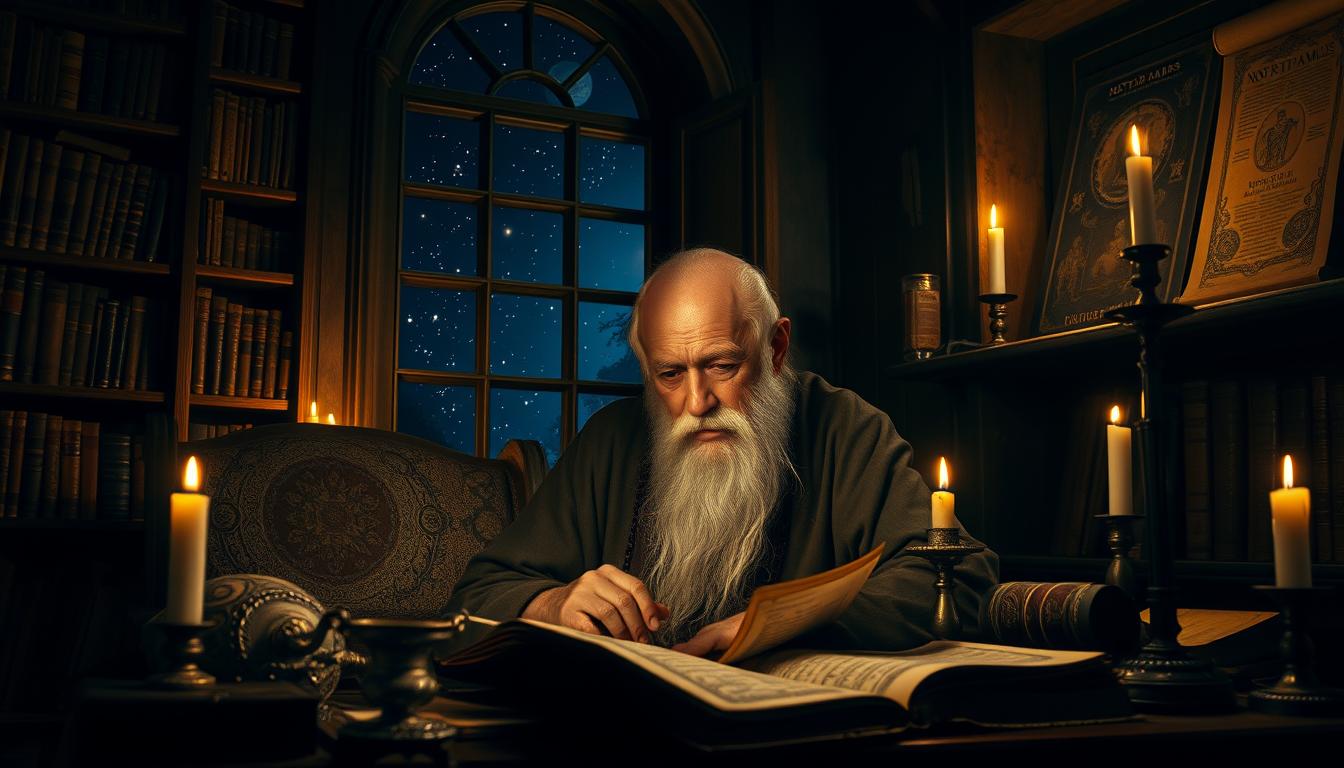
Michel de Nostredame was a 16th-century French seer, an astrologer and a trained physician. His 1555 book, Les Prophéties, collected 942 poetic quatrains that readers still parse for modern predictions.
People often ask the same core question: what does Nostradamus say about 2025. Many lines are poetic and admit several readings. That opens space for big claims tied to war, disease, floods and cosmic threats.
This short intro flags the main themes you will see next: a long war nearing an end, talk of a new plague, and natural disasters linked to distant regions. Some outlets note that a few lines were later read as having came true outcomes, like papal succession.
Read on with caution. The verses invite interpretation and scholars warn about pattern‑matching. For broader context on modern forecasts, see psychic predictions and cultural spins like angel number 2525.
Key Takeaways
- Nostradamus wrote Les Prophéties, a book of quatrains often reused for modern predictions.
- Common 2025 themes include war, disease, and floods, but lines are vague.
- Poetic form allows many interpretations; be wary of sensational readings.
- Some claims say lines came true, yet historians urge caution.
- Scientific monitoring and evidence should guide real‑world risk views.
Why Nostradamus Is Back in the Headlines for 2025
At year‑end, a 16th‑century volume resurfaces in headlines. Readers and reporters scan the Les Prophéties for lines that seem to map onto modern events. This cycle repeats because poetic quatrains invite fresh interpretation as new stories unfold.
From Les Prophéties to today: quatrains, ambiguity, and modern interpretation
Les Prophéties uses short, symbolic stanzas that leave room for multiple meanings. That openness lets people tie a single quatrain to many events in the world.
Modern commentators often link dated lines to current news. The result can feel like a precise forecast even when the verse was vague.
Claims that “came true” versus caution: papal succession and the lack of scientific evidence
Some argue a line about the death of an old pontiff meant a papal succession and thus “came true.”
“Through the death of a very old pontiff… a Roman of good age will be elected.”
Scholars note there is no consensus tying that quatrain to a specific year or verifiable prediction. Analysts warn that after‑the‑fact pattern‑matching and no scientific basis make firm claims risky.
For broader context on modern forecasts and similar cultural trends, see a brief piece on angel numbers.
what does nostradamus say about 2025
Lines about a long war paint a bleak logistics image: armies low on money, soldiers unpaid and coin turned to odd metal. Interpreters point to “Gallic brass” and the crescent sign moon as symbols linking France and Turkey. This reading often ties strained budgets to hopes the war may ease as resources run thin.
“Through long war…”: Gallic brass and the crescent sign
The verse about an exhausted army is read as a commentary on funding and manpower. When gold fades, commentators say, diplomacy or surrender can follow.
“Ancient plague” and cruel wars
Another quatrain evokes lands Europe and England, cruel wars, and an ancient plague. That pairing fuels anxiety over renewed disease amid conflict, though this is interpretive rather than factual.
Garden world, new city, floods and sulphur
References to a “garden world” near a new city lead some readers to Brazil and Brasília. Imagery of a tub, floods, and sulphur maps to worries about natural disasters and toxic waters.
Fireball rise and aquatic empire
Talk of a “fireball rise” often stems from paraphrase and fuels end‑of‑world chatter. Agencies tracking near‑Earth objects find no evidence for an impact threat this year. Rivers overflowing and talk of a new “aquatic empire” act as shorthand for climate and rising waters, not a verified prophecy.
“Through long war all the army exhausted…”
| Verse Image | Common Interpretation | Modern Concern |
|---|---|---|
| Long war, coin to brass | Budget strain; Gallic brass = France | Hopes for de‑escalation as resources thin |
| Ancient plague, cruel wars | Europe/England tensions | Fear of disease amid conflict |
| Garden world, tub, sulphur | Amazon/Brasília imagery | Floods, poisoned waters, city risk |
| Fireball, aquatic empire | End‑times paraphrase | Climate anxiety; no NEO evidence |
These readings make for gripping predictions, but they are interpretive. For related themes of burden and fate, see commentary on the ten of wands or cultural blends like the Sirian starseed.
How to read these prophecies in a modern news cycle
A single evocative phrase can spark dozens of after‑the‑fact connections across the news. That tendency fuels dramatic headlines linking a “fireball rise” to an impact or to the end of a local city.
Asteroids, fireballs, and facts: official monitoring shows no evidence‑based prediction of an asteroid impact in this year. NASA and international NEO programs track objects constantly. They publish risk assessments and lists of known threats, so the loud online claims about a cosmic strike are not supported by those data.
Pattern‑finding after the fact: viral stories pick a sign or short phrase from a quatrain and retrofit it to an ongoing conflict, war, flood, or quake. That retrofitting makes the match feel precise when it is not.
- Translate scary “fireball” headlines into facts by checking NEO trackers and official statements.
- Weigh end‑times language against transparent data sources and expert analysis.
- If a claim lacks a dated line and independent corroboration, treat it as interpretive storytelling, not a time‑stamped forecast.
“If a claim lacks a direct, dated line and independent corroboration, treat it as interpretive storytelling rather than a forecast.”
For a broader look at cultural blends and star lore that people attach to these lines, see a related piece on the Pleiades and Sirius material. Rely on clear reporting and current evidence to assess future risks, especially for climate and natural disasters.
Conclusion
Taken together, the verses string a set of images that readers map to modern fears.
Crescent sign moon, a tired army, coin turned to brass, and a garden world near a new city feed bold predictions yet remain symbolic.
Common threads — cruel wars, an ancient plague in lands europe, rising floods, and talk of an aquatic empire — echo today’s worries but do not equal dated forecasts.
Lines tied to death or claims that something came true draw attention. Treat those notes as one part of the story and pair them with clear data when assessing the future.
For a gentle next read on symbolic cards and meaning, see the Knight of Cups reading.