
Quick guide: This short intro explains which sources claim the famed French astrologer pointed to a modern year and why that idea spreads now.
There is no explicit date in the original quatrains. Still, recent social buzz links certain verses to a rare European solar eclipse. That eclipse and a viral mix of numerology drive many online predictions.
We trace the history of these claims, show how ambiguous prophecies get matched to news items, and name specific verses often cited, like the “seven months” line. We also note how media trends in the United States push this topic into public view today.
For a practical look at modern readings and services, see a trusted psychic directory like psychic readings. This piece aims to keep entertainment separate from verifiable facts about real-world events.
Key Takeaways
- Original texts offer no clear date tied to 2026.
- Eclipse timing and viral posts fuel renewed interest.
- Ambiguous language lets interpreters retrofit lines to news.
- We compare quoted verses with historical context.
- Balance curiosity with verified sources when reading claims.
Why 2026 Is Suddenly in Focus: Eclipse headlines, quatrains, and today’s tensions
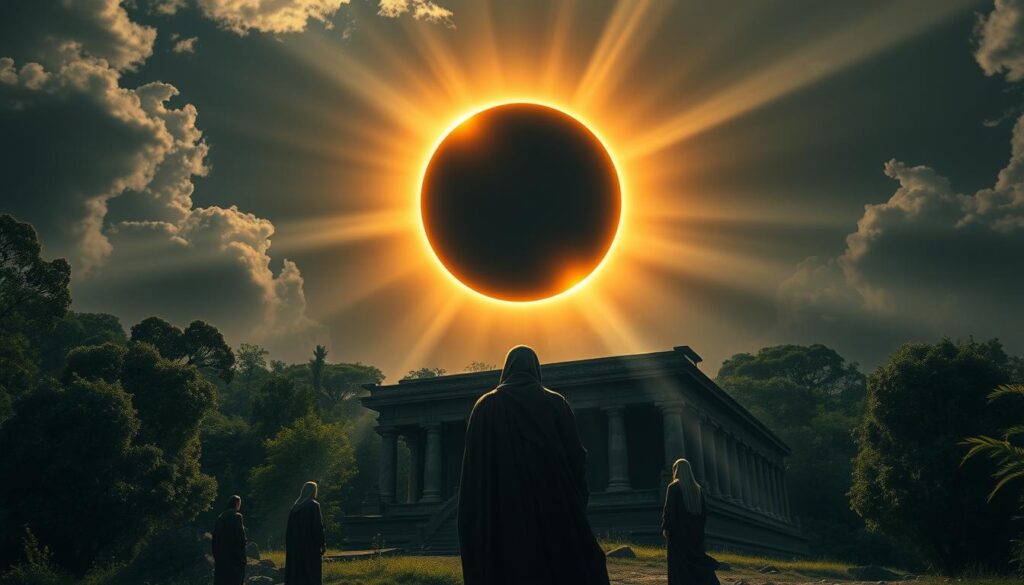
A rare European eclipse has turned once-quiet quatrains into headline bait. The path of totality offers a neat, shareable event that pulls sky-themed lines back into circulation.
The total solar eclipse hook and Renaissance sky motifs
Eclipse imagery — darkened suns, celestial fire, and shadowed planets — matches familiar Renaissance astrological language. That language was symbolic and reusable, not tied to a single date.
From history to today: why prophecies resurface during conflict and culture shifts
In eras of conflict and cultural anxiety, people look for signals in old texts. Competing manuscripts and translation choices let one verse be mapped to many modern events.
“Once a big celestial event is on calendars, predictions cluster around it, giving the sense of accuracy.”
Print pamphlets once amplified claims; now short videos and viral threads do the same. For modern readings and services tied to celestial themes, see a trusted directory like Pleiades & Sirius listings.
- Headline tethering makes timing feel precise.
- Astrological motifs are timeless symbols, not timestamps.
- People seek patterns in today‘s uncertain years.
What does Nostradamus predict for 2026: verses, interpretations, and the war narrative
Modern readers tie a small set of quatrains to present tensions, especially when translation choices leave room for drama.

The “seven months, great war” quatrain and European anxieties
The oft-cited line about seven months and great war resurfaces during European crises.
It names places like Rouen and Évreux and lacks any clear date, so linking it to a specific year is speculative.
The “26” numerology game
Some readers equate quatrain numbers I:26 and II:26 with a calendar year.
This leap relies on numerology, not text. Bee imagery from I:26 and Ticino mentions in II:26 are retooled into modern symbols.
Celestial fire, fires, and modern overlays
Sky motifs—eclipses, obscured suns, and “celestial fire”—appear often across the corpus.
That repetition makes it easy to match an eclipse to a verse, even though the imagery is generic.
“Flexible language lets lines shift from people and blood to cities and years.”
| Passage | Common modern reading | Textual caution |
|---|---|---|
| “Seven months, great war” | European conflict signal | No date; 16th‑century place names |
| I:26 / II:26 | Numerology → year link | Verse numbers ≠ calendar years |
| Sky and fire lines | Eclipse and “celestial fire” | Motifs are broad, not specific |
Bottom line: contemporary readings add layers like “three fires,” Venus decline, or AI themes. These overlays reflect modern fears more than firm, dated evidence, which helps explain why such predictions keep resurfacing and spreading online.
Trend analysis: how 2026 Nostradamus predictions went viral in the United States
A tidal wave of viral posts made centuries-old verses feel urgent across U.S. feeds. Short videos and threaded threads amplified claims about a looming world war and an AI takeover. Millions engaged in October 2025.

World War III and AI takeover claims dominate short-form feeds
Creators mapped phrases like “cosmic fireball” to nuclear strike scenarios or meteors. That ambiguous language acts as a blank slate for modern conflict fears.
The “Living Nostradamus” effect
Athos Salomé, labeled a modern seer, added a contemporary hook. His AI warnings for 2025–2026 and claimed hits gave videos a timely angle. Media coverage multiplied reach.
Why ambiguity spreads
Numbers and drama sell. Posts often cite 946 attributed prophecies and about 70 partial hits to feel authoritative.
| Viral element | How it spreads | What experts say |
|---|---|---|
| Sensational clips | High shares, comments, algorithm boost | Prioritizes emotion over accuracy |
| Modern seers | Timely claims tie past to present | Track records are often retrospective |
| Ambiguous imagery | Fits many disaster narratives | Source texts lack dates |
“Spectacle often outpaces scholarship.”
For balanced readings and services that separate entertainment from verification, see psychic predictions.
Scholarship and skepticism: translation, history, and retrofitting yesterday’s news
Scholars note that close reading, not viral clips, reveals the limits of strong claims.
Middle French and manuscript variety create real hurdles. The quatrains mix Middle French, Latinisms, and variant spellings. Competing manuscript families show differences that can change a single line’s tone or subject.
That makes one translator’s clear meaning another’s ambiguity. Two modern editions of the same quatrain can read like different texts. Such differences directly affect any later interpretation.

Why skeptics call retrofitting the core problem
Critics point out that the verses lack fixed dates, named people, or verifiable details. Because of this, alleged predictions are not testable before events occur.
“Interpretation often follows events, not the other way around.”
Retrofitting is simple: an event happens, then readers search the corpus for evocative lines—fire, eclipse, or battle—and declare a match. Historical and scientific reviews find no predictive power beyond chance when after‑the‑fact adjustments are removed.
| Issue | How it affects readings | Result for claims |
|---|---|---|
| Middle French wording | Obscure grammar and Latinisms | Multiple plausible translations |
| Manuscript variants | Different spellings and lines | Inconsistent text base |
| Evocative imagery (fire, eclipse) | Common visual motifs | Easy to attach to many events |
Practical tip: always check which edition and translator a viral claim cites. Source literacy helps separate creative readings from grounded analysis.
Skepticism is not dismissal; it is a method. It asks for clear, testable links between a quatrain and a later event before accepting claims about predictions or prophetic power across years.
For those curious about personal abilities and balanced readings, try a short assessment at psychic abilities test.
Conclusion: a grounded outlook on 2026 predictions—separating prophecies from real-world risks
A calm, evidence-first approach makes sense amid viral prophecy chatter. Treat sweeping prophecies as entertainment unless they cite verifiable facts. Prioritize reputable analysts for geopolitics, AI, and climate over open-ended verses.
Remember that world war narratives and war panic often trend online without testable detail. When forecast windows pass, timelines shift — a familiar pattern, not proof.
Protect mental health by curating feeds and checking sources. Ask which quatrains and translations are quoted, how much interpretation fills gaps, and whether claims quote full lines.
Stay curious about culture and debate, but anchor your year outlook to facts. For balanced readings and tools, see a short guide at angel number resources. Keep people safe by favoring clear alerts over viral fear.