

Why this question surged after Pope Leo XIV’s election is clear. A first American leader, a rare papal name and global unrest made centuries-old lines suddenly seem relevant again.
Commentators link a “lion on the throne” image and Saint Malachy’s closing motto to a 2027 timeline. Some point to Leo XIV’s Augustinian ties, Spanish fluency, and a 2002 trip to León as symbolic reference points.
Quatrains and mottos are vague by design, yet their appeal grows when events match striking details. This piece will map claims to texts, separate literal lines from modern interpretation, and weigh historian cautions.
Expect a balanced, evidence-focused look at prophecy, the Catholic Church’s role in public meaning, and why symbolic readings flare during leadership change.
Key Takeaways
- Interest spiked after Leo XIV’s surprise election and unusual papal name.
- Both Nostradamus quatrains and Saint Malachy mottos are being re-read for clues.
- Symbolic links draw on biography details and imagery like a lion and dusk.
- Scholars warn that ambiguity fuels modern fits to events.
- The article separates textual reference from modern interpretation and social impact.
Breaking context: Pope Leo XIV’s election rekindles apocalyptic prophecies
Cardinal Robert Prevost’s surprise fourth-ballot rise shifted a quiet conclave into global headlines. The sudden result and his status as the first American to lead the Church gave instant weight to otherwise private choices.
Why this mattered: his opening words, “Peace be with you,” arrived as conflict, climate strain, and moral debate dominated news cycles. That setting made symbolic readings more likely and faster to spread.
Then there was the name. Choosing Leo XIV — a rare papal name last used in 1903 — prompted swift chatter connecting lion imagery to older texts. Reporters and online commentators wove brief biography notes into those threads: Augustinian ties, Spanish fluency, and a 2002 visit to León.
- Conclave surprise on ballot four drove immediate analysis.
- First American election pope status amplified global attention and rapid news sharing.
- Name choice and early words acted as a catalyst, not proof, for prophetic claims.
Set against Vatican City and a fast information age, these early signals framed weeks of commentary that mixed history with speculation about papacy and prophecy.
What did Nostradamus say about the last pope
Across translations, a line about a very old pontiff and a lion near civilization’s dusk is often cited in modern debate. Les Prophéties uses terse, image-driven quatrains that invite many readings. This brevity lets readers map a few words to wide events.

The quatrains: cryptic language, flexible interpretations
Style matters: short stanzas, dense metaphor, and deliberate ambiguity kept writers safe in a risky political age. That same uncertainty lets later interpreters fit lines to popes across centuries.
“Lion on the throne at world’s dusk”: text, translation, and debate
Translators shape how a line reads. Minor word choices turn a vague image into a specific reference. Some renderings place a lion beside a throne near the world’s dusk.
“Through the death of a very old Pontiff…”
From prophecy to prediction: how interpreters link quatrains to popes
Linking imagery to a single man or name requires leaps. A lion can suggest a Leo, yet that leap is speculative. Scholars note many modern references come from later compilations, not a single clear original text.
| Original feature | Common modern reading | Interpretive risk |
|---|---|---|
| Vague metaphor | Specific symbol (lion) | Retrofit to events |
| Short quatrain | Predictive sentence | Overinterpretation |
| Old French wording | Updated translation | Meaning shift |
Bottom line: the quatrains read as broad prophecies. Turning them into precise predictions about a man or name remains uncertain and depends on which text and translation readers prefer.
Linking the “lion” to Leo: name symbolism, throne, and world events
For many, a return to the name Leo feels like a symbolic loop from past centuries to today.

History matters: the last Leo to serve was Leo XIII (1878–1903). Moving to Leo XIV after more than a century gives commentators a clear reference point and a memorable narrative anchor.
Leo as lion and the meaning of throne
The name naturally evokes a lion image. Paired with throne language, this links a personal name to the office of the Bishop of Rome. That pairing resonates because the throne is both a literal seat and a symbol of authority.
Reading sun, fire, and flood in today’s world
Interpreters often map metaphors—sun, fire, flood—onto visible crises: wildfires, heat waves, severe floods, and geopolitical conflict. These parallels make ancient lines feel immediate.
- Symbolic association (name equals lion) creates easy storytelling.
- Evidence requires more than matching imagery; it needs direct textual support.
- Profiles noting an Augustinian order or ministry are useful context but not proof of prophecy.
“Correlations do not demonstrate causation,” a useful guide when reading broad metaphors against modern events.
In short, name symbolism offers a memorable reference. It shapes headlines and memory. Scholarly method, however, warns that neat links between a name and global events remain interpretive, not evidentiary.
For related perspectives on starseed and symbolic lineage, see Sirian Starseed resources.
Saint Malachy’s Prophecy of the Popes: list, mottos, and “Peter the Roman”
A medieval catalog of 112 Latin mottos attributed to Saint Malachy returns whenever a new leader takes the chair in Rome. The list survives in public imagination because it offers tidy labels that readers can test against living lives.
How the 112 mottos are applied to popes in modern times
Researchers and hobbyists match short mottos to modern biographies. For example, commentators link Benedict XVI to “glory of the olive” because of his ties to Olivetan traces and monastic images.
John Paul II often gets tied to an eclipse image, since his birth coincided with a solar event. Those pairings mix biography with symbolic reading more than strict textual proof.
Benedict XVI, John Paul II, and symbolic matches
Such pairings show how easy it is to retrofit a phrase to a life. Scholars of the prophecy list warn that many mappings rely on hindsight and creative leaps.
Is Leo XIV symbolically aligned with the final motto?
Some suggest Leo XIV fits the spirit of Peter the Roman by timing and imagery. Historians and theologians, however, question authenticity and point out that Rome as a city figures heavily in the narrative.
In short, strong correlations like “glory olive” act as a memorable reference, but they do not prove literal fulfillment of prophecy popes.
Does the prophetic timeline point to 2027?
One calculation that resurfaces in forums and clips centers on Pope Sixtus V’s 1585 election. Advocates mark that date as a midpoint and add a 442-year span to arrive at 2027. This neat arithmetic turns vague prophecies into a single calendar year.

The Sixtus V midpoint theory and the 442-year calculation
The claim: start at 1585, count 442 years, and you get 2027. Supporters present this as a clear temporal anchor for modern readings of medieval texts.
Scholars caution that this framework lacks primary-source backing. The numeric link borrows historical names but rests on selective counting rather than agreed timelines.
Why 2027 fuels end-times narratives in news and social media
Fixed-date predictions attract attention because they promise clarity and urgency. A specific time feels actionable in a noisy news cycle.
- Such claims jump from niche threads to headlines and viral posts.
- “Peter Roman” is cited to imply an ultimate leader, but the calendar tie is speculative.
- Election events and global crises intensify public speculation.
“Attaching a precise year does not make an interpretive reading a validated forecast.”
In short, the 1585–2027 count is a memorable reference, not a proven end-of-line marker for popes or the world. The next section examines historical risks in dating papal fate and how astrology and court life shaped past forecasts.
Astrology, politics, and the papal court: a historical backdrop
In Renaissance Rome, celestial charts often guided policy as much as prayer. Courts used astrology as practical intelligence, folding star lore into decisions about war, finance, and church building.
Renaissance patrons and celestial advice
Julius II timed major projects, while Leo X funded a professorship in astrology at La Sapienza. Paul III relied on Luca Gaurico for key choices. These acts show how patronage made the practice respectable and useful.
Techniques, risk, and a famous scandal
Astrologers used a man’s birth chart and methods like prorogation to offer a life-span or danger timing. A June solar eclipse once became a focal point for a grim prediction about Urban VIII.
“Predicting a ruler’s fate could destabilize a city overnight.”
| Actor | Astrological Role | Outcome |
|---|---|---|
| Leo X | Institutional support | Academic professorship |
| Paul III | Advised by Gaurico | Policy influence |
| Orazio Morandi | Predicted Urban VIII’s death | Imprisonment; law against fatal forecasts |
The Morandi affair led to harsh penalties for forecasting a pope’s death, so practitioners adopted coded language. These episodes are a sober part of church history and explain why modern readers treat prophetic reference with care.
For contemporary readings that mix symbolic links and psychic claims, see a related resource on psychic readings.
From quatrains to headlines: how interpreters shape public perception
Editors and translators frequently decide which images from a short quatrain will travel into headlines.

Language, metaphor, and media choices
Translators pick words that set tone. A softer verb makes a verse descriptive; a sharper one makes it ominous. Those small choices steer readers’ emotions.
Headline writers hunt for memorable words. A single phrase like “lion” or “throne” becomes a persistent reference. That repetition creates a loop where images dominate coverage of current events.
“Paraphrase can be more influential than the full text in forming public belief.”
- Interpreters act as gatekeepers to hard-to-read material and highlight lines that match news cycles.
- Partial quotes drift from original wording and deepen speculation.
- Audiences prefer bold predictions and neat stories when faced with vague, centuries-old lines.
| Role | Action | Impact |
|---|---|---|
| Translator | Selects words and tone | Alters perceived meaning |
| Editor | Chooses headline hooks | Drives shareable imagery |
| Interpreter | Highlights parallels to events | Shapes public reference points |
Practical tip: compare editions, seek the original context, and note when language choices push an implied forecast. For related commentary and psychic perspectives, see a curated resource on psychic predictions.
Papal biography details that feed the narrative
Profiles of Leo XIV focus less on prophecy and more on formative details that shape any modern papacy.
American birth and family roots made his election pope feel historic to many U.S. readers. His U.S. formation and parish work explain a global reach that resonates across continents.
Order ties and language reach
Augustinian order membership is mentioned often because religious charism influences leadership style and priorities. That order background gives reporters a clear reference when tracing themes in his papacy.
Spanish-language fluency expands pastoral reach. It shapes public appearances and media coverage in Spanish-speaking regions.
Travel, name, and conclave drama
A 2002 visit to the city of León is now framed as an interpretive anchor in some narratives. Likewise, choosing the papal name “Leo” invites symbolic comparison with earlier Leos.
Election details — a surprise fourth-ballot result — added dramatic context that drew wider family interest beyond church circles.
Biographical facts offer useful context; they do not, by themselves, validate prophetic claims.
| Biographical element | How it is reported | Interpretive risk |
|---|---|---|
| American birth | Global papacy angle | Overstating national symbolism |
| Order affiliation | Leadership style cue | Reading spiritual charism as proof |
| Spanish fluency & travel | Pastoral reach and media connection | Using travel as prophetic anchor |
Biographical detail maps a path from birth and formation to global leadership. Still, language skills, pastoral experience, and order charism are more likely to shape governance than retrospective prophecy frameworks.
For privacy and site policies, see our privacy policy.
What this means for the Catholic Church today
Renewed attention to old prophecies often fades once a new leadership agenda takes shape. For the catholic church, symbolic links and media cycles rarely redirect day-to-day governance.
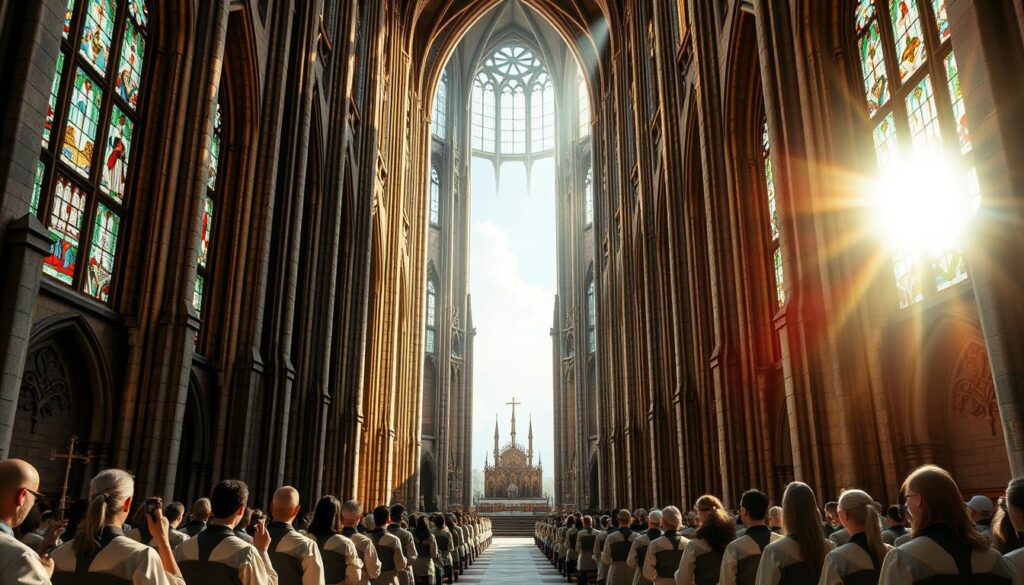
Practical work—pastoral initiatives, synods, and diplomatic efforts—sets the pace. Still, commentators will read words and images into moments. That interest does not alter how popes run the curia or set policy.
Institutional resilience depends on doctrine, sacraments, and local communities. A religious order‘s charism can shape emphasis areas like education or outreach in measurable ways.
Families often find prophecy stories engaging, yet everyday family life is formed by parish rhythms, catechesis, and service. Global events—humanitarian crises and ecological strain—will frame the agenda far more than a name-based reference.
“Listen to the pope’s homilies and documents; priorities appear there in concrete form.”
History offers perspective, but meaning for believers grows through acts of faith, hope, and charity. In practice, the Church’s mission continues regardless of headline cycles about endings or timelines.
Conclusion
Historic mottos and terse quatrains often resurface during times of rapid change. Interest in prophecies peaks after a surprising election, yet broad language resists tight, binding predictions about any single leader. Core takeaway: symbols like lion, throne, and sun make vivid headlines, but they do not equal proof of a scheduled end.
Lists such as Saint Malachy’s and cryptic quatrains invite many readings. Claims about a final year or a named figure often reflect news cycles and interpreter bias more than clear textual support.
Keep a balanced view: enjoy history and poetic imagery, weigh each claim critically, and focus on family, parish life, and practical good. For a related read, see best book on angel numbers.