
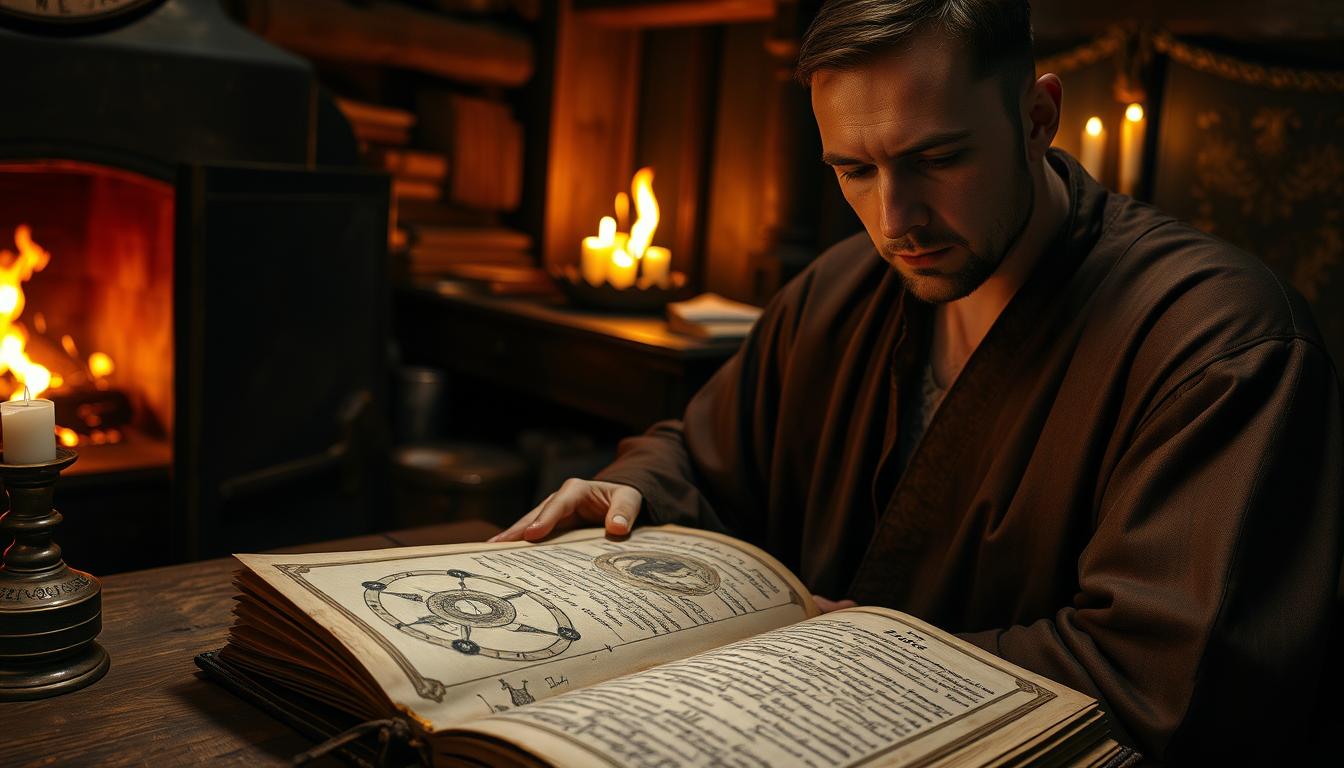
Short answer: What did Nostradamus predict for the year 2026? The French seer never named that specific date in his quatrains. Modern headlines link lines to a coming total solar eclipse across parts of Europe, sparking renewed interest and fresh interpretations.
This news explainer breaks down how interpreters match lines to events and why a visible sky show tempts readers and outlets to connect dots. You will get clear information on eclipse timing, why certain cities like Rouen and Évreux appear in discussions, and how quatrains change meaning with translation and numerology games.
Expect a friendly, fact-based walk-through that separates sensational headlines from original text, and a link to further psychic prediction coverage at psychic predictions for readers who want more context.
Key Takeaways
- Nostradamus did not write explicit dates; modern links rely on interpretation.
- The 2026 eclipse is a major spark for renewed claims and news cycles.
- Translations, manuscript variants, and numerology shape many prophecies.
- Cited cities often come from 16th-century geography, not direct naming.
- Read claims critically but enjoy the history and cultural debate.
Viral 2026 Nostradamus buzz: what’s driving the headlines right now
A cluster of rapid posts on TikTok, Twitter, and YouTube reshaped dusty verses into breakout content. Short clips turned lines into urgent hooks and boosted creator reach. Algorithms rewarded dramatic edits that pulled in fast views and shares.

Social media trend watch
Creators act as self-styled decoders, packaging quatrains into punchy clips aimed at viral reach. This content often reads like breaking news, even when sources are vague.
World War III and AI takeover claims
Some posts tie lines to global conflict or a tech takeover. A prominent psychic, Athos Salomé, pushed AI timelines into late 2025 and 2026, a thread picked up by outlets such as the New York Post. Believers cite these claims; skeptics note missing dates in original texts.
The “cosmic fireball” narrative
The open-ended fireball meme keeps conversations alive. It can mean nuclear strike, meteor strike, or symbolic disaster. That ambiguity makes it ideal for creators who want to drive content and repeat attention across each channel.
- Short-form formats favor drama over detail.
- Entertainment sites amplify viral threads into mainstream news.
- Readers seeking more on psychic timelines can try a psychic abilities test.
What did Nostradamus predict for the year 2026
There is no clear textual date in the original quatrains, meaning claims about 2026 depend on modern reading.
No explicit date: scholars note lack of a calendar marker
Scholars stress that the collection uses poetic scene-setting rather than numbered years. Translators and editors organize quatrain numbering for convenience, not to encode a calendar.
The eclipse temptation and sky-themed verses
The 2026 total solar eclipse acts as a strong narrative hook. Sky images—obscured moons, celestial fire—are common in Renaissance astrology, so matching them to a single event is a leap.
“Seven months, great war” and recurring context
The famous verse referencing Rouen and Évreux resurfaces whenever tensions rise. Those cities reflect a 16th-century view, not a roadmap to modern world war.
Playing the “26” numerology game
Fans point to I:26 and II:26 as a 26 signal. That numbering is organizational; it can be repurposed easily, which helps headlines spread.
- Interpretation matters more than explicit dating.
- Believers often retrofit lines to past attacks or future attacks.
- An astrologer’s language and manuscript variants widen reading options.
For readers who want a deeper look at how modern readers decode numbers and symbols, see a brief guide on angel number meaning.
From quatrains to clicks: how media, influencers, and a “Living Nostradamus” shape the story
A modern persona and fast-moving platforms have reshaped dusty quatrains into headline fodder.
Athos Salomé acts as a visible face for vague verses. His AI warnings got a New York Post spotlight, which helped move a fringe line into mainstream conversation.
That coverage shows how a single claim can jump from a creator channel to television and back into feeds. Social media rewards dramatic framing. As a result, views and shares often matter more than verification.

Athos Salomé’s AI warnings and the New York Post spotlight
Salomé’s persona turns interpretive quatrains into specific timelines. Tabloid headlines amplify those timelines, creating short bursts of intense attention.
Entertainment outlets vs. journalism: where speculation meets news
Entertainment content treats prophecy like a show. Traditional outlets focus on sourcing and context.
“A catchy clip can equal a headline in reach, even when a full text citation is missing.”
- Influencers package predictions for quick engagement.
- Major outlets can legitimize a story by repeating it.
- Astrologer references lend old-world authority to new claims.
| Role | Speed | Verification | Typical goal |
|---|---|---|---|
| Entertainment outlets | Fast | Low | Maximize views |
| Traditional news | Moderate | High | Inform and verify |
| Social creators | Very fast | Variable | Drive engagement |
For readers who want background on modern psychic claims, see a short guide to psychic superpowers.
What historians and skeptics say about Nostradamus’ predictions
Historians and skeptics offer a steady dose of caution when readers encounter bold prophecy claims.
Retrofitting 101: vague quatrains, flexible translations, and zero specific dates
Facts matter to academic readers. Scholars note the original work uses Middle French mixed with obscure Latin terms and inconsistent spellings across competing manuscripts.
That mix creates wide room for interpretation. No quatrain contains a clear timestamp or verifiable name, so lines can be matched to many different events after they happen.
Popular retrofits include claims tied to the Great Fire of London, the French Revolution, Napoleon, Hitler, Hiroshima and Nagasaki, and 9/11. Analysts show these matches appear only after an event occurs, not before.
- Historians stress core facts: prophecies avoid precise dates, inviting broad readings.
- The information gap makes retrofitting easy—find a quatrain that fits post-event.
- Translation variance and manuscript errors widen possible meanings.
When modern articles assert a specific outcome, experts ask for full-text sourcing and manuscript context rather than isolated lines. Academic reviews find the accuracy of such readings is no better than chance.
Bottom line: treat sweeping war or attack forecasts with caution. For readers interested in psychic services or modern readings, consider a trusted option like psychic readings.
Why 2026 theories resonate now: psychology, history, and the social feed
When global strain rises, simple narratives beat complex analysis. People crave a single storyline to explain fast-moving events and rising tensions.

Confirmation bias and the timeless appeal of prophecies in uncertain times
Confirmation bias makes it easy to match a verse to recent events after they happen. Readers then treat that match as proof, not coincidence.
This effect grows when years with big headlines pile up. People and believers see a pattern and feel comforted by a neat narrative.
Apocalyptic anxiety: when doomsday content meets real-world stress
Streaming shows, short clips, and fast posts compress time and mix past, present, and future. That stream of content raises anxiety, especially among younger audiences.
World war talk and extreme scenarios cut through feeds and spread quickly. The more such content repeats, the truer it feels — even when evidence is thin.
- Take a breath and check context.
- Compare multiple sources before sharing claims.
- Explore other perspectives, including community ideas like Sirian Starseed.
Conclusion
Scholars agree that the quatrains lack a clear, datable forecast for 2026. The plain facts show no pre-event, verifiable line that names that date, so modern nostradamus predictions are interpretive, not literal.
A visible eclipse and tense geopolitics revived interest. Social media and news outlets package short clips and headlines that amplify worry. That cycle favors dramatic content over careful sourcing.
Treat bold predictions and sweeping prophecies with healthy skepticism. Check full-text citations and context before accepting a claim about any single event or a looming world war. If a forecast fails, expect timelines to shift rather than vanish.
, Enjoy the storytelling, but weigh intrigue against clear evidence and trusted sources.