
Short answer: the famed French astrologer never labeled that specific year in his verses. Modern headlines link his lines to current news cycles, but the original texts offer symbolic imagery rather than firm dates.
Interest in this year spikes because a rare total solar eclipse will cross parts of Europe. That sky event gives culture creators and some shows a fresh reason to revisit old prophecy claims.
The author wrote 946 short poems, or quatrains, full of vague verses and period place names. Translators note Middle French and mixed Latin make literal readings risky, so many nostradamus prophecies get retrofitted to match modern headlines.
This section will guide readers through source material and common modern takes. For related context and psychic perspectives, see a trusted resource at psychic readings.
Key Takeaways
- The original texts do not assign explicit modern dates.
- Interest in the year is driven largely by a notable eclipse and cultural attention.
- Language and manuscript variation make literal claims unreliable.
- Many online angles favor dramatic links over careful context.
- This article compares the quatrains with popular interpretations so readers stay clear-eyed.
Why 2026 Is Suddenly in the Headlines: Eclipse Hooks, Viral Quatrains, and Today’s Tensions
A rare European eclipse has become the trigger for a fresh wave of interest this year. Media and breaking news outlets frame the sky event alongside evocative lines about darkened suns and celestial fire.
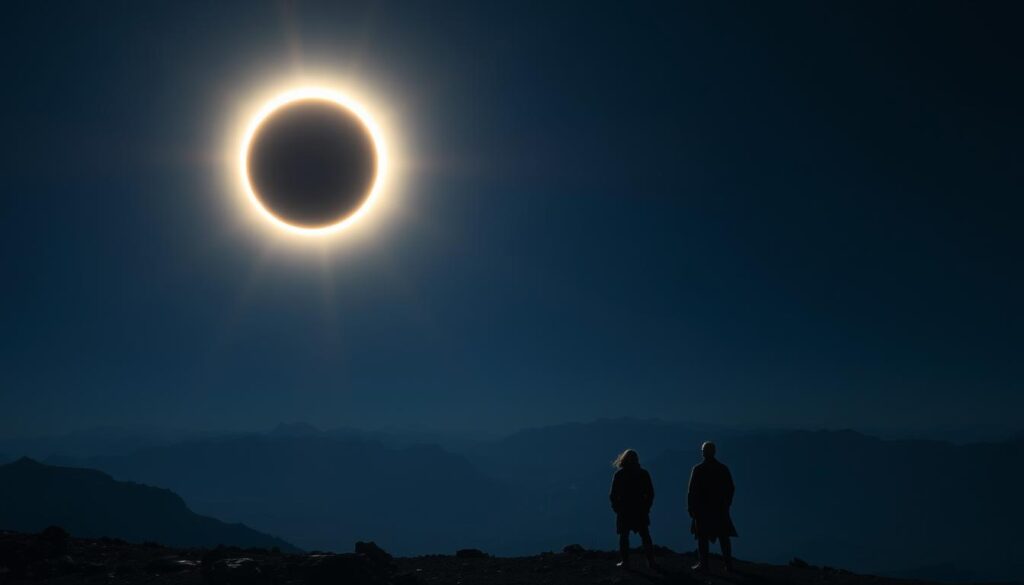
A rare total solar eclipse over Europe is fueling fresh prophecy chatter
The eclipse is a clear events anchor that reporters use to revisit centuries-old quatrains. That sky motif—obscured sun and poetic fires—appears often in Renaissance astrology, not as a dated forecast.
Social media surge: TikTok, Twitter, and YouTube push predictions into breaking news culture
Short videos speed the rise of snackable claims. Social media rewards novelty, so threads turn vague verses into urgent-sounding news and feed today’s culture of instant interpretation.
Quick context: 946 quatrains, centuries of prophecy, and modern cycles
The 16th-century astrologer wrote 946 quatrains. Some believers count about 70 partial fulfillments. Historians warn that repurposing lines across years breeds confirmation bias.
- Drivers: eclipse hooks, platform algorithms, geopolitical tensions
- Effect: viral reinterpretation and seasonal spikes in searches
- Example: viral clips linking celestial fire to modern fires or conflict
| Driver | How it shows up | Typical headline |
|---|---|---|
| Eclipse | Sky metaphors reused | “Darkened sun sparks prophecy talk” |
| Platforms | Short clips, threads | “Viral nostradamus predictions trend” |
| Tensions | Conflict context | “Verses tied to war and fire” |
For more on psychic takes and modern readings, see psychic predictions.
What did Nostradamus predict for 2026: claims about war, fires from the sky, and AI
Modern threads tie a few striking quatrains to current crises, turning poetic images into urgent headlines.
The “seven months, great war” line in circulation
One verse—“Seven months great war, people dead through evil, Rouen, Evreux the King will not fail”—reappears during European tensions. It names places, not dates, so the line offers no calendar anchor.
Numerology and the I:26 / II:26 shortcut
Fans point to quatrain numbers like I:26 and II:26 as a neat link to the year. This is tidy branding, not textual proof, and it stretches the original material.
Sky language and eclipse temptation
Dark suns and “celestial fire” are common Renaissance tropes. An eclipse year simply makes those phrases feel timely, boosting viral reinterpretation.
AI claims, world war scenarios, and viral themes
Online narratives mix world war fears, fires from the sky, and runaway machine power into dramatic threats. These are modern layers placed onto vague prophecies.
- Takeaway: Read the quatrain and then the headline; the link between them is often interpretation, not evidence.
- For a wider psychic context, see Sirian starseed profiles.
| Claim | Source Line | Reality |
|---|---|---|
| Seven months great war | Quoted quatrain | Mentions places, no year |
| Numerology = 2026 | I:26 / II:26 | Labeling, not dating |
| Celestial fire | Sky imagery | Common astrological motif |
What the scholarship and skeptics say: no dates, vague verses, and retrofitting yesterday’s news
Research shows the quatrains were written in an unstable linguistic mix. Many passages use Middle French and occasional Latin, and spelling varied across early prints.

Manuscripts, language, and the limits of close reading
Historians point to competing manuscripts and variant spellings that let translators choose options that suit later events. That flexibility makes precise dating or firm links to specific years unreliable.
Why post-event fits feel convincing
Interpretation often happens after an incident. Critics note that when readers map a line onto recent news, the match seems neat—yet that mapping relies on loose grammar and broad imagery.
- Scholars find no verified advance prediction with exact dates or names.
- One quatrain can be read to reference many different events, depending on translation.
- Confirmation bias explains much of the persuasive power of these claims.
“Before the fact, attempts to forecast specific events fail; after the fact, stories appear to fit.”
| Issue | Effect | Takeaway |
|---|---|---|
| Variable text | Wide readings | Weak dating |
| Hazy phrasing | Easy retrofitting | Low predictive value |
| After-the-fact claims | Persuasive narratives | Not evidence |
The friendly conclusion: enjoy the literature of prophecy, but treat confident claims about future events as storytelling unless supported by verifiable, time-stamped forecasts. For related self-checks on intuitive claims, try a psychic abilities test.
The culture story today: how media, influencers, and anxiety shape “nostradamus predicted” trends
Today’s coverage mixes fast entertainment with deeper anxieties, and that blend fuels viral prophecy cycles. Creators package striking lines into snackable clips. Media then amplify the most clickable angles as breaking news.

Athos Salomé and the amplification loop: modern psychics, headlines, and viral predictions
Athos Salomé is one clear amplifier. Confident pronouncements about AI risks and high-profile calls have fed reaction videos across TikTok, Twitter, and YouTube since October 2025.
That loop looks like this: a bold claim, rapid social media spread, reaction shows, and recycled clips that keep the topic alive even after specific dates pass.
- Why it sticks: rapid AI progress, geopolitical friction, and climate anxiety make world war and conflict themes feel plausible.
- What experts say: historians and scientists reject these lines as precise forecasting and note there is no scientific validation.
- Mental health: repeated exposure to doomsday narratives can raise stress among younger readers.
“Entertaining claims travel fastest; careful interpretation rarely wins the headline.”
| Role | Effect | Counter |
|---|---|---|
| Influencers | Drive rapid interest | Historians challenge literal readings |
| Media | Amplify clicks as breaking news | Scientists warn against causal claims |
| Shows | Pivot timelines when dates pass | Readers advised to seek evidence |
Practical tip: enjoy the spectacle, but treat dramatic predictions as cultural entertainment. For broader context on star lore and modern profiles, see Pleiades-Sirius profiles.
Conclusion
Historic verses act like mirrors: readers and creators see modern fears reflected back. Treat these lines as cultural texts and literary prophecies, not a dated prediction engine.
The bottom line: headlines, social clips, and news cycles may invoke world war or sweeping conflict, yet the quatrains lack clear year markers. Media framing and viral repackaging let the same lines fit new threats.
Expect the narrative to shift into future years. That flexibility lets claims about war and power be recycled indefinitely. Use friendly, evidence-minded analysis to weigh alarmist stories.
Focus where action helps: climate risk, real geopolitical flashpoints, and ethical AI policy. Enjoy the intrigue of culture and prophecy, but rely on data and clear reporting for decisions about real threats.