

Think of healing as a spectrum, not a single shade. Chromotherapy, or light therapy, uses different hues from the visible range to influence body, mind, and mood. Each hue carries a unique signature that people often describe as a subtle feel inside.
We live in a world full of light, and simple tones can shape how we sense comfort and calm. The right choice can be personal, based on mood, intention, and what draws you in at a given moment.
This guide looks through three lenses: chromotherapy and light therapy, chakra color systems, and intuitive experience during meditation. It aims to inform and support, not replace medical advice for health concerns.
Practical takeaways include a chart of meanings, tips to choose a best hue, and easy ways to use gentle light at home and at work. Whether you are new or well versed in wellness, this intro invites curiosity and a clear path forward.
Key Takeaways
- Healing is presented as a spectrum that uses varied hues.
- Light and simple tones affect mood and bodily sensations.
- Color choice can be personal and tied to intent.
- Article covers chromotherapy, chakras, and meditation insights.
- This guide is informational, not a medical substitute.
- Practical tips include a meanings chart and home use ideas.
Healing energy and color in a world made of light
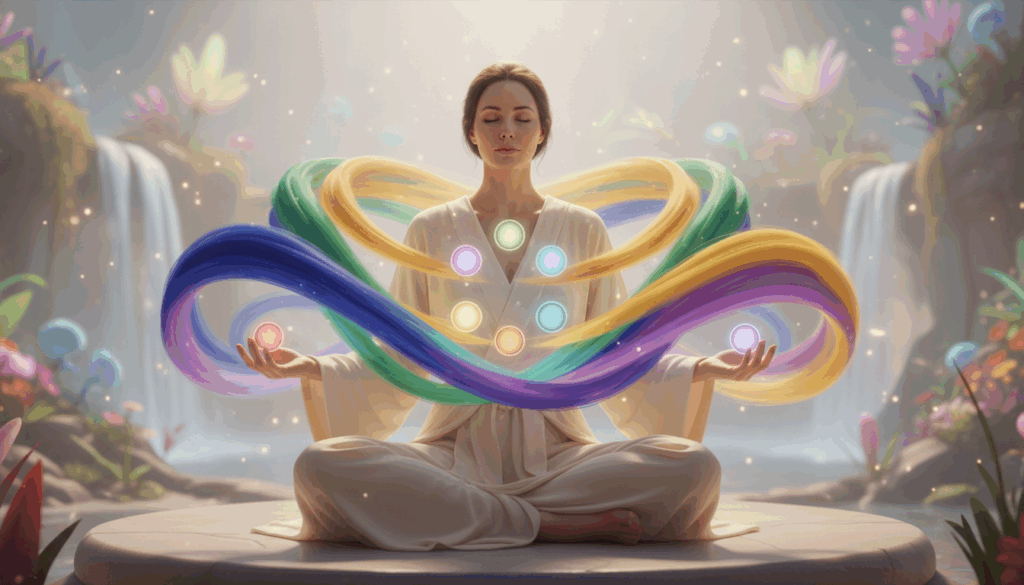
Across ages and cultures, people have noted that different bands of visible light shape mood and physical response.
How hues affect feelings and the nervous system
Visible light travels to the eye and sends signals to the brain. Those signals reach areas that guide sleep patterns and daily alertness, including the hypothalamus.
Different hues register differently in our nervous system and in common speech — from “feeling blue” to “seeing red” — showing how naturally we link tones to emotions and mood.
From ancient practice to modern wellness
Chromotherapy has deep roots across civilizations, including ancient Egypt, and appears today in clinics and wellness spaces as targeted lighting, meditation visuals, and structured hue charts.
Some traditions describe subtle vibration or frequency as a way to frame gentle inner shifts. Modern uses add physiology, noting that light exposure cues can change sleep/wake timing and daily energy through circadian rhythm effects.
Responses vary: cultural background, memory, and stress alter how one person vs. another reacts to the same hue. For practical guidance and deeper techniques, see psychic energy healing techniques.
Next: we’ll explore how specific hues are applied in chromotherapy and which aims they commonly support — from calm and focus to better balance.
What color is healing energy in chromotherapy and light therapy?
Targeted light setups apply specific hues to support rest, drive, or mental clarity. Chromotherapy selects tones to help a given aim, such as calm, focus, or steady mood.

How selective light uses specific hues for goals
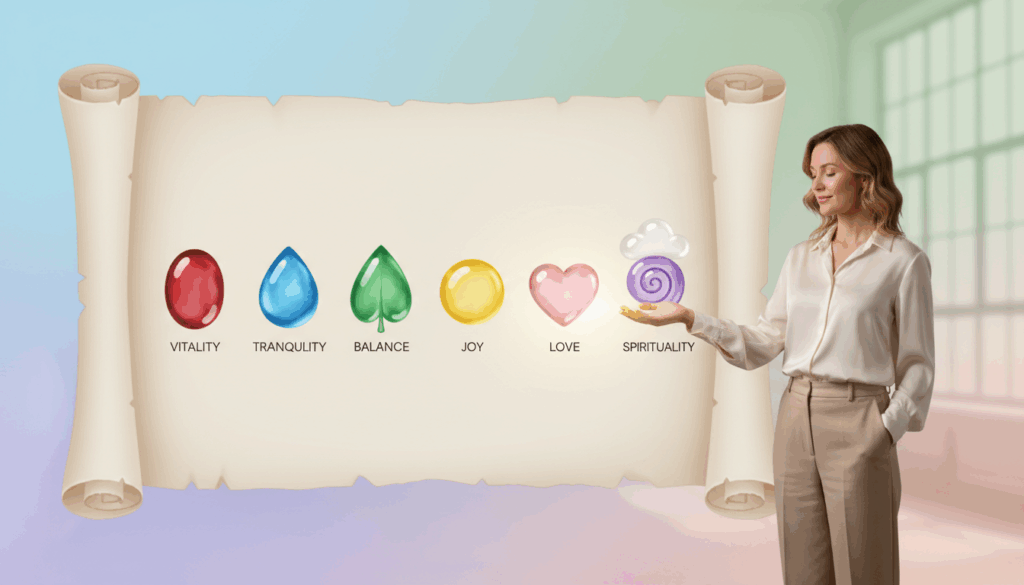
Practitioners often use a simple chart to match tone to intent. Common matches include red for vitality, blue for calm, yellow for clarity, green for balance, violet for transformation, orange for warmth, indigo for insight, and white for purity and amplification.
Pick a hue based on intention: choose for relaxation, motivation, emotional openness, or sharper thinking. Treat charts as guides, not rules.
Why there’s no one-size-fits-all best hue
People change over time. A busy week may call for calm, while a creative season may welcome warmth. Test brief sessions and note how your body and mind respond.
- Scattered attention → try blue or green for calm and balance.
- Low drive → test red or yellow for vitality and clarity.
- Combine with sleep, hydration, movement, and medical care for best results.
Note: many modern systems overlap with chakra tones, so charts often bridge practical light practice and traditional maps of centers.
Chakra colors and energy centers in the body
A classic system names seven centers inside the body, arranged like a vertical rainbow from base to crown. These energy centers each carry a theme and a linked tone that helps describe their role in physical and mental life.
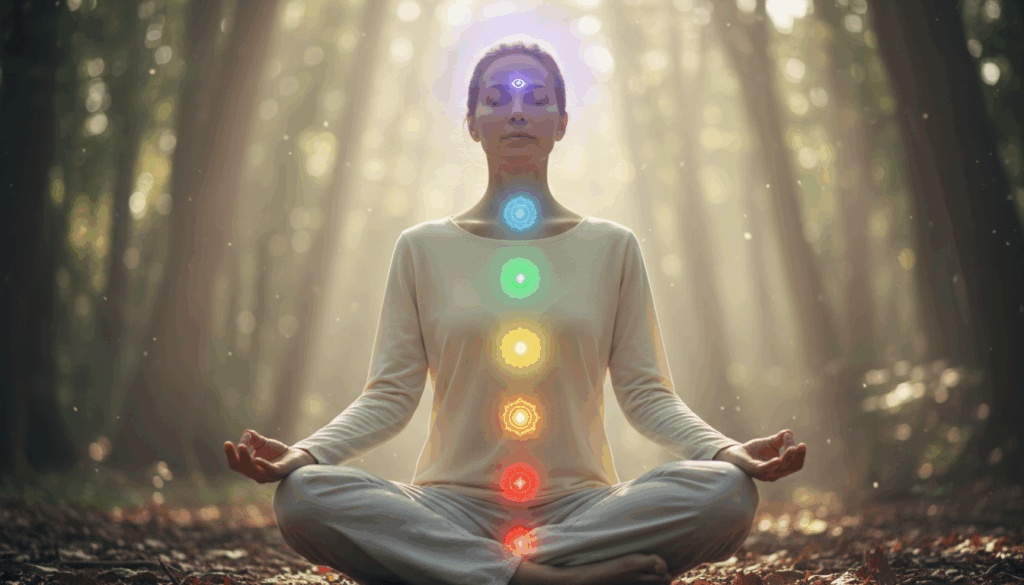
How the seven chakras map from root to crown
Root — at the base of the spine; grounding and safety.
Sacral — lower abdomen; creativity and emotion.
Solar plexus — upper belly; confidence and personal power.
Heart — center chest; balance, compassion, and connection.
Throat — voice center; communication and truth.
Third eye — between the brows; intuition and inner sight.
Crown — top of the head; broader connection and spiritual openness.
Seeing tones during meditation or energy work
People often report flashes of purple or yellow during focused practice. Reiki practitioner Lillie Marshall notes this may point to active crown connection or focused chakra work.
Such inner visuals can be symbolic, intuitive, or simply the mind’s way of showing shifts in focus. For example, seeing blue may link to throat themes like clear speech, while green often signals heart-centered balance.
- Overlap: chakra associations often mirror chromotherapy charts, so repeated meanings feel familiar.
- Practice tip: journal after meditation—note the hue, sensations, and any mental shifts.
- Explore more: learn practical methods for working with subtle centers via energy manipulation.
Healing energy color meanings chart
Use this quick guide to match a chosen hue to its common role in chromotherapy and chakra practice. Each entry notes a simple aim, a practical use, and a crystal pairing to try.
Red — grounding and vitality
Root support: Use red when you feel depleted or unmotivated. It brings steady drive and sense of safety.
Try: short bursts of light or a red stone like garnet or red jasper.
Orange — creativity and warmth
Sacral balance: Orange loosens stuck projects and invites playful flow. Good for reconnecting with joy.
Try: carnelian or sunstone for boosting creative momentum.
Yellow — confidence and clarity
Solar plexus power: Yellow aids focus, brighter mood, and mental clarity. Use it before tasks that need will and joy.
| Hue | Common meanings | Chakra | Crystal pairing |
|---|---|---|---|
| Green | Harmony, growth, compassion | Heart | Jade, green aventurine |
| Blue | Calm, clear communication | Throat | Aquamarine, sodalite |
| Indigo / Violet / White | Intuition, transformation, purity | Third eye / Crown | Amethyst, clear quartz |
How to choose the right healing color for your life right now
“Trust a simple pull toward a shade — it often tells you what your system needs.”
Your first instinct toward a hue often signals what your body and mind need right now.
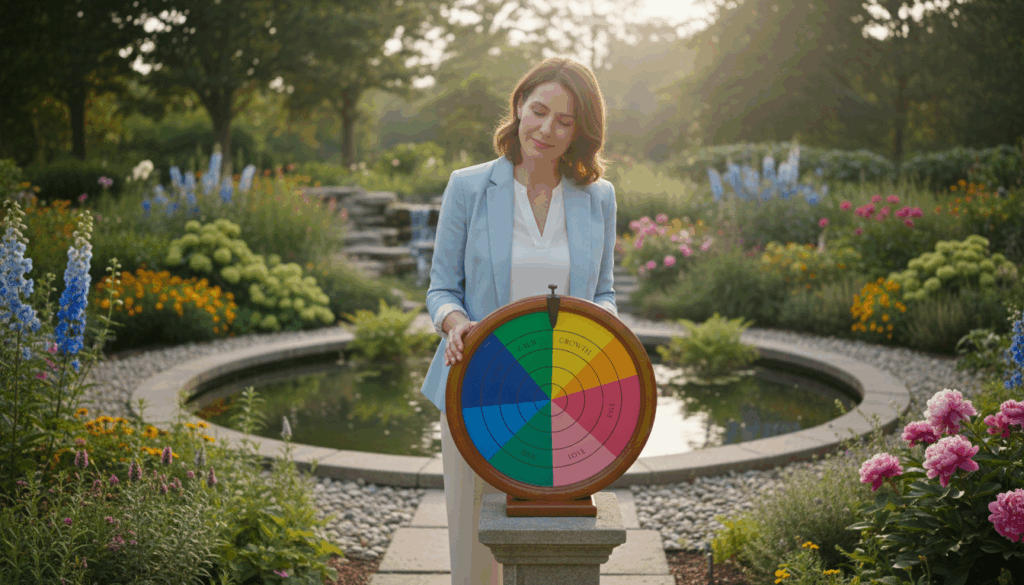
Let your intuition lead: notice the tone you pick when shopping, arranging a room, or scrolling images. Wear that shade or add a small item nearby for a few days.
Match a shade to your intention
Use brief tests: sit with the tone for 10 minutes and record how you feel. Ask: do I feel calmer, clearer, more energized, or more connected?
- Balance: try green for steady calm and harmony.
- Creativity: orange nudges playful ideas and movement.
- Love & connection: pink or soft green supports open emotions and care.
- Clarity: yellow or pale tones aid focus and confidence.
Consider context: stress, grief, or burnout call for different choices. People change over time, so repeat the test each month. No special tools are needed — just attention, short practice sessions, and gentle experimentation.
Ways to harness color healing at home and at work
A focused use of tone in your space can act like a gentle cue for the mind and body throughout the day.
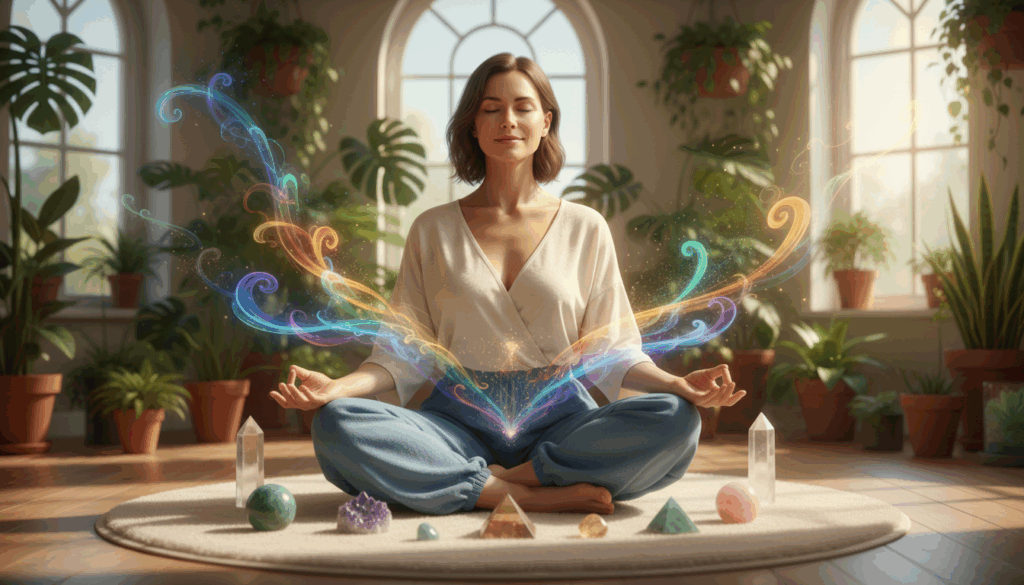
Visual meditation: bathing the mind and body
Try a short guided meditation. Sit quietly for five minutes.
Imagine one hue filling you from head to toe. Breathe slowly and rest attention where tension shows.
End by noting any shift in calm, focus, or clarity.
Wear it and surround yourself
Pick one intentional item for the day: a shirt, scarf, or notebook. Let that piece guide mood and action.
At work, add small accents—desk mats, artwork, or a smart bulb—to change the feel of a room without repainting.
Pair with crystals for stronger connection
Match stones to the tone family for added focus. Try citrine for bright clarity or carnelian for creative boost.
Keep a small crystal on your desk or in a pocket to reinforce the cue.
Quick at-home and work toolkit
- Short daily meditation (5–10 minutes).
- One wearable item as an anchor.
- Subtle décor swaps: throws, lamp filters, or artwork.
- Work tip: use blue or green tones for calm focus; add yellow accents for upbeat energy.
- Experiment: change intensity and placement until it feels supportive.
| Action | At Home | At Work | Crystal pairing |
|---|---|---|---|
| Visual meditation | Five-minute visual baths before sleep | Short focus breaks at your desk | Clear quartz to reset |
| Wear & surround | Throw, pillow, or lamp filter | Scarf, notebook, or screen background | Carnelian for creativity |
| Décor & lighting | Smart bulbs and gentle fabrics | Desk mat, small artwork, soft task light | Citrine for clarity |
For guided practices and deeper methods, explore psychic healing to learn safe, practical routines that fit your routine.
Light therapy techniques that use color on purpose
Practical light devices deliver chosen wavelengths so you can add supportive cues to your day.

LED devices for targeted wavelengths
Targeted light means devices or filters that emit a specific hue or wavelength on purpose. LED units can aim narrow bands at a room or a body area for short sessions.
Modern LED tools are portable and fit into daily routines. Use them as ambient support or for focused work breaks.
Examples include Luminette 3, a wearable that delivers blue-enriched white light and has clinical backing, and Luminette Drive, a compact lamp that clips near the visor or screen. The Drive offers three intensities and 20–45 minute sessions.
Filtered light and immersive setups
Filters isolate a hue so intensity and time stay consistent. That helps comfort and repeatable results.
Immersive chromotherapy uses fabrics, lamps, stones, and tinted waters to shift a whole space. Start with short trials and keep lights off direct line of sight to reduce eye strain.
Practical tips: begin with brief sessions, note sleep and mood, and use clear intention—calm, focus, or wind-down—to guide your practice. For guided rituals that pair light with ritual tools try a short candle ritual.
Benefits and considerations for safe, effective practice
Simple, repeatable light practices may gently shift how your body and mind respond to stress. Below are realistic benefits, key cautions, and clear signs to consult a professional.

Potential benefits
Calmer mood: Regular, brief sessions can support steadier mood and milder emotions.
Relaxation: Short visual rests often help people unwind after a busy day.
Better balance: Consistent use alongside sleep and stress care tends to give the strongest results.
Important cautions
- Some people report eye strain, headaches, or sleep disruption when timing or intensity is off.
- Photosensitive conditions, including photosensitive epilepsy, require extra care.
- Certain medications increase light sensitivity; check with a clinician before starting sessions.
When to talk to a qualified professional
If you have ongoing mental health concerns, chronic sleep problems, eye issues, pregnancy, or bipolar disorder, seek medical advice before trying new light routines.
Tip: Start at low intensity, keep sessions short, and stop if symptoms appear. For guided methods that tie visual practice to subtle inner work, explore an aura reading for added context.
Conclusion
, Reaffirmation: no single hue owns the idea of support. Different tones help at different times, and your best match can change with stress, sleep, or project cycles.
Combine structure and feeling: use charts and chakra maps as guides, then follow what you keep choosing. Let brief tests guide choices rather than rules.
Try a simple next step: pick one shade for seven days. Wear it, add it to a room, or use a lamp for short sessions. Note shifts in mood, focus, and daily rhythm.
White light can act as a quick reset or amplifier when unsure. And remember: if symptoms persist or you manage a condition, seek professional guidance for safe care.