

Welcome to a friendly, easy-to-use glossary that helps you find a clear meaning fast and then dive deeper when needed.
This guide maps the 78-card system into two clear parts: the Major Arcana, which traces the Fool’s Journey from new beginnings to completion, and the Minor Arcana, which explores everyday life through four suits — Wands, Cups, Swords, and Pentacles.
Use this resource whether you want a quick lookup or a richer reading. The layout moves from big-picture story to suit-level notes, then to a compact quick-reference you can skim during a session.
Upright and reversed interpretations are shown at a glance so you can read with confidence. Symbolism, imagery, and elemental ties add depth without slowing your flow.
For an example of Major Arcana focus and practical tips, see a detailed entry like The Chariot overview.
Key Takeaways
- A friendly glossary gives quick definitions and deeper context.
- The Major Arcana shows life milestones; the Minor Arcana covers daily experience.
- Upright and reversed notes help you read confidently in any spread.
- Symbolism and elemental associations deepen interpretation without overload.
- Skim headers for fast lookup or use the full reference during a session.
How to Use This Tarot Card Meanings Glossary Today
Use this glossary like a toolkit: quick scans for fast answers, or deeper reads for richer context. The approach is simple and repeatable, so you can build reliable skills over time.

Reading Upright vs. Reversed at a Glance
Upright entries show the constructive essence of an archetype. They point to flow, strengths, and clear opportunities.
Reversed entries flag obstacles, delays, or imbalance. Think of them as warnings, not fate—directional signals about momentum.
Quick Lookup vs. Deep Dive Meanings
Start with headers to locate a card fast. Read the upright phrase first for a quick meaning. Then check reversed for nuance if the card is inverted or the spread feels blocked.
- Skim the quick index, confirm keywords that match your question.
- Make brief notes about the situation, then match those notes to the lines that feel most relevant.
- When pressed for time, use the quick lookup; for planning or reflection, take the deep dive.
- Synthesize multiple cards by spotting repeating keywords to find the throughline of the reading.
- If no cards are reversed, use reversed entries as hidden influences to watch.
| Step | Action | Result |
|---|---|---|
| Scan | Find H2/H3 headers and the quick index | Locate the card fast |
| First pass | Read upright phrase | Get a clear, simple meaning |
| Second pass | Check reversed and suit context | Add nuance and caution |
| Synthesize | Note repeating keywords across cards | Reveal message throughline |
Need more examples or practice reads? Visit the full tarot guide for expanded notes and sample spreads.
What Is in a Tarot Deck: Major Arcana and Minor Arcana
A full deck holds two complementary systems that tell both a big-picture story and the small steps that carry it.
How the deck breaks down: A deck has 78 cards total. Twenty-two major arcana track a spiritual storyline from The Fool (0) to The World (21). The other 56 are minor arcana and split into four suits: Wands (Fire), Cups (Water), Swords (Air), and Pentacles (Earth).
The Fool’s Journey is a simple metaphor for growth. It moves from innocence through tests and learning to integration and completion.
How Major and Minor Work Together
Major arcana often point to why a theme shows up — a turning point or life lesson. Minor arcana show how that theme plays out in daily choices and timing.
Quick practical tip: Start with the major arcana theme, then layer the minor arcana to see steps, options, and timing. One major among many minors can shift the reading toward deeper reflection.

| Part | Count | Function |
|---|---|---|
| Major Arcana | 22 | Big life themes, pivotal shifts |
| Minor Arcana | 56 | Everyday actions, how things unfold |
| Suits (W/C/S/P) | 4 | Elemental focus: Fire/Water/Air/Earth |
Major Arcana Overview: Themes, Lessons, and Life Milestones
Think of the major arcana as milestones on a path of inner growth and outer choice. They form the backbone of a deck and show where major turning points appear in your life.
Key archetypes balance inner knowing and action. The Magician brings willpower and creation; The High Priestess points to intuition and inner voice.
Key Archetypes: Intuition, Willpower, Justice, Judgement
Justice and Judgement act as accountability figures. They ask you to face truth, reflect, and choose fair next steps.
“Major archetypes mirror stages of growth and invite honest reflection.”
Cycles and Change: The Wheel of Fortune, Death, and The World
The Wheel of Fortune, Death, and The World mark change, endings, and completion. These cyclical markers show when a phase closes and a new one begins.
- Clusters of major arcana often signal a deep reorientation.
- Use an archetype as a journal prompt to test assumptions.
- Quick shortcut: name the dominant archetype, then translate it into a practical boundary or decision.
Encountering these symbols isn’t about fear of challenges; it’s about resilience and conscious integration.
Major Arcana Meanings: Card-by-Card Quick Index
Here is a rapid reference to anchor each Major Arcana with a single phrase. Use these lines to stay in flow during a reading and to spot narrative threads fast.
The Fool — innocence, new beginnings, free spirit
The Magician — willpower, desire, creation, manifestation
The High Priestess — intuitive, unconscious, inner voice
The Empress — motherhood, fertility, abundance
The Emperor — authority, structure, control
The Hierophant — tradition, ethics, learning
The Lovers — partnerships, values, choices
The Chariot — direction, control, moving forward
Strength — inner strength, courage, confidence
The Hermit — contemplation, inner guidance
The Wheel of Fortune — change, cycles, destiny
Justice — cause and effect, clarity, truth
The Hanged Man — sacrifice, release, new perspective
Death — endings, beginnings, metamorphosis
Temperance — middle path, patience, balance
The Devil — materialism, bondage, restoring control
The Tower — sudden upheaval, revelation, recalibration
The Star — hope, faith, rejuvenation
The Moon — illusions, intuition, subconscious
The Sun — joy, success, vitality
Judgement — reflection, awakening, reckoning
The World — fulfillment, completion, harmony
Quick practice: pull three of these entries to form a beginning, middle, and end for a simple reading. Layer suit and elemental notes from later sections to deepen each line.
| Role | Turning-point | Restoration | Action |
|---|---|---|---|
| Early spark | The Fool | The Star | Begin with curiosity |
| Conflict / test | The Tower | Temperance | Recalibrate and heal |
| Decision | The Lovers | Justice | Choose with clarity |
| Completion | Wheel of Fortune | The World | Integrate and move forward |
The Tower Card in Focus: Change, Mars, and Fire
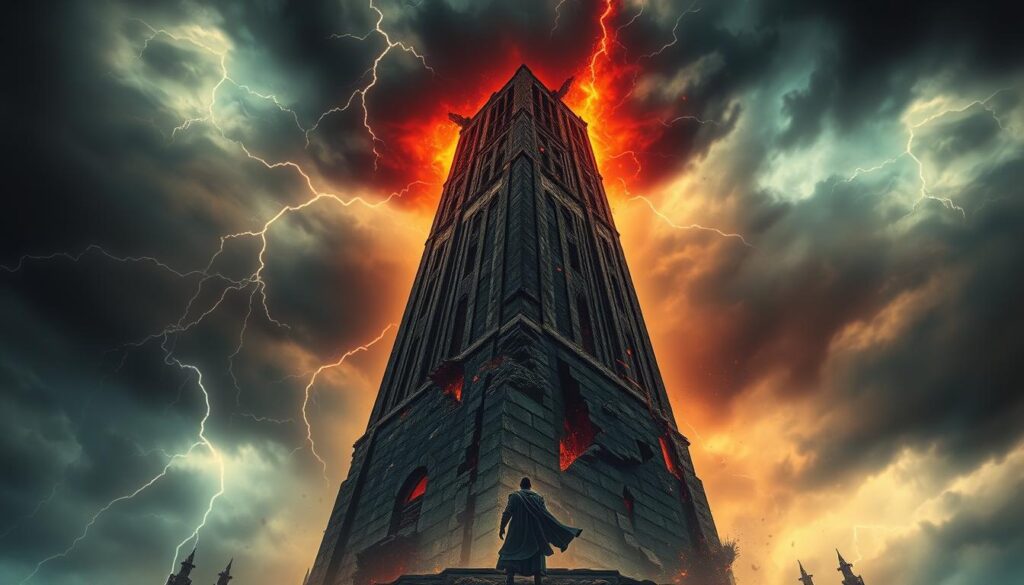
When sudden upheaval arrives, it often opens the raw space needed for honest rebuilding. The Tower signals radical change that alters your trajectory. It does not always mean disaster; it asks for surrender and the release of structures that no longer serve.
When Upheaval Leads to Growth
Reframe the collapse as a needed breakdown. Mars and Fire fuel decisive action and the courage to dismantle false supports. The immediate impact feels chaotic, but that clearing makes room for truer foundations.
Astrology, Element, Chakra, and Yes/No
Astrology: Mars. Element: Fire. Chakra: Crown. Yes/No: No — treat this as a protective stop sign.
“Surrendering old structures is a courageous way to reclaim agency.”
- Pause and assess what must fall.
- Choose one stabilizing action for safety and integrity.
- Timing cue: move slowly; clarity comes as dust settles.
- Recovery sequence: Tower → Star → Temperance to restore balance and direction.
Minor Arcana Overview: Daily Life, Work, and Relationships
The Minor Arcana brings big themes down to daily choices and practical steps. It is the deck’s action layer that shows how lessons appear in routine moments.
The Four Suits: Wands, Cups, Swords, Pentacles
Wands (Fire) show energy, drive, action, and plans. They point to initiative at work and creative effort.
Cups (Water) speak to emotions, intuition, and relationships. When Cups dominate, watch shifts in feelings and connection.
Swords (Air) focus on logic, truth, conflict, and decisions. They often flag communication issues and tough choices.
Pentacles (Earth) cover the material world, stability, health, and prosperity. They guide resource planning and routines.
Courts and Pages: Communication, Ideas, and Learning
Court cards can represent people, roles, or strategies. Pages typically signal messages, study, and early-stage ideas.
Quick method: name the dominant suit to find the arena of action, then read the rank for stage and direction. This gives fast, usable meaning during a spread.
| Suit | Element | Focus | Everyday meaning |
|---|---|---|---|
| Wands | Fire | Action, plans | Initiative at work; start projects |
| Cups | Water | Emotions, intuition | Feelings, relationships, empathy |
| Swords | Air | Ideas, truth | Decisions, communication, conflict |
| Pentacles | Earth | Resources, stability | Time management, health, finances |
Tip: When a suit repeats, treat it as the main arena for change. Then zoom into ranks and courts to plan the next small step.
Suit of Wands Meanings: Energy, Drive, and Willpower
Wands are the spark that turns raw inspiration into forward motion. This suit aligns with Fire: passion, ambition, and visible action.
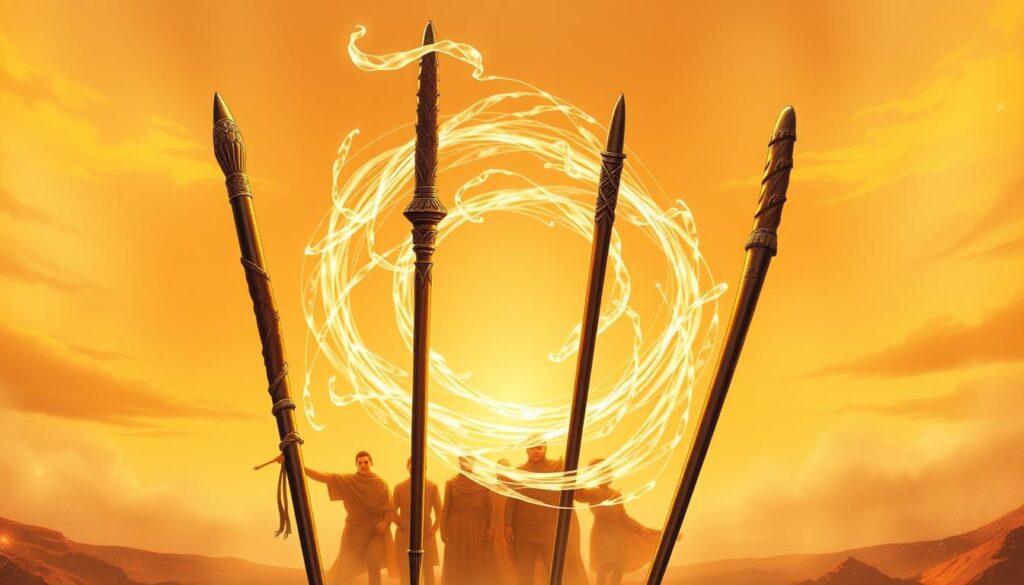
Element of Fire: Creativity, ambition, plans
Fire cues—heat, speed, and visibility—help you spot when momentum and confidence are available.
Use those cues to choose when to sprint and when to pause for clarity.
From Page to King: Court Progression
Pages bring new ideas and eagerness. A Knight acts fast; look for bold moves and decisive energy like the knight wands.
The Queen holds steady charisma and warmth, and the queen wands shows calm confidence. The King leads with vision; a king wands influence plans and direction.
- Frame Wands as the spark that turns ideas into action when you are moving forward.
- If Wands dominate, focus energy on one goal to avoid scattering effort.
- Channel nine wands energy to hold your ground and pace exertion.
- Pair Wands with Pentacles for practical planning or with Cups to gather support.
| Rank | Primary trait | Practical tip |
|---|---|---|
| Page | Enthusiasm | Test one small idea |
| Knight | Action | Set a short, clear deadline |
| Queen | Confidence | Lead with presence |
| King | Vision | Outline a sustainable plan |
“When energy is steady and focused, ambition becomes a sustainable path, not a burst of reckless heat.”
Suit of Cups Meanings: Emotions, Intuition, and Relationships
Water suit entries point to the inner currents that shape how we love, grieve, and connect.
Element of Water: This suit centers on feelings, connection, and compassion. It highlights intuition and creative sensitivity that steer interpersonal choices.
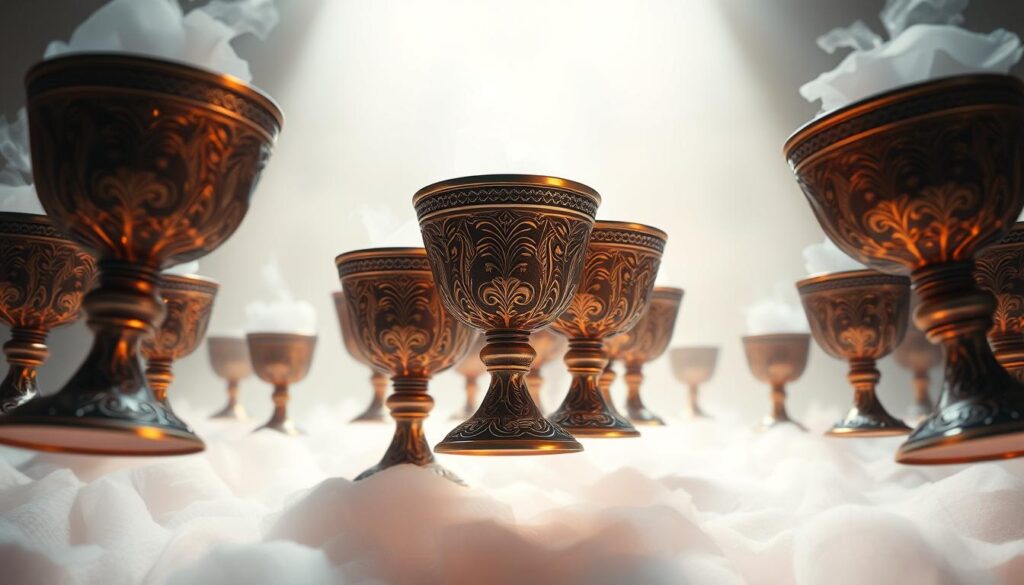
Element of Water: Feelings, connection, compassion
The water energy invites gentle listening and flow. When these cards appear, slow down and tune into tone, body language, and subtle cues.
Key Cards: Three of Cups, Six of Cups, Queen of Cups
Three of Cups celebrates community and joyful milestones that refill the heart. Share gratitude and mark small wins.
Six of Cups raises memories and nostalgia. Honor what those memories teach, but choose actions that keep you present.
Queen of Cups models emotional intelligence: warm boundaries, steady compassion, and deep attunement to others.
- Position Cups as the realm of connection and inner wisdom that shapes how you relate and choose.
- Journal feelings before interpreting a Cups-heavy spread to anchor clarity.
- Balance head and heart by pairing Cups with Swords for kind, clear communication.
- When emotional overload appears, pick a simple self-care ritual to soften stress and regain perspective.
For a focused example of court energy in a reading, explore the nuance of the Knight of Cups as a model of romantic movement and invitation.
Suit of Swords Meanings: Ideas, Intellect, and Communication
Swords represent the mind’s arena, where thought and language shape reality. This suit aligns with Air — logic, truth, and the choices that test our resolve.
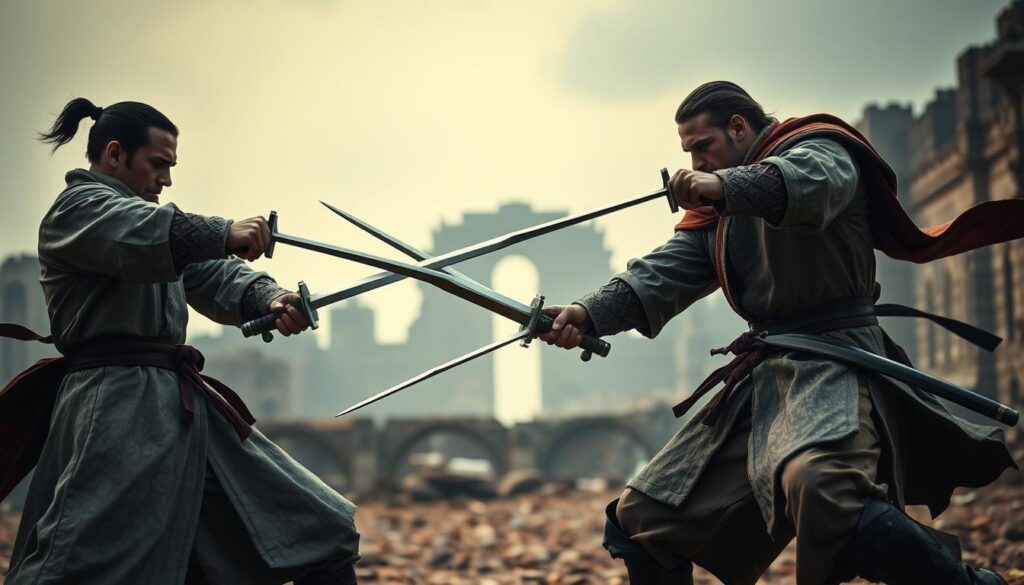
Element of Air: Clarity, challenges, choices
The Swords show how ideas can heal or harm. In tense moments, clarity and honest speech cut through confusion.
Communication is a tool. Truth-telling often resolves misunderstandings and moves you past tough spots.
Key Cards: Three of Swords, Six of Swords, Nine of Swords, Ten of Swords
Three of Swords points to heartbreak and sorrow. It asks for compassionate processing, not suppression.
Six of Swords models transition toward calmer waters. It suggests problem-solving, boundary work, and leaning on support.
Nine of Swords flags rumination and fear. Grounding breath, short walks, and naming one worry at a time interrupt worry loops.
Ten of Swords marks a painful ending. Acceptance frees energy and opens space for renewal.
- Frame Swords as the mental realm where choices matter.
- Use clear talk and gentle honesty to meet challenges.
- Cross-check Swords with Cups for empathy and with Pentacles for practical steps.
“Intellectual honesty is a courageous act that restores integrity and direction.”
The next time this suit appears in a reading, focus on one clear action: speak, set a boundary, or make a small plan. That single step brings stability to thought and helps translate meaning into progress for your tarot practice.
Suit of Pentacles Meanings: Material World, Hard Work, and Abundance
Pentacles anchor readings in the everyday tasks that build long-term security. This suit connects to Earth and points to routines, health, finances, and tangible progress.
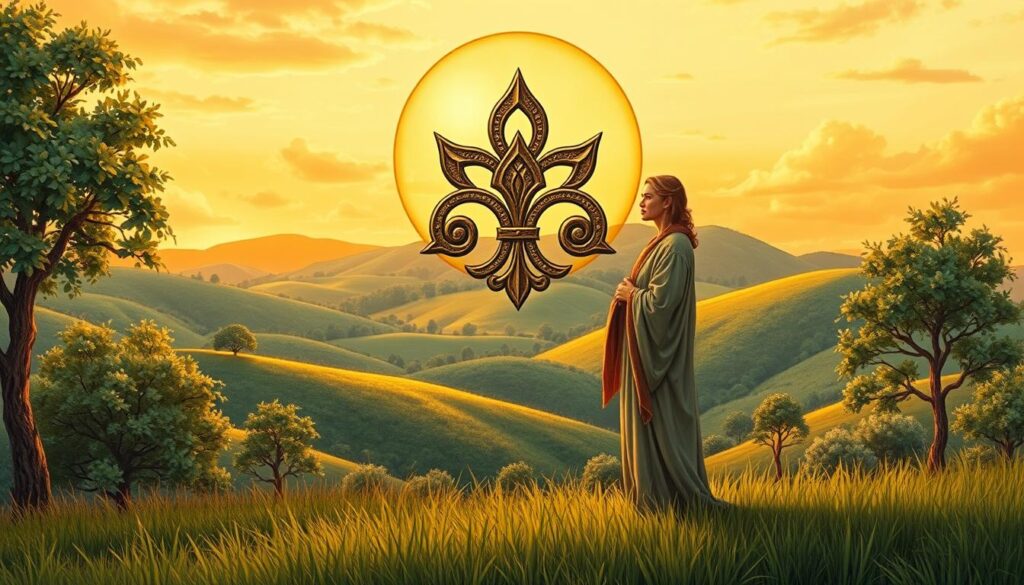
Element of Earth: Security, Stability, Resources
Earth energy favors steady growth, practical habits, and systems that protect wellbeing. Think budgets, sleep routines, and project plans.
Key Cards and Practical Notes
Six of Pentacles focuses on balanced exchanges—give or accept help with clear intention.
Nine of Pentacles celebrates self-sufficiency and the comfort born from consistent effort.
Queen of Pentacles blends warmth with management; she nurtures people and projects with practical care. See a focused entry on the Queen of Pentacles.
King of Pentacles models stability: measured risk, wise investments, and reliable leadership.
- Present Pentacles as the arena of steady results and earned abundance.
- Tie Earth to routines, body care, finances, and durable resources.
- When Pentacles dominate, use budgeting and simple time-management prompts.
- Pair with Wands to execute plans, with Swords for clear analysis, and with Cups to align prosperity with values.
| Card | Focus | Action Prompt |
|---|---|---|
| Six of Pentacles | Generosity, fair exchange | Offer help or accept support with clear boundaries |
| Nine of Pentacles | Self-sufficiency, harvest | Schedule a treat that honors consistent work |
| Queen of Pentacles | Nurture + systems | Create a simple routine to support someone or a project |
| King of Pentacles | Material mastery | Review investments and set a three-month plan |
“Steady, small steps build the foundation that lets abundance arrive and stay.”
Tarot Card Meanings List
A compact reference helps you check a card’s practical cue without slowing intuition. Use these anchors to move quickly from impression to interpretation during a spread.
Major Arcana: From The Fool to The World
Quick anchors for fast scanning. Each line names the archetype and a short meaning you can use in real time.
- The Fool — new beginnings
- The Magician — manifestation
- The High Priestess — inner voice
- The Empress — abundance
- The Emperor — structure
- The Hierophant — tradition / learning
- The Lovers — choices / values
- The Chariot — direction
- Strength — confidence
- The Hermit — inner guidance
- Wheel of Fortune — cycles
- Justice — clarity
- The Hanged Man — new perspective
- Death — metamorphosis
- Temperance — balance
- The Devil — restoring control
- The Tower — upheaval
- The Star — rejuvenation
- The Moon — intuition
- The Sun — vitality
- Judgement — awakening
- The World — completion / integration
Minor Arcana: Aces to Tens and Court Cards by Suit
Suit anchors show progression from seed to result. Pages often signal messages or new study.
| Suit | Ace–Ten (seed→culmination) | Courts |
|---|---|---|
| Wands | Idea → plan → action → success | Page (message) / Knight / Queen / King |
| Cups | Feeling → rapport → growth → fulfillment | Page / Knight / Queen / King |
| Swords | Idea → conflict → decision → resolution | Page / Knight / Queen / King |
| Pentacles | Seed → skill → work → harvest | Page / Knight / Queen / King |
- Practical tags: choices, clarity, work, world/completion — use these to match a pull to your question.
- Bookmark this section on mobile for quick checks between shuffles.
- Use the quick anchors as a cross-check after your intuitive read to refine interpretation.
“A brief anchor phrase keeps readings fast and grounded.”
Putting It All Together in a Tarot Reading
Find the core message first, and use suits to reveal how that lesson plays out day to day. Major arcana show the “why”; minors show the “how.” This simple split helps you turn insight into a practical plan.

Finding Clarity in Work, Life, and Feelings
Start with the Major influence to name the central lesson. Then read suits to map action in work, relationships, and daily life.
- Use one sentence per card to keep meaning crisp.
- Track positions (situation/obstacle/advice) to spot where momentum or resistance lives.
- Pair Pentacles with Wands for work projects; Cups with Swords for feelings plus honest talk.
Balancing Insight with Action: Temperance to Chariot
Temperance helps you blend insight and restraint so choices align with values. The Chariot gives willpower to move once balance is set.
- Align insight with one decision, one conversation, and one small action.
- Close a reading with a growth reflection: what you learn, what you release, and the first step you’ll take.
“Turn clarity into a simple, repeatable way to choose and move forward.”
Conclusion
End a session by turning quick impressions into a simple, repeatable step. Name the main archetype, see how the suits offer the next move, and jot a short action to try this week.
Compare similar figures — for example, High Priestess versus The Hermit — to sharpen inner listening. Use journaling spreads that track cycles like the Wheel of Fortune and reframe stuck perspective with the Hanged Man.
Remember roles: Pages begin learning arcs, Knights test momentum, Queens model care and mastery, and Kings steady systems. Notice which side you favor — intuition or action — and aim to balance both.
Practical next step: choose one area (work, relationships, or growth), pull three cards, and translate the meanings into one action you’ll take this week. For a focused example, see the Ten of Wands example.